
Alcohol Rehab in Chiang Mai, Thailand that Puts Safety First
Alcohol rehab at Jintara in Chiang Mai, Thailand, starts with medical detox on site when it is clinically safe. Registered nurses are awake day and night, and withdrawal is scored with CIWA-Ar, a standard alcohol withdrawal scale. Therapy starts on your first day, alongside detox, not after it. The 30-day program is USD 12,500. Medical detox and the psychiatric assessment are included, and prescribed medication is the only extra.
In a medical emergency, such as a seizure or severe confusion, call your local emergency number now. If you need hospital care to stabilize before detox, that comes first, and you pay the hospital separately from the program fee. Jintara is for adults only.
Licensed by the Ministry of Public Health.
Accredited under Thailand’s national standard for drug treatment and rehabilitation facilities.
16-minute video
Nine questions to ask any alcohol rehab in Thailand before you book.
For anyone weighing rehab for themselves or someone they love. We answer each one plainly, including who we're not right for.
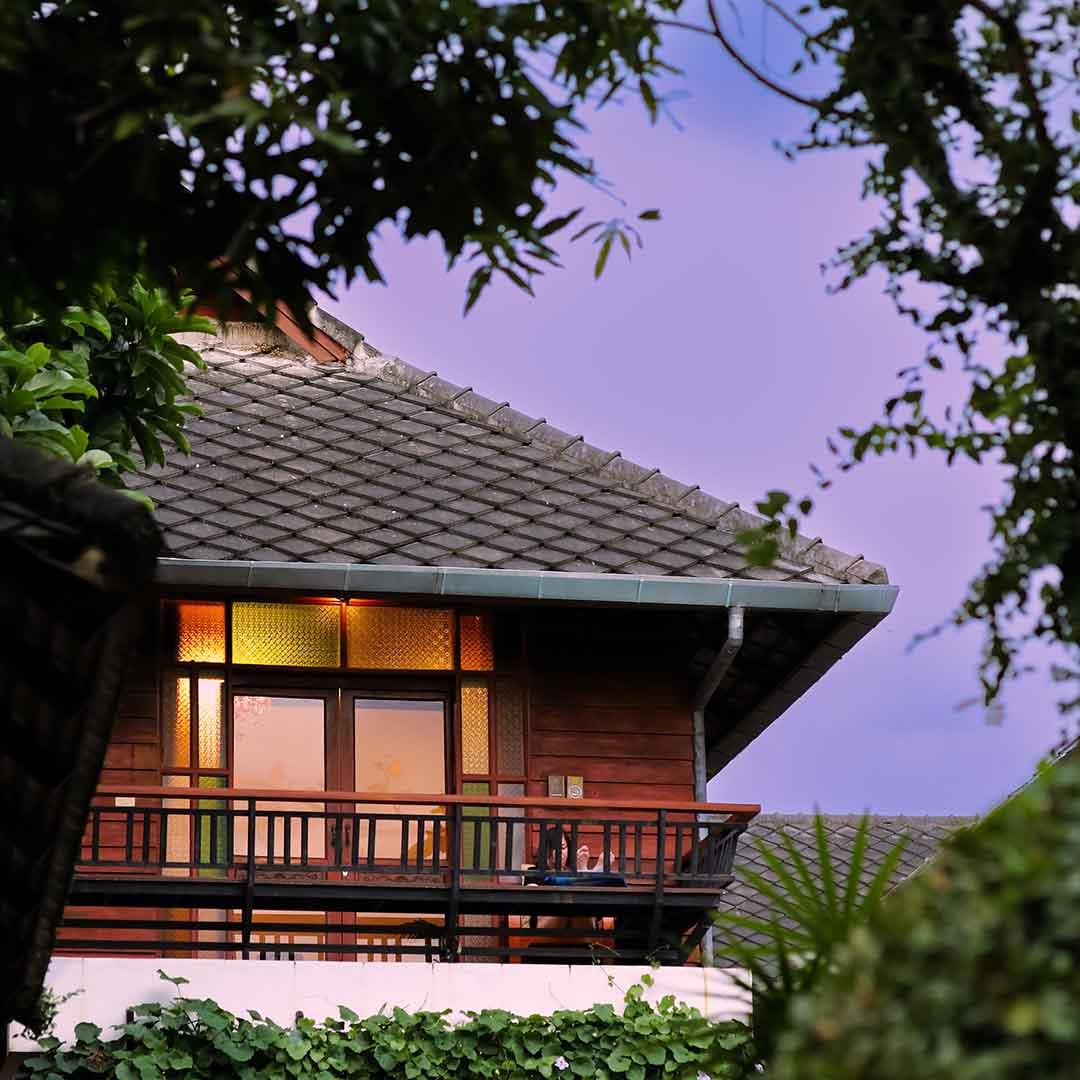
Is It Dangerous to Stop Drinking on Your Own?
It can be. If you drink every day, withdrawal can start within hours of your last drink, and after heavy, long-term drinking it can lead to seizures or delirium tremens. Taking sleeping pills with alcohol raises the risk, because both slow the same systems in the brain. Please don't stop alone. Talk to a doctor first, or call Jintara to talk through a supervised detox.
Call your local emergency number now if you or someone you're with has any of these:
- A seizure, or shaking that will not stop
- Seeing or hearing things that are not there
- Severe confusion, or not knowing where you are
- A racing heart with a fever or heavy sweating
Supervised detox means someone is watching for these signs with you. At Jintara, alcohol detox happens on site when it is clinically safe, with registered nurses awake through the night. Our therapists then work on what drove the drinking, without judgment.
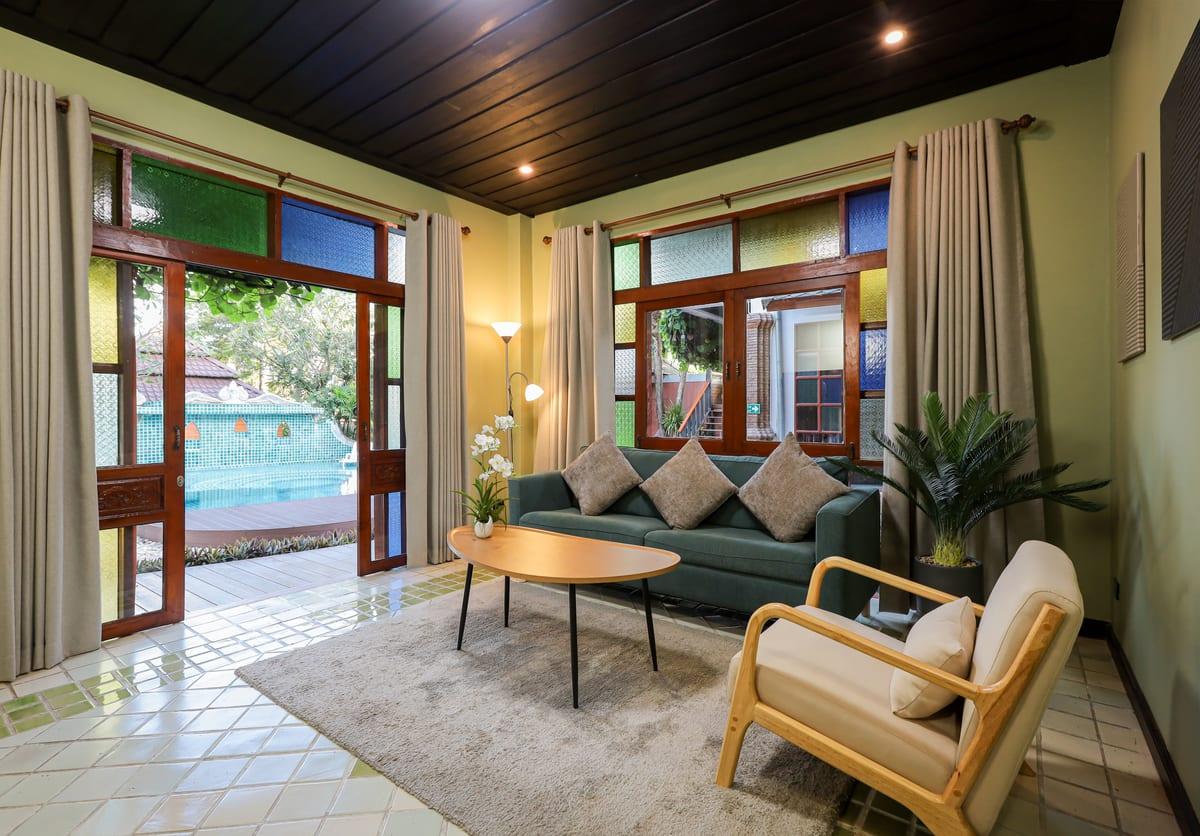
What Is It Like in a Rehab With Only Ten Clients?
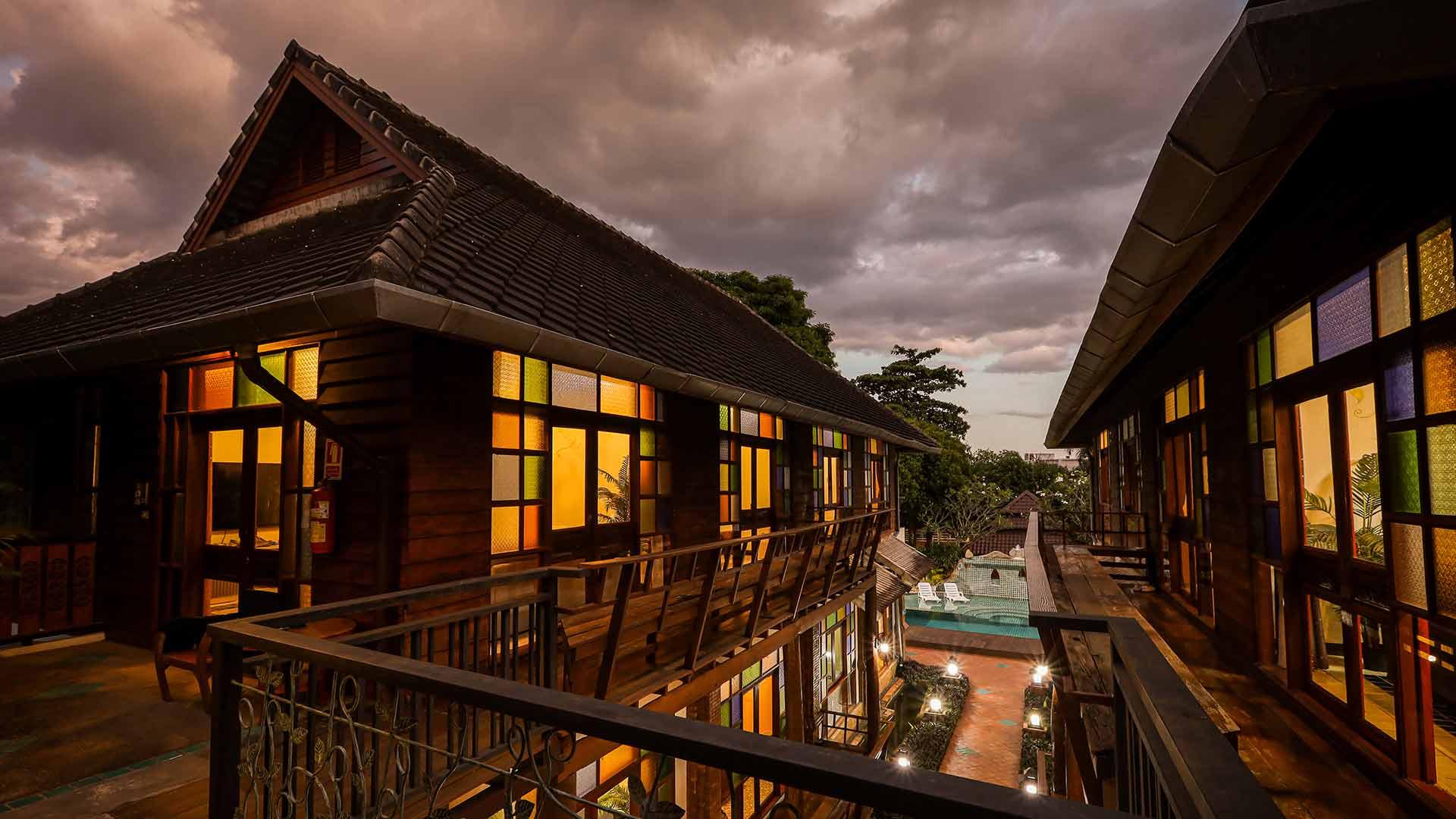
Jintara is a residential alcohol rehab in Chiang Mai, Thailand, with 32 staff for a maximum of 10 clients at any time, so therapy, nursing, and medical care stay closely coordinated. With so few people in the house, the clinical team meets every week to review every client and their treatment plan.
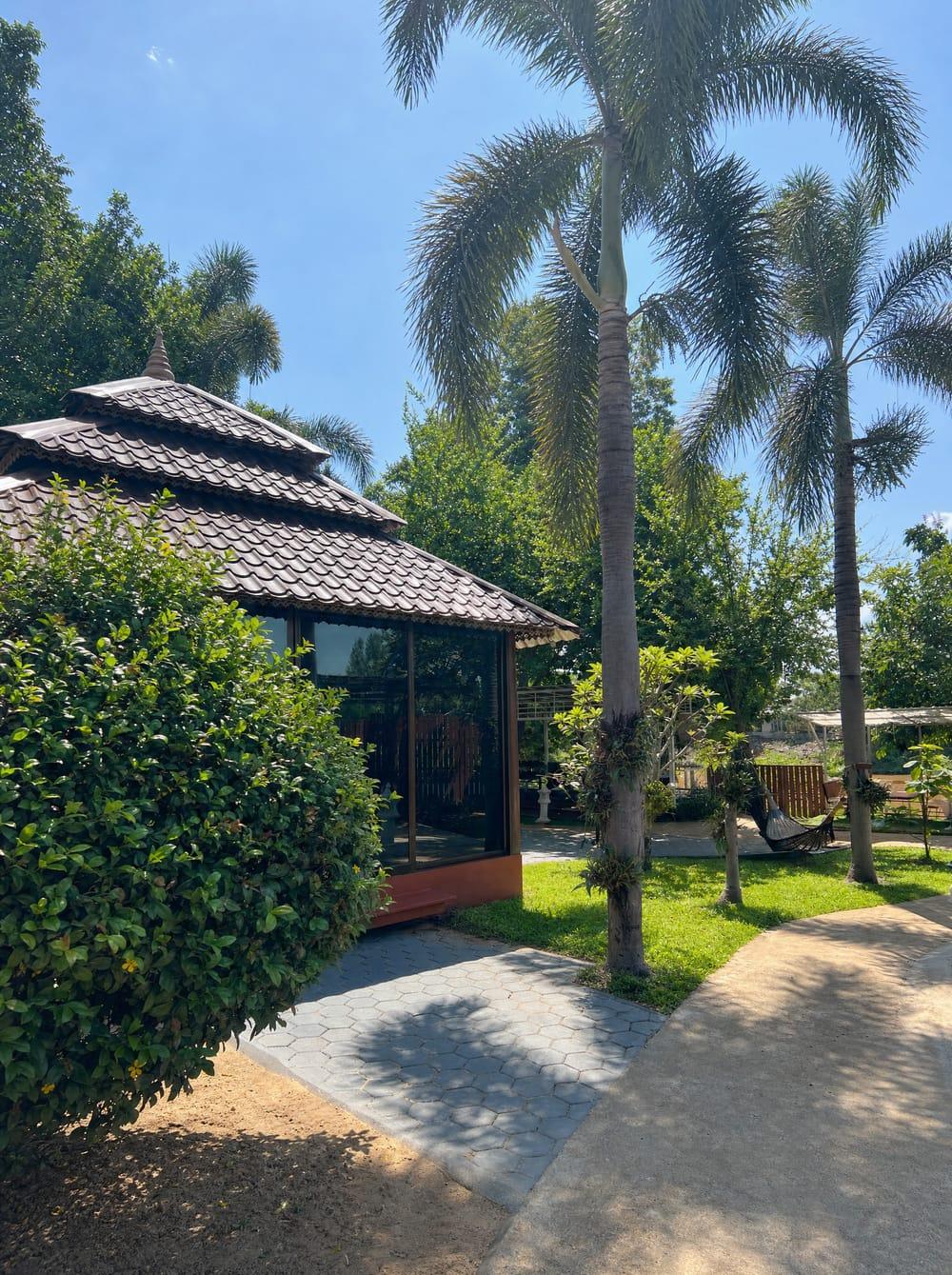
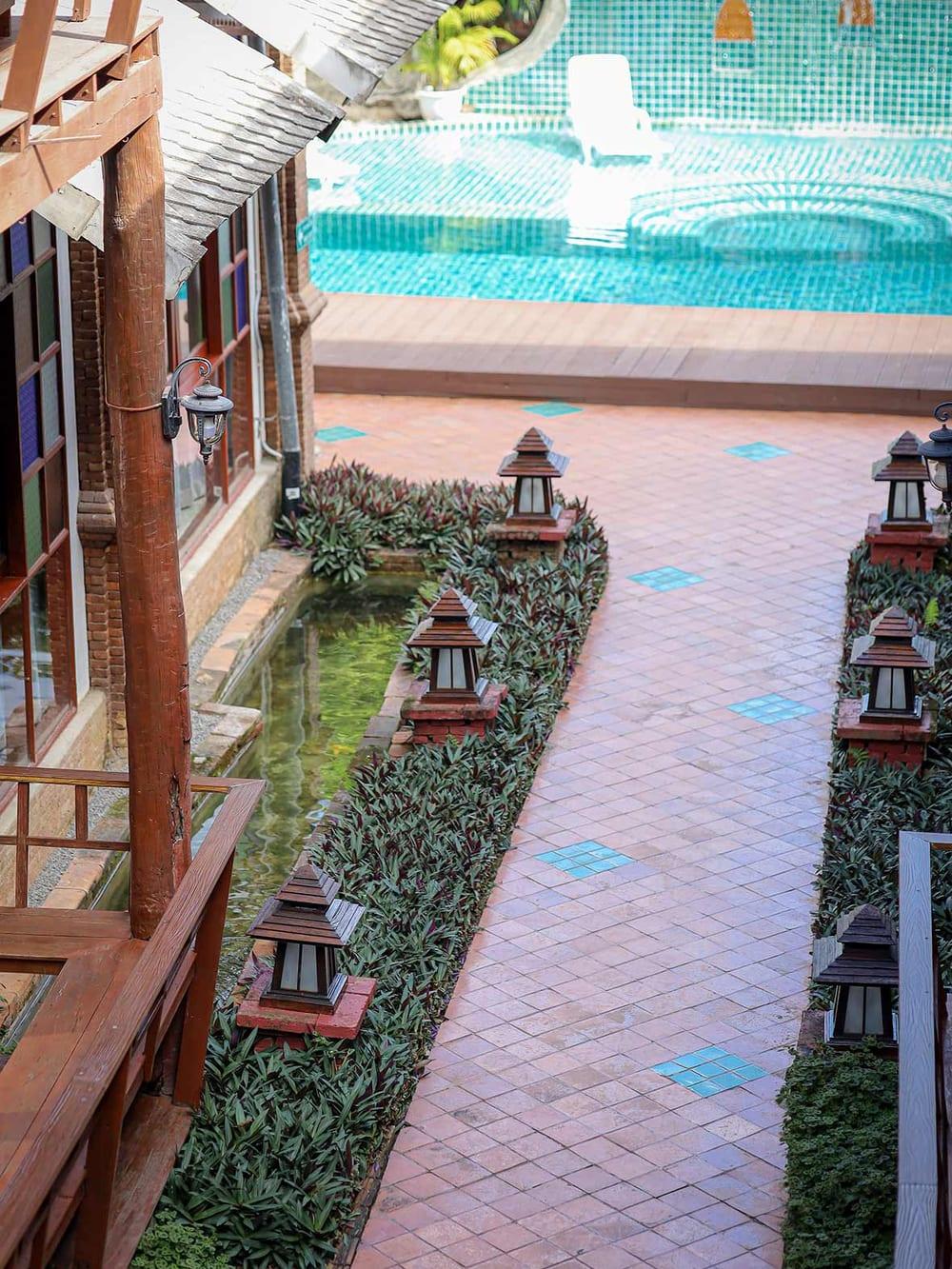
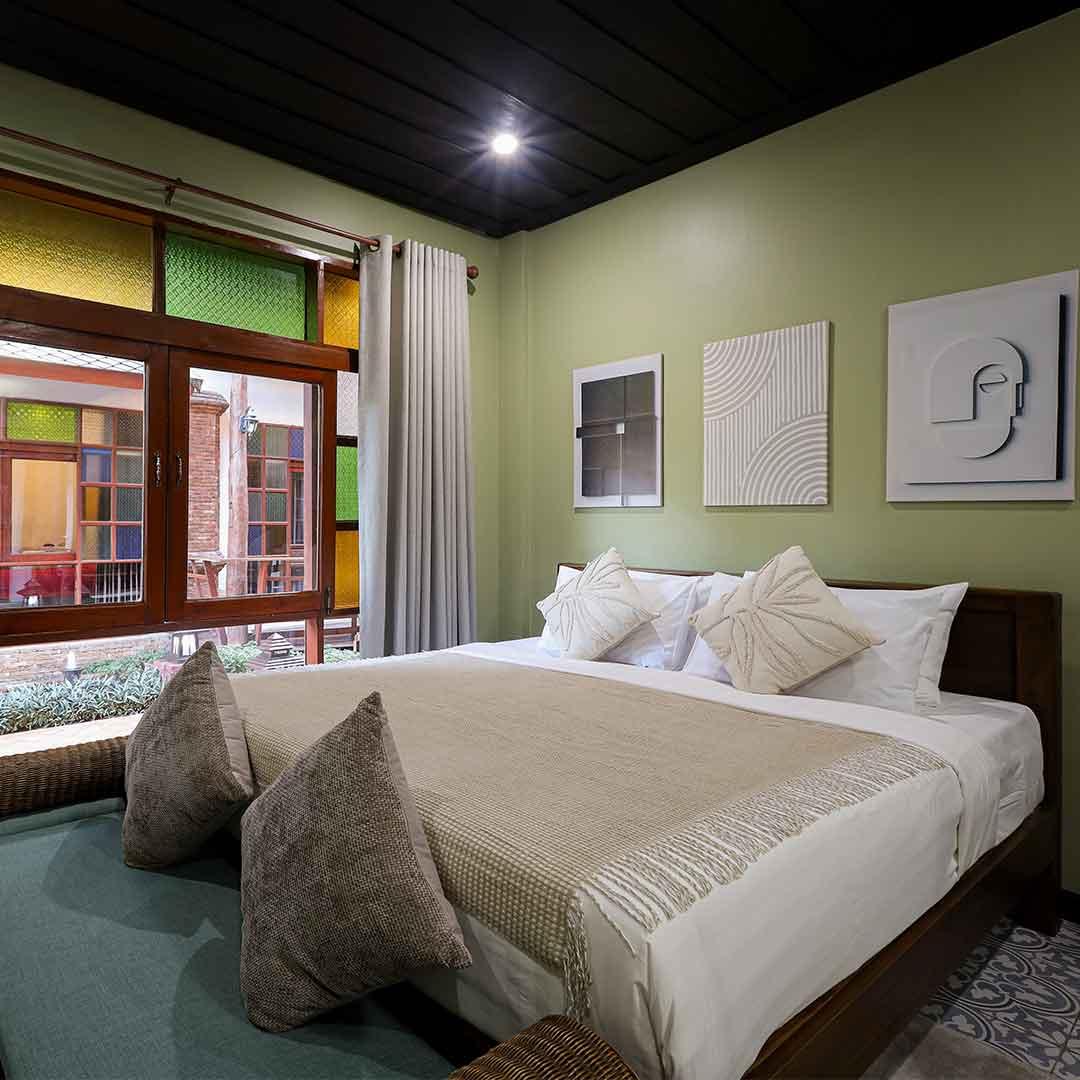
- Your own private villa: Every client has a private villa with a bedroom, a separate lounge, a kitchenette, an in-suite massage area and a large wet-room shower. You can look through the villas and grounds before you decide.
- Three therapists on site: Three therapists are on staff, full time on site, for ten clients. You have two individual sessions a week from the day you arrive, plus group therapy.

Why Come to Chiang Mai, Thailand, for Alcohol Rehab?
Alcohol rehab in Chiang Mai puts distance between you and the routines you drink in, without taking you far from hospital care. Jintara is on the southern edge of Chiang Mai, about 18 minutes by car from Chiang Mai International Airport (CNX) and about 20 minutes from the Old City. Its two partner hospitals, Bangkok Hospital Chiang Mai and Chiang Mai Ram, are both in the city.
- Entering Thailand: Under rules from 15 September 2026, passport holders from 60 countries and territories can stay visa-free for up to 30 days, the length of the program. An extension of up to 30 days is at the immigration officer's discretion, so check your own passport before you book.
- Going home: Aftercare planning starts in your first week. You go straight home after discharge, not on to a holiday in Thailand, and one-to-one sessions after you leave are available at extra cost.

What Happens When You Arrive in Chiang Mai?
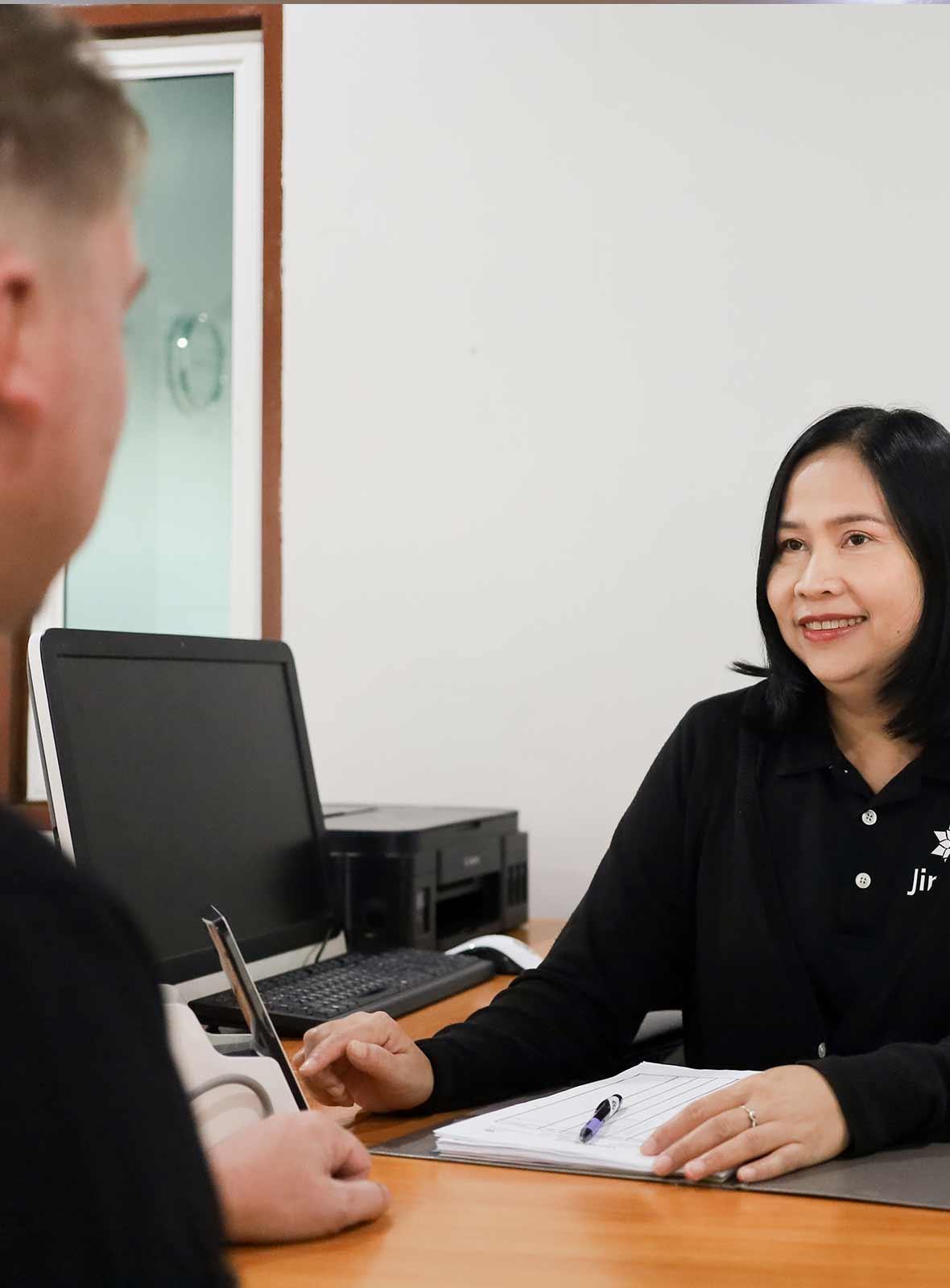
June, the client liaison, meets you at Chiang Mai airport. On arrival you have a breath test, a urine drug screen and a vitals check, your bags are searched, and your passport goes in the safe. Your psychiatric assessment happens on day one, and so does your first therapy session.
- Day one: Detox starts on site when it is clinically safe, with withdrawal scored on the CIWA-Ar scale. The psychiatric assessment is included in the fee.
- Your first night: A registered nurse is awake on site all night. We know the first night can feel frightening, and you will not be alone in it.
- Day two: In most cases, a health check at Bangkok Hospital Chiang Mai at Jintara's expense: a full blood panel, liver and kidney function, an EKG and a chest X-ray.
The rest of your first week at Jintara is set out day by day.




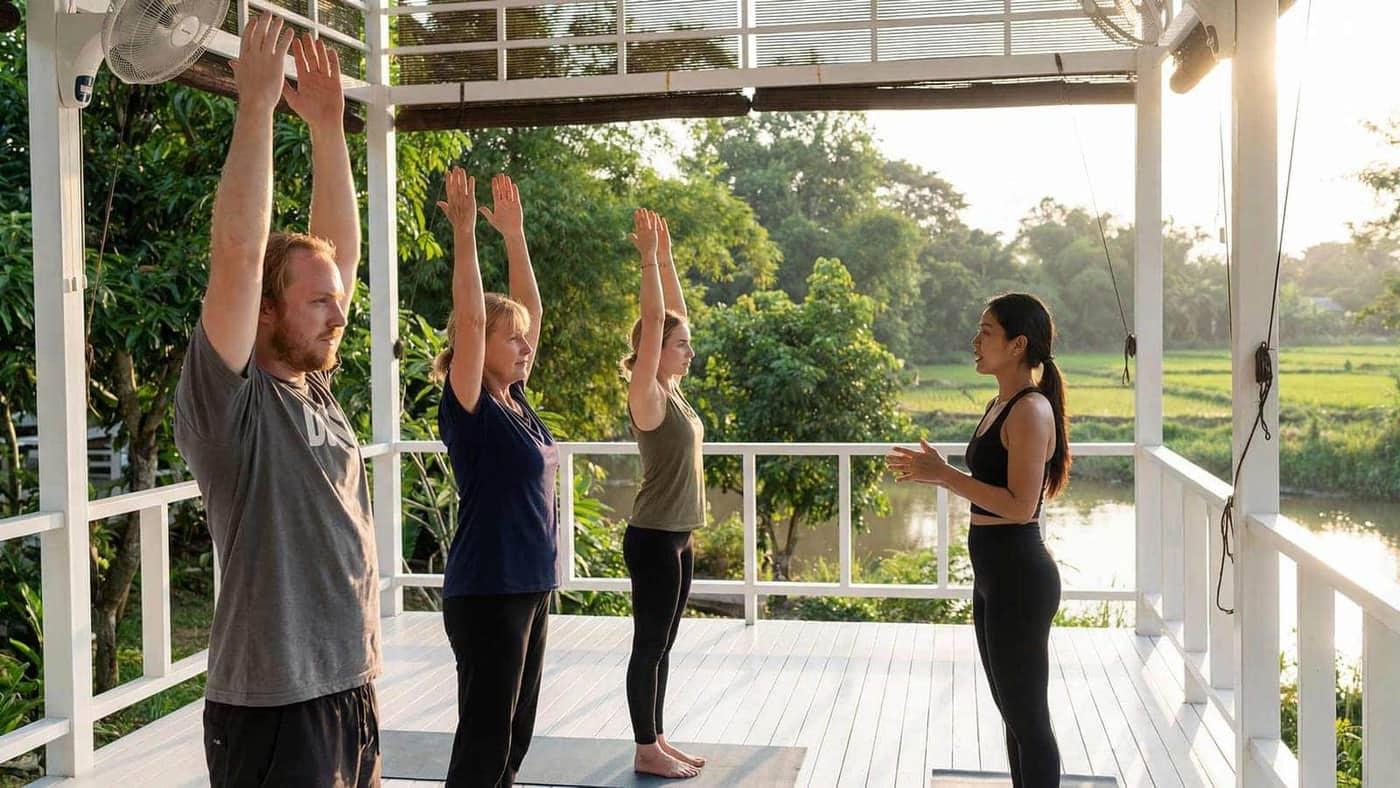
What Does a Typical Day Look Like in Alcohol Rehab at Jintara?
A day in Jintara's residential treatment program for alcohol in Chiang Mai follows a set rhythm: yoga or a walk first thing, group therapy in the morning, one-to-one therapy or exercise in the afternoon, and a quiet evening with staff around. Therapy starts on your first day, alongside detox, and nurses give every dose of medication at set times.
- Morning: Yoga or a walk from 7:30, Monday to Friday, then breakfast cooked to order. Nurses give morning medication at 8:30, and group therapy follows.
- Afternoon: One-to-one therapy or care planning on most afternoons. The gym runs on Monday, Wednesday and Friday as part of the fitness program, and one-to-one Muay Thai with an instructor is optional.
- Evening: Dinner at 18:30, then Uno or pickleball with the support staff. Curfew is at 10pm, and the house goes quiet.
Saturdays bring a supervised outing with a restaurant meal. Sundays have badminton, lunch out and time for self-care.
What Does Alcohol Treatment at Jintara Include?
Alcohol treatment at Jintara is a 30-day residential program in Chiang Mai that pairs medical detox on site with cognitive behavioral therapy, one-to-one sessions and group work. Therapy starts on your first day and runs alongside detox. Over 30 days, that adds up to 65 to 70 hours of individual and group therapy.
- CBT at the center: Cognitive behavioral therapy helps you spot what leads to a drink and practice other ways to respond.
- One-to-one sessions: Your individual therapy also uses motivational interviewing and skills from dialectical behavior therapy (DBT).
- Group therapy: Group therapy is a required part of the program, runs on a four-week rotation and uses SMART Recovery tools.
- Art, massage and meditation: Art therapy on Friday mornings, Thai massage twice a week, and one-to-one Reiki and meditation, all included in the program.
Jintara is not a 12-step program. AA and other peer groups are optional while you are here, and encouraged once you are home.
Who Is With You at Night During Alcohol Detox?
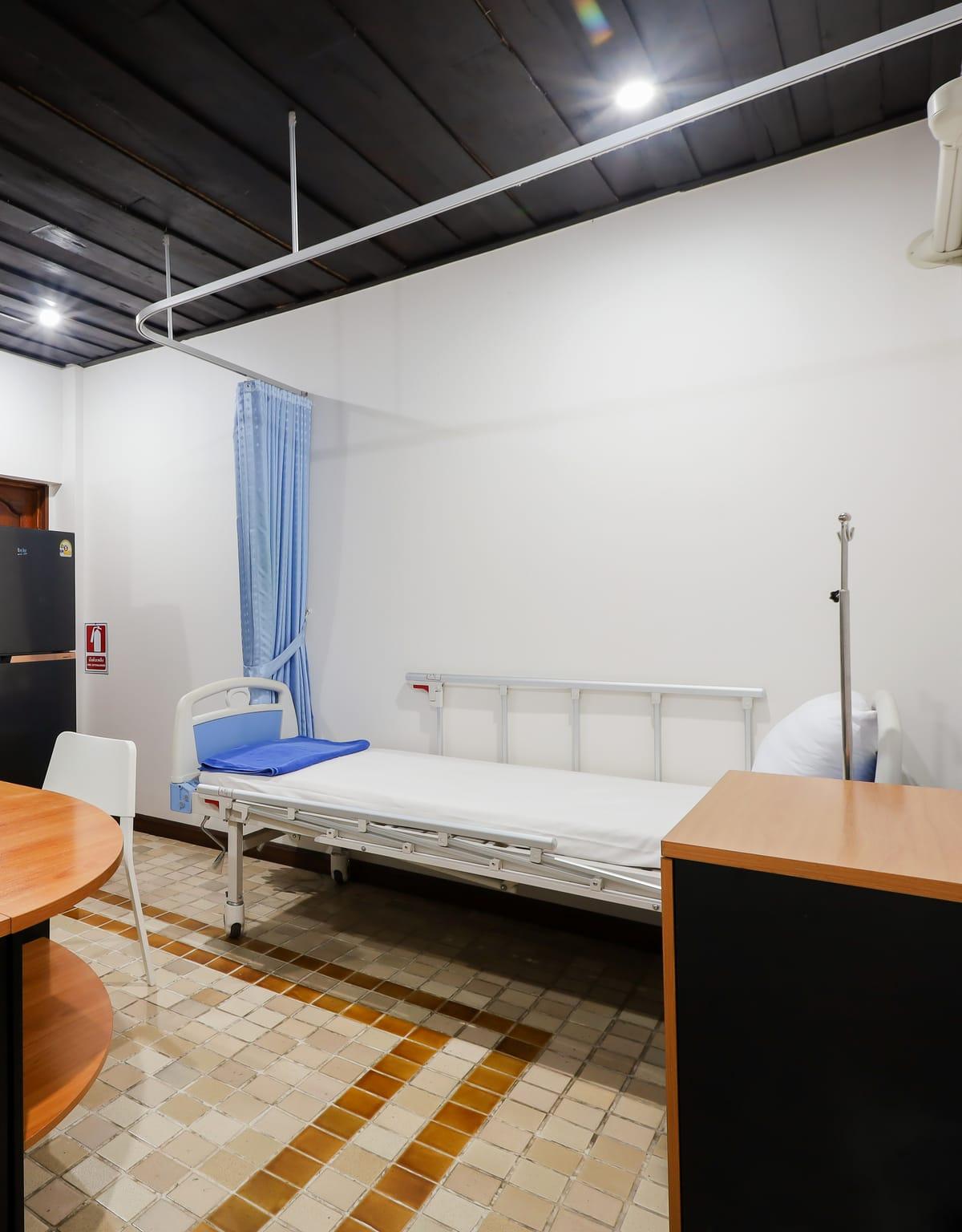
At Jintara in Chiang Mai, registered nurses are awake on site 24 hours a day, seven days a week. In early detox a nurse checks on you every one to two hours, through the night, and scores your withdrawal on CIWA-Ar, a standard alcohol withdrawal scale. Nobody can predict in advance how hard withdrawal will be, so close monitoring starts from arrival.
- Registered nurses only: Every nurse is a fully registered Thai nurse, recruited from major hospitals.
- Written down every day: Nurses write a daily report on each client, and the clinical team meets weekly to review every client and their treatment plan.
Therapy starts on your first day and runs alongside detox, not after it.
StatPearls Review
Alcohol withdrawal can progress to delirium tremens. Historically that complication carried mortality as high as 20 percent, and with treatment the rate is now around 1 percent. CIWA-Ar scoring and awake nursing help nurses spot early warning signs, so you can be moved to hospital fast if needed.
Is There a Doctor on Site, and What If You Need a Hospital?
There is no doctor on site at Jintara. Psychiatric oversight comes from addiction-specialist psychiatrists at Bangkok Hospital Chiang Mai and Chiang Mai Ram, our two partner hospitals. If you need a hospital, transfer is available at any hour, including two in the morning.
- Your medication: The partner-hospital psychiatrists oversee it. No client self-administers medication: a nurse gives, observes and writes down each dose, and our page on medication protocols used during alcohol detox explains how the taper works.
- If you need hospital care first: If you arrive needing hospital stabilization before detox, that hospital care is paid by you, separately from the program fee.
Jintara is certified against Thailand's national quality standard for drug treatment and rehabilitation facilities. Certificate 25/2569 is valid from 20 May 2026 to 19 May 2029, and the accreditation page sets out the full record.
How Long Does Alcohol Withdrawal Last?
If you drink every day, alcohol withdrawal can start 6 to 12 hours after your last drink. The highest risk of delirium tremens comes between 48 and 72 hours, and physical symptoms usually begin to ease from day five to seven. Timing differs from person to person, so treat these stages as a guide.
First symptoms
- Anxiety, restlessness and nausea
- Poor sleep, sweating and a fast heartbeat
Symptoms build
- Shaking hands and body tremors
- Risk of seizures after heavy, long-term drinking
The highest-risk window
- Delirium tremens (DTs) is most likely now
- Hallucinations and severe agitation can appear
Symptoms settle
- Physical symptoms ease and sleep starts to return
- Therapy carries on, because it started on day one
Stages follow StatPearls' review of alcohol withdrawal syndrome. Please don't go through alcohol withdrawal without medical supervision. Our alcohol withdrawal timeline goes through each stage in more detail.

Who Is Jintara's Alcohol Program For?
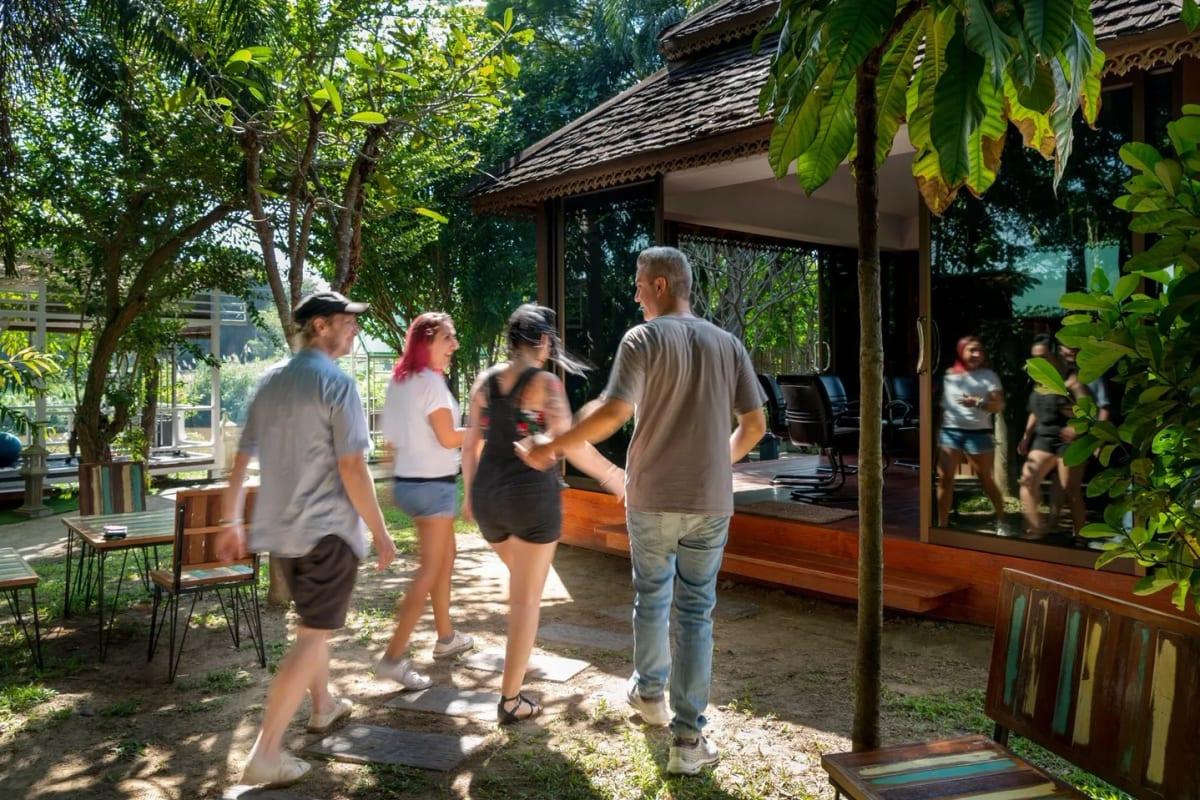
Jintara's alcohol program is for adults who want to stop drinking safely and work on why it took hold. Many also live with anxiety, depression or trauma. That is dual diagnosis: an alcohol problem and a mental health condition at the same time. Jintara treats both in one plan, starting with a psychiatric assessment on your first day.
- Drinking alongside anxiety or depression: anxiety and depression are screened on day one and built into your plan.
- Professionals who still hold it together: many clients have kept work and family going while drinking heavily, which is high-functioning drinking.
- Alcohol with cocaine, meth or other drugs: medical stabilization comes first, with alcohol withdrawal managed under nursing supervision, and meth and alcohol used together carry their own risks.
Some situations need a different kind of care first. In a medical emergency, call your local emergency number now. Jintara is adult-only, so anyone under 18 needs a youth service. Schizophrenia and unmedicated psychosis need a psychiatric setting. If that is your situation, you can still call Darren: if Jintara is not the right place, he will help you find one that is.
Who Will Know You Are Here?
Only the people you choose. Jintara handles your information under Thailand's Personal Data Protection Act, and nothing goes to family, an employer or anyone else without your written consent. There are no automatic updates to anyone.
- Your family: if you agree, Darren updates your family after you arrive and then about once a week. Written consent sets what they hear.
- Your work: Wi-Fi runs throughout, phones and laptops are allowed in your room, and set times for work calls keep therapy time protected.
Every enquiry goes to Darren, the owner, not a call center, and our guide to rehab confidentiality in Thailand explains what is shared and when.
How Long Is the Stay, and What Does It Cost?
The 30-day program costs USD 12,500. You pay in 30-day blocks, and we never take payment for more than 30 days at a time. After the first 30 days, optional extensions are billed week by week. Medical detox and the psychiatric assessment are included, and prescribed medication is the only extra. EMDR trauma work is kept for stays of 60 days or longer. The fee covers:
- Your own private villa, with Wi-Fi, in a calm, natural setting
- On-site medical detox, with registered nurses awake day and night
- The psychiatric assessment and, in most cases, the day-two hospital check
- Two individual therapy sessions a week plus group therapy, with master's-level therapists
- Art therapy, mindfulness, fitness and Muay Thai, with pool and gym access
- Supervised Saturday excursions
- Aftercare planning that starts in your first week
The deposit and the current 30-day block are non-refundable, so talk dates through with Darren before you book. If you are comparing quotes, our breakdown of private rehab costs in Thailand shows what each one should spell out.
How Do You Start at Jintara?
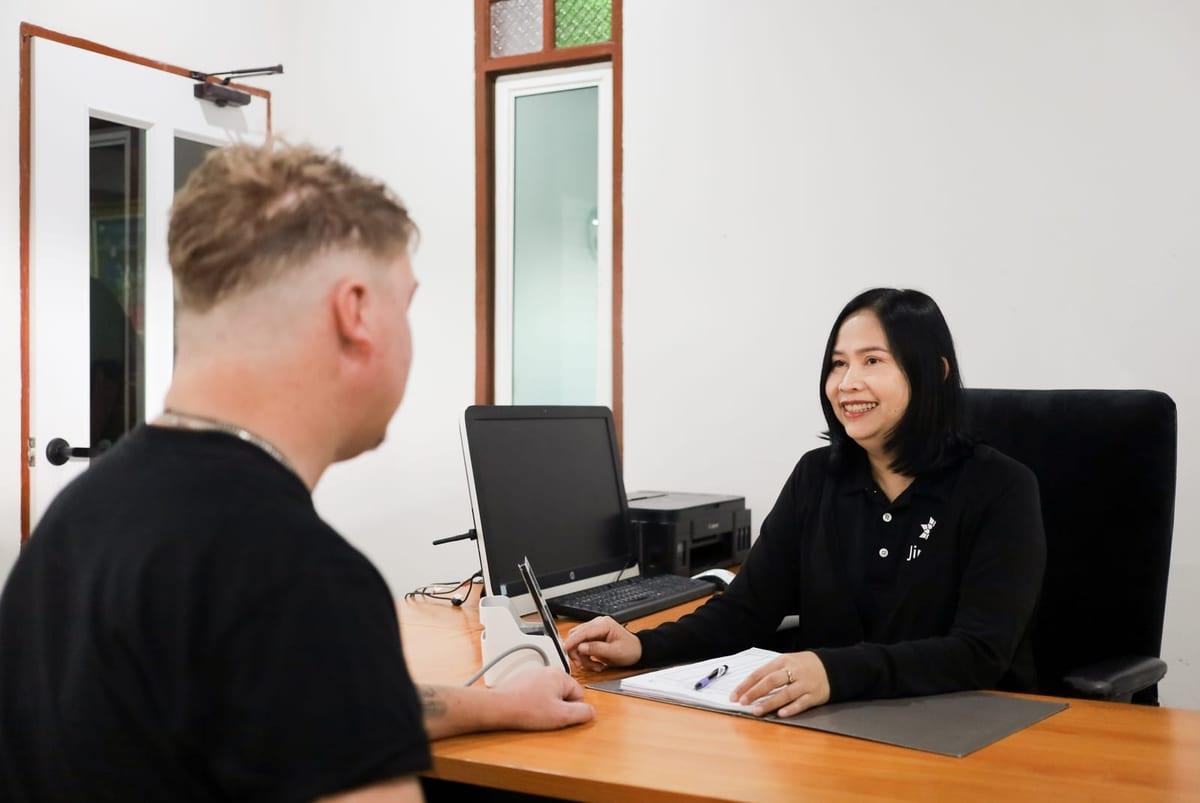
You start with a free, confidential call with Darren, the owner. Every enquiry goes to him, not a sales team, and the call covers your drinking, your health and your travel. NIAAA's alcohol treatment navigator recommends a clinical conversation like this before residential care, to confirm it is the right fit and safe. It helps to have ready:
- A list of medications and allergies
- Any recent medical records or mental illness diagnoses
- Travel documents (passport, visas)
- Past treatment services or outpatient treatment history
If you are reading this for someone else, a partner at 2am or a son or daughter far away, you can make the first call for them. Once they arrive, what you hear about their care depends on their written consent. The full admissions process is set out step by step.

Talk with Our Admissions Team
Your enquiry is confidential and goes only to our admissions team.
Common Questions About Alcohol Addiction Treatment in Thailand
Is detox safe at your alcohol rehab in Thailand?
Detox is supervised by registered nurses who are awake on site 24 hours a day, and every nurse is a fully registered Thai nurse. Nurses give and record every dose of medication, and transfer to hospital is available at any hour. Jintara is licensed by Thailand's Ministry of Public Health.
How long does residential treatment last?
The program is 30 days. At Jintara you pay in 30-day blocks and add extra time week by week, so nobody has to commit to 90 days on the first day. EMDR trauma work is only offered on stays of 60 days or longer.
What is included in the cost?
USD 12,500 for 30 days covers a private room, on-site medical detox, the psychiatric assessment, the day-two hospital check in most cases, individual and group therapy, fitness sessions, supervised Saturday excursions and aftercare planning. Prescribed medication is the only extra.
Do you treat drug addiction and alcohol addiction?
Yes. Our rehab treats alcohol addiction, drug addiction, cocaine dependency, and other drug dependencies. We provide evidence-based treatments, trauma therapy, and support co-occurring disorders. Among the people we treat most often are high-functioning drinkers, who keep up work and family responsibilities while drinking at clinically dependent levels. If work stress is part of it, our piece on stress-driven alcohol use patterns may sound familiar. Each client has their own care plan.
How does Jintara involve families?
With your written consent, Darren updates your family after you arrive and then about once a week, and families can join an optional online session with a counselor. Jintara does not offer family therapy. Our page on family involvement in alcohol recovery explains what families can do. We encourage families to understand how Jintara treats families as part of the recovery process and to create a supportive environment at home.
What happens when I leave?
Aftercare planning starts in your first week, so the plan for home is built while you are here. You go straight home after discharge rather than staying on for a holiday in Thailand. If you want to keep working with your therapist, one-to-one sessions after you leave are available at extra cost.
Will they find out how much my partner is really drinking?
Arrival includes a breath test and a urine drug screen, and in most cases the day-two hospital check includes liver and kidney function. What you hear afterwards depends on their written consent.
Do you offer outpatient treatment?
No, Jintara is residential only. Aftercare planning starts in your first week, one-to-one sessions after you leave are available at extra cost, and AA or NA is encouraged at home. Our comparison of inpatient vs outpatient treatment sets out the difference.
Is Jintara Rehab fully licensed and accredited?
Yes. Jintara is licensed by Thailand's Ministry of Public Health. Jintara is certified against Thailand's national quality standard for drug treatment and rehabilitation facilities. Certificate 25/2569 is valid from 20 May 2026 to 19 May 2029.
Can you treat mental health conditions alongside drinking?
Yes. We specialize in dual diagnosis treatment for mental illness such as anxiety, depression, and PTSD. Our clinical team collaborates with psychiatrists and mental health professionals so both are treated together. Evidence-based therapies like cognitive behavioral therapy and trauma therapy address both addiction and mental illness. For those taking antidepressants alongside alcohol, see our dedicated page on alcohol and antidepressants for what the combination means clinically and how we treat both together. When opioids are also involved, opioid detox uses a methadone taper; our page on the alcohol and opioid combination explains the risks.
Do you work with support groups?
Yes. Jintara is not a 12-step program. SMART Recovery is used, 12-step peer support is optional, and AA or NA is encouraged after you leave.
How do you handle trauma or mental health disorders?
Jintara has three EMDR therapists, and EMDR is for clients on stays of 60 days or longer, usually starting in the second month. On a 30-day stay, cognitive behavioral therapy and your two individual sessions a week work on what sits under the drinking.
Are there special programs for cocaine dependency or other drug dependencies?
We treat various forms of drug addiction, including cocaine addiction, ice and methamphetamine addiction, opioid misuse, prescription drug addiction, marijuana addiction, and kratom addiction treatment. Our page on cocaine and alcohol combined covers that mix. Each client has their own care plan.
Are the rooms and grounds comfortable enough for an adult coming from overseas?
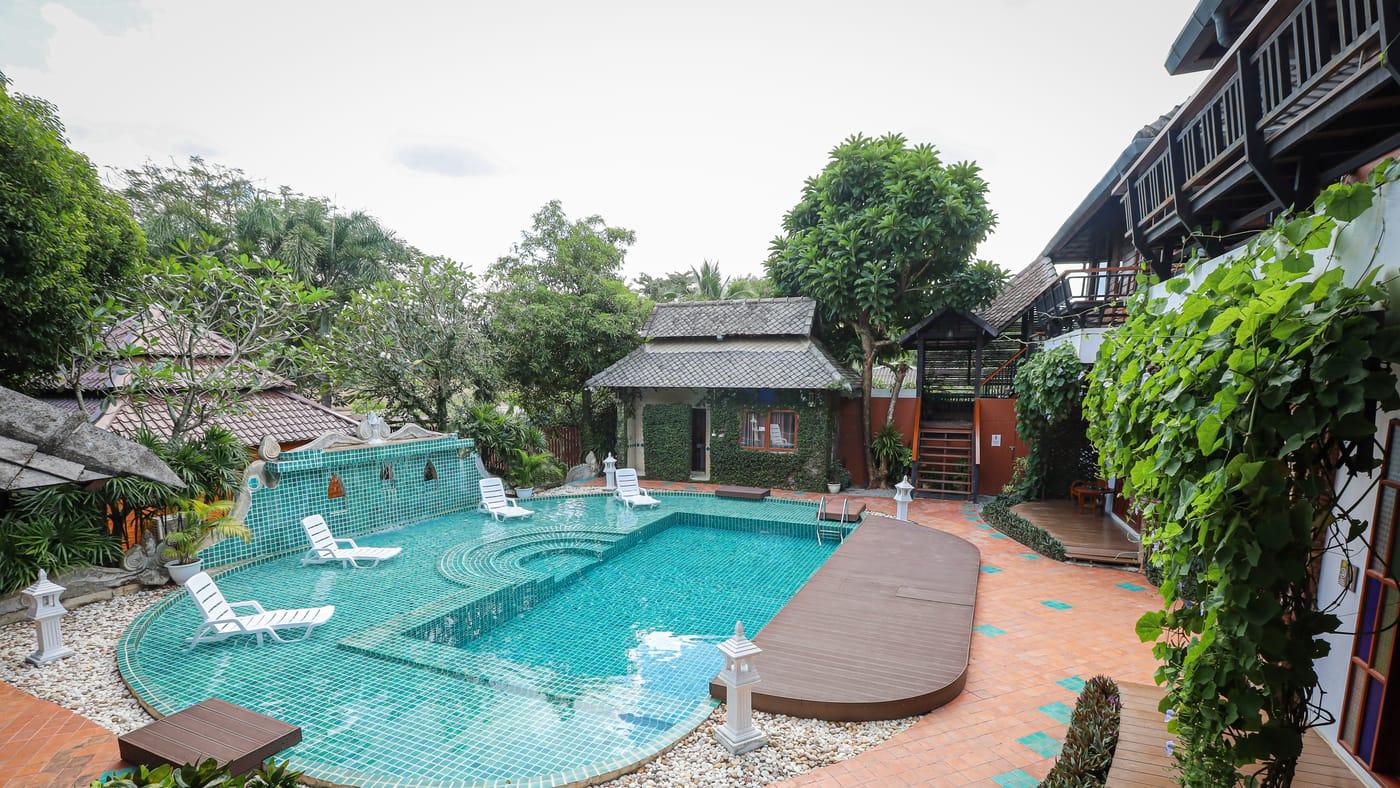
Rooms are private, the grounds are quiet, and meals are cooked fresh by a Thai chef, with halal, vegetarian, vegan, gluten-free and allergy needs covered. We focus on comfort and dignity so you can focus on recovery. Jintara is a clinical program in a calm setting, not a luxury resort.
Accreditation certificate
Jintara is accredited against Thailand’s national quality standard for drug treatment and rehabilitation facilities, jointly certified by the Healthcare Accreditation Institute, the body that accredits Thailand’s hospitals, with the Princess Mother National Institute on Drug Abuse Treatment and the Department of Medical Services, Ministry of Public Health. Certificate no. 25/2569, valid 20 May 2026 to 19 May 2029. To check it, ask us for a copy of the certificate, or confirm it by facility name with the Princess Mother National Institute on Drug Abuse Treatment or the Department of Medical Services.