

Inpatient vs Outpatient Rehab. Choosing the Right Level of Care
Inpatient and outpatient rehab are different levels of care, not competing products. How severity, home environment, and relapse history decide which one fits.
Written by Darren Lockie | Medically reviewed by Denise O'Leary | Published: July 30, 2026 | Last Updated: July 30, 2026
Most people arrive at this question already exhausted by it. Both models treat addiction and both are evidence-based, but they are not interchangeable. Inpatient treatment provides round-the-clock medical and therapeutic care in a residential setting. Outpatient treatment provides structured sessions while the person carries on living at home.
The honest answer is that the right choice depends on three things: how severe the addiction is, what the home environment is actually like, and what has already been tried. Jintara is an inpatient facility in Chiang Mai, and the admissions team will say plainly when outpatient is the better clinical fit for someone. This guide sets out how the two models differ and what genuinely decides between them.
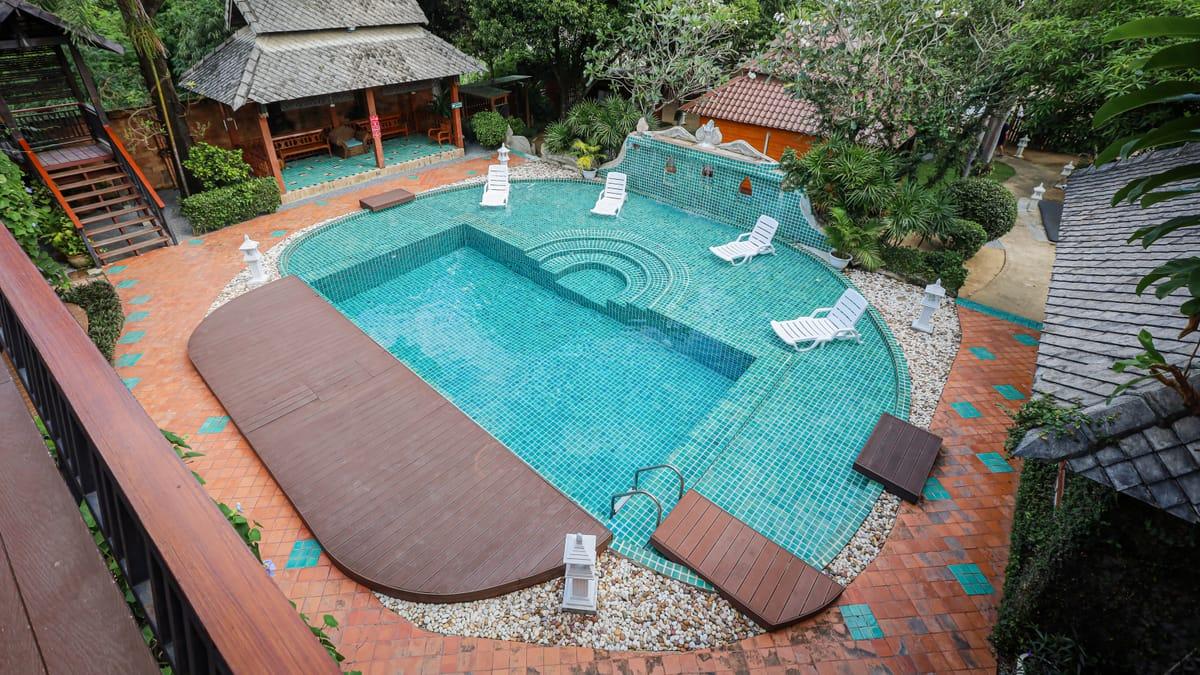
Inpatient and outpatient rehab differ in one fundamental way.
Inpatient rehab is residential treatment where the client lives on site full time. The person receives continuous medical monitoring, structured therapy, and accommodation within the facility for the length of their stay. Outpatient treatment works differently, with the person attending sessions several times a week and returning home each day. Neither is universally better. The clinical question is which model fits the person's situation.
The core difference is the level of containment. An inpatient setting removes the person from the triggers, relationships, and environments that maintained the addiction, while an outpatient setting asks them to manage all of it while treatment is still under way. For someone with a stable home, a mild to moderate addiction, and no medical detox needs, outpatient can be entirely appropriate. For someone with a severe addiction, an unsafe home, a history of relapse, or a substance that requires supervised withdrawal, inpatient is the clinically indicated option.
Duration also differs. Inpatient programs typically run 28 to 90 days, and the standard Jintara program is 30 days with 8-week and 12-week options. Outpatient programs run for 3 to 12 months, with sessions lasting 3 to 20 hours per week depending on intensity.
Medical detox is the clearest indicator that inpatient care is required.
When someone is physically dependent on alcohol, benzodiazepines, or opioids, withdrawal is not simply uncomfortable. It is medically dangerous. Alcohol withdrawal can cause seizures and delirium tremens, and benzodiazepine withdrawal carries its own risk of serious complications without supervision. Opioid withdrawal is rarely fatal but causes severe physical distress that makes an unsupported detox very hard to complete.
Jintara provides on-site medical detox with 24/7 awake nursing staff rather than on-call nurses. Vital signs are monitored regularly during active withdrawal, and the alcohol treatment program uses the Clinical Institute Withdrawal Assessment for Alcohol, Revised (CIWA-Ar) to grade severity and calibrate medication. Work by Sullivan JT et al., 1989 established that scale, and it remains the standard instrument for grading alcohol withdrawal. SAMHSA's guidance sets out the detailed clinical picture of withdrawal from specific substances alongside the monitoring each one requires. Opioid withdrawal is tracked using COWS, the Clinical Opiate Withdrawal Scale, and medication is prescribed and overseen by an addiction psychiatrist from Bangkok Hospital Chiang Mai.
Outpatient programs cannot safely manage a medical detox. If the substance involved requires supervised withdrawal, the person needs inpatient care first. That is not a preference or an upsell. It is a clinical requirement that protects the person and the people around them.
“We tell people what we specialise in, we tell them what we don't do, and we refer them to rehabs that might be a better fit.
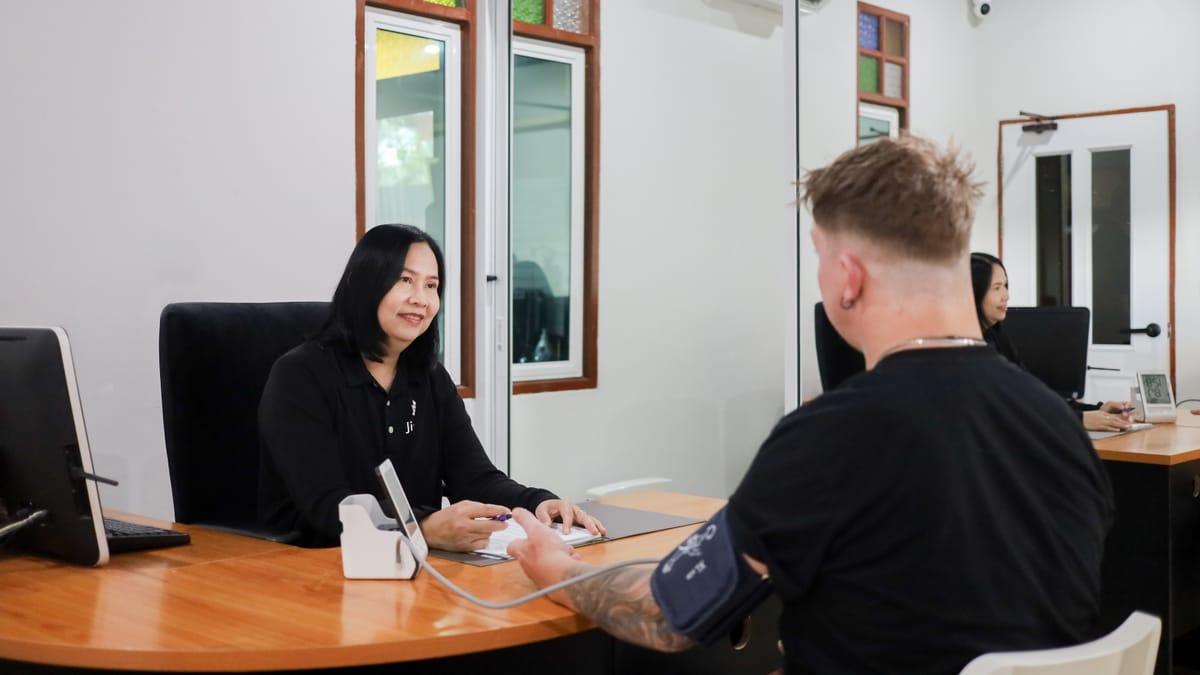
Outpatient treatment has a defined role for the right candidate.
Outpatient treatment is appropriate when the addiction is mild to moderate, the home environment is stable and free from active substance use, the person has strong social support, and no medical detox is required. Intensive outpatient programs, usually shortened to IOP, run 10 to 20 hours of structured sessions per week. Standard outpatient runs 3 to 5 hours a week and generally suits continuing care after a residential stay.
The risk of outpatient for a severe addiction is not that it fails in principle. The risk is that it places the full weight of managing triggers, cravings, and relationships on the person before they have built the tools to carry it. Both models sit on a recognised continuum of care, and SAMHSA's clinical guidance on intensive outpatient treatment describes how a person is matched to a level of intensity and moved between levels as their needs change. For someone with a longstanding addiction or a history of relapse, the structure of inpatient care is a protective factor rather than a preference.
Outpatient is also commonly used as a step-down phase after inpatient. Someone who completes a 30-day residential program and returns home may continue with weekly sessions, SMART Recovery meetings, or ongoing therapy with a clinician at home. At Jintara the aftercare plan is built during treatment rather than at discharge. The two models are not rivals. They work in sequence.
Cost reflects what each model provides.
Inpatient rehab costs more than outpatient because accommodation, meals, 24/7 staffing, medical monitoring, and therapy all sit inside one fee. Jintara's 30-day inpatient program starts from USD 12,500, and the full breakdown of what that fee includes is published rather than quoted case by case. Outpatient costs less per week but runs for a longer period, and it does not include the environmental separation that often makes early recovery possible in the first place.
Comparison with home-country residential care is where the picture gets clearer. A program with this staffing ratio in Australia, the United Kingdom, or the United States typically runs two to three times higher, and that gap is a labour-cost difference rather than a difference in clinical quality. The equivalent 30-day program in Australia runs USD 18,000 to 20,000. Our comparison of what private rehab actually costs sets out the Thailand program fee alongside what is and is not included. Jintara's fee covers a 3.2 to 1 staff-to-client ratio, on-site medical detox, three full-time therapists with post-graduate qualifications, and a Day 2 medical workup at the facility's expense.
The question is not which model is cheaper. The question is whether the level of care matches the severity of the addiction. Choosing outpatient for a condition that needs inpatient is not a saving. It is a clinical mismatch that raises relapse risk and often leads to a second, more expensive attempt.
Severity, environment, and history are the three deciding factors.
Three variables decide which model is appropriate for any given person.
- Addiction severity Someone with a long history of heavy use, physical dependence, or several previous treatment attempts is a stronger candidate for inpatient. Someone with a shorter history and no physical dependence may be well suited to outpatient.
- Home environment If the person lives with others who are using, or the home is high-stress or unsafe, outpatient cannot provide the separation that early recovery requires. It is also the hardest of the three to assess honestly about your own home.
- History of relapse Each relapse on a lower level of care is information. It usually indicates that the level of support available was not enough to hold the recovery, and that more clinical weight is needed.
If any one of these three points toward inpatient, that is usually the right call. Jintara treats a maximum of 10 clients at any time, supported by around 32 staff, and how the facility is set up reflects a program built around adults over 30 in high-functioning roles who want small group sizes and clinical depth. If that profile fits, an honest conversation will confirm it quickly, and if it does not, the team will say so and refer to a more appropriate service.
Frequently asked questions
- What is the main difference between inpatient and outpatient rehab? Inpatient rehab means living at the treatment facility for the length of the program, typically 30 to 90 days, with 24/7 clinical and medical support. Outpatient rehab means attending structured sessions several times a week while continuing to live at home. The key difference is the level of containment and the support available outside scheduled sessions.
- When is inpatient rehab medically necessary? Inpatient care is medically necessary when someone is physically dependent on alcohol, benzodiazepines, or opioids, because withdrawal from these substances needs supervised management. Where that applies, medical detox is the starting point rather than an optional extra. It is also the appropriate choice when the home environment is unsafe, when there is a history of relapse on outpatient care, or when daily life without clinical structure is not sustainable early in recovery.
- Can outpatient rehab work for serious addiction? Outpatient can be effective for mild to moderate addiction where the home environment is stable and no medical detox is required. For severe addiction or physical dependence, it does not provide enough containment or medical oversight. In those cases the recommended clinical approach is to start with inpatient and step down to outpatient afterwards.
- What is an intensive outpatient program? An IOP provides 10 to 20 hours of structured sessions per week, typically including group therapy, individual counselling, and psychoeducation. It is more intensive than standard outpatient, which runs 3 to 5 hours a week. It is often used as a step-down from residential care, or for someone whose addiction is moderate and whose home is stable.
- How much does inpatient rehab cost compared to outpatient? Inpatient costs more per month because accommodation, meals, 24/7 staffing, and medical monitoring sit inside the fee alongside therapy. Jintara's 30-day inpatient program starts from USD 12,500, while the equivalent program in Australia runs USD 18,000 to 20,000. Outpatient costs less per week but runs for a longer period and does not include the same level of medical support.
- Why is Jintara inpatient only? Jintara was built on the view that serious addiction needs a residential environment, continuous medical oversight, and a small client group where nobody is overlooked. With a maximum of 10 clients, around 32 staff, and three therapists on site, the model is built around depth of care rather than volume. Jintara does not offer outpatient sessions and will refer elsewhere when someone's needs are better met by a different service.
- What happens after inpatient rehab ends? Most people continue with some form of outpatient support after a residential program, whether that is weekly therapy, SMART Recovery groups, or a structured aftercare plan agreed before discharge. At Jintara that planning begins in the first week of treatment rather than the last. The aim is that the person leaves with a written plan and named contacts rather than a discharge date.
- How do I know which one I need? Start with the three factors above: severity, home environment, and relapse history. If any one of them points toward inpatient, that is usually the answer. An assessment call will confirm it quickly, and a facility worth trusting will tell you when a different level of care is the better fit for your situation.

Talk with Our Admissions Team
Your enquiry is confidential and goes only to our admissions team.