
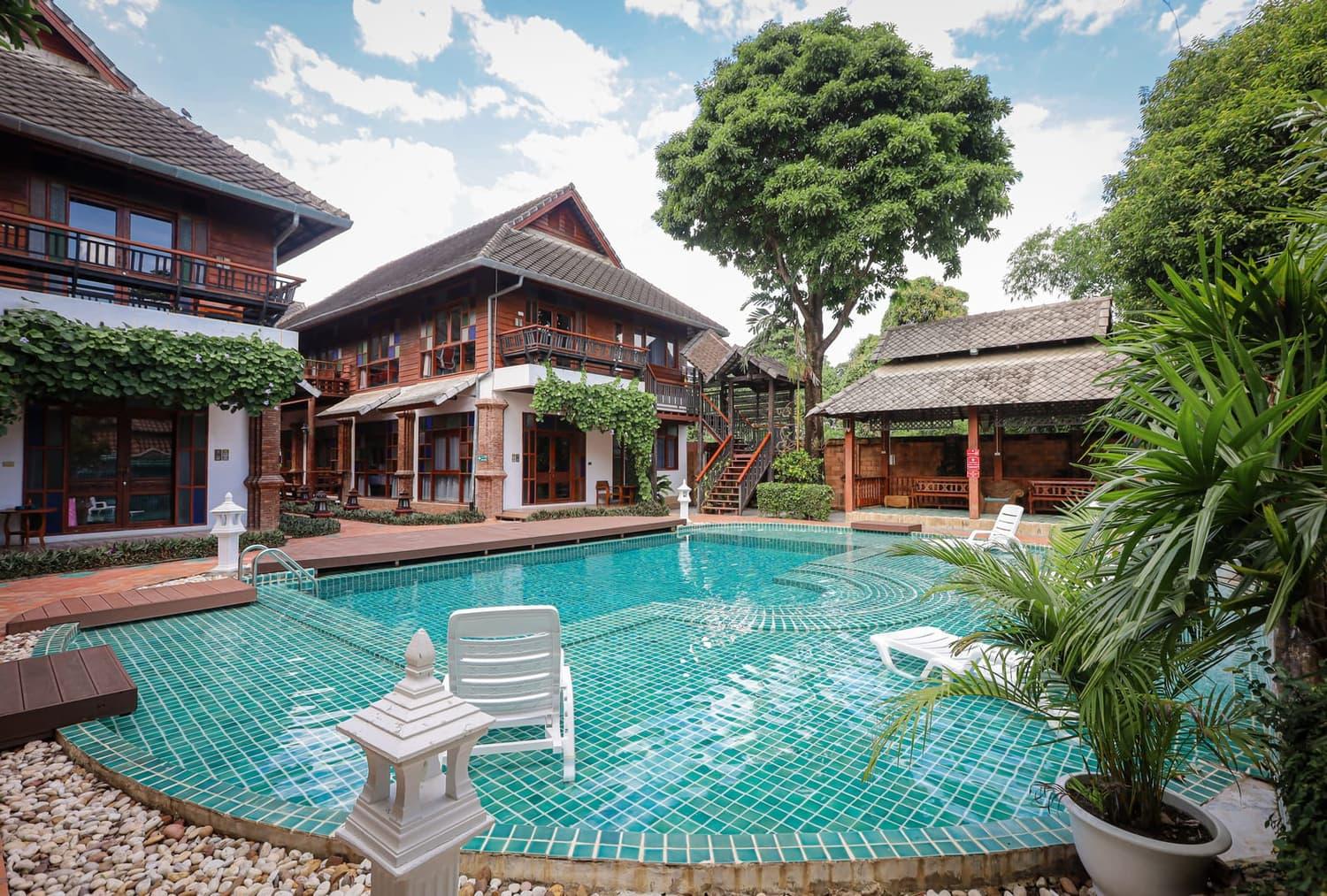
What Private Rehab Costs in Thailand. A Complete Breakdown
Private rehab in Thailand runs from about $3,000 to $20,000 or more. What Jintara's $12,500 30-day program includes, what costs extra, and how to compare.
Written by Darren Lockie | Medically reviewed by Denise O'Leary | Published: May 14, 2026 | Last Updated: October 21, 2026
Most people researching private rehab compare headline prices without knowing what those prices cover. Jintara's 30-day residential program costs $12,500 USD as one all-inclusive figure. Because cost tracks local labour rates, how the three main Southeast Asian options differ is the wider frame for any single quote. This article breaks down exactly what that includes, what costs extra, and how to evaluate whether any facility's price reflects its clinical model.
- The 30-day fee is all-inclusive. No surprise add-ons for core care.
- A full Day 2 hospital workup is included at Jintara's expense.
- 24/7 awake nursing is standard. Not on-call. Not sleeping shifts.
- Three on-site therapists. Maximum 10 clients. No diluted group care.
An all-inclusive rehab price covers more than a bed and meals.
An all-inclusive rehab price covers every clinical service a client receives during treatment. That means no itemized billing for essential care, no surprise charges for psychiatrist consultations, and no premium tier for services the clinical protocol considers standard.
At Jintara, the $12,500 program fee includes:
- The psychiatrist-led intake assessment on arrival
- The full Day 2 hospital medical workup
- 24/7 awake nursing throughout the stay
- All group and individual therapy sessions
- Medical detox protocol and medication management during detox
- Holistic services including yoga, massage, meditation, and fitness
- All excursions and outdoor therapy activities
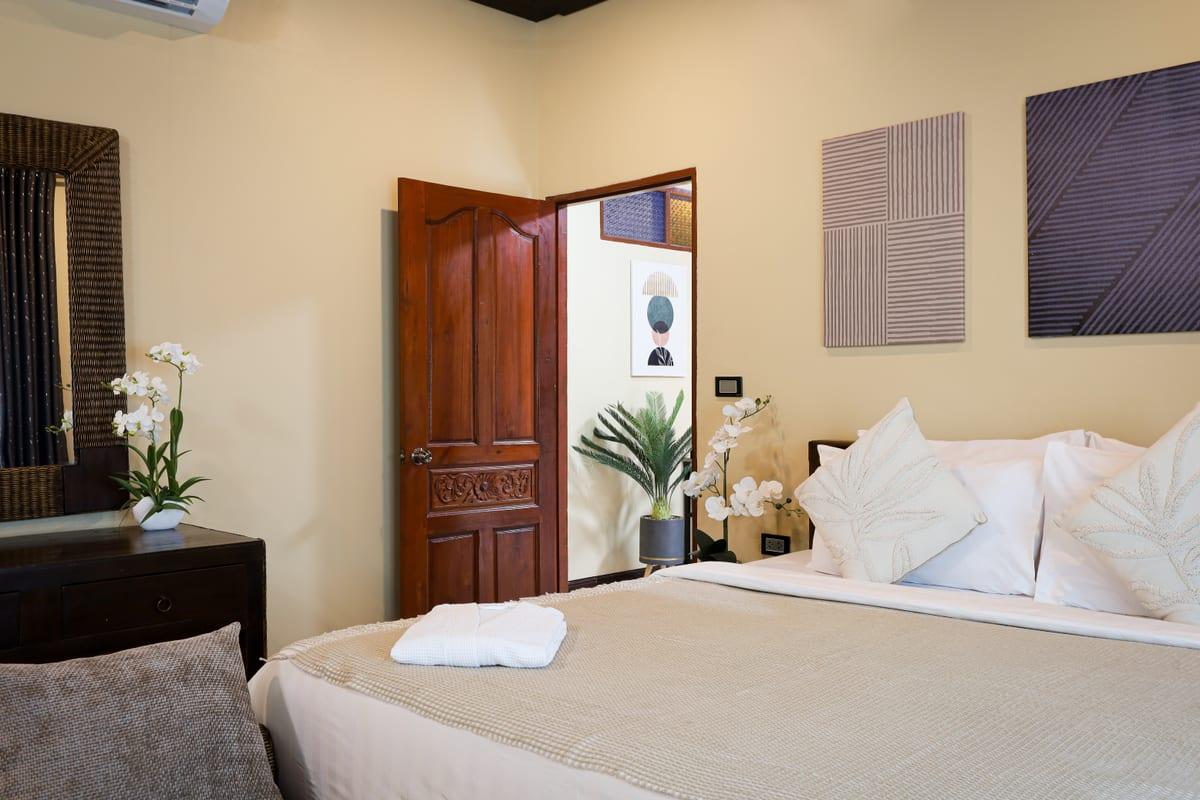
- Private room accommodation
- All meals
- Airport transfers
The list of what costs extra is short: prescription medications, where required, are billed separately because not every client needs them and Jintara does not charge for services that are not used. If a client arrives in such poor condition that hospital stabilisation is needed before admission, that transfer cost is also the client's responsibility. Everything else is included.
This model exists because Darren Lockie, Jintara's founder, operates on a principle of pricing transparency. "We've just done a lousy job communicating. I think we've been a little too humble about what we offer, given what we actually provide," he said. NIAAA's Core Resource on Alcohol documents the clinical components that define evidence-based alcohol use disorder treatment, grounding what an all-inclusive model is expected to cover. The on-site medical detox protocol is part of that offer. It is not a paid upgrade.

The Day 2 hospital workup is included in the fee because Jintara treats safety as a baseline.
Every Jintara client receives a full hospital medical workup on the second day of their program, at the facility's expense. The workup covers a complete blood spectrum, liver function, kidney function, EKG, and chest X-ray. Jintara absorbs this cost for every client.
The reason is clinical: people entering treatment for alcohol or drug dependence frequently have undiagnosed organ damage, cardiac anomalies, blood abnormalities, or other conditions that affect how detox is managed. "Someone that's been drinking heavily, there's probably going to be some fatty liver or some liver enzyme issues," Darren explained. "We might pick up bigger problems that need a bit more medical care around the heart or around the liver. We think the medical test is important, and done in a timely manner."
Conditions identified at Day 2 include cardiac arrhythmias, elevated white or red blood cell counts, liver enzyme abnormalities, and kidney stress indicators. What happens during the first week of treatment is shaped by what the workup reveals. In some cases the findings require follow-up with specialists in Chiang Mai.
A facility that does not conduct this assessment is applying a different standard of clinical risk management at the point where risk is highest.
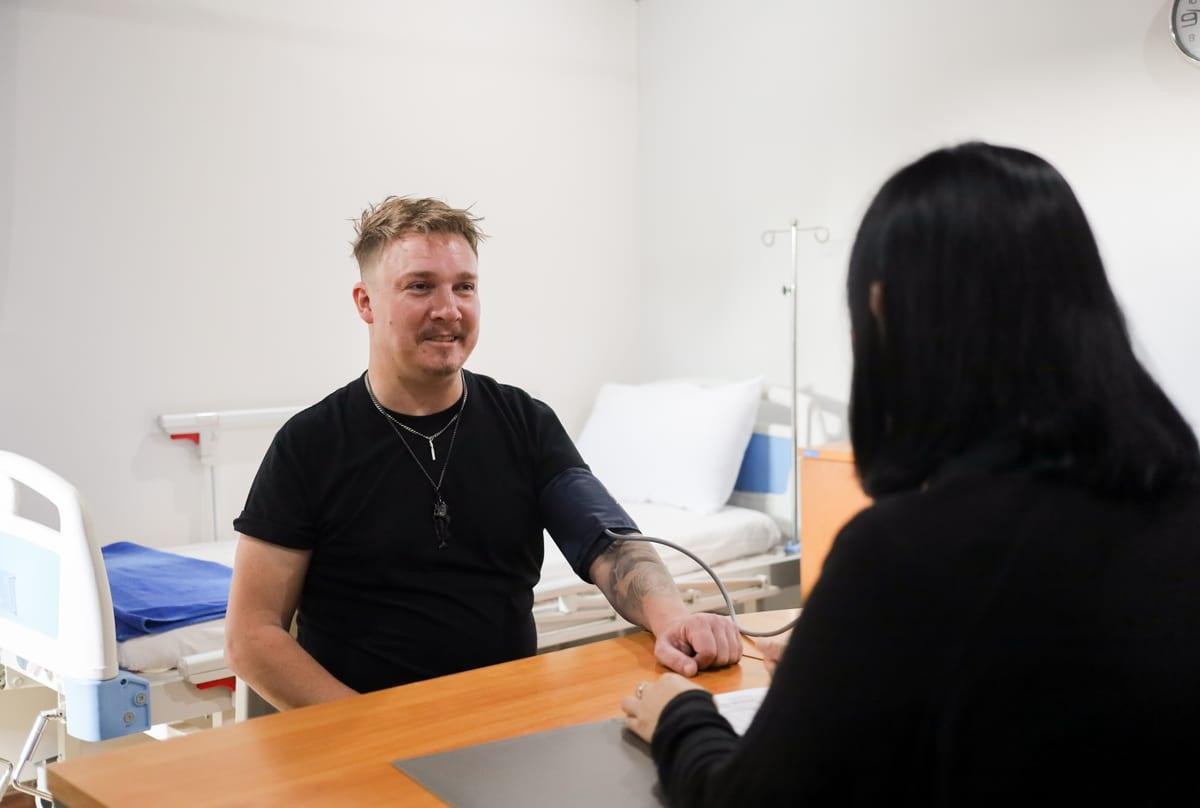
Awake nursing around the clock is a staffing cost most facilities do not absorb.
Twenty-four-hour awake nursing is a fixed part of the Jintara model. Registered nurses are on duty and awake at all times. They are not on-call. They do not work sleeping shifts. During the first days of detox, clients are checked every one to two hours, with vital signs documented and daily reports provided to management.
This level of nursing supervision costs more to provide than the industry alternative, which is typically a single nurse on day shifts with on-call cover overnight. "Most other rehabs don't have nursing teams. They may have one nurse during the day who comes for a few hours," Darren said. "They're not fully awake, fully registered nurses observing clients proactively."
The clinical consequence of that difference is significant during alcohol and benzo withdrawal, where neurological events can escalate within hours. For that phase, SAMHSA TIP 42 provides the clinical framework for monitoring co-occurring conditions during detox. Those protocols, including the 24/7 nursing model and detox monitoring cadence, were independently assessed against Thailand's national quality standard for drug treatment and rehabilitation facilities in 2026. The assessors confirmed them as meeting it.
Jintara holds working transfer relationships with Bangkok Hospital Chiang Mai and RAM Hospital to manage any situation that exceeds facility-level care. As Darren Lockie, founder and CEO, puts it: "If we didn't have these safeguards in place, I don't think I'd sleep very well. The risk to the client is first and foremost. It's not even a question I would ever pose myself." The 24/7 nursing model is not a premium add-on. It is a baseline safety requirement.
Key Takeaway
"It's not even a question whether we'd have these pathways and escalations and relationships with the hospital. It's something that ethically needs to be done." Darren Lockie, Founder and CEO, Jintara Rehab
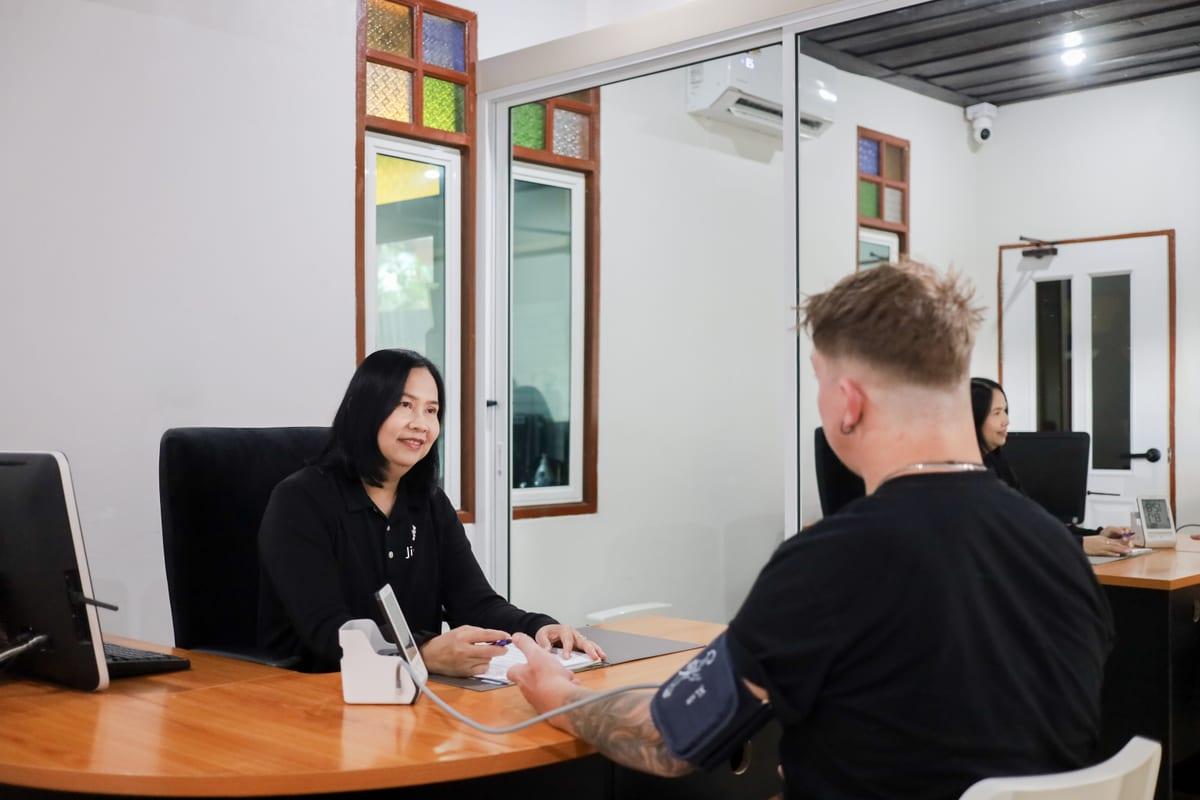
Staff ratio determines the depth of care each client receives.
The staff-to-client ratio at a private rehab sets the ceiling on how much individual attention any one client can receive. Jintara employs 32 staff to support a maximum of 10 clients at any time, a ratio of 3.2 to 1. Within that team, three therapists hold post-graduate qualifications, each with a master's degree in counselling, psychology, or a related clinical field.
Each client receives individual therapy sessions, not as a scheduled exception to group programming, but as a standard component of the treatment plan. Trauma-focused therapy, including EMDR delivered one to one by one of Jintara's three EMDR therapists, is available to every client whose clinical assessment identifies it as appropriate.
The therapist-to-client ratio at facilities with 20 or 40 beds and similar staffing is structurally different. It is not possible to deliver the same depth of individual clinical engagement across a large census. This is not a criticism of larger facilities. It is a statement about the economics of care. Smaller client numbers cost more per person to serve, and that cost appears in the program fee.
A maximum of 10 clients is a deliberate constraint. The Jintara team is sized around that number. It is what makes the model work clinically.
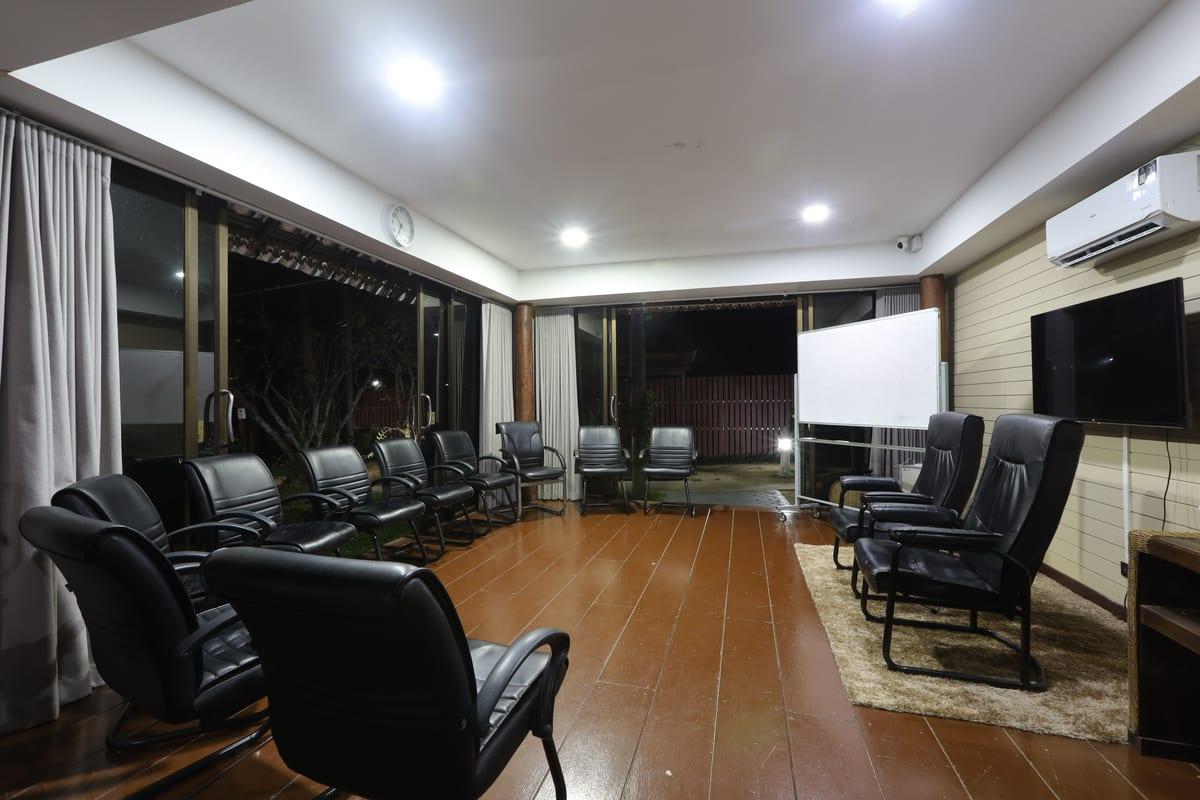
The list of what costs extra at Jintara is genuinely short.
Three items fall outside the Jintara program fee, and all three are listed here. Prescription medications, where the treating psychiatrist determines they are clinically necessary, are billed separately at cost. Hospital transfer costs apply in the rare case that a client arrives in a condition that requires stabilisation before admission rather than at the facility. Any optional post-discharge services, such as continued one-on-one therapy after program completion, can be arranged directly and are not included as standard.
Darren's position on optional post-discharge therapy is clear: not every client needs it, so including it in the program fee and charging everyone for it does not reflect good practice. "I want to be transparent. If you want it, we just add it on," he has said.
What this means in practice is that the $12,500 program fee is what a client pays for 30 days. American clients holding a PPO plan may recover part of it afterwards, and what a PPO plan can claim back is worth checking before you assume the headline figure is the net cost. There is no billing cycle mid-stay for nursing hours, psychiatric assessments, therapy sessions, group work, holistic activities, excursions, or accommodation. The 30-day treatment program is the complete offer. Extensions beyond 30 days are available in increments as small as one week and are priced separately.

The true cost of rehab includes the cost of relapse after inadequate treatment.
Alcohol use disorder and drug dependence are chronic conditions. As NIDA's overview of treatment and recovery describes, addiction shares features with other chronic medical conditions. It responds to treatment, and relapse signals a need for continued clinical engagement rather than indicating that treatment failed.
A person who completes a 30-day program with adequate medical detox supervision, consistent individual and group therapy, and a structured aftercare plan has a different relapse trajectory than someone who completes a shorter or less clinically intensive program.
The economic consequence of relapse for the individual includes re-entry into treatment, which means a second program fee. It may also include costs associated with health deterioration during the period between programs: liver function decline, cardiac events, workplace consequences, and the personal cost of time lost.
None of this is a reason to choose any specific facility. It is a reason to evaluate what the fee covers clinically and how the program is structured to address the conditions that drive relapse. At Jintara, dual diagnosis treatment addresses co-occurring mental health conditions alongside addiction, because unaddressed mental health presentation is one of the primary drivers of post-treatment relapse. Treating the addiction without addressing the underlying condition is an incomplete clinical model regardless of program length.
Evaluating a rehab's price against its clinical model requires five specific questions.
Five questions help any prospective client or family evaluate whether a private rehab's price reflects its clinical model. Relatives paying for a family member's program should ask the same five.
- What is the nursing model overnight, and are nurses awake or on-call?
- Is a full hospital medical workup conducted within the first two days, and who bears that cost?
- What is the actual therapist-to-client ratio during treatment hours, not the headline staff count?
- What does the program fee explicitly exclude, and are those exclusions services that may be clinically necessary?
- What is the aftercare model, and is continuity of care structured into the program before discharge or offered as an optional paid service after?
The five questions above are designed to evaluate a baseline: the clinical standard for structured assessment and medical supervision across detox settings. That standard comes from SAMHSA's TIP 45 chapter on physical detoxification, the reference protocol for withdrawal from specific substances. A facility that answers all five specifically, and in writing if requested, is operating from a position of clinical confidence. Evasive or vague answers to any of them are relevant data.
Jintara answers all five. The residential treatment setting and the staff it supports are described in detail to anyone who asks, before any admission decision is made. Pricing is published on the website. The clinical model is documented. This transparency is a deliberate choice.
Frequently Asked Questions About the Cost of Private Rehab in Thailand
- How much does private rehab in Thailand cost? Private rehab in Thailand ranges from approximately $3,000 USD for basic programs to $20,000 or more for premium residential facilities. Jintara's 30-day program is $12,500 USD. Anyone pricing rehab in Thailand vs the UK will find the British private market starts near the top of that band, which is why cost alone rarely settles the decision. American readers weighing Thailand vs USA rehab meet the same pattern from a higher domestic baseline again. The more relevant question is what each program includes for that fee. All-inclusive pricing that covers medical detox, awake nursing, hospital workup, and therapy differs from a headline rate that bills these separately.
- What does the $12,500 Jintara program fee include? The fee covers everything: psychiatrist-led assessment on arrival, Day 2 hospital workup (blood panel, liver, kidney, EKG, chest X-ray), 24/7 awake nursing throughout the program, all group and individual therapy, medical detox protocol, holistic activities, excursions, private room, all meals, and airport transfers. Prescription medications and hospital transfers on arrival for critical condition clients are the only items billed separately.
- What costs extra at Jintara? Three items are not included. Prescription medications, where clinically required, are billed at cost because not every client needs them. Hospital transfer on arrival is the client's responsibility in the rare event that their condition requires immediate hospital stabilisation before admission to the facility. Any optional post-discharge therapy is also separate. No other core clinical services carry a separate charge.
- Why does the Day 2 medical workup matter? People entering treatment frequently carry undiagnosed conditions: fatty liver, cardiac arrhythmias, elevated blood cell counts, kidney stress, or respiratory issues from long-term substance use. Identifying these on Day 2 shapes how detox is managed and prevents medical events later in treatment. The workup represents a significant cost if purchased privately at a Chiang Mai hospital. Jintara includes it in the program fee.
- Does Jintara offer payment plans? The standard structure is a deposit followed by the program balance before admission. Some flexibility exists on a case-by-case basis, particularly for clients managing complex financial or logistical situations. Speak directly with the admissions team to discuss what options apply to your specific circumstances. No discussion is off the table.
- How does Jintara's price compare to other Thailand facilities? Some Thailand facilities publish lower headline rates. The comparison becomes meaningful only when the included clinical services are equivalent. Facilities that charge separately for psychiatric assessments, hospital workups, or nursing services beyond business hours may present a lower entry price but a higher total cost. The all-inclusive model eliminates billing surprises during treatment.
- Is private rehab in Thailand worth the cost? That depends on what the program delivers. Jintara treats substance use and co-occurring mental health conditions. It operates with a maximum of 10 clients, 32 staff, three therapists with post-graduate qualifications, and 24/7 awake nursing. The Day 2 workup is included. Detox is managed on-site. For clients whose situation calls for that level of clinical intensity, the model justifies the fee. For others, Jintara will say so directly and refer to a facility that fits better.

Talk with Our Admissions Team
Your enquiry is confidential and goes only to our admissions team.