




“I had a genuinely positive experience here and would highly recommend it to anyone looking for help with addiction. The support staff are incredible and genuinely go out of their way to help and make you feel comfortable. The nursing team are excellent, … The counsellors and educators helped me work through a lot, including past trauma that had contributed to my addiction, and the EMDR was fantastic.”Boutique Thailand Rehab Centre For Drug & Alcohol Addiction
Jintara is a licensed residential addiction treatment centre in Chiang Mai, Thailand, accredited under the country’s national standard for drug treatment and rehabilitation facilities. We keep it small on purpose, with a maximum of 10 clients and 32 staff, so care stays personal and steady from day one.
Licensed by the Ministry of Public Health.
Accredited under Thailand’s national standard for drug treatment and rehabilitation facilities.
About Us
A Private, Adult-Only Rehab In Chiang Mai.
Jintara is a private rehab in Chiang Mai for adults only. We take no more than 10 clients at a time and have 32 staff, so the team knows you and care happens on time: medical detox on site, registered nurses awake all night, and therapy that starts alongside detox, not after it.
Our program is CBT-led, not 12-step. In your first week you get a full health check at Bangkok Hospital Chiang Mai, paid by Jintara, and help to sleep while your body settles. From there, individual therapy and CBT skills groups build a plan you take home, with EMDR added on stays of 60 days or longer when it’s right for you.
If you’re choosing for someone you love, the fear of getting it wrong is real, and you shouldn’t carry it alone. Jintara is accredited against Thailand’s national quality standard for drug treatment and rehabilitation facilities, certified by the institute that accredits the country’s hospitals together with the national drug-treatment institute and the Department of Medical Services. Checked to that standard, and still small enough to know each person by name.

Explore Jintara
Take the next right step to start your recovery journey in Thailand
Program Overview
What You’ll Experience at Our Drug and Alcohol Rehab in Thailand.
Jintara provides results-focused care in a calm setting where individuals learn practical skills that fit everyday life. Whether alcohol addiction or drug addiction has disrupted your routines, your way forward will be clear and steady.
Individual Therapy
One-on-one sessions give you space to address patterns, triggers, and practical plans for the next stage. These sessions are effective for addiction and co-occurring mental health issues.
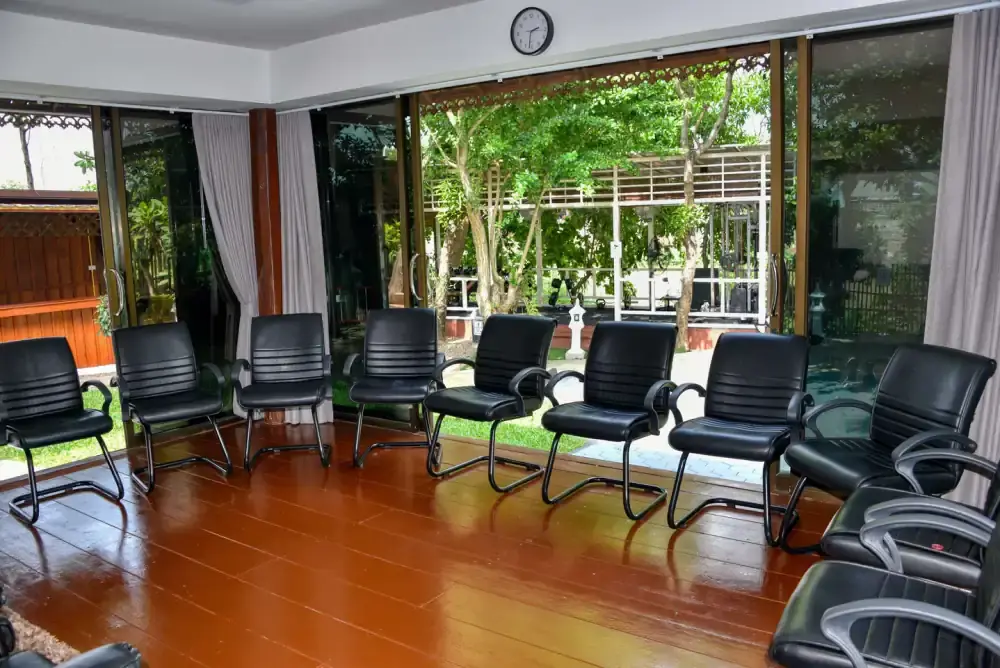
Group Sessions
These short, practical sessions help you spot the thoughts that keep use alive, manage urges, lift low-mood loops, calm anxiety spikes, sleep better, set boundaries, and build healthy routines. Worksheets and brief assignments help you apply skills in real time.
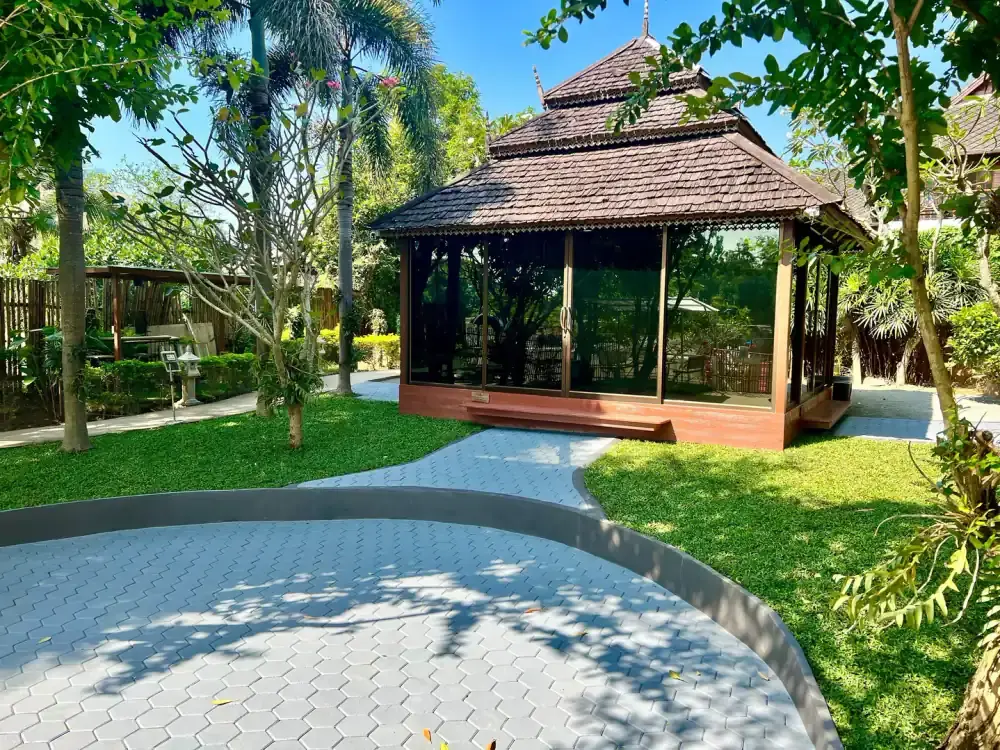
Understanding What's Happening
Short classes make withdrawal and recovery understandable so you know what to expect. Topics include withdrawal timelines, how your medications work, sleep science, nutrition basics in early recovery, relapse prevention, and how to talk with family about boundaries.
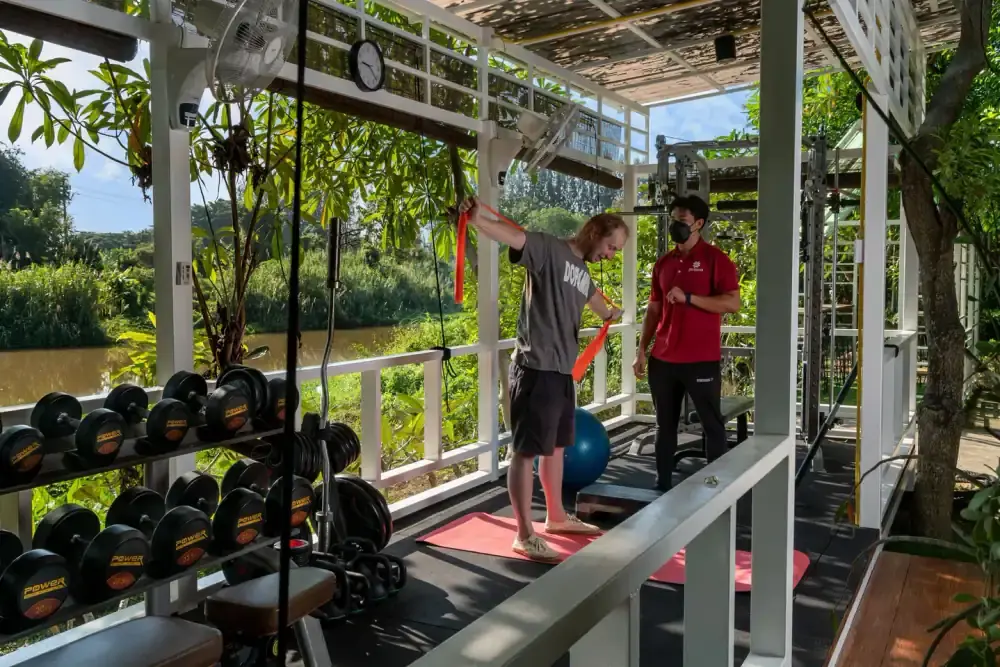
Physical Health & Fitness
Gentle movement supports your sleep and mood and is adjusted to medical status and physical ability. These sessions back up your physical health and your focus in therapy.

Excursions
Supervised outings let you practice simple boundaries in real settings with clear start and finish times. Staff choose low-stress locations and debrief on return so you can consolidate skills like ordering a meal, managing cues, and travelling safely.
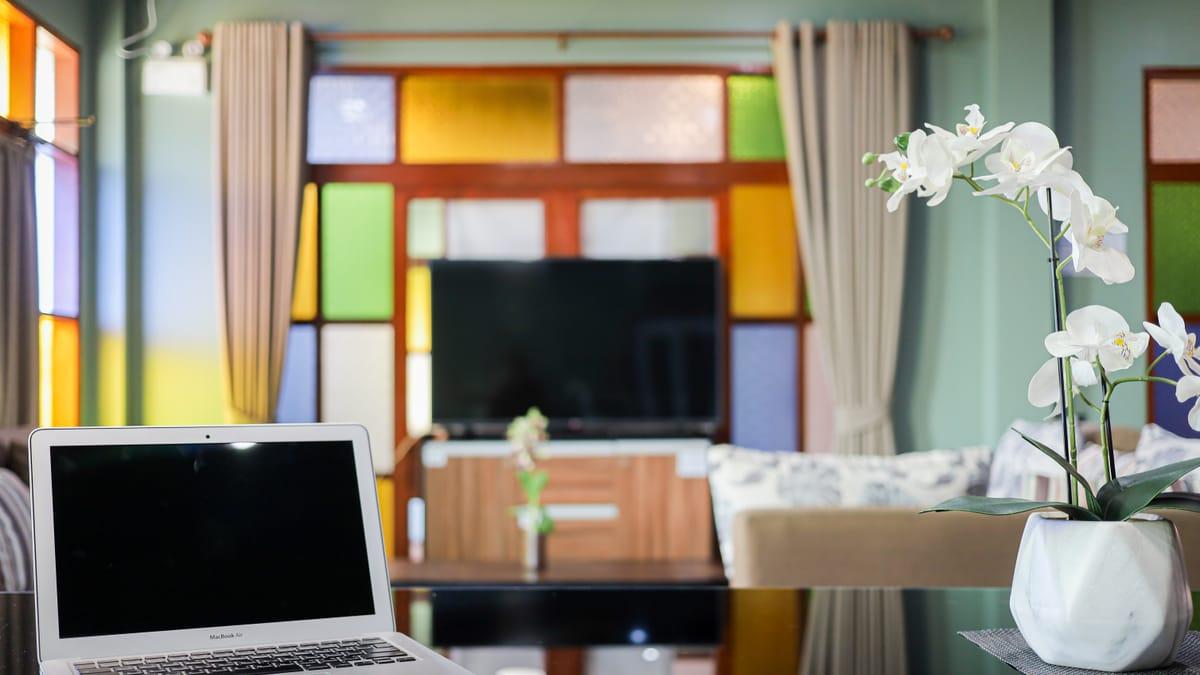
Aftercare
Before you fly home, we finalise a personalised plan you can follow from day one. It includes a relapse prevention map, a medication summary, local therapy referrals, and a first 30-day schedule.




Your First Week at Jintara
We structure your first week carefully to support your immediate comfort, stability, and therapeutic engagement:
- Arrival & Orientation: Personal greeting from Darren, nurse intake, medication assessment, psychiatric evaluation (if detox required).
- Medical Checkup: Comprehensive medical evaluation at our partner hospital in Chiang Mai, to accurately tailor your care plan.
- Personalised Therapy: Begin your individualised therapy sessions with your focal counsellor, supported by psychoeducation, group therapies, and fitness activities.
- Daily Check-ins: Continuous refinement and adjustment based on daily progress tracking.
Reviews & Feedback
What People Say About Their Experience With Us.
Jintara Rehab Thailand is rated 4.9 out of 5 from 27 Google reviews, checked on 19 October 2026. These are some of the five-star reviews, in the reviewers' own words and sometimes shortened.
“My experience at Jintara was truly amazing and life-changing. What I appreciated most was the holistic approach to recovery rather than the traditional 12-step model. It helped me understand myself better, change my mindset, and develop a much more positive outlook on life. The staff were incredibly helpful, supportive, and hospitable throughout my stay, which made the whole experience feel comfortable and welcoming.”“This rehab is saving my life. The facilities and food are amazing. The staff and therapists are also top notch. They don’t push a 12 step model, instead, they focus on science and education. The groups help you understand your values, the why behind your addiction, and encourage introspection. They also help you understand the nature of relapse and help you plan to avoid it.”“This place gave me another shot at life and happiness. And it wouldn't have been possible without the team at Jintara. People who not just know what they are doing but actually care about doing it and making a difference. With my gratitude to you all, always. RA”“I cannot recommend Jintara Rehab Thailand highly enough, the program is brilliantly structured to help you enjoy life again by building a healthy and consistent routine. … The dedicated nurses are available 24/7, ensuring you always feel safe and well cared for. To top it off, the food is consistently great, and the Saturday excursions are always incredibly fun.”“To be completely transparent, I found the initial period challenging. At times, I was quite irritable and even wanted to leave. But the staff never flinched. June was an absolute saint - always present, endlessly patient, and kind, even when I was struggling to settle in. The entire community quickly began to feel like family, and the atmosphere was so full of warmth that, ironically, it became very, very difficult for me to leave in the end.”“You will arrive at Jintara and they will have your roadmap ready , if you need to be detoxed from a certain substance they’ll do it for you slowly and safely depending on your poison … it’s only 10 people max at any one time so you’re not just another number , you matter”“Going to Jintara Rehab for 3 months was honestly the best choice I’ve ever made. It was a completely life changing experience. The staff and the care you get there are just amazing. They actually care and are there for you every single day to make sure you're supported.”“I have recently completed the 30 day program at Jintara and it was life changing. From my first contact with Darren and through every consequent step, the care and attention afforded me was first class, and allowed me the time to fully concentrate on my journey.”Licensed And Nationally Accredited
A licence means a rehab is allowed to open its doors. Jintara’s national accreditation means an independent survey team inspected what happens behind them and confirmed our care meets Thailand’s quality standard for drug treatment and rehabilitation facilities, certified by the institute that accredits the country’s hospitals. In daily practice that standard shows up as structured clinical standards aligned with the Ministry of Public Health. Here is what an independent survey team checked and verified:
- Staffing & supervision: Registered nurses with psychiatrist oversight.
- Medication governance: Controlled storage, reconciliation, and clear audit trails.
- Clinical documentation: Informed consent, structured care plans, precise handovers, and privacy safeguards.
- Facility protocols: Infection control, emergency drills, and partner-hospital links for rapid transfer.
What this means for you? A steady, comfortable environment during your primary treatment, clear routines, fast access to hospital care when needed, and practical safeguards for your well-being, all held to a standard that was independently checked, not just claimed.

How Much Will Rehab in Thailand Cost.
Jintara's fees are simple and cover the essentials you need for safe, steady progress.
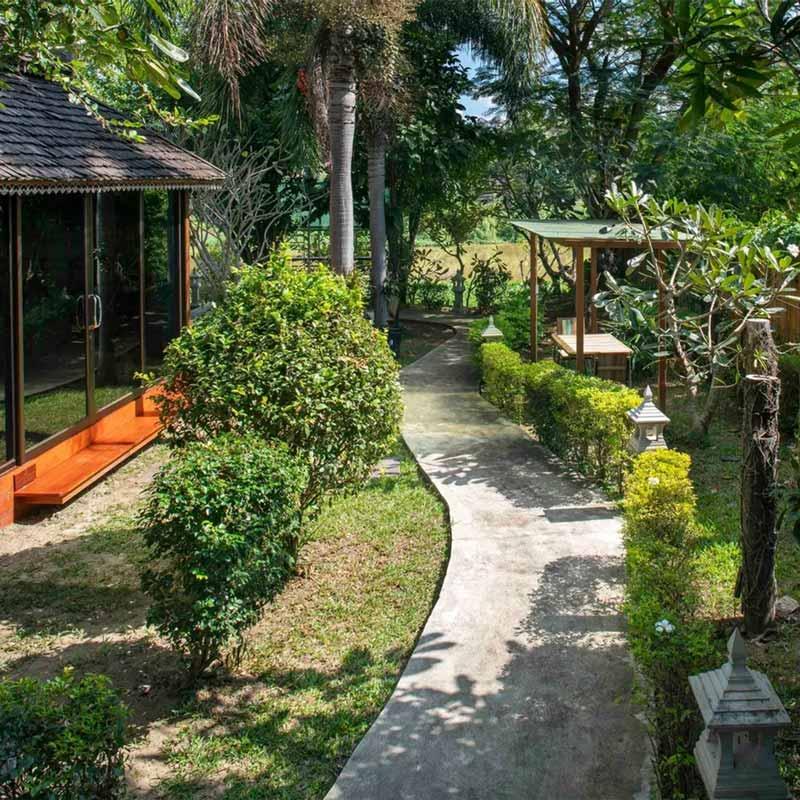
- Private en-suite room with daily housekeeping, high-speed internet, and a quiet riverside setting.
- On-site medical detox managed by nurses and overseen by a psychiatrist.
- Detailed medical checkup at Bangkok Hospital Chiang Mai.
- Personal technology allowed within house guidelines to support sleep and focus.
- All transfers and excursions included, no hidden extras.
Pricing starts at $12,500 for the 30-day program. No hidden extras.
Safer Withdrawal with On-Site Medical Detox and 24/7 Awake Nurses
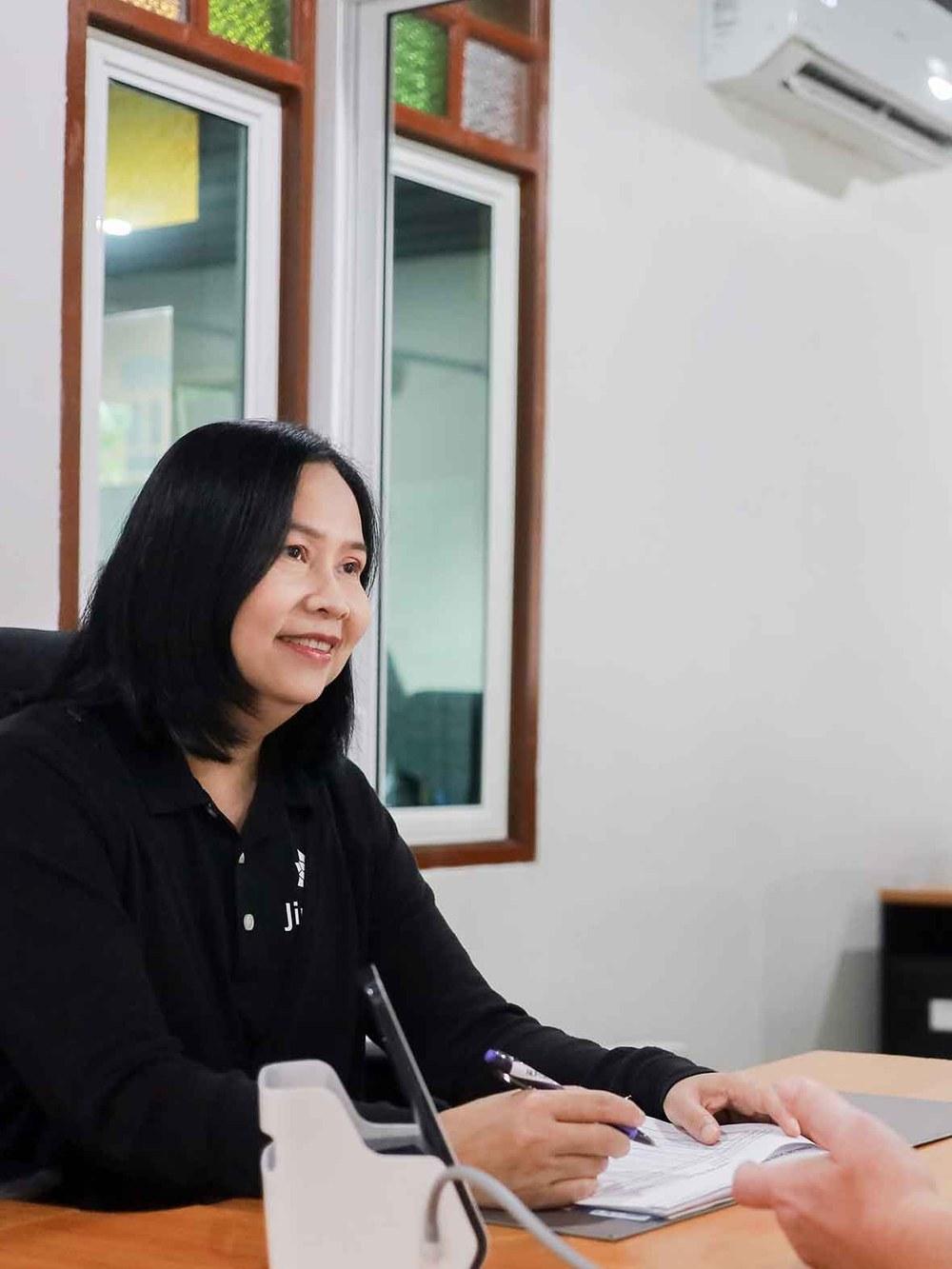
At Jintara medical detox is managed on-site by nurses who are present around the clock, with psychiatrist oversight guiding medication and monitoring. Our approach is steady, individualised, and designed to keep you safe and comfortable from the very start. Detox is when families worry most, which is why our protocols, medication handling and around-the-clock nursing were independently assessed against Thailand's national standard for drug treatment and rehabilitation facilities and met it.
- Medication adjustment and symptom tracking throughout, not just at intake.
- Psychiatrist involvement in medication decisions, dose changes, and review.
- Hospital pathways to Bangkok Hospital Chiang Mai if higher-level care is needed.
See how our team keeps detox safe and supported from the first hour.
One Clear Admissions Path from Your First Phone Call to Arrival
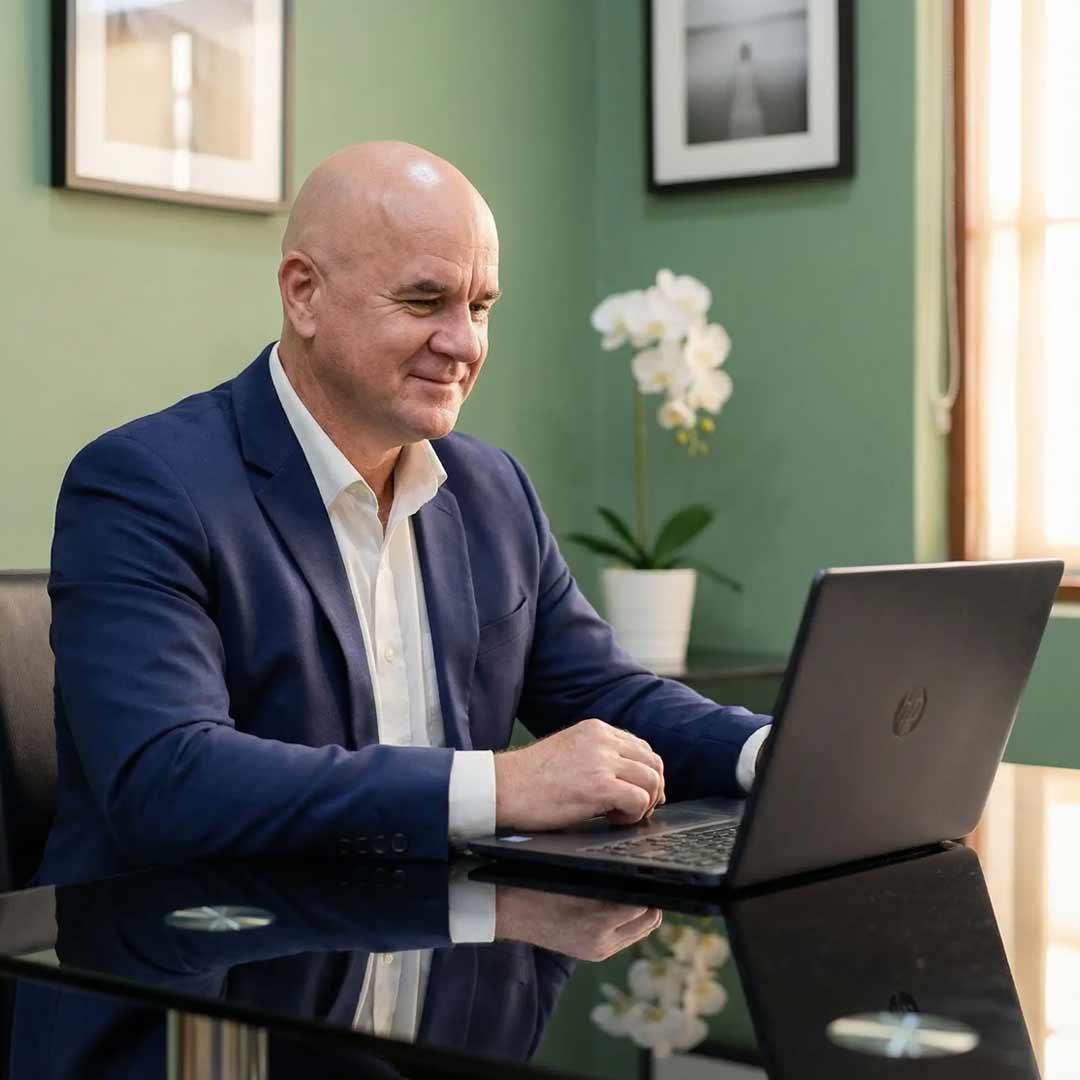
“I personally screen every client. No call centre, no junior gatekeepers.”Darren Lockie, OwnerAdmissions to Jintara are private and owner-led. You'll speak directly with the owner, Darren Lockie, who is across every detail of your stay before you arrive.
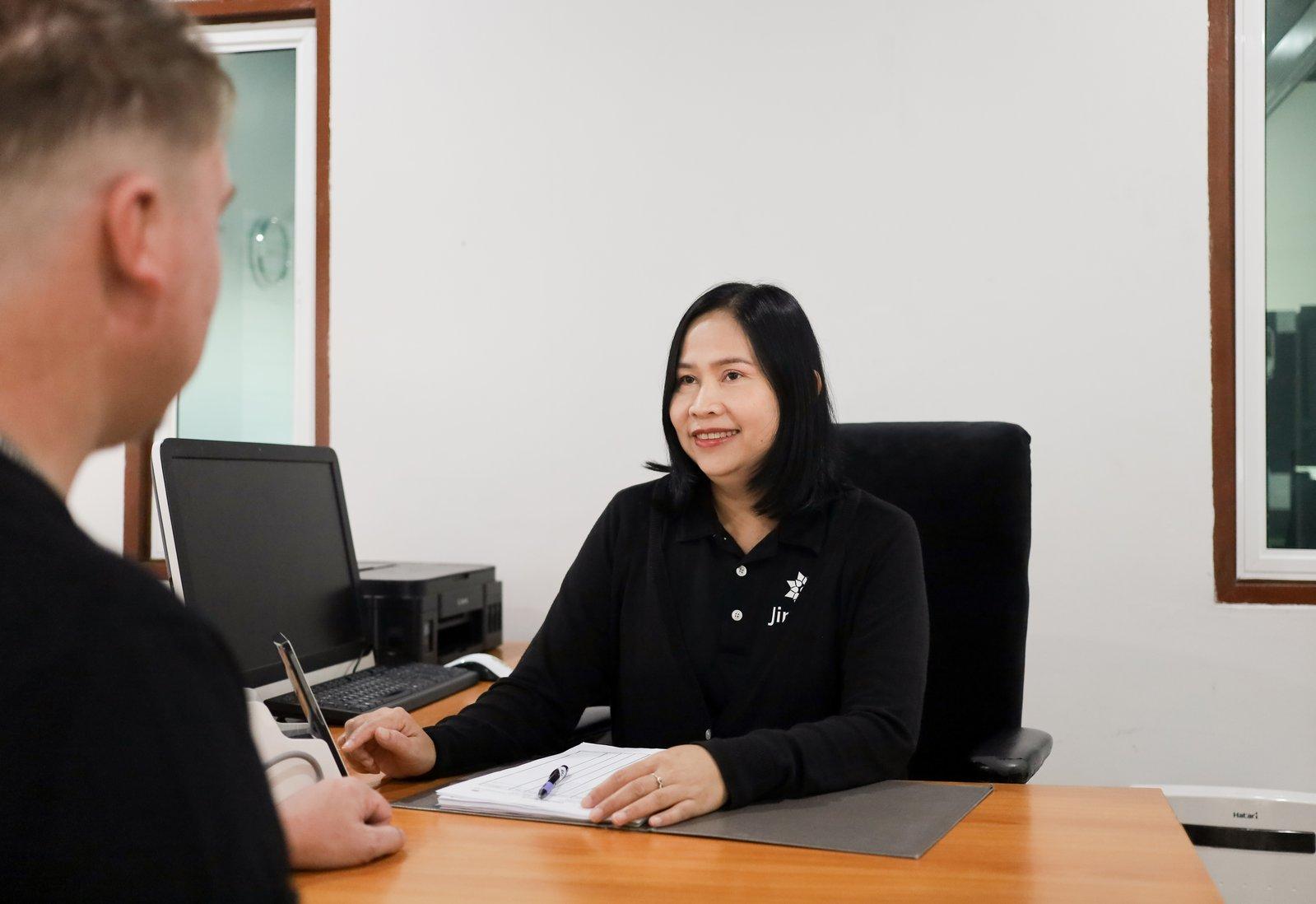
- Confidential consult with Darren to confirm clinical fit, set expectations, and plan your first 48 hours.
- Pre-arrival checklist covering paperwork, packing, and flight details.
- Low-profile airport transfer where a staff member meets you at the airport, 20 to 30 minutes from the centre.
- Individual therapy and CBT skills begin within the first days. EMDR is assessed separately and is available after stabilisation on stays of 60 days or longer.
Begin with a confidential call. No pressure, no waiting list of questions.

Why Choose Chiang Mai for Your Recovery Journey.
Staying at a rehab in Chiang Mai gives you distance from daily triggers and access to a calm, well-connected city that supports early recovery.
- Accredited on-site care: the clinical team handles detox and day-to-day treatment on site, with Bangkok Hospital for anything beyond their scope.
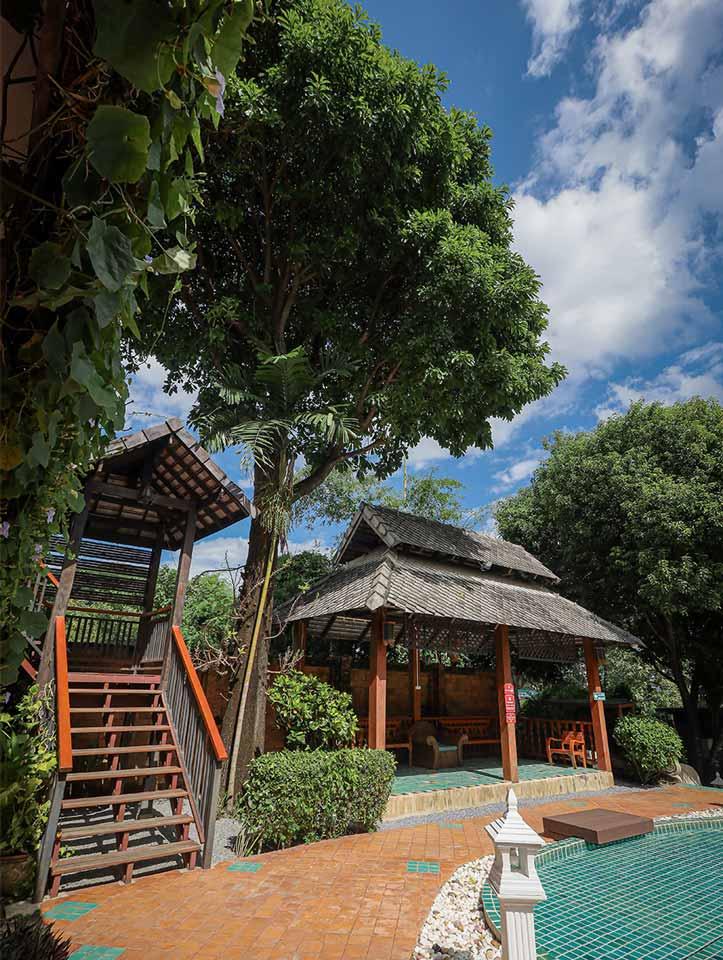
- Riverside setting close to nature, easy to unplug.
- Easy flight connections from Bangkok and regional hubs.
Most international clients at Jintara come from Australia, New Zealand, the UK, and across Asia. Chiang Mai’s calm pace and medical access make it a strong base for treatment.
Our Services
What Does Jintara Treat.
Most rehab centres try to be everything to everyone: any age, any addiction, any mental health struggle. While that might sound inclusive, in reality it’s messy for clients and doesn’t lead to deep transformation. Jintara keeps our treatment services focused, with small groups and a calm pace, so you can build a fulfilling life after treatment.
How Does Our Alcohol Rehab in Thailand Support Your Recovery.
Alcohol addiction affects sleep, mood, cognition, as well as your physical and mental health. We focus on sleep, mood, and safety first. Many clients choose Jintara after comparing or even attending other drug and alcohol addiction treatment centres in Chiang Mai, Bangkok or Phuket. Here's just a few areas where Jintara stands out:
- On-site detox with continuous nursing and psychiatrist oversight
- Full medical checkup at Bangkok Hospital Chiang Mai
- Individual therapy, cognitive behavioural therapy groups, and EMDR when indicated
If alcohol addiction has been a long-standing issue for you, we pace diagnostics and medication carefully. This approach works well within a small treatment centre rather than large alcohol rehabs.
How Does Our Drug Rehab Program in Thailand Deliver Lasting Change.
Drug addiction is complex and affects multiple areas of life. The drug rehab program at Jintara stabilises you safely, then builds skills you can use at home. If a drug or prescription medication dependency has overlapped with work stress or the strain it puts on the family around you, we can help map your triggers and routines for the next 30 to 90 days, while providing you with:
- Medical support for withdrawal symptoms.
- CBT skills for urges, mood loops, sleep, and boundaries.
- Vetted and proven approach to recovery.
For many people, progress comes easier in a calm, adult setting with small groups and steady, evidence-based work. That’s the experience we offer.


How Does Our Trauma and Mental Health Care Focus on Your Long-Term Wellbeing.
Substance use often becomes dual diagnosis, which travels with anxiety, depression, stress, low mood, sleep disruption, or trauma. At Jintara, one integrated plan covers both, with medical oversight, practical CBT skills, and EMDR when the time is right gives you the coping skills you need.
- Psychiatrist involvement and continuous nursing for safety.
- CBT for low-mood habits, sleep hygiene, and boundary skills.
- EMDR available from three EMDR therapists led by an EMDRIA Certified Therapist, on longer stays when it is clinically right.

Talk with Our Admissions Team
Your enquiry is confidential and goes only to our admissions team.
Jintara FAQ’s
Common questions about rehab in Thailand
Most people ask us the same things before they come: is detox safe, who looks after me, who will know I'm here, and how do I get there. The short answers are below. If yours isn't here, ask Darren directly through the form or WhatsApp.
Is detox safe at Jintara?
Detox at Jintara is managed on site for adults who can be treated safely in a residential rehab setting. Nurses are awake and present all night and all day. A psychiatrist is involved in medication selection, dose changes, and symptom review. Monitoring covers vitals, comfort, nutrition, hydration, and sleep. Breath alcohol or urine screening is used when needed to keep the environment safe.
If signs point to risk that requires hospital-level care, hospital transfer is available at any hour, including two in the morning. Therapy does not wait for detox to finish: individual sessions and CBT skills groups run alongside detox from the day you arrive, without leaving the centre.
Do not attempt to withdraw alone. If you are unsure whether your case fits on-site care, speak with admissions so the clinical team can assess your recent use and medical history.
Is Jintara an accredited rehab?
Yes. Jintara is accredited against Thailand's national quality standard for drug treatment and rehabilitation facilities, jointly certified by three government bodies. They are the Healthcare Accreditation Institute, the Princess Mother National Institute on Drug Abuse Treatment and the Department of Medical Services. Certificate 25/2569 runs from 20 May 2026 to 19 May 2029.
Jintara is registered with the Thai Ministry of Public Health as a drug rehabilitation centre (registration certificate SFT.50.13-11116, issued 8 September 2023). The facility is operated by Lanna Health Care Company Limited. Neither is a promise about any one person's recovery.
What does the accreditation actually change for my family?
It takes the things you cannot easily check yourself, detox safety, medication handling, staff qualifications, patient confidentiality and aftercare, and has them inspected against a national standard rather than simply claimed. For a family deciding from overseas, that is independent proof the clinical foundations are sound before anyone arrives.
Holding the standard is the floor. The reason families choose Jintara over the larger facilities that also meet it is the boutique model: a maximum of ten clients, owner-led admissions, and around-the-clock nursing.
Are rooms private and what facilities will I have?
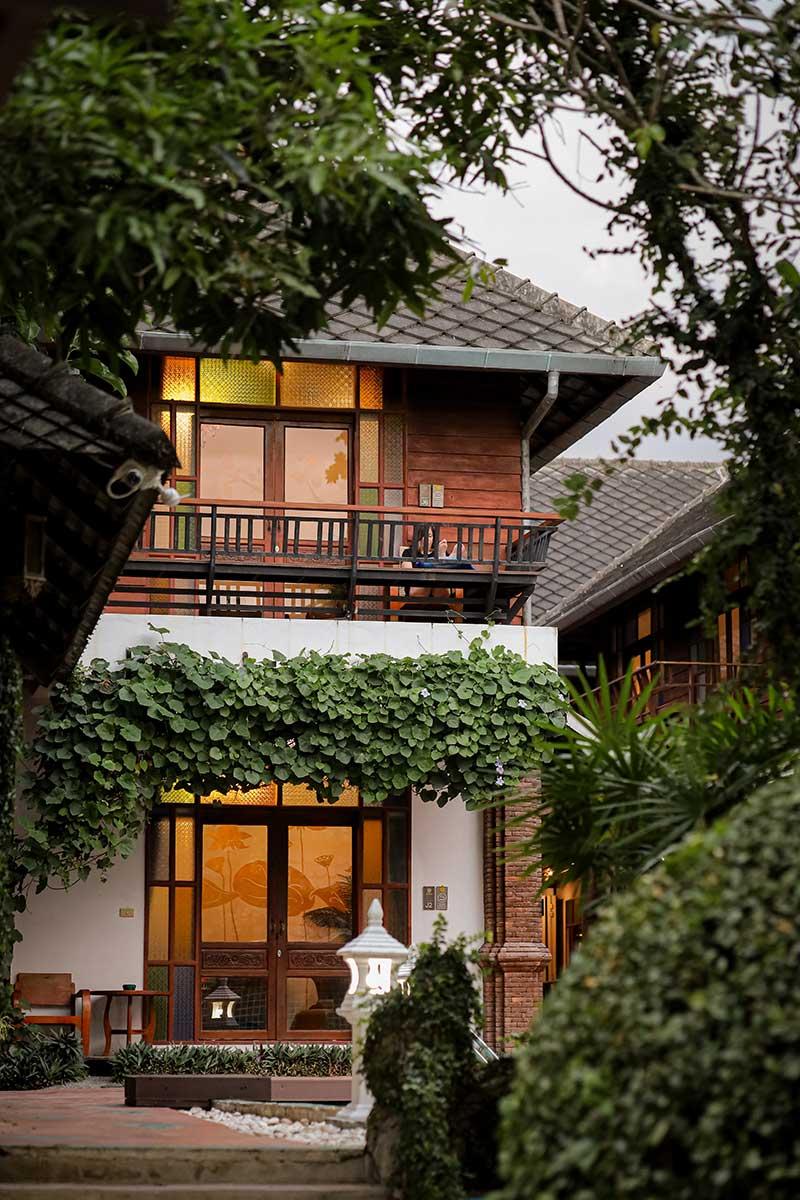
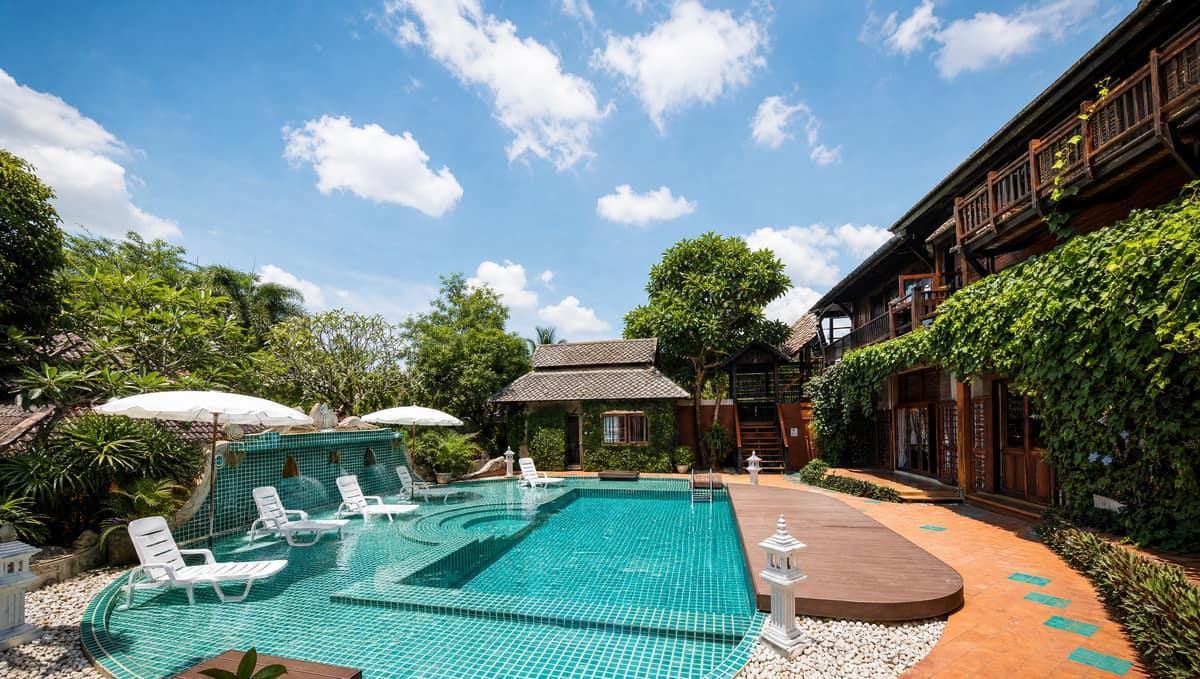
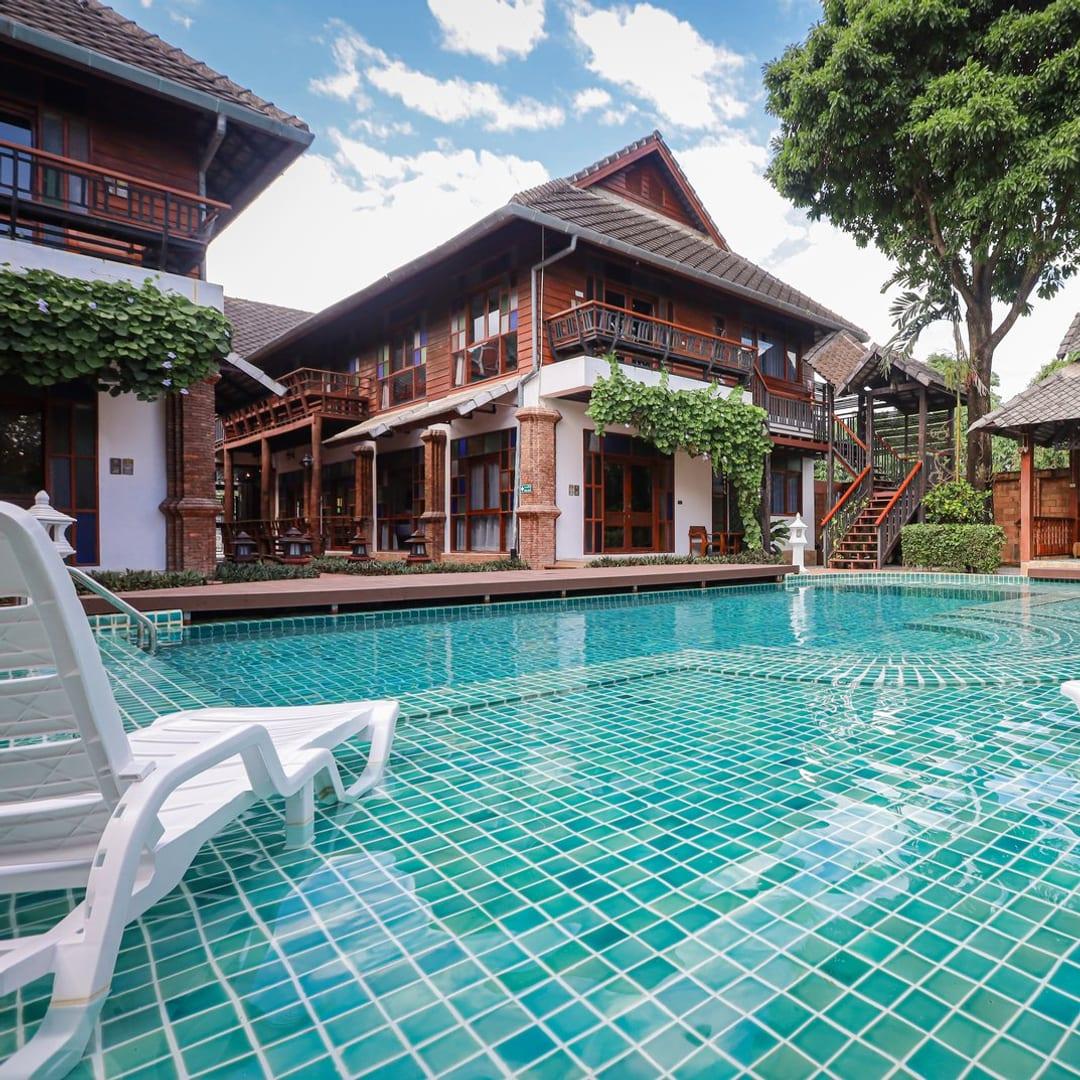
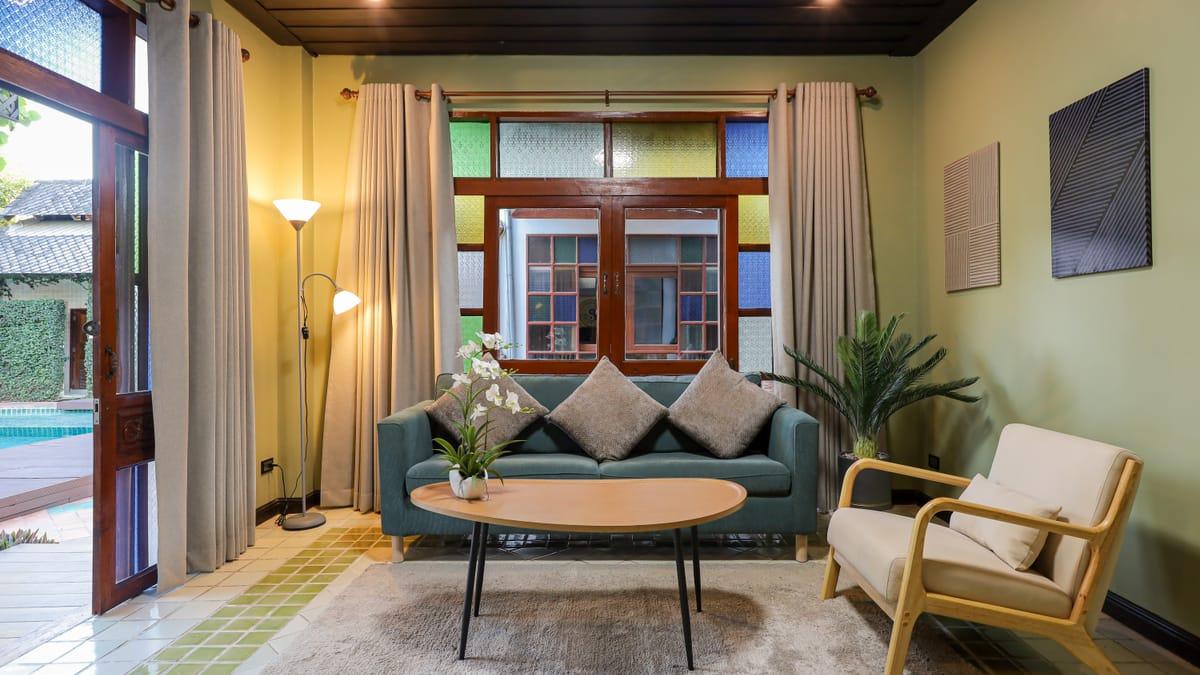
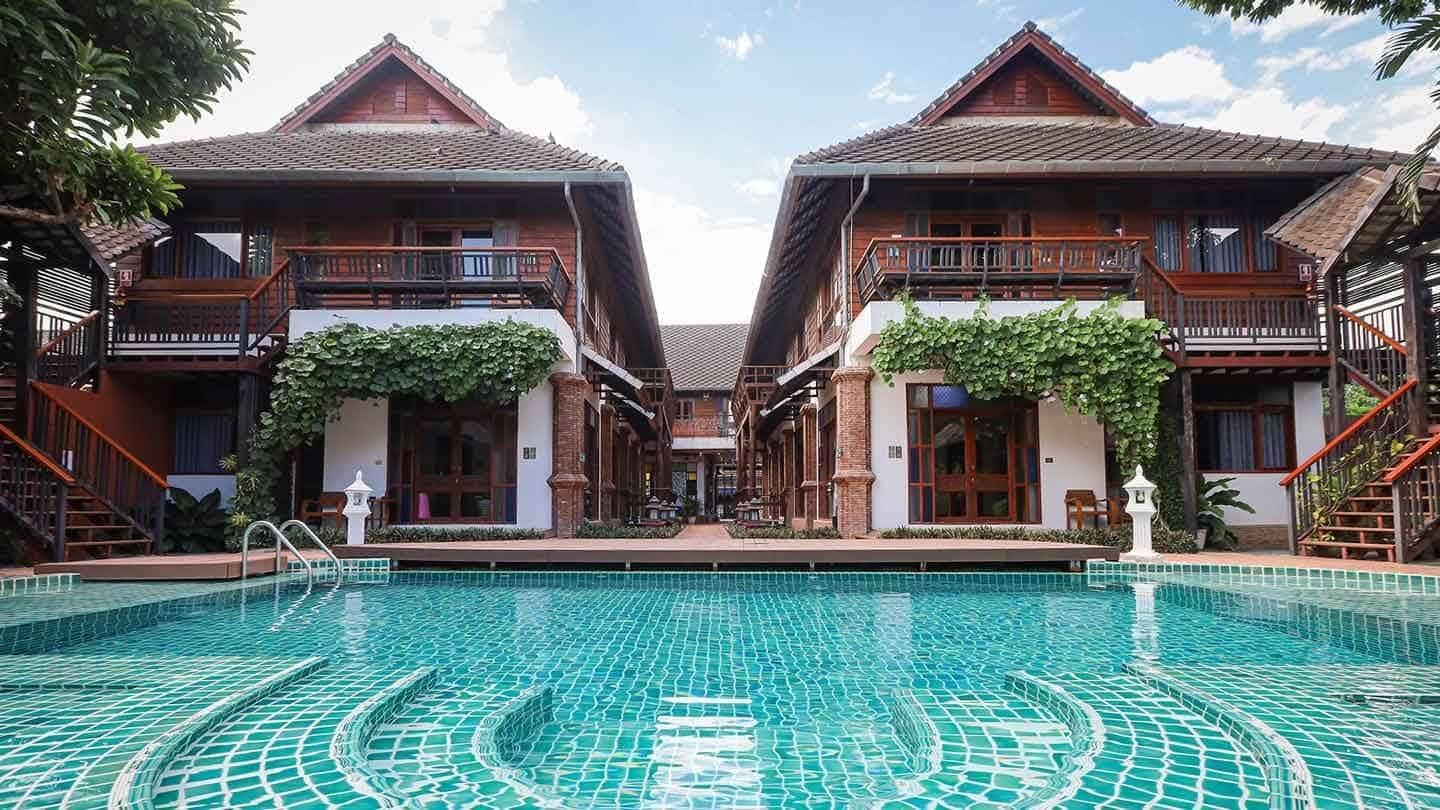
Each client has a private ensuite room with daily housekeeping. Private space helps sleep return and gives you time to complete brief therapy assignments without distraction. Rooms include a comfortable bed, private lounge, kitchenette, massage studio, balcony, and a bathroom with hot water, as well as 3 air conditioners and an air purifier.
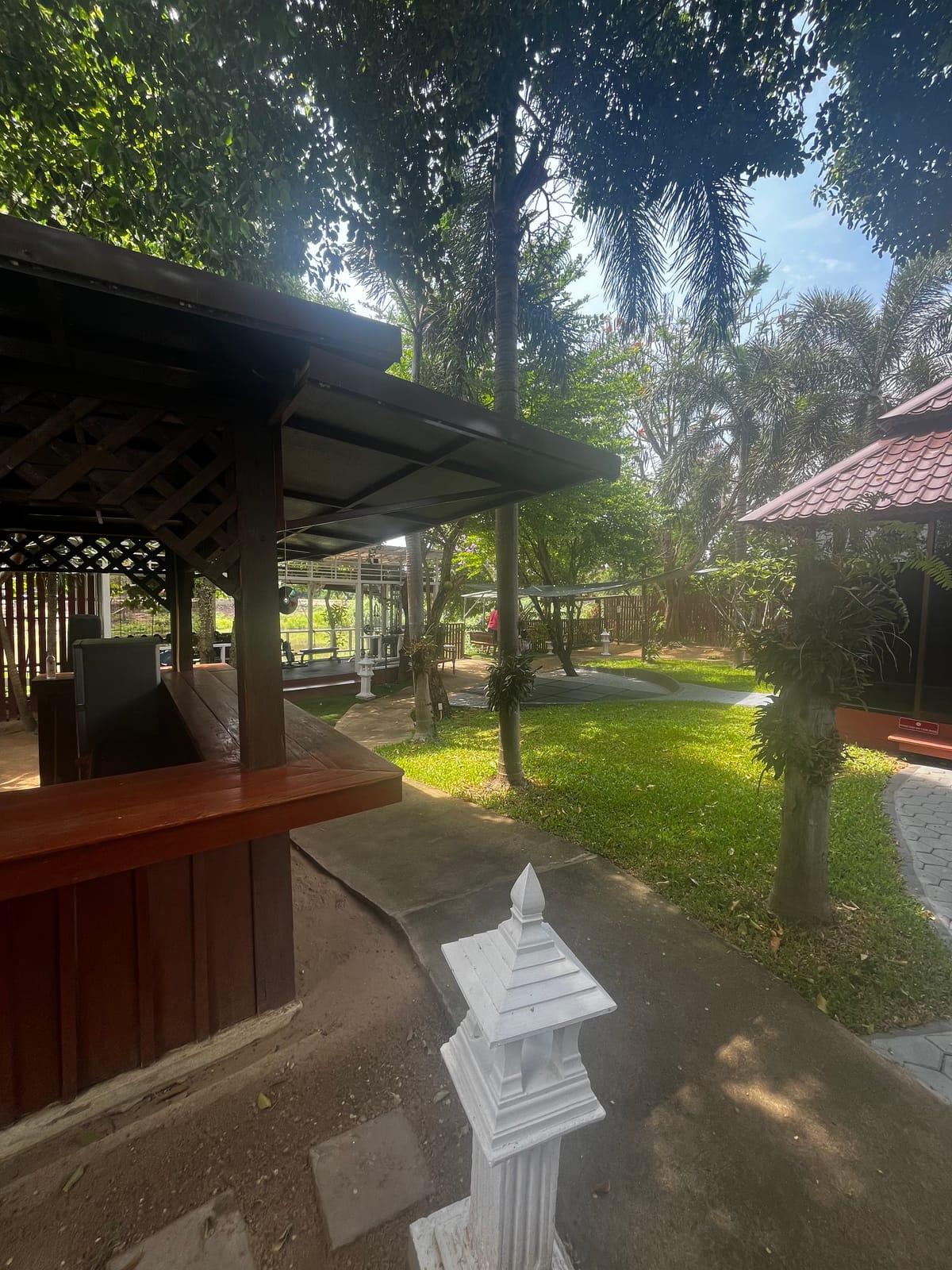
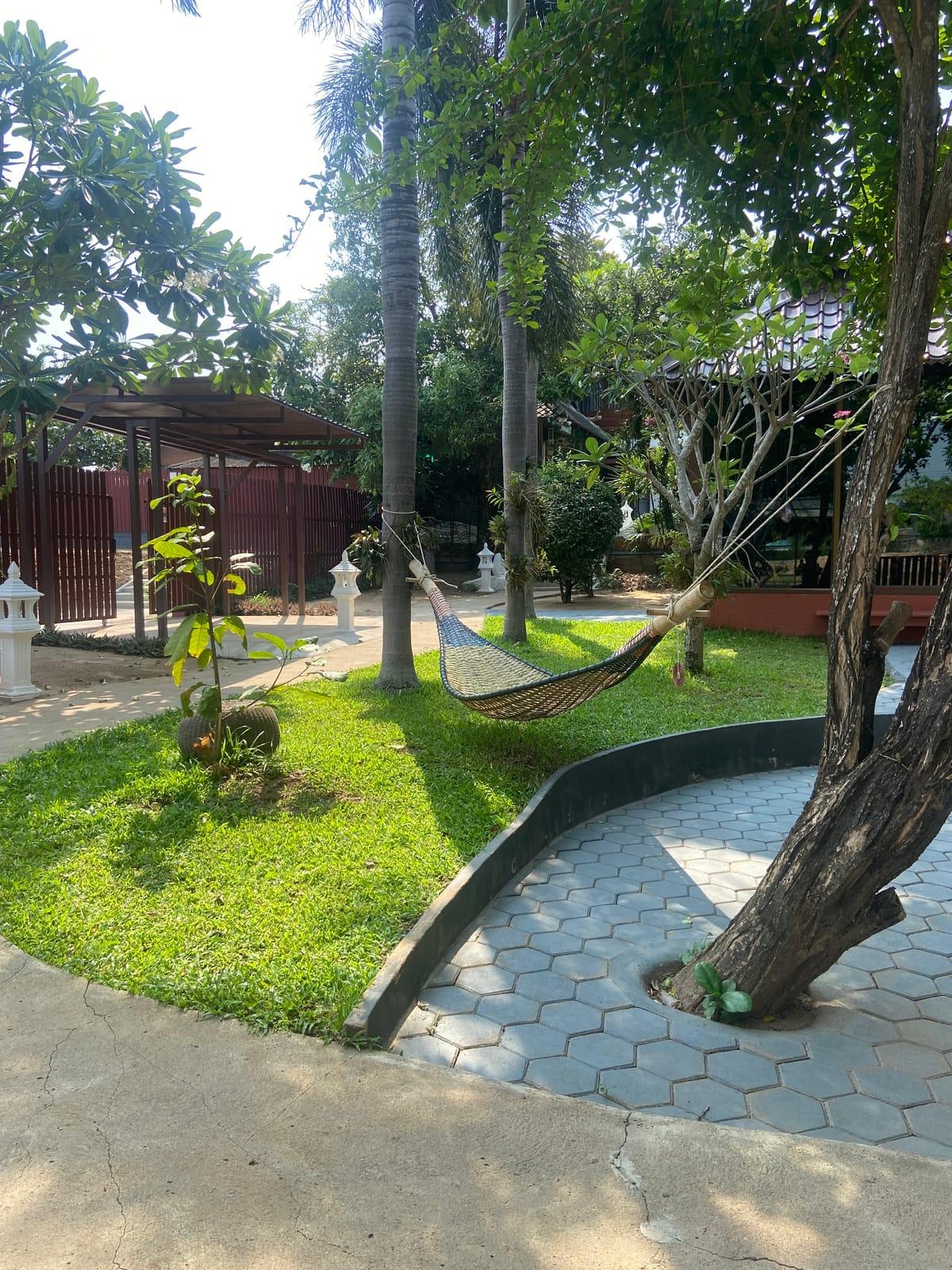
Common areas are set up for quiet social time and group work. Movement spaces support light sessions guided by staff. High-speed fiber internet is available 24/7 for essential communication, which protects sleep and group focus. The setting is green and near the river, which many adults find calming and makes unplugging easy during early recovery.
If you have special needs for bedding or room features, speak with admissions before you fly so we can prepare.
What does the Bangkok Hospital medical checkup include and why is it part of my stay?
Early in your stay, Jintara arranges a full health check at Bangkok Hospital Chiang Mai. The checkup often exceeds what is typically covered by doctors in western countries, and includes a physician-led physical examination, full blood spectrum, liver function test, kidney function test, laboratory tests, an EKG, and a chest X-ray as standard.
These results help the team understand your baseline health, any silent risks, and current medication needs. The psychiatrist and nursing team review the report and align detox plans and therapy pacing with your medical status. When indicated, follow-up tests or referrals are arranged through the same hospital network.
Including the checkup early removes guesswork and sets a clear foundation for safer detox, better sleep, and more effective therapy work. The cost of this checkup is included in your program, and transport is arranged by the centre. If you have recent imaging or lab results, bring copies so the doctor can compare trends.
Who will be caring for me day to day and at night?
Your daily care team includes Thai nursing staff who are awake through the night, a psychiatrist who oversees detox medication and reviews progress, and master’s-level therapists who guide individual sessions and CBT groups. Three EMDR therapists for no more than ten clients, led by an EMDRIA Certified Therapist, are available for trauma therapy when it is clinically right, usually in the second month of a 60-day stay.
Operations staff maintain a supportive environment each day by coordinating your meals, taking care of housekeeping and any transport needs so your time is reserved for clinical work and rest. The owner remains engaged in admissions and logistics and is available to you during the stay.
The small census means you will see familiar faces across shifts. The clinical team at Jintara shares information in structured handovers so care remains consistent throughout the entire length of your addiction treatment program. If symptoms change between sessions, nursing can contact medical leadership promptly for a same-day plan update.
Do you only admit adults and how many clients are in residence at once?
Jintara typically admits adults who are ready to engage in a focused, medically supported program. The center runs at a maximum of ten clients at a time. A small group keeps groups calmer, shortens wait times, and makes it easier to stick to the schedule.
It also supports better sleep because days stay quiet and predictable. You will have time with your individual therapist in the first few days without having to compete for basic clinical attention like at facilities with larger group numbers. This addiction rehab is adult-only, and our residential rehab model supports steady progress.
What does a typical first week in an addiction treatment facility look like?
Arrival day focuses on comfort, intake, and rest. Nursing completes a safety screen, confirms recent use, and reconciles medications. If detox is indicated, the psychiatrist sets a symptom-based plan and schedules reviews. Early in the week you attend Bangkok Hospital Chiang Mai for the full checkup.
Individual therapy and CBT skills start from your first day, alongside detox, with the pace set by how you feel. Core topics include urges, sleep hygiene, mood loops, thinking traps, and boundaries. Psycho-education makes the medical side of recovery clear, such as withdrawal timelines and medication literacy. Movement blocks support sleep and energy and are adjusted to your status.
Evenings close with short check-ins and wind-down practices. Weekends include a supervised outing that lets you practice simple boundaries in real settings without pressure. Sundays start with a structured social lunch out, then return to the centre for on-site massage, rest, and quiet time. We call it self-care Sunday because the day is built around recovery basics: real food, a slow pace, and time to think.
Do you offer EMDR and who is a good fit for it?
Jintara offers EMDR when, after detailed assessment, we believe that trauma or PTSD contributes to your addiction and mental health issues. The work is delivered one to one by one of Jintara's three EMDR therapists, within a careful preparation framework.
You and your therapist first confirm goals, practice grounding skills, and review medical status, including the hospital results and current sleep. EMDR is introduced when you are stable enough to process and to recover after sessions.
It is not a race. The pace matches your nervous system and your progress in core CBT skills. EMDR can help reduce reactivity to old cues, ease shame cycles, and clear space for healthier choices.
EMDR processing needs a minimum 60-day stay. Month one is stabilisation and preparation, and processing sits in month two, so a 30-day stay does not include trauma processing.
What do fees include and what is the early departure policy?
Program fees include your private room, on-site care, full medical checkup, individual therapy, CBT groups, EMDR preparation when indicated (EMDR processing itself needs a stay of 60 days or longer), awake nursing, routine safety testing, movement blocks, and a supervised weekend outing. Meals and housekeeping are part of your stay.
A deposit secures your room and start date. The first four weeks are payable on arrival. If you leave early for reasons outside your control, unused paid days may be credited toward a future return within twelve months. Cash refunds are not offered for remaining days. Rule breaches can lead to discharge without credit.
For a detailed inclusions list and current availability, see the pricing page or speak with admissions.
How discreet is the admissions process and who will I speak with first?
Admissions are private and owner-led. Your first conversation is with the owner, Darren Lockie, who will ask about your reason for considering rehab, your goals for rehab, your recent use, current medications, health history, and timing for starting treatment among other things. The call is confidential and will give you an actionable way forward regardless of staying at Jintara.
The goal is to confirm clinical fit, map travel needs, and plan the first forty-eight hours so you know exactly what will happen every step of the way. After the call, you receive a clear checklist that covers paperwork, packing, and flight details. Airport transfers are arranged in advance.
On arrival, June, the client liaison, meets you at Chiang Mai airport. Intake happens in your private room with our support team. If detox is needed, a psychiatrist appointment is set promptly. All client information is handled on a need-to-know basis and will not be shared with anyone without your signed approval. Your records are kept under Thailand's Personal Data Protection Act.
Can family visit or join sessions and how is contact managed?
Family contact is guided by your consent and clinical timing. In the first days, focus stays on medical stability and sleep. Visits are considered once you are ready and are scheduled in a way that supports recovery, not stress.
Phone contact follows house rules that protect the group and your rest. Families can join a structured call to review boundaries and aftercare plans when that makes sense.
If a loved one needs guidance on how to support you after discharge, your therapist can offer simple, practical steps. If a visit is not helpful yet, the team will explain why and set a review point. The aim is to support your work, not to add noise.
Which substances and co-occurring concerns do you treat?
Jintara treats adults with alcohol addiction, prescription medication addiction, drug addiction, and other substance use disorders when on-site management is clinically appropriate (including opioid addiction when safe to manage).
Many clients also experience mental health issues such as anxiety, depression, low mood, sleep problems, or trauma-related symptoms. Care plans address both the substance use and these concerns through CBT, individual therapy, careful medication schedules, and EMDR where indicated on stays of 60 days or longer. Our drug rehab team supports complex cases.
If an acute psychiatric or medical issue appears that requires hospital care, escalation happens through established links and your plan is updated after the hospital visit. If your situation requires a higher level of ongoing care than a residential program can provide, the team will discuss referral options that protect your safety.
What are your hospital escalation pathways and when are they used?
Escalation pathways exist for medical and psychiatric risks that exceed residential scope. Examples include severe withdrawal risk, chest pain, persistent vital sign instability, or a mental health issue that needs inpatient assessment. Bangkok Hospital Chiang Mai is the primary partner for urgent medical needs, and transport is arranged by staff.
If you go to hospital, the team shares essential information to support continuity, then updates the plan when you return.
Hospital pathways are not a sign that treatment failed. They are a protective part of care that keeps you safe through unpredictable events. Most clients return to the center the same day and resume the program with adjustments agreed by the doctor and therapist.
What about meals and dietary needs during my stay?
Meals are balanced and familiar to support energy and sleep in early recovery. Hydration is encouraged at set points during the day. If you have dietary restrictions, allergies, or cultural preferences, share them during admissions and again at intake so the team can plan your menu.
Caffeine is available in moderation and follows house rules that protect sleep. Nicotine support is available within policy limits. Snacks are offered at scheduled times to stabilize blood sugar during detox.
If you are under a physician’s guidance for specific nutrition needs, bring documentation so the kitchen and nursing teams can follow that advice.
What should I pack and what should I leave at home?
Pack comfortable clothing for a warm climate, athletic shoes for movement, modest swimwear if you plan to use water spaces, and a light jacket for cooler nights. Bring current prescriptions in original labeled containers, a list of medications with doses, and any recent medical letters. A simple journal and one book are helpful between sessions.
Leave valuables, large amounts of cash, and non-essential electronics at home. Substances and paraphernalia are not allowed on site.
The center provides bedding, towels, basic toiletries, and laundry support. If you have a specific medical device, confirm with admissions so staff can prepare charging and storage.
How soon can I start and how do I plan to travel?
Availability changes quickly due to the small census. Speak with admissions for the next openings and the best arrival window. Chiang Mai connects easily from Bangkok and major hubs in the region. Share your flight details so transfer can be arranged. Most Western passport holders are stamped in on arrival under Thailand's visa exemption, and admissions confirms the position for your passport when you book.
If a clinical review suggests hospital detox first, the team will explain the steps and timing. The aim is to set a start date that matches your health needs and travel reality, then get you here with the fewest uncertainties. If you need extra time to arrange work or family commitments, the deposit holds your place in the residential treatment program while you prepare.
What happens after I leave and how is aftercare handled?
Before discharge, you complete a clear aftercare plan with your therapist. This includes a personalised treatment plan, medication summary, local referral options, sober living options if needed, and steps for the first thirty days at home. You also review sleep strategies, boundary scripts for family and work, and a schedule for continued therapy.
If you live far from Chiang Mai, the team focuses on referrals close to home and can share your hospital checkup results with your consent. Flying home directly is recommended so there is no long gap between program rhythm and home routines. When appropriate, your aftercare may include outpatient treatment with local providers so gains consolidate.
How does Outpatient treatment promote a lasting recovery for clients?
Jintara is a residential program; outpatient treatment is used as an aid for your healing process as you continue to face addiction issues, not a substitute for detox or early stabilisation.
Aftercare planning begins in the first week. Before discharge you leave with a written plan that includes local therapy or psychiatry options, SMART Recovery options, and scheduled check-ins, and we share a medication summary and a personalised treatment plan to carry forward.
If you live in Thailand or nearby, we refer to trusted providers; if you live elsewhere, we coordinate options close to home. Short bridge sessions by phone or video may be arranged when clinically appropriate to support the handover.
Is your addiction rehab program suitable for people with diagnosed Eating disorders?
Jintara does not offer specialist eating-disorder treatment. Eating disorders generally make Jintara unsuitable. Any possible admission requires detailed discussion with the therapists about the individual's current stage, stability, and level of care needed.
If an eating disorder is part of your history, tell admissions on the first call. A history alone does not establish suitability. The therapists must assess your current needs before any admission decision.
Accreditation certificate
Jintara is accredited against Thailand’s national quality standard for drug treatment and rehabilitation facilities, jointly certified by the Healthcare Accreditation Institute, the body that accredits Thailand’s hospitals, with the Princess Mother National Institute on Drug Abuse Treatment and the Department of Medical Services, Ministry of Public Health. Certificate no. 25/2569, valid 20 May 2026 to 19 May 2029. To check it, ask us for a copy of the certificate, or confirm it by facility name with the Princess Mother National Institute on Drug Abuse Treatment or the Department of Medical Services.
Written by Darren LockieMedically reviewed by Denise O'Leary (MA Counselling Psychology, EMDRIA-Certified EMDR Therapist)Published: November 23, 2025Updated: October 23, 2026