
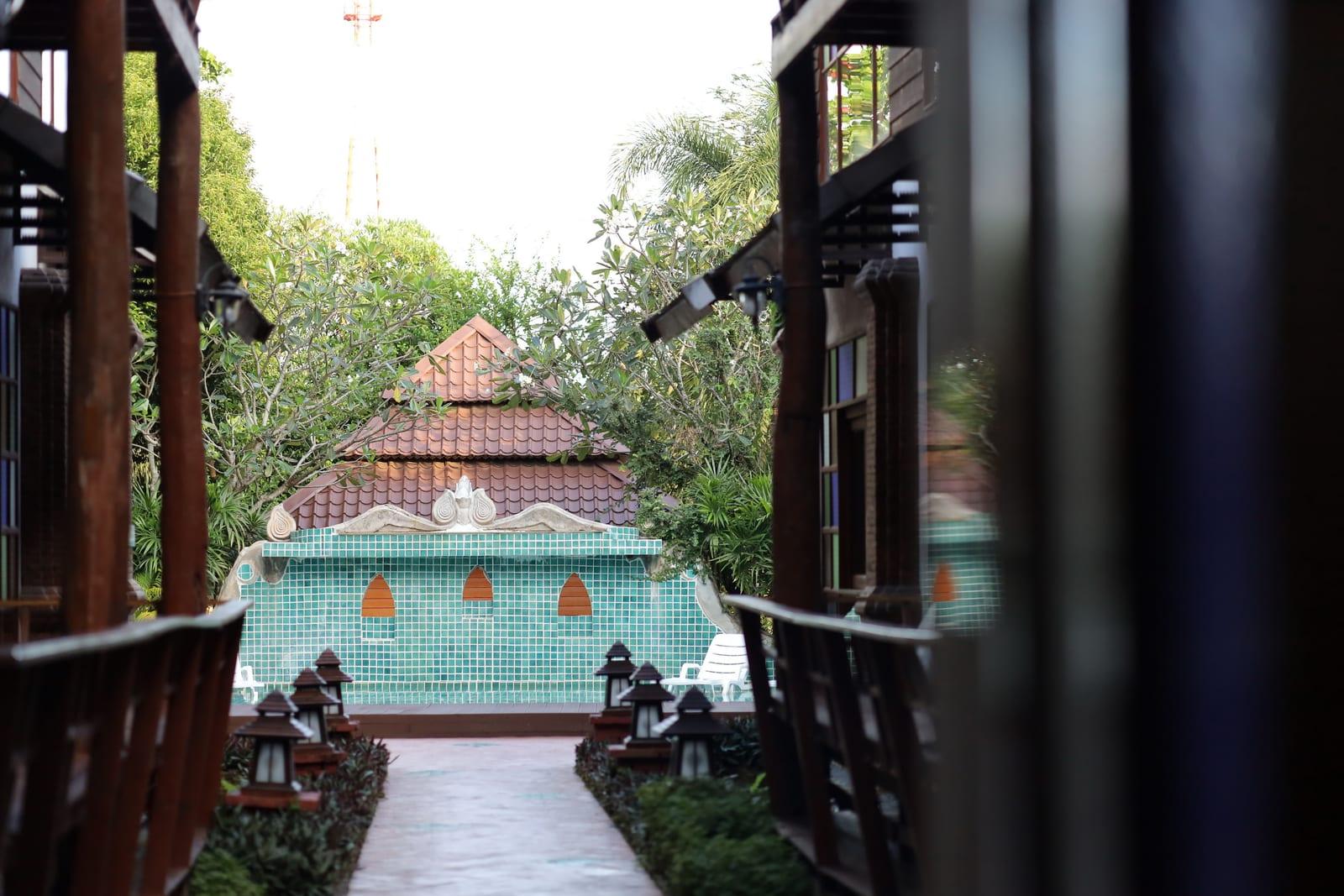
The Case for Boutique Rehab
Boutique rehab is a clinical model built on individual attention, not bed count. The staffing ratios, the research, and how to weigh it against a big facility.
Written by Darren Lockie | Medically reviewed by Denise O'Leary | Published: May 15, 2026 | Last Updated: October 20, 2026
When Darren Lockie built Jintara, he made a deliberate choice to stay small. This article, one of our collection of addiction and recovery articles, explores the clinical and practical reasons why that decision shapes recovery outcomes. It also covers what to consider when choosing between a boutique setting and a larger treatment centre.
A boutique rehab is a clinical model, not a marketing label.
A boutique rehab is a small treatment centre built around individual attention, not bed count.
The term has been diluted by facilities that use "boutique" to signal aesthetics rather than clinical intensity. Private rooms and pleasant surroundings are secondary. What separates a genuine boutique model from a large facility calling itself boutique is the staffing ratio and how treatment is actually built. At a large facility running 40 to 100 beds, a standard protocol is applied across the whole group. Sessions are scheduled in blocks. Individual therapy is rationed across a large caseload. At a boutique facility, the protocol adjusts to the individual because there is capacity to do so.
At Jintara, a maximum of 10 clients means three full-time therapists work with no more than four people each at peak occupancy. That ceiling came out of more than 15 years spent running larger facilities, and most centres in Thailand and internationally run at six to seven clients per therapist. The implications of that ratio difference are not abstract. They determine how thoroughly the team knows each person's history and how quickly the treatment program at Jintara is adjusted when something changes during treatment. They also determine how often a client receives individual therapy time.
Research on small treatment groups supports the boutique model.
Smaller client-to-clinician ratios are associated with stronger therapeutic alliance, higher treatment retention, and better long-term sobriety outcomes in published addiction treatment literature.
Therapeutic alliance is built through repeated, substantive contact with a consistent clinician over time. SAMHSA's Treatment Improvement Protocol 41 says retention is higher when clients are prepared and involved from the first sessions of group. In a group of eight to 10 people, every participant speaks. In a group of 20 or more, dominant personalities fill the space and quieter individuals disengage.
Jintara's group therapy sessions run with a maximum of 10 clients. In practice, with typical occupancy, they run with six to eight participants. That size allows the therapist to notice when someone has gone quiet, to bring them into a discussion, and to follow up individually the same day. That level of direct observation and responsive clinical attention is not feasible in a large client group where a therapist's time is spread across many more clients.
The evidence does not suggest boutique facilities produce better outcomes in every case. For the specific population Jintara treats, adults aged 30 and above dealing with substance use alongside underlying mental health challenges, close clinical contact in dual diagnosis treatment settings carries particular weight. Sustained contact of that kind predicts a better result than volume-based treatment.
An honest comparison of boutique and large facilities.
Boutique and large rehab facilities offer real, measurable differences in strengths. Reading up on what most rehabs get wrong helps identify which clinical questions to probe on both sides. The right choice depends on clinical need, not facility marketing.
Large facilities often have advantages a boutique setting cannot replicate. Dedicated nutritionists, multiple psychiatrists with different subspecialties, a larger peer community, and more varied group programming are all realistic in a facility running 50 to 100 clients. If the clinical picture involves a highly complex combination of conditions, severe eating disorder alongside addiction, active psychosis, or a history of serious self-harm requiring intensive psychiatric supervision, a large facility with more specialist depth may be the more appropriate setting.
Jintara is direct about this. Darren Lockie takes every admission call personally. If a prospective client's needs exceed what a 10-bed boutique facility can safely address, he says so and refers to a better-suited facility elsewhere. That referral practice is part of how the model works: every client who arrives at Jintara is there because they fit, not because a sales process landed them there.
The boutique model performs best when the clinical need is for intensive individual focus, consistent therapeutic relationships, and a small peer community where people face similar challenges. Confirming that fit is what the admissions process at Jintara is designed to do. No place is offered before that conversation happens.
What 32 staff for 10 clients looks like in practice.
Jintara's staffing model delivers a 3.2:1 staff-to-client ratio, the highest published figure among addiction treatment facilities in Thailand.
That number is specific, not approximate. The roster includes Lertkhwan Sukpia, Head Nurse, who leads 24/7 awake nursing staff monitoring vital signs every one to two hours during active detox. A consulting psychiatrist assesses every client on arrival and returns for medication review as required. Three full-time therapists deliver individual and group sessions throughout the week, including Denise O'Leary, an EMDRIA-certified EMDR therapist and Clinical Director. Tong, the Fitness and Recovery Coach, builds an individual program for each client based on their physical condition on arrival. Leszek Kudiuk, the Holistic Therapist, delivers twice-weekly sessions per client: one meditation instruction session and one reiki session. Support staff who manage meals, transport, and day-to-day logistics make up the remainder of the 32.
This is not a skeleton team supplemented by external contractors or on-call specialists. It is a full operational structure, the team at Jintara, built around a client group of 10. Every person on the team knows every client by name within the first 48 hours.
Key Takeaway
"I came to the conclusion that I didn't want to open a large, one size fits all rehab. I didn't want clients to be a number. I want to open a boutique rehab with 32 staff for a maximum of 10 clients and provide the highest level of care."Darren Lockie, Founder and CEO, Jintara Rehab
The economics of staying deliberately small.
Running a boutique facility at a 3.2:1 staff-to-client ratio means higher per-client operating costs than a large facility that spreads its staff across 40 or 80 beds.
Those costs show up in what clients pay. At Jintara, the published program fees put a 30-day program at USD $12,500. That sits at the mid-range of the international treatment market. A comparable program in Australia or the United States delivering the same level of clinical staffing would cost between $18,000 and $25,000, because labour costs in Thailand are substantially lower. The cost advantage is structural, not a sign of lower clinical quality.
The boutique model does not generate revenue through volume. Maximum occupancy at Jintara is 10. That means the team declines inquiries from clients who are not a fit rather than filling beds with anyone willing to pay. As Darren Lockie has said directly: "We probably turn away equal amounts that we take because they're too young, they don't want to be here, forced by their family."Selective admission protects the group environment. Every client in the room is there by choice, in the right age range, and addressing challenges their peers recognise from their own experience. NIDA's treatment overview describes motivational enhancement therapy as a way to build resolve to quit and stick with treatment goals.
What large facilities do better.
Large treatment centres offer genuine advantages a boutique setting cannot match, and any honest comparison should acknowledge them.
A facility running 50 to 100 clients can employ multiple psychiatrists with different subspecialties, dedicated nutritionists, occupational therapists, and specialist trauma teams that boutique facilities simply cannot fund at a comparable price point. The peer community is larger, which can matter for people who benefit from the range of perspectives a bigger group provides. Programming is often more structured and varied, with multiple therapy tracks running simultaneously, specialist workshops, and group tracks by primary diagnosis. The clinical staff are unlikely to be the founders, which can create a clearer professional separation between the ownership and the therapy relationship.
Large facilities also tend to have more established protocols for highly complex presentations: acute psychosis, severe co-morbidities, or histories of serious self-harm that require dedicated psychiatric supervision beyond the scope of a 10-bed program.
Jintara is specific about its clinical scope: substance use disorders and co-occurring mental health conditions in adults. The page on what we treat spells this out, along with the team's capacity to manage dual diagnosis and medical detox. For needs that fall outside that scope, a referral to a more specialist facility is the appropriate response, and Jintara makes those referrals.
How a small peer community shapes recovery.
Group cohesion in addiction treatment is a clinical outcome, not a social benefit.
When the same group of people eat, exercise, and work through a 30-day program together, they develop an understanding of each other's patterns that accelerates the therapeutic process. A person in recovery learns to identify their own distorted thinking when it is reflected back by peers doing the same work. In a large facility where the client group cycles weekly, that bond starts reforming before it delivers its full clinical value.
Smaller communities also remove the anonymity that allows a person to disengage without being noticed. At Jintara, a client who has gone quiet is visible to the whole team within hours. Their therapist follows up. Peers notice at dinner. This is not surveillance. It is the natural functioning of a small, intimate group where everyone is paying sustained attention to the people around them.
For some clients, a small peer community feels exposing. That is worth acknowledging. The dynamic that accelerates therapeutic work for one person may feel uncomfortable for another. It is one of the reasons why the admissions conversation matters. For instance, structured trauma therapy at Jintara is assessed individually and only introduced after medical stabilisation. That approach matches NIMH guidance on co-occurring substance use and mental health, which supports integrated, relationship-based treatment for dual diagnosis presentations. The principle is the same throughout: readiness determines timing.
Questions to ask any rehab before you decide.
Choosing a facility based on what it publishes transparently is more reliable than choosing based on what its marketing claims.
Before committing to any treatment program, verify the following directly: the actual staff-to-client ratio during treatment, the names and qualifications of the clinical team, whether the psychiatrist is on-site or only available on-call, whether medical detox is included in the program fee or charged separately, what the escalation pathway is if a medical emergency arises, and whether the approach is evidence-based or 12-step.
At Jintara, all of that information is published and answered on the initial call. For example, on-site medical detox at Jintara is included in the program fee, the psychiatrist conducts a full assessment on arrival, and the escalation pathway to Bangkok Hospital Chiang Mai and RAM Hospital is a standing arrangement. Darren Lockie answers the initial inquiry call personally. When the owner is on the phone, there is no gap between what is promised and what the facility delivers. That is what NIAAA's Core Resource on evidence-based treatment describes as transparent, clinically grounded care in practice. Accountability at a boutique scale has nowhere to hide.
Those answers are also verifiable by a body outside the facility. Jintara holds certificate 25/2569, issued on 20 May 2026 by three national bodies that certify Thailand's standard for drug treatment and rehabilitation facilities: the Healthcare Accreditation Institute, the Princess Mother National Institute on Drug Abuse Treatment, and the Department of Medical Services, Ministry of Public Health. Their surveyors assessed Jintara's clinical protocols, nursing standards, and medication handling independently and confirmed they met that standard. When external certification exists, a facility's own assurances are no longer the primary evidence. The proof is the certificate number and the bodies that issued it.
Frequently asked questions.
- What is a boutique rehab? A boutique rehab is a treatment facility with fewer than 15 beds that delivers individually constructed treatment protocols, direct access to a named clinical team, and a high staff-to-client ratio. The defining feature is not the decor or the location but the clinical intensity of the attention each client receives. At Jintara, boutique means 32 staff for a maximum of 10 clients.
- Is a small rehab better than a large one? It depends on clinical need. Smaller facilities offer more personalised attention, consistent therapeutic relationships, and tighter peer cohesion. Larger facilities often have broader specialist coverage and bigger peer communities. For adults dealing with substance use and co-occurring mental health conditions, research links stronger therapeutic alliance with better long-term outcomes. That alliance is harder to build at scale.
- What is Jintara's staff-to-client ratio? Jintara operates with 32 staff for a maximum of 10 clients, a 3.2:1 ratio. That figure includes 24/7 awake nursing, three full-time therapists, a consulting psychiatrist, a Fitness and Recovery Coach, and a Holistic Therapist. Most addiction treatment facilities in Thailand run at six to seven clients per therapist.
- Why does Jintara limit client numbers to 10? The limit is a clinical decision, not a capacity constraint. Jintara's model is built on individualised treatment. Adding more clients without proportionally expanding the clinical team would dilute the ratio that makes individual attention possible. Darren Lockie chose 10 as the ceiling because it is the number at which every client can receive named, consistent clinical relationships throughout their stay.
- How does group therapy work with fewer people? Smaller groups mean more speaking time per person, deeper trust, and fewer places to stay silent without being noticed. SAMHSA's clinical guidance on group therapy identifies therapeutic alliance as a primary predictor of retention. In a group of six to eight people, that alliance forms faster and holds longer than in groups of 20 or more. At Jintara, every client participates in every session.
- Is boutique rehab more expensive? Not necessarily, when comparing like for like. Jintara's 30-day program is USD $12,500, which is mid-range for the international treatment market. A program delivering the same clinical staffing ratio in Australia or the United States would cost between $18,000 and $25,000. Thailand's lower labour costs make a high-ratio boutique program viable at a price point that would not be sustainable in most Western countries.
- Can a boutique facility handle complex cases? Jintara manages dual diagnosis, medical detox for alcohol, opioids, and benzodiazepines, and clients with psychiatric co-occurring conditions. The consulting psychiatrist assesses every client on arrival. For presentations that exceed the clinical scope of a 10-bed facility, Jintara refers to appropriate specialist services and does not accept clients whose needs cannot be safely met in the program.
- How do I know if Jintara is the right fit? Call and speak with Darren directly. He assesses every inquiry personally and will tell you honestly whether Jintara is the right setting for the situation at hand. If it is not, he refers elsewhere. That conversation is free, takes 20 to 30 minutes, and produces a clear answer about whether to proceed. Visit Jintara Rehab to make contact.

Talk with Our Admissions Team
Your enquiry is confidential and goes only to our admissions team.