

Prescription Drug Addiction Treatment in Chiang Mai, Thailand
You didn't go looking for drugs. A doctor prescribed medication for a real problem, and you took it as directed. It worked, until it stopped working at the original dose. That's not a character flaw. It's pharmacology. The newest version of the same pattern is ketamine rehab in Thailand for prescribed ketamine that became daily use, arriving through telehealth clinics rather than a pharmacy counter. Jintara treats prescription drug addiction as a serious medical condition. We also treat the condition you were given the medication for in the first place. Both matter.

Licensed by the Ministry of Public Health.
Accredited under Thailand’s national standard for drug treatment and rehabilitation facilities.
NIDA
NIDA describes prescription-drug problems in terms of tolerance, withdrawal when a medicine is stopped or cut, and compulsive use despite negative consequences. Physical dependence can occur with chronic prescribed exposure and is not the same as addiction.

How Do You Know If Prescription Drugs Have Crossed Into Addiction.
Prescription drug addiction develops gradually. Many people don't recognise dependence until withdrawal symptoms appear between doses. These are common patterns that show prescription drug use has crossed into addiction:
- You need higher doses of your medication for the same effect you had when you first started taking it
- You feel unwell when you miss a dose or try to reduce your intake, with symptoms like nausea, restlessness, or insomnia
- You've tried to stop taking your medication on your own but couldn't manage the withdrawal symptoms
- You continue using your medication after the original condition has resolved, because stopping feels worse
- You visit multiple doctors to maintain supply, or take more than originally prescribed
- You worry about running out, and your routine revolves around when you can take your next dose
Prescription drug misuse, often resulting from long term use, is one of the most common forms of drug addiction globally. The fact that a doctor wrote the prescription doesn't prevent the body from developing a physical reliance. A reliance that developed through legitimate use is still a condition that professionals can treat effectively. If any of these signs apply to you, speak with our admissions team about a confidential assessment.
Why Is Jintara Built for Prescription Drug Addiction Treatment.
Jintara is built for prescription drug addiction because each drug class requires a distinct taper protocol. This applies equally to codeine syrup dependence, where the opioid taper must account for the additional antihistamine load from promethazine-codeine formulations. A detox plan designed for opioid painkillers would be dangerous for someone dependent on benzodiazepines. SAMHSA's TIP 45 identifies psychiatrist-supervised individualised tapers and twenty-four-hour nursing as essential for safe prescription drug detox. Jintara's Day 2 hospital workup sets safe taper parameters before any medication change. Here's why Jintara is built for this.
Many families arrive at this question carrying a specific clinical concern: if the taper protocol is wrong for the drug class, there are real medical consequences. Jintara's detox protocols, nursing standards, and medication handling have been independently assessed against the national accreditation standard by three national health bodies, including the Healthcare Accreditation Institute that certifies Thailand's hospitals. Proven to that standard, and a team small enough to know your daily withdrawal score by name.
- Maximum 10 clients at any time: Jintara's private rooms and small census mean your treatment team knows your taper schedule, your withdrawal trajectory, and how you're feeling every day. You're not a number on a ward.
- On-site medical detox with psychiatrist-supervised protocols: Your detox plan is designed by a psychiatrist based on your specific drug, dose, duration of use, and medical history. Taper adjustments happen in real time based on your response, not a fixed schedule.
- Day 2 full medical workup: Within 48 hours of arrival, Jintara runs blood work, liver function tests, kidney function tests, a chest X-ray, and an EKG at our expense. Liver function determines safe taper levels. Kidney function affects how quickly medicines clear the body. This workup is completed before any medication adjustment begins.
- 24/7 awake nursing: Jintara's nursing team monitors vital signs, withdrawal severity, and behavioural indicators around the clock. Lertkhwan Sukpia, Jintara's lead nurse, explains: "We don't need to wait for three days to see the signs. We usually see the progress every day if it's getting worse, or staying still, or getting better."
- Your underlying condition gets treated too: Unlike facilities that only treat the addiction, Jintara's psychiatrist assesses whether the condition that led to the original prescription still needs attention, and identifies how to treat it safely without addictive medicines.
What Does the First Week of Prescription Drug Detox Look Like.
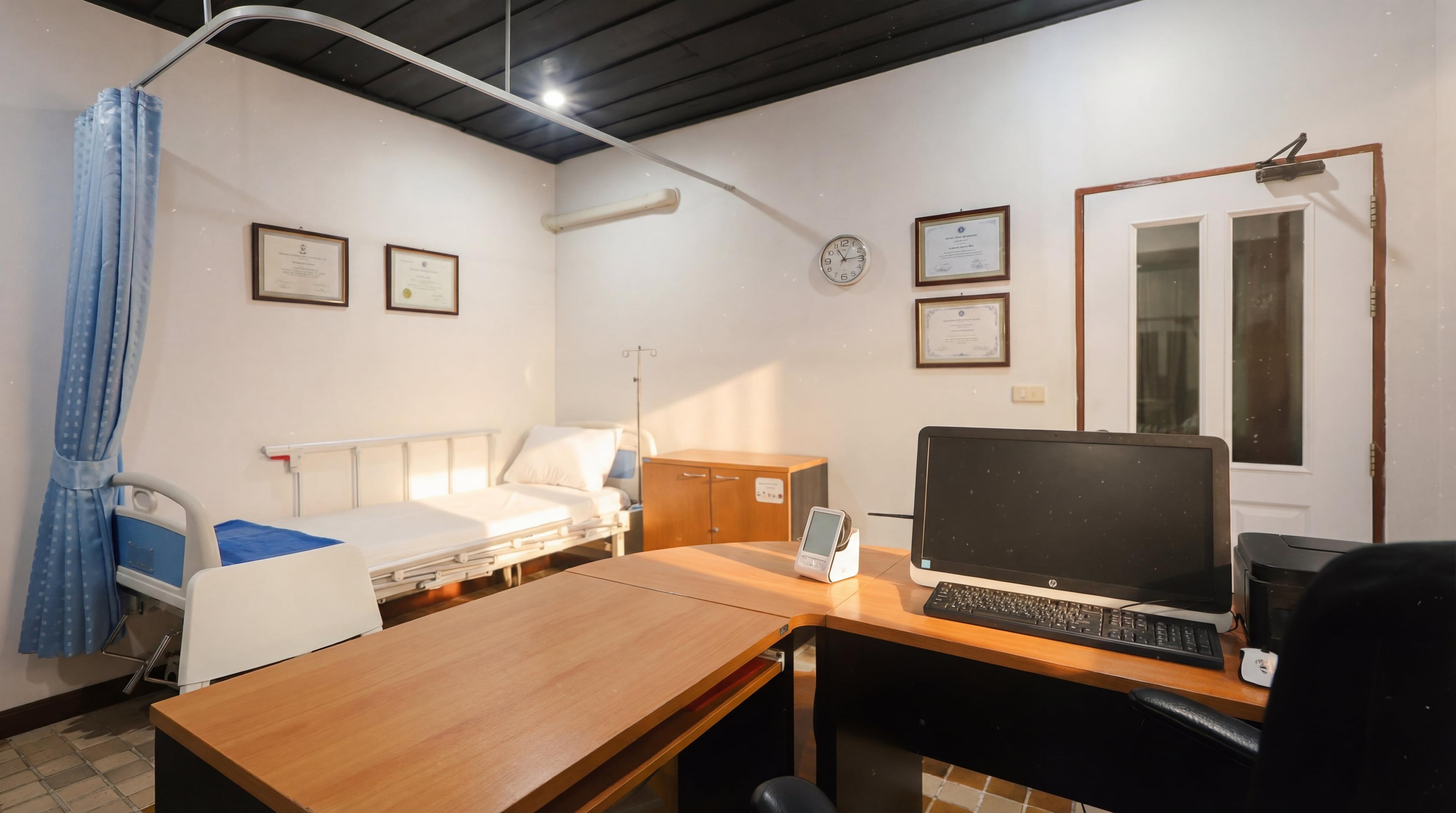
The first week of prescription drug detox at Jintara includes Day 1 psychiatric assessment, Day 2 full medical workup (blood panel, liver function, kidney function, EKG, chest X-ray), and Days 3 to 7 chemical-dependency review with taper planning. SAMHSA's detoxification guidance requires baseline labs and psychiatric oversight before any prescription taper. Jintara includes all Day 2 diagnostics in the program fee.
- Day 1: Psychiatric assessment on arrival: You meet the psychiatrist for an initial assessment. The nursing team begins 24-hour monitoring. Immediate stabilisation drugs are prescribed based on your substance class. Detox is managed through Jintara's clinical team in coordination with hospital partners including Bangkok Hospital Chiang Mai. See the medical detox program for details.
- Day 2: Full medical workup: Blood work including liver function and kidney function. Chest X-ray. EKG. The results determine safe taper parameters. For patients with a history of polydrug use or overdose, the EKG identifies cardiac risks before any medication changes.
- Days 3 to 5: Chemical dependency assessment: Your history is documented: which opioids, benzodiazepines, sleeping pills, or other medication you were taking, what dose, how long you've been taking them, why they were originally given, and when escalation or misuse began. You and the psychiatrist decide together on the detox approach.
- Day 7: Taper protocol finalised: Your individualised taper protocol is set. For opioid detox, methadone is typically underway. For benzodiazepine clients, the stabilisation phase is wrapping up and gradual reduction begins.
As Darren Lockie, Jintara's owner with 15 years in treating addiction, explains: "All detox medication is a discussion with the psychiatrist looking into history, physical condition, and what the client wants to do."





What Happens to the Underlying Condition Once Prescription Drugs Are Removed.
The underlying condition that led to a prescription does not disappear when the medication is removed. Research from the National Center for Complementary and Integrative Health confirms exercise, acupuncture, mindfulness, and other non-opioid approaches are evidence-based alternatives for managing chronic pain after opioid discontinuation. Jintara's psychiatrist assesses whether the original condition still requires treatment and designs a non-addictive care plan from the first week.
Your chronic pain didn't disappear because you became addicted to the painkiller. Your underlying condition is still present underneath the benzodiazepine reliance. Your insomnia will return if the sleep disorder isn't addressed when the sleeping pills are removed.
Jintara's psychiatrist assesses whether the underlying condition that led to the original prescription still requires treatment. If it does, the care plan includes non-addictive alternatives to replace the medicines you were taking.
- After detox from opioids for those with chronic conditions: NSAIDs for inflammation, gabapentin for residual discomfort, massage, and acupuncture. Full resolution may not be immediate. The goal is functional management. Each patient develops a coping mechanism for flare-ups, supported by medication that doesn't bind to opioid receptors.
- After benzodiazepine detox for those with anxiety: EMDR therapy with one of Jintara's three EMDR therapists, led by Denise O'Leary (available for patients staying 60 days or more), cognitive behavioural therapy (CBT) for recognising and coping with situations that trigger drug use cravings, relaxation techniques including mindfulness meditation with Leszek Kudiuk (twice-weekly sessions), and exercise-based stress and trauma reduction. Motivational interviewing (MI) is integrated throughout treatment to build motivation for long term recovery and behavioural change.
- After sleeping pill detox for those with sleep disorders: Behavioural sleep strategies, structured physical activity to support natural sleep onset, melatonin, environmental sleep controls for better sleep quality (private room, quiet facility, 10pm curfew), and ongoing nursing support.
Your biggest concern is probably this: "If I stop taking my medication, my original problem comes back and I have nothing." That concern is rational. Our treatment plan addresses the underlying disorders from the first week, running alongside the detox process rather than waiting until after.

How Does Jintara Treat Opioid Painkiller Addiction.
Jintara treats opioid painkiller addiction with psychiatrist-supervised methadone taper over approximately three weeks, COWS-scored nursing monitoring, and non-opioid symptom support. NIDA's research on medications for opioid use disorder confirms methadone normalises brain chemistry and reduces withdrawal and cravings. Jintara tapers to zero rather than continuing maintenance, because buprenorphine and naltrexone are unavailable in Thailand.
Managing withdrawal symptoms from opioids is uncomfortable but rarely life-threatening under medical supervision. Symptoms typically begin within 12 to 24 hours after the last dose and peak between 48 and 72 hours, which is why opioid addiction treatment is sequenced around that window rather than a standard 7-day detox. Some clients arrive having substituted prescription opioids with kratom as an opioid substitute, while others have escalated to illicit opioids and arrive for heroin withdrawal treatment. Both require the same psychiatrist-led methadone taper protocol, adjusted for the specific substance and use history.
- COWS monitoring and methadone taper: Jintara's nursing team monitors opioid detox using the COWS scale (Clinical Opiate Withdrawal Scale), a standardised scoring tool that tracks symptom severity. The primary approach is a methadone taper over approximately three weeks. This isn't ongoing methadone maintenance. It's a short-term medical process to manage withdrawal symptoms safely and reduce cravings during the acute phase. Many patients arrive wanting to detox without methadone, using support drugs like clonidine. That option is available. In our experience, roughly half switch to methadone by day three when the severity becomes apparent.
- Non-opioid symptom management: NSAIDs, gabapentin for neuropathic discomfort, and acupuncture. Using additional opioids to manage discomfort reinforces reliance and increases overdose chance.
- Buprenorphine and Suboxone aren't available: Both are illegal in Thailand. Medication assisted treatment using these drugs is standard in some countries, but Jintara's position is that methadone serves as a short-term detox tool, not an ongoing maintenance approach. Naltrexone, which blocks opioid receptors to prevent other drugs from producing a high, is also not offered post-detox. Jintara doesn't use medication to treat addiction on an ongoing basis after the detox process is complete.
- Codeine and tramadol follow the same framework: Codeine is a weaker opioid in the same class as oxycodone, but regular codeine use still produces significant addiction. Many patients underestimate codeine because it's available over the counter in some countries. Tramadol sits in the same prescription group but behaves differently, because its dual opioid and serotonergic action produces two overlapping withdrawal syndromes rather than one. All opioids follow Jintara's drug addiction treatment protocols, adjusted based on the specific drug and dose.



How Does Benzodiazepine Tapering Work During Prescription Drug Detox.
Benzodiazepine tapering during prescription drug detox at Jintara runs over eight to twelve weeks with gradual dose reductions set by the psychiatrist. The FDA boxed warning on the benzodiazepine class states that stopping benzodiazepines abruptly or reducing the dose too quickly can cause withdrawal seizures, which is why a gradual taper is required. Jintara's psychiatrist sets the pace based on drug type, dose, and withdrawal response.
- Gradual taper over two to three months: The clinical team uses careful monitoring through vital signs and presentation, with the psychiatrist adjusting the reduction schedule based on how each patient responds.
- Post-zero observation for three weeks minimum: Rebound distress during this period is expected. Denise O'Leary, Jintara's Clinical Director and EMDR Therapist (MA Counselling Psychology, EMDR certified), uses this window to assess the patient's underlying disorders: "We do a basic screen at the start, and then after a week or two, just see how they're doing. If it's substance-related, they'll be better. If they're not better, then we need to do some more digging."
Jintara's full benzodiazepine rehab in Thailand protocol is designed for the extended timeline that safe benzo withdrawal requires.

Is Gabapentin Addictive and How Is It Treated.
Gabapentin and pregabalin produce physical dependence with regular use, and abrupt cessation can cause restlessness, insomnia, nausea, and in rare cases seizures. MedlinePlus, the National Library of Medicine's patient information on gabapentin, documents these withdrawal risks and recommends gradual dose reduction under medical supervision. Jintara tapers gabapentin gradually under psychiatric supervision rather than stopping abruptly.
For clients where gabapentin addiction is the primary presenting condition, rather than a secondary adjunct, the clinical picture requires its own assessment, including polysubstance context, taper pacing, and the degree of nursing observation needed.
- Withdrawal symptoms: Restlessness, insomnia, nausea, and in rare cases seizures. Many people don't realise gabapentin carries this risk until they try reducing their dose. Gabapentin should be reduced gradually under the supervision of a health professional rather than discontinued abruptly.
- Therapeutic use vs dependency: At Jintara, gabapentin is also used therapeutically during detox from other drugs. It helps ease withdrawal symptoms like restlessness and body aches. When a patient arrives already dependent on gabapentin, the approach is to treat gabapentin reliance through gradual dose reduction under psychiatric supervision.

Why Does Rebound Insomnia Make Sleeping Pill Addiction So Hard to Break.
Rebound insomnia after stopping Z-drugs like zolpidem and zopiclone is often more severe than the original sleep problem, making it genuinely hard to believe that sleep without medication is possible. MedlinePlus drug information for zolpidem confirms that stopping abruptly can produce rebound insomnia and withdrawal, and recommends gradual dose reduction under medical guidance. Jintara rebuilds sleep through structured activity, sleep hygiene, melatonin, and environmental controls rather than substituting another sedative.
Extended use of Z-drugs (zopiclone, zolpidem) and other sleeping pills changes natural sleep architecture, and dedicated zolpidem and sleeping pill addiction treatment rebuilds your body's ability to sleep without chemical support. Recovery focuses on restoring natural sleep rather than substituting another sedative.
- Sleep rehabilitation at Jintara: On Day 1, combination medication is prescribed for the acute period. Beyond medication management, the clinical team coordinates a program of physical activity during the day, relaxation techniques before bed, a 10pm curfew with a quiet facility environment, and melatonin supplementation. Tong, Jintara's Fitness and Recovery Coach, designs individual fitness programs that include enough exertion to support natural sleep onset. Night nurses check on clients throughout.
- No one leaves without a plan for managing sleep: Good sleep is possible without sleeping pills or other addictive medication, and the clinical team builds that foundation during treatment.
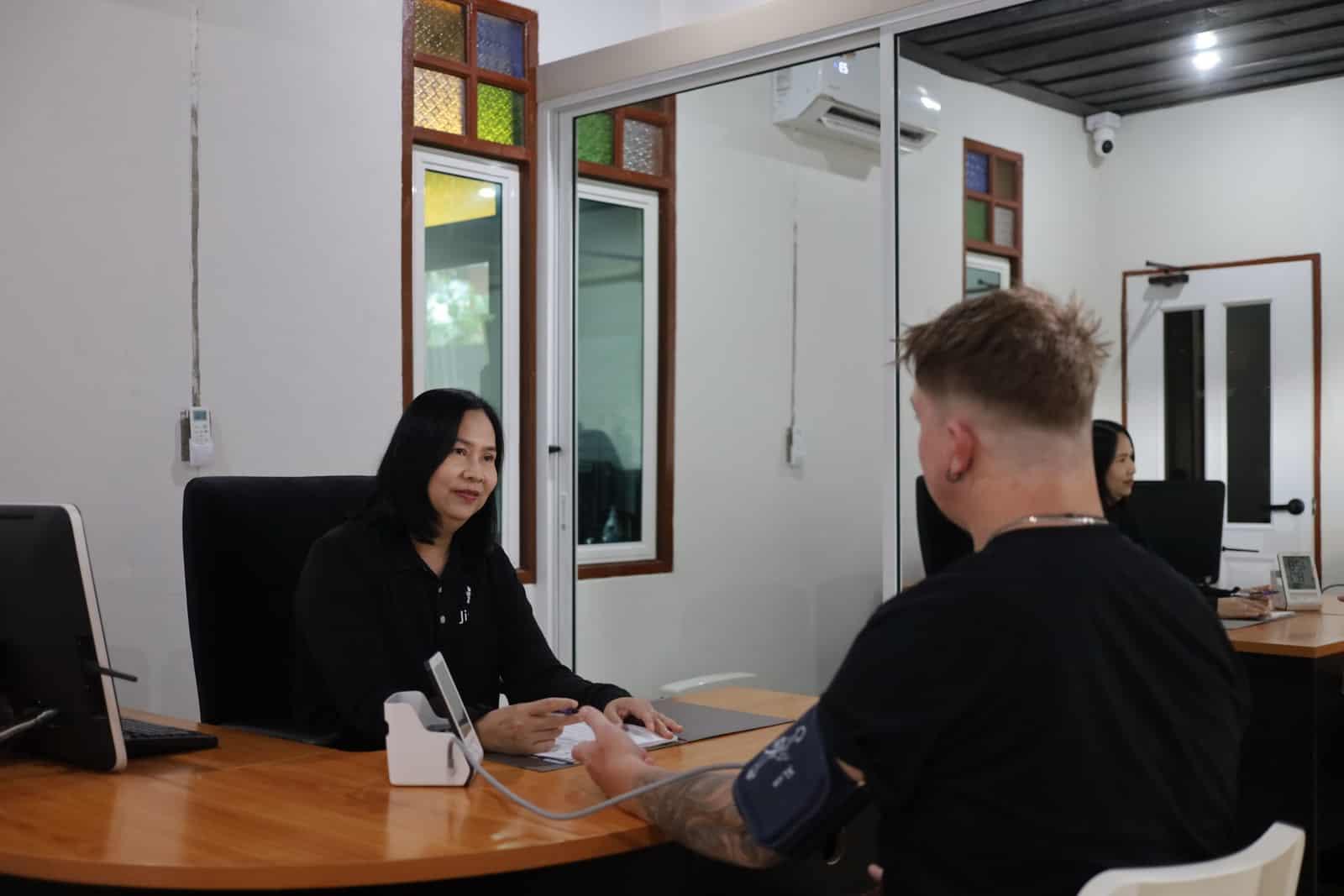

How Does Jintara Handle Polydrug Prescription Dependence.
Polydrug prescription dependence at Jintara is treated with a sequenced detox plan designed by the psychiatrist after a full medical review. Overdose or death is more likely when benzodiazepines are combined with opioid pain relievers or alcohol, a pattern CDC polysubstance use facts covers for mixing depressants and for drinking alcohol while using other drugs. Jintara addresses alcohol withdrawal first when present, then benzodiazepine taper, with opioid detox running sequentially or concurrently based on clinical safety.
Polydrug use complicates every aspect of treatment. Prescription drug detox takes longer because each substance must be managed in a specific sequence. Overdose risk increases when multiple drugs interact. Withdrawal symptoms from one drug can overlap with or mask symptoms from another, making careful monitoring essential.
- Sequenced detox: The psychiatrist maps out the full picture of drug use before designing a detox plan. The sequence matters: if alcohol is involved, it's addressed first. The benzo taper follows. Opioid detox can run concurrently or sequentially depending on what's safest for that patient.
- Dual diagnosis treatment: Many people with co-occurring mental health disorders such as anxiety, depression, or PTSD were given multiple types of medication for overlapping conditions. Jintara's dual diagnosis approach works to treat both the addiction and the underlying mental health conditions simultaneously.
- Highest risk combinations: Patients using more than one drug, particularly alcohol and benzodiazepines together, face the highest medical risk. Mixing prescription drugs like benzodiazepines with alcohol dramatically increases the chance of a fatal overdose.

Who Is Jintara's Prescription Drug Rehab Designed For.
Jintara's prescription drug rehab serves adults with dependence originating from legitimate medical prescriptions, commonly involving opioids, benzodiazepines, gabapentinoids, or sleeping pills. Many of those admissions start with a medication that was prescribed for a genuine medical reason. Jintara's program length is matched to drug class and severity. Our clients include:
- Professionals who developed dependence through long term use of medication prescribed by their doctor and need a confidential program away from their home community
- People with dual diagnosis, where prescription drug addiction co-occurs with anxiety, depression, PTSD, or chronic pain
- Clients with polydrug use, particularly those combining opioids with benzodiazepines or alcohol
- Adults who've tried to taper at home without professional support and experienced severe withdrawal symptoms or relapse
- People from Australia, the UK, the United States, and across Asia looking for a prescription painkiller rehab in Thailand with Western-trained clinical staff
- Individuals who need longer than 30 days. Most prescription drug clients at Jintara complete 30 to 90 day programs depending on the drug class
Jintara's program length is determined by several factors: the drug class, severity of addiction, presence of trauma or mental health conditions, and your home situation. Darren Lockie: "We tell people what we specialise in, we tell them what we don't do, and we refer them to rehabs that might be a better fit." If your situation isn't something Jintara can treat safely, we'll tell you directly and help you find the right facility.

What Is Included in Prescription Drug Treatment at Jintara.
Jintara's prescription drug program fee covers a private room, psychiatrist-supervised detox, Day 2 full medical workup, twenty-four-hour awake nursing, individual and group therapy, EMDR for trauma histories in programs of 60 days or longer, fitness programming, and aftercare planning. SAMHSA's TIP 45 lists these elements as the minimum structural features of evidence-based residential addiction treatment. Every prescription drug addiction program at Jintara includes:
- Private room with en-suite bathroom
- On-site medical detox with psychiatrist-supervised protocol for your specific drug class
- Full Day 2 medical workup (blood work, liver function, kidney function, chest X-ray, EKG) at Jintara's expense
- 24/7 awake nursing during the critical withdrawal phase
- Individual therapy sessions (50 minutes, twice weekly) with three therapists for a maximum of 10 clients
- Group therapy sessions (daily, 4 to 5 times per week)
- EMDR therapy for clients with trauma histories (60-day programs and longer)
- Psychiatric medication management throughout detox
- Assessment and treatment plan for the underlying condition that led to the original prescription
- Fitness program with personal training (Tong, Bachelor of Sports Science)
- Mindfulness, yoga, and holistic wellness activities
- Excursions in Chiang Mai (experiencing sober life in a real-world setting)
- Aftercare plan with health professional connections at home
Program duration: 30 to 90 days. Jintara's residential program is all-inclusive at USD $12,500 for 30 days, $25,000 for 60 days, and $37,500 for 90 days. Extensions are available from one week minimum, with full pricing details available on our pricing page.

How Does Prescription Drug Recovery Begin at Jintara.
Prescription drug recovery at Jintara begins with a free confidential call covering medication name, dose, duration, and other substances involved. SAMHSA's treatment locator recommends a pre-admission clinical conversation to confirm safe detox planning before any travel arrangements are made. You don't need to have all the answers ready. Before your call, it helps to know:
- What medication you're taking (brand name or generic)
- Your approximate daily dose
- How long you've been taking it
- Whether you use other substances (alcohol, other drugs, or additional prescriptions)
This information helps our admissions team assess whether Jintara is the right fit and give you an accurate program recommendation. If detox is needed, it happens on-site with 24-hour nursing. See how our medical detox program works. "Everybody who comes to rehab has ambivalence. That is okay. We can work with that," says Darren Lockie.

Talk with Our Admissions Team
Your enquiry is confidential and goes only to our admissions team.
Frequently Asked Questions About Prescription Drug Addiction Treatment
Is dependence on prescribed medication common?
Yes. Opioid painkillers, benzodiazepines, gabapentin, pregabalin, and sleeping pills all carry dependence risk when taken regularly, even at recommended dose levels. The fact that a doctor wrote the prescription doesn't prevent the body from developing physical reliance. Drug abuse in the traditional sense isn't how most prescription drug patients got here. They followed their doctor's instructions.
How do I know if I'm addicted to my medication?
Signs of prescription drug addiction include needing higher doses for the same effect (tolerance), feeling unwell when you miss a dose, continuing the medication after the original condition has resolved, visiting multiple doctors to maintain supply, taking more than originally prescribed, and worry about running out. If any of these apply, a health professional can help you work out what's happening and what to do next.
Can I stay on some medicines during detox?
Detox doesn't mean stopping all medication at once. Opioid detox at Jintara typically involves a methadone taper over approximately three weeks. Benzodiazepine detox involves gradual reduction over two to three months, with the dosage tapered gradually under psychiatric supervision. Non-addictive medication for the underlying condition may be introduced during or after the detox process.
What about chronic pain after opioid detox?
After detox from opioids, Jintara uses non-opioid alternatives: NSAIDs, gabapentin for residual discomfort, physical therapy, and massage. The psychiatrist assesses whether the chronic condition still needs care and how to treat it. Some pain may persist. The goal is functional management, developing a coping mechanism for flare-ups, and using medication that doesn't trigger the same neural pathways.
Is gabapentin addictive?
Gabapentin and pregabalin (Lyrica) can produce physical dependence with regular use. Withdrawal symptoms include anxiety, insomnia, and in rare cases seizures. Gabapentin abuse is a growing global concern. Few treatment centres address it with dedicated clinical attention. Gabapentin abuse often goes unrecognised because doctors don't always associate it with addiction.
How long does prescription drug detox take?
It depends on the drug class. For opioids such as codeine, tramadol, and morphine: acute withdrawal from codeine or similar opioids lasts 5 to 10 days, with post-acute symptoms potentially continuing for weeks. For benzodiazepines: the taper process takes two to three months, followed by a minimum three-week observation period. For sleeping pills: acute insomnia typically lasts one to two weeks after the last dose, with sleep patterns improving over months.
Is it dangerous to quit prescription drugs suddenly?
For some drug classes, yes. Unsupervised benzodiazepine cessation can cause seizures and is potentially life-threatening. Opioid withdrawal is uncomfortable but rarely life-threatening with proper clinical support. Gabapentin can cause seizures in some patients if stopped abruptly. A health professional should supervise all prescription drug detox to manage overdose risk and complications.
What if my doctor is still prescribing the medication?
Many patients arrive at Jintara still taking active medication. The psychiatrist works with you to manage the transition. With your consent, the team can coordinate with your current doctor. The goal is safe detox combined with an ongoing plan for the underlying disorders.
How is prescription drug detox different from other drug detox?
The detox mechanisms are pharmacologically identical whether medicines were directed by a doctor or obtained otherwise. The difference is in the clinical approach: prescription drug patients receive assessment of the underlying condition, a plan for managing that condition without addictive drugs, and support for the particular shame many prescription drug patients feel about becoming addicted to something a doctor told them to take.
Can I bring my current medicines to Jintara?
Yes. All current medication is documented at admission through a reconciliation review. The psychiatrist reviews everything you're taking and integrates it into your detox plan. Don't change what you're taking before arrival without guidance from a health professional.
What is the risk of relapse after treatment?
Relapse is a recognised part of the recovery process for many patients with drug use disorders. It doesn't mean treatment failed. The brain chemistry changes caused by prolonged drug use take time to reverse. Jintara's aftercare plan includes strategies for managing cravings, recognising early red flags, and connecting with health professionals and support groups for ongoing recovery support. Personal relationships often need rebuilding, and the aftercare plan addresses this too.
What does prescription drug rehab in Thailand cost?
Jintara's residential program is all-inclusive at USD $12,500 for 30 days, $25,000 for 60 days, and $37,500 for 90 days. Extensions available from one week minimum. The price includes medical detox, the Day 2 medical workup, therapy, fitness, holistic sessions, accommodation in a private room, and all meals.
Has Jintara been independently assessed for its clinical protocols?
Yes. Jintara holds joint accreditation from the Healthcare Accreditation Institute (HAI), the Princess Mother National Institute on Drug Abuse Treatment (PMNIDAT), and the Department of Medical Services, Ministry of Public Health. Certificate 25/2569 was issued on 20 May 2026 and is valid through 19 May 2029. The standard applied is Thailand's national one for drug treatment and rehabilitation facilities.
What does the national accreditation mean for prescription drug detox specifically?
It means Jintara's detox protocols, medication handling, and clinical oversight were assessed against Thailand's national standard for drug treatment and rehabilitation facilities, by three separate government bodies. For prescription drug patients, this covers how psychiatrist-supervised taper plans are designed, how controlled medication is handled and documented, and how withdrawal is monitored around the clock. An independently verified clinical standard gives families a concrete reference point beyond Jintara's own claims about its protocols.
Accreditation certificate
Jintara is accredited against Thailand’s national quality standard for drug treatment and rehabilitation facilities, jointly certified by the Healthcare Accreditation Institute, the body that accredits Thailand’s hospitals, with the Princess Mother National Institute on Drug Abuse Treatment and the Department of Medical Services, Ministry of Public Health. Certificate no. 25/2569, valid 20 May 2026 to 19 May 2029. To check it, ask us for a copy of the certificate, or confirm it by facility name with the Princess Mother National Institute on Drug Abuse Treatment or the Department of Medical Services.