

Trauma Therapy at an Adult-Only Rehab in Thailand with EMDR-Trained Therapists
If you are looking for trauma therapy in Thailand, you may want relief, but you may also feel unsure about timing. That is normal. At Jintara, trauma work is steady and consent-led, with clear boundaries and medical oversight.

Fully Licensed and Hospital Accredited





SAMHSA · DSM-5
Trauma-related conditions including post-traumatic stress disorder are defined in the DSM-5 and are effectively treated with evidence-based therapies including EMDR, CBT, and Cognitive Processing Therapy when delivered alongside adequate stabilisation. SAMHSA identifies trauma-informed care as a framework that recognises the widespread impact of trauma and integrates this knowledge into policies, procedures, and practice across all treatment settings.
Source: SAMHSA Trauma-Informed Care

How Does Jintara Approach Trauma Therapy During Early Recovery.
Trauma therapy can support recovery, but it needs the right pace. If you are still stabilising, your first job is safety and steadiness. Inside our wider residential program, we build coping skills for sleep, cravings, and emotion regulation before any deeper processing begins.
At Jintara, we start with grounding, daily structure, and a plan for nights. Some people begin trauma-focused work during their stay. Others do preparation work now and defer processing until mood, medication, and safety are more stable. This is not 'avoiding it.' It is careful pacing that protects sobriety and mental health recovery.
You stay in control. You can slow down, pause, or stop at any time. We do not ask for graphic details.

How Does Trauma-informed Therapy Work at Jintara.
Trauma-informed care is a systemic approach to delivering services that recognises the widespread impact of trauma and integrates this knowledge into policies, procedures, and practice. SAMHSA's trauma-informed care guidance identifies safety, trustworthiness, peer support, collaboration, empowerment, and cultural sensitivity as the six core principles that shape all trauma-informed practice. At Jintara, these principles govern how every interaction and session is structured.
Trauma-informed therapy is not a single technique. It is how care is delivered. Many people worry they will be pushed, exposed, or left feeling raw. We take that seriously. At Jintara, we focus on safety, consent, and steady pacing from the first day.
Trauma can show up in many ways, even in people who look 'fine' on the outside. Some research suggests around 70% of people encounter trauma at some point in their lives. That is why trauma-informed care starts with a simple assumption:
Trauma-informed care operates on the assumption that every individual seeking services may be a trauma survivor.
You do not need to label yourself. This assumption simply means we design care to be safer and more predictable from the start. The concept of trauma-informed care was introduced in 2001 by Harris and Fallot, as a shift in how services are delivered to trauma survivors.
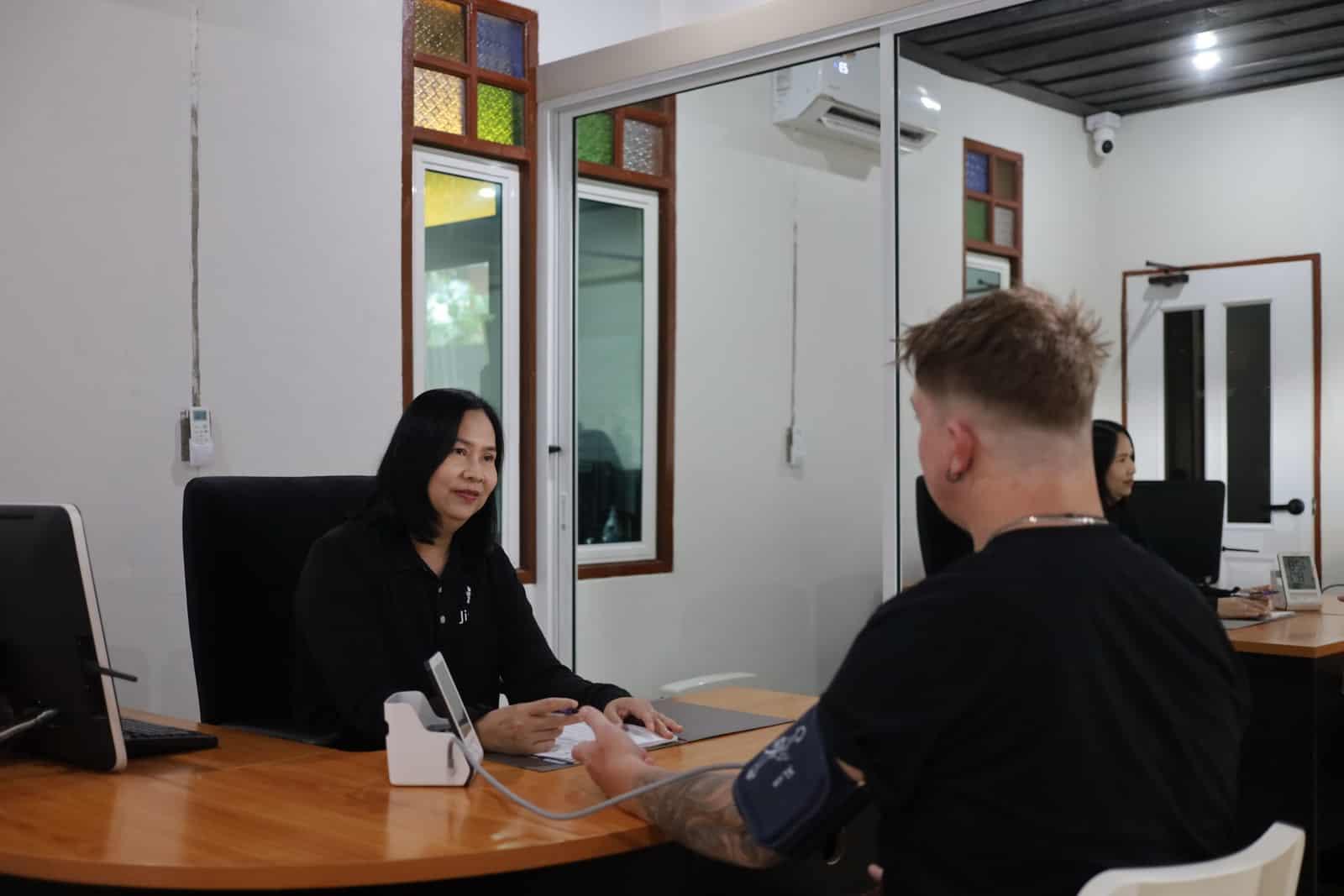
What Does Trauma-informed Care Mean in Practice at Jintara.
Trauma-informed care in practice means applying an evidence-based framework to every part of the treatment environment. SAMHSA's trauma-informed care approach organises this into four interconnected steps known as the 4 R's, a sequential framework that, because the trauma-addiction connection is so consistent, is adopted across mental health and addiction services and moves from awareness of trauma's impact to active resistance of re-traumatisation in clinical settings. At Jintara, these principles shape daily care:
- Realising the widespread impact of trauma
- Recognising signs and symptoms
- Responding by integrating trauma knowledge into daily practice
- Resisting re-traumatisation
Trauma-informed care also includes six core principles: safety, trustworthiness, peer support, collaboration, empowerment, and consideration of cultural factors. Cultural factors can shape traumatic experiences, coping methods, and engagement in therapy. We keep care respectful and adaptable.
What Will You Experience Day to Day in Jintara's Trauma Treatment.
Structured, predictable daily care reduces anxiety and supports trauma recovery by giving the nervous system a safe, consistent environment to stabilise. SAMHSA's TIP 45 chapter on settings and levels of care covers placing people in the right intensity of residential or monitored detox. At Jintara, the daily structure adjusts as you stabilise. Here is what that looks like:
- A clear treatment plan from day one, with review points as you stabilise.
- Small groups in our adult-only facility, and privacy boundaries that are explained.
- Trauma processing is always 1:1 in individual therapy, not in group settings.
- Skills first, then trauma-focused work when readiness is there.
- Coordinated care across our team, so sleep, medication, nursing, and therapy stay aligned.
- Medical coordination when needed, including escalation to hospital if risk changes.
- Day 2 hospital-grade tests included, with bloods, EKG, and chest X-ray to surface anything that should shape your trauma plan.
- 10 clients at a time and 32 staff, so therapy, nursing, and medical care stay closely coordinated.


How Does Jintara Tailor Trauma Therapy to Your Specific Needs.
Trauma therapy is matched to a person's current clinical presentation, not a one-size approach. The VA's National Center for PTSD identifies multiple evidence-based therapies for PTSD and trauma, including CPT, Prolonged Exposure, and EMDR, each suited to different presentations of post-traumatic symptoms and co-occurring conditions. At Jintara, the starting method is chosen based on what supports steadiness and safety between sessions.
A traumatic event can be a single event like a serious injury, sexual violence, domestic violence, sexual assault, or a natural disaster. Assault and related harm are treated as sexual trauma treatment when that is the presenting history. It can also be a pattern where events occurred over time, which is the usual shape of PTSD rehab for first responders and other work-acquired exposure. Any of this can cause emotional or psychological harm, including anxiety, sleep disruption, shutdown, or other trauma related symptoms.
Some people meet criteria for post traumatic stress disorder. Others live with complex trauma that affects trust, self-worth, and relationships. These are among the conditions we treat, and the right trauma therapy depends on timing, safety, and support.
Trauma-focused psychotherapy is defined as any therapy that uses cognitive, emotional, or behavioural techniques to facilitate the processing of a traumatic experience. In practice, that can mean different things for different people.
At Jintara, the method is chosen based on what supports steadiness between sessions. That may mean starting with CBT or DBT skills, then stepping into trauma-focused work later. If you have done other trauma approaches before, we factor that into your plan and your aftercare handover.
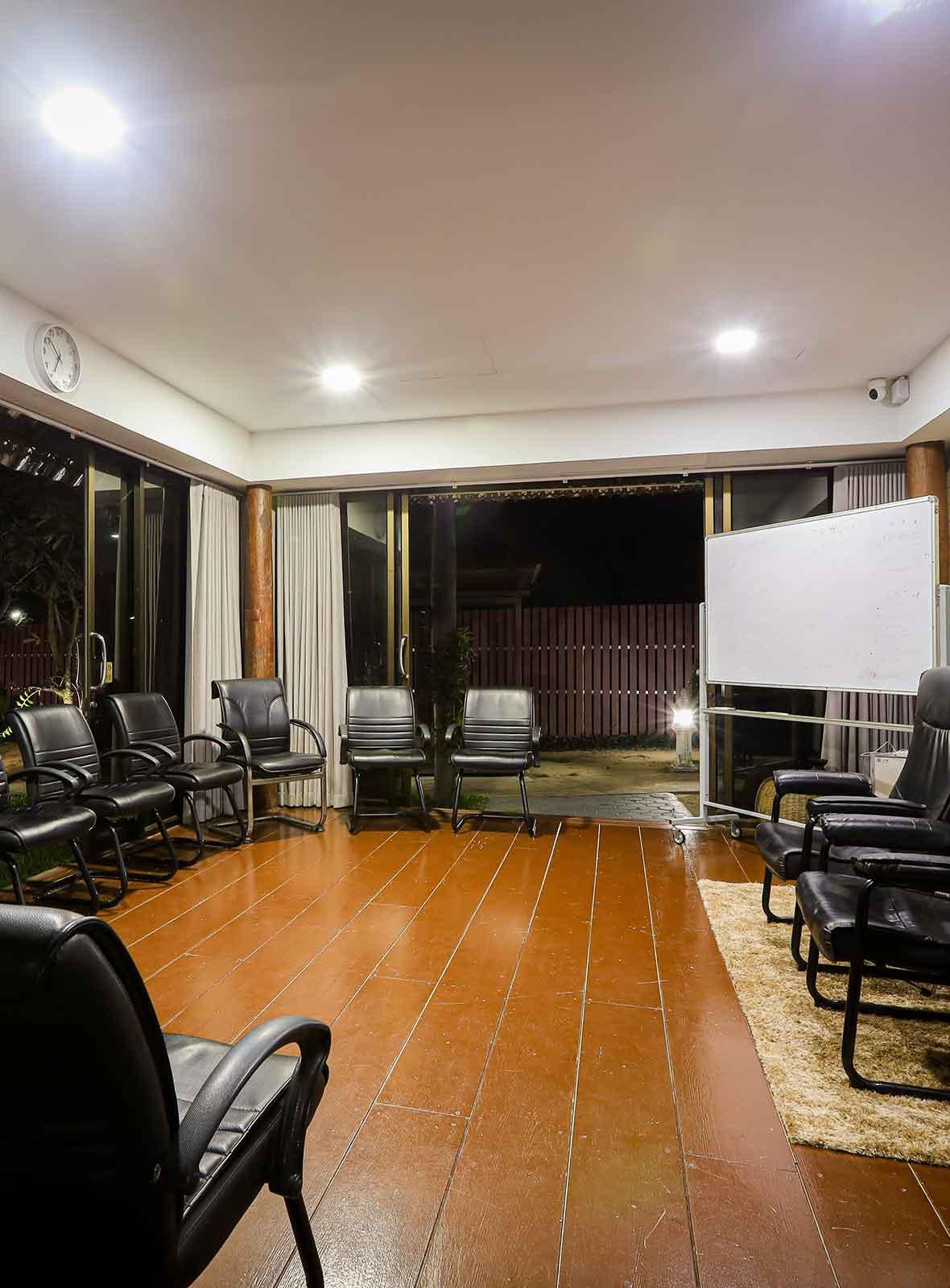
What Is Cognitive Behavioural Therapy and How Does It Help in Rehab.
Cognitive behavioural therapy (CBT) is a structured, evidence-based psychotherapy that examines how thoughts, beliefs, and behaviours interact to maintain addiction and emotional distress. NIDA's treatment overview describes cognitive behavioural therapy as a way to work with stressful thoughts and with cues that can trigger a return to use. At Jintara, CBT begins in the first week to give clients practical tools the same day.
CBT also supports anxiety and depression while your nervous system is still settling, and the skills carry between sessions to steady your nights and quieten cravings. How those skills run inside a stay is set out on the structured CBT program at Jintara page for the 30-day sequence. Over time, the same approach helps shift the thinking patterns that keep someone stuck.

Do You Use Dialectical Behaviour Therapy Skills at Jintara.
Dialectical behaviour therapy (DBT) is an evidence-based skills program that builds four core capacities: mindfulness, distress tolerance, emotion regulation, and interpersonal effectiveness. Published research on DBT supports its effectiveness for people managing both substance use and emotional dysregulation, including the intense emotional states that trauma can trigger. At Jintara, DBT skills are taught in the first weeks to support daily stability before deeper clinical work begins.
DBT is also used in some settings for personality disorders. In rehab, we use it as a practical skill set for early stability and safer choices.

What Is EMDR Therapy and How Does It Work.
Eye Movement Desensitisation and Reprocessing (EMDR) is a trauma therapy validated across PTSD, anxiety, and addiction recovery that uses bilateral stimulation while the client holds fragments of a difficult memory in mind to reduce distress and build more adaptive beliefs. EMDRIA documents EMDR as recognised by the WHO, APA, and VA as evidence-based trauma treatment.
Our lead trauma therapist is EMDRIA-certified, the only EMDRIA-certified clinician currently practising in Thailand. At Jintara, EMDR therapy follows a clinical readiness assessment before it begins.
You are not pushed to share details you do not want to share. You can pause or stop at any time. Here's a few simple things to know about EMDR:
- EMDR helps the brain re-file a trauma memory so it triggers less distress.
- It uses bilateral stimulation, often eye movement desensitisation using guided eye movements.
- Sessions are structured, with preparation and closure so you leave grounded.
- It runs alongside stabilisation, not instead of it.
- You can slow down, pause, or stop at any time.

What Are Exposure Therapy and Cognitive Processing Therapy for Trauma.
Exposure therapy and Cognitive Processing Therapy (CPT) are first-line, evidence-based treatments for PTSD and trauma. The VA's National Center for PTSD identifies both as strongly recommended interventions, and residential PTSD treatment in Thailand sets out how each one is chosen after assessment: Prolonged Exposure helps clients reduce avoidance of trauma memories step by step, while CPT restructures stuck or distorted beliefs about the traumatic event. At Jintara, these approaches are considered when stabilisation is secure and readiness indicators are met.
Exposure therapy can include imaginal exposure and in vivo exposure. This means working with trauma reminders in a planned way, not 'being thrown in.'
Another trauma-focused option is Cognitive Processing Therapy. Cognitive Processing Therapy (CPT) was developed to help people with trauma by teaching them how to change their thinking about the experience. Cognitive Processing Therapy (CPT) helps individuals change stuck beliefs about traumatic events.

How Do You Know If You Are Ready for Trauma Therapy.
Readiness for trauma-focused therapy is a clinical determination based on stability of sleep, cravings, emotional regulation, and coping capacity, not willpower or motivation alone. SAMHSA's trauma-informed care framework emphasises that trauma processing requires a foundation of safety and predictability before deeper memory work is clinically appropriate. At Jintara, readiness is assessed collaboratively using a structured set of markers.
At Jintara we assess your readiness based on several factors, including your current mental state and support systems. This is not an exhaustive list, but if several items are 'not yet,' we build these foundations first.
- My sleep is starting to settle most nights.
- My cravings for drugs or alcohol feel more manageable, even if they still show up.
- I can use at least one grounding skill when I get overwhelmed.
- I can stay present in session without feeling completely flooded.
- My medication plan and mood feel more steady from week to week.
- I can commit to the time and support needed for trauma work.



When Does Jintara Defer EMDR and Trauma Processing.
Trauma processing is deferred when stabilisation is insufficient for safe memory reprocessing. SAMHSA's trauma-informed care principles establish safety as the foundational requirement of trauma-informed practice, and EMDR should not proceed when active withdrawal, severe insomnia, medication instability, or safety risk is present. At Jintara, deferral decisions are made by clinical assessment, not assumptions about readiness. Clinical indications for deferral include:
- You are in acute withdrawal, or detox is still being stabilised.
- Severe insomnia is ongoing, or nights feel unsafe.
- Cravings are intense and hard to manage day to day.
- Mood is highly unstable, or medication changes are still underway.
- Dissociation, panic, or overwhelm is frequent and hard to settle.
- There is active safety risk, immediate danger, or medical risk that needs closer monitoring.
In these cases we prioritise stabilisation, coping skills, and medical coordination before trauma processing. Early intervention matters, but timing matters more. For families choosing from a distance, it helps to know these clinical protocols were independently assessed by three national bodies, including the Healthcare Accreditation Institute, the same body that accredits Thailand's hospitals. That assessment confirmed Jintara's care meets Thailand's hospital-grade accreditation standard. Proven to a hospital bar, still small enough to know your loved one by name.

How Does Jintara Handle Consent and Boundaries in Trauma Work.
Consent and clear boundaries are structural requirements of trauma-informed care, not optional preferences. SAMHSA's six core principles of trauma-informed care include safety, trustworthiness, and empowerment as foundational, meaning every trauma session at Jintara is built on what you have agreed to, with clear stop signals, controlled disclosure, and no pressure to share more than is safe.
If you have spent years containing or masking everything with drinking or substance use, trauma work can feel like taking the lid off. The point at Jintara is not 'more emotion.' The point is safety, pacing, and choice, so you do not leave sessions flooded.
Trauma therapy aims to validate individuals' experiences and emotions related to their trauma. That starts with consent and clear limits.
- You lead the pace. We do not rush trauma processing.
- No forced disclosure. You choose what you share and when.
- A clear stop signal is agreed early. You can pause at any time.
- We stay inside safeguarding lines. Sessions remain steady and boundaried.
- Family updates only happen with your consent and clear limits.
Therapy can help validate a person's experiences and offer the understanding needed to start healing. Trauma therapy can help individuals build trust, which may have been disrupted by traumatic experiences.
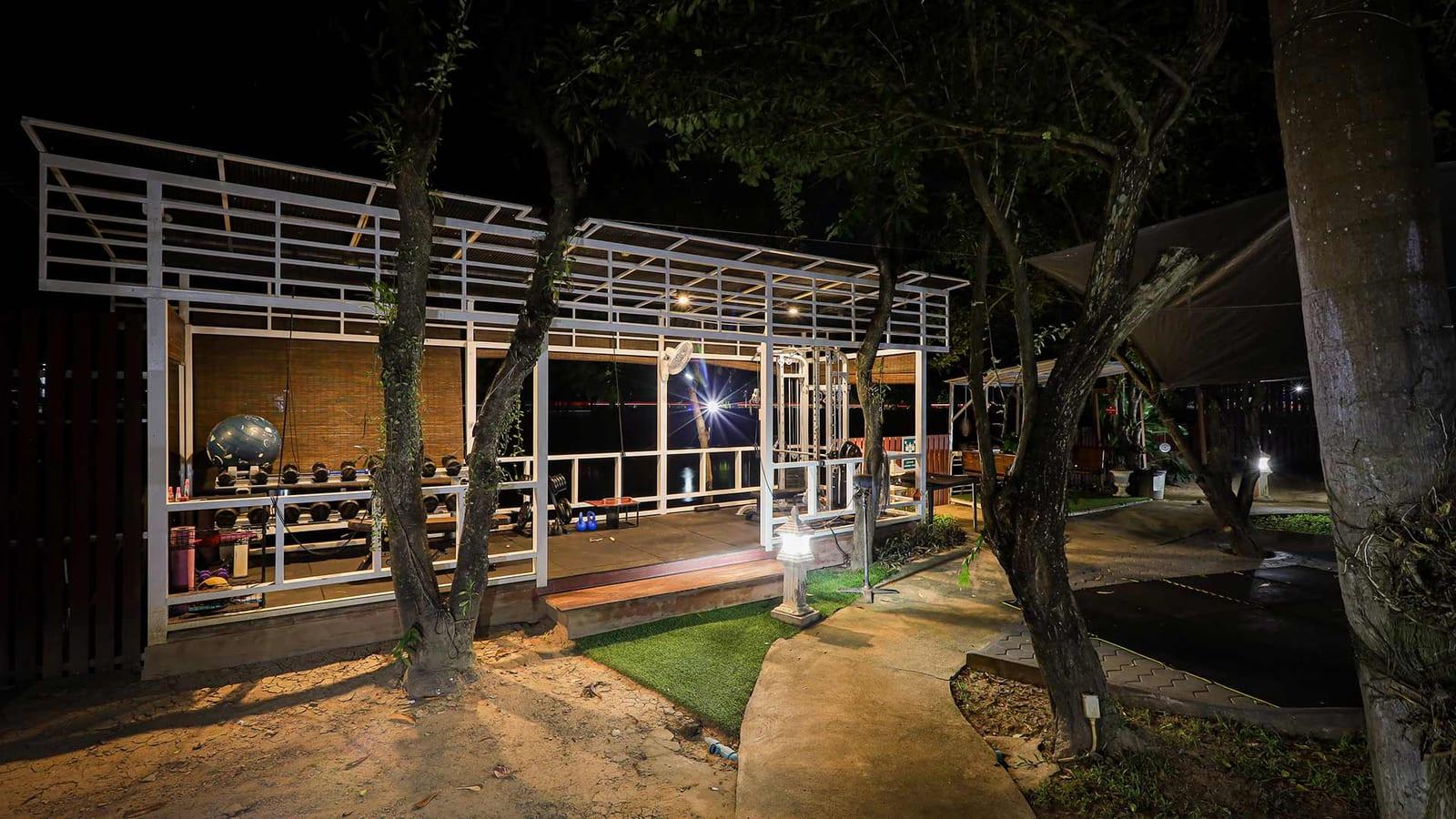
How Does Physical Movement Support Trauma Recovery at Jintara.
Physical movement and somatic regulation practices are evidence-based complements to trauma-focused therapy, helping to reduce stress hormones, improve sleep, and build body-based coping capacity. SAMHSA's trauma-informed care principles recognise that trauma affects the body and nervous system as much as the mind, making movement, breathing, and grounding practices an integral part of recovery. At Jintara, movement supports the daily routine:
- Gentle daily activity that supports routine.
- Simple breath and grounding practices you can repeat anywhere.
- Strength and fitness basics that build confidence and body awareness.
- A plan for when stress spikes, including coping strategies and coping methods that do not rely on willpower.
This is not about performance. It is about stability you can keep after discharge.

How Do Trauma Symptoms Connect to Relapse Risk in Addiction Recovery.
Unresolved trauma symptoms including sleep disruption, shame, anxiety, and emotional flooding are among the primary drivers of relapse in addiction recovery. SAMHSA's trauma-informed research links unaddressed trauma to significantly poorer substance use treatment outcomes, which is why Jintara treats trauma as part of relapse prevention, not a separate stream. For clients presenting with heroin addiction rehab needs alongside trauma, the clinical team sequences trauma processing to begin only once the acute detox phase is complete. Many clients benefit most from concurrent dual diagnosis treatment alongside their trauma work.
Effective trauma therapies reduce PTSD symptoms, anxiety, and flashbacks by integrating experiences and building coping mechanisms. Therapy can help clients integrate traumatic events and understand them, enabling them to begin the healing process. Trauma therapy can also help individuals face their fears in a safe environment, but only when stabilisation is strong enough.

Will You Receive an Aftercare Trauma Plan After Leaving Jintara.
Aftercare planning is a clinical component of every residential stay at Jintara, particularly for clients completing trauma-focused work. SAMHSA's treatment improvement guidance identifies structured aftercare as a key determinant of long-term recovery outcomes, with discharge without a clear plan substantially increasing relapse risk. Your aftercare trauma plan at Jintara could include:
- Handover to an EMDR-capable therapist in your local area when appropriate.
- A written summary and roadmap for ongoing therapy goals.
- A coping toolkit for triggers, sleep, and stress.
- A relapse prevention plan that links trauma triggers to practical steps.
- Planned follow-ups and support prompts so you are not doing it alone.
Your handover therapist receives a clinical summary, current treatment goals, and recommended next steps so the work continues without restarting from scratch. We follow up at planned intervals, and we can re-engage if stress rises or you need a refresher on skills.

How Do You Start a Confidential Conversation with Jintara About Trauma.
Every admissions conversation at Jintara begins from a position of confidentiality and no pressure. SAMHSA's trauma-informed care principles identify safety and empowerment as the foundation of meaningful care conversations, especially for people carrying trauma. Darren, Jintara's Owner, is available to help you identify the right next step without commitment. In that call, we can cover:
- Your trauma readiness checklist
- When to defer EMDR and what to do first
- Safeguarding and consent boundaries
- What an aftercare trauma plan can look like

Talk with Our Admissions Team
Your enquiry is confidential and goes only to our admissions team.
Common questions about treating trauma & addiction in Thailand
Yes. Jintara holds accreditation under Thailand's national quality standard for drug treatment and rehabilitation facilities, jointly certified by the Healthcare Accreditation Institute (the body that accredits Thailand's hospitals), the Princess Mother National Institute on Drug Abuse Treatment, and the Department of Medical Services, Ministry of Public Health. Certificate no. 25/2569, valid May 2026 to May 2029. Jintara is one of only six private rehabs in Thailand to hold this accreditation.
It means the clinical protocols governing how we handle trauma work, including when we defer trauma processing, how we manage destabilisation, and how we coordinate medical oversight, were independently assessed by national authorities against the same standard applied to Thailand's hospitals. For a family choosing a trauma program from overseas, it means the safety procedures are not just promises: they cleared a national inspection.
Trauma therapy is specialised treatment that helps individuals heal from distressing events by processing memories and emotions in a safe space. It aims to reduce the physical, emotional, and psychological effects of a traumatic event. Trauma therapy can help individuals develop coping skills to manage their trauma-related symptoms. It can also help clients challenge problematic beliefs they may have developed about themselves and the world around them. Many people find it improves overall functioning and quality of life over time.
No. We do not require graphic detail. You can share at a level that feels manageable. You can pause, slow down, or stop at any time.
EMDR is part of Jintara's trauma-focused care, but it is not the starting point for everyone. It depends on readiness, sleep, stability, cravings, and how you cope between sessions. For some clients, deeper processing is more suitable in a second month.
Eye movement desensitisation is part of EMDR. It uses eye movements as bilateral stimulation while you hold parts of a trauma memory in mind. The aim is to reduce distress and support safer processing.
We defer when safety is not steady enough. Common reasons include acute withdrawal, severe insomnia, intense cravings, unstable mood or medication, or not yet having coping skills between sessions. In these cases we prioritise stabilisation, skills, and medical coordination before trauma processing.
Trauma processing at Jintara is always 1:1 in individual therapy, not in groups. Groups may still include skills and psychoeducation. If a client chooses to share in group, it is by choice, not pressure.
We start with coping skills early. DBT-informed steps can reduce panic and help you return to the present. If you become overwhelmed, we slow down and return to stabilisation.
For many people, trauma symptoms drive stress, shame, and cravings. When stress rises, relapse risk can rise too. We treat relapse prevention as a skills plan, not willpower.
We use cognitive behavioural therapy and DBT-informed skills as part of stabilisation and relapse prevention. Other methods exist too, like psychodynamic therapy or exposure therapy models. Fit and timing matter most.
PTSD is defined in the diagnostic and statistical manual (DSM-5). We can support PTSD treatment as part of an overall plan, when it is safe to do so. In early recovery, we also track symptoms over time because sleep, withdrawal, and medication changes can affect what you feel. If PTSD symptoms remain after stabilisation, we plan trauma-focused work and aftercare with clear safeguards.
Only with your consent. We agree together what can be shared and when.
Before you leave, we build an aftercare trauma plan. This may include a referral report, a handover path to an EMDR-capable therapist, and clear steps you can follow when stress rises.
Independently Verified
Jintara is accredited against Thailand’s national quality standard for drug treatment and rehabilitation facilities, jointly certified by the Healthcare Accreditation Institute, the body that accredits Thailand’s hospitals, with the Princess Mother National Institute on Drug Abuse Treatment and the Department of Medical Services, Ministry of Public Health. Certificate no. 25/2569, valid 20 May 2026 to 19 May 2029.