

Residential mental health care that treats the cause, not just the symptom.
At Jintara, mental health and addiction are treated as what they almost always are: the same problem. Every client receives a psychiatrist-led assessment on the day they arrive, 65 to 70 hours of therapy over a 30-day dual diagnosis treatment program, and a clinical team whose sole focus is understanding why you are struggling, not just stabilising the surface. Based in Chiang Mai, Thailand.


Fully Licensed and Hospital Accredited

Mental health treatment at Jintara addresses addiction and psychological wellbeing simultaneously.
Mental health treatment at Jintara addresses both addiction and the psychological conditions that sustain it. Those conditions, including anxiety, depression, trauma, and burnout, both drive substance use and are worsened by it. Nearly 99% of clients who arrive at Jintara present with a dual diagnosis, meaning they carry both a primary addiction and at least one co-occurring mental health condition, even when they have not labelled it as such. Darren Lockie, Founder and CEO: "Most people who come to us don't realise they've been self-medicating underlying anxiety or depression with drugs or alcohol."
This clinical reality shapes everything about how the program runs. Treatment does not sequence addiction first, then mental health later. It addresses them together from day one, because the two conditions sustain each other and cannot be resolved in isolation. Medical detox creates the physical clarity needed for psychological work to take root. Therapy addresses the reasons behind the substance use, not just the substance use itself.
The result is a program where, in Darren's words, "medical detox is 10% of the work. The vast majority of everything we do is around mental health." That framing is not marketing language. It reflects the clinical hour distribution: approximately 65 to 70 hours of individual and group therapy across a 30-day stay.
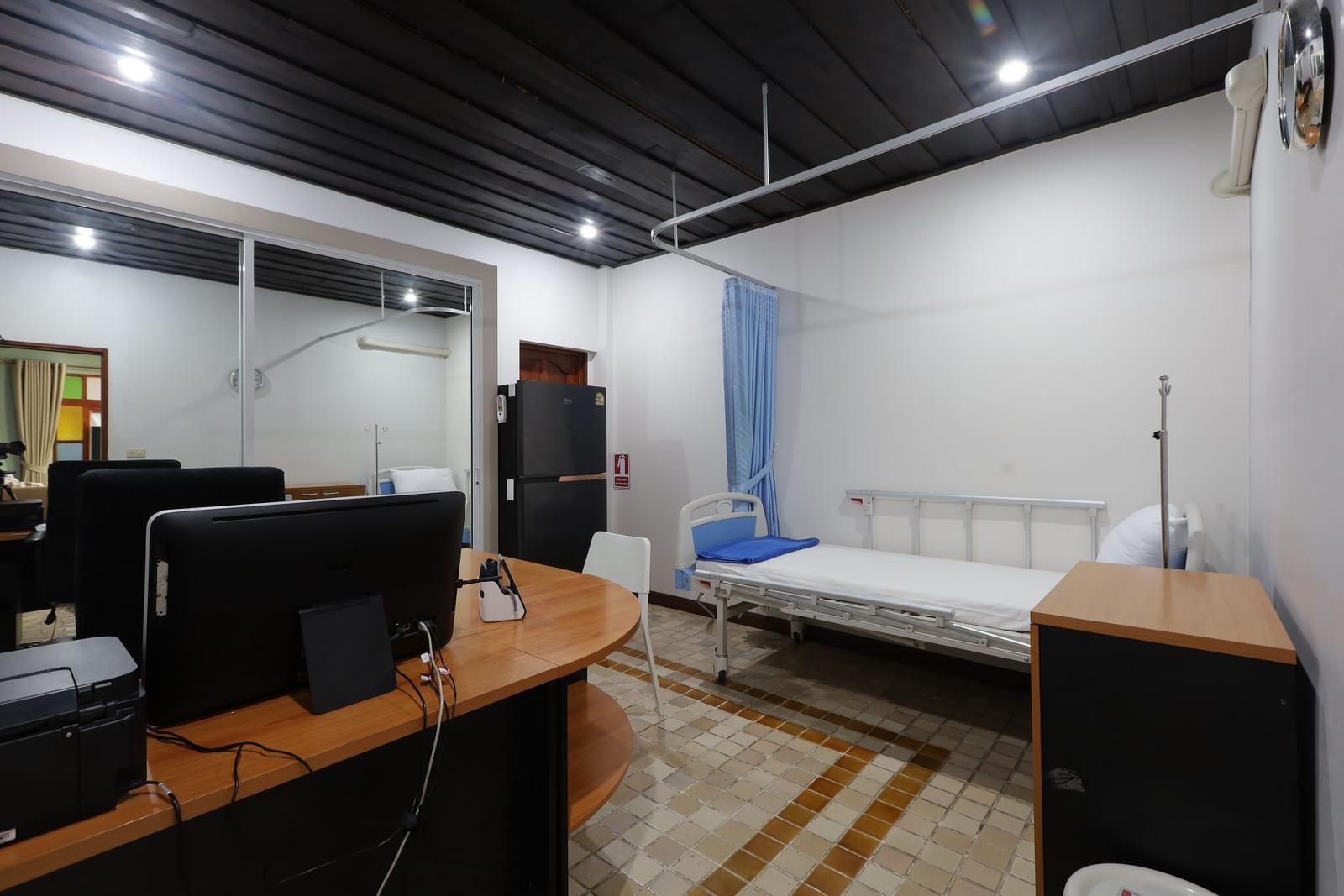
A psychiatrist-led assessment takes place on the day you arrive.
On the day a client arrives at Jintara, they meet with a psychiatrist for a full clinical assessment. This meeting is included in the program cost. It is not an optional add-on, and it is not billed separately as it is at several competing facilities in Thailand.
The assessment establishes a baseline for both the addiction history and any co-occurring mental health conditions. Depending on what the psychiatrist identifies, clients may see the psychiatrist a further five to seven times during their stay, with each follow-up used to review and adjust medication where needed. This is standard care at Jintara, not an escalation.
In the days that follow, the therapy team uses two standardised screening tools to track mental health status: the PHQ-9 for depression and the GAD-7 for anxiety. NIAAA's Core Resource on co-occurring alcohol and mental health disorders recommends standardised intake screening for all clients presenting with alcohol use disorder. These assessments are administered every one to two weeks throughout the stay. The results help the clinical team distinguish between substance-induced symptoms, which typically resolve as the brain clears, and symptoms that reflect an underlying condition requiring its own treatment track. A full picture of what the medically supervised detox phase looks like clinically is covered on the medical detox page.

Anxiety and depression are present in almost every client who comes through the door.
The most common mental health presentations at Jintara are, in order: anxiety in its various forms, burnout and exhaustion in high-performing professionals, depression, and trauma as the underlying driver of the other three. Denise O'Leary, Clinical Director and EMDR Therapist: "Pretty much everybody, without exception, comes in with some form of anxiety or depression. It just seems to go with addiction."
This holds regardless of the primary substance. Clients seeking help with alcohol, opioids, benzodiazepines, or methamphetamine almost universally carry anxiety or depression alongside their addiction, whether or not they identify it as a separate condition. For many, the way trauma and addiction feed each other shows up as substance use that began as a way to manage feelings they had no other tools for. For others, years of heavy use have created the mood disorder they are now trying to escape.
Understanding which came first matters for treatment design, but it does not change the fact that both need to be addressed. The clinical article on treating anxiety in addiction recovery covers the integrated approach in detail: GAD-7 screening, CBT tools, and how rebound anxiety is distinguished from a pre-existing disorder. The clinical program at Jintara is built around closing that gap. For more on Jintara's specific clinical approach to trauma, see the trauma therapy program.





CBT and DBT form the clinical core of daily mental health work.
Cognitive behavioural therapy is the primary modality used across individual and group sessions at Jintara. CBT addresses the thought patterns that maintain both substance use and the mood disorders that accompany it. Jintara's founder, Darren Lockie, trained at the Beck Institute, a formative influence on how CBT is applied across the program at Jintara. NIDA's overview of comorbid addiction and mental health confirms that treating co-occurring addiction and mental health conditions together produces better outcomes than sequential treatment.
- Cognitive behavioural therapy: CBT identifies the compulsive thought cycles that generate distress and builds practical skills to interrupt and correct them. It is the primary individual and group modality across the program, addressing both addiction patterns and co-occurring mood disorders simultaneously.
- Dialectical behaviour therapy: An abbreviated DBT curriculum covers all four core modules: mindfulness, distress tolerance, emotion regulation, and interpersonal effectiveness. The distress tolerance and emotion regulation modules receive the most clinical focus, as these are most directly linked to managing relapse risk.
- Motivational interviewing: MI is integrated into every individual session as the communication approach therapists use when ambivalence about recovery is highest, typically in weeks one and two. It is not a scheduled session type but a clinical posture applied throughout treatment.
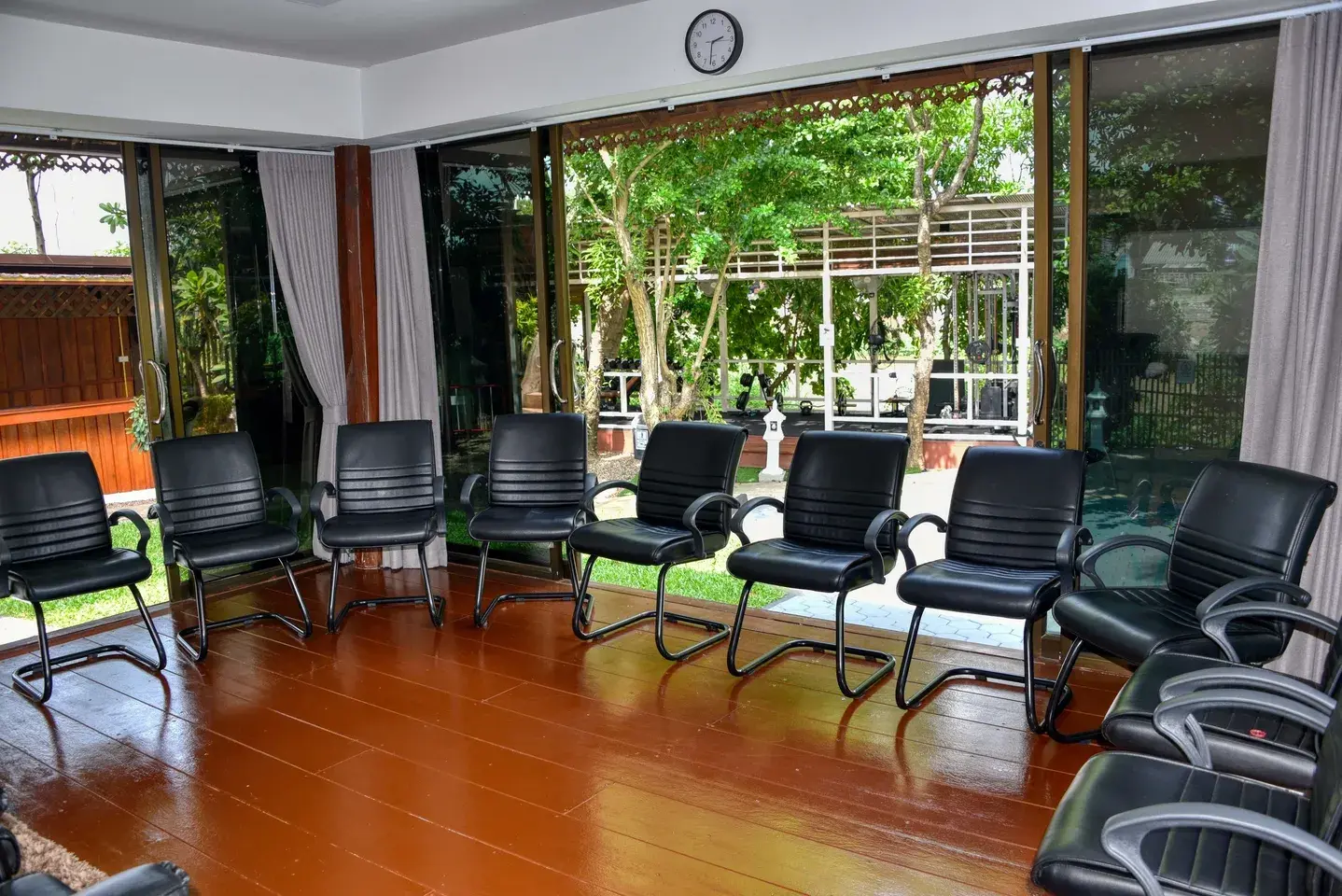

EMDR is available for clients who commit to a longer stay.
EMDR (Eye Movement Desensitisation and Reprocessing) is available at Jintara for clients whose trauma history is a primary driver of their addiction. It is not assigned to all clients, and it is not a standard feature of the 30-day program. EMDR is a clinical decision, and it requires a two-month stay as a minimum for the work to be done safely.
The reason for this requirement is the structure of the therapy itself. Month one at Jintara is focused on medical stabilisation and addiction recovery. EMDR processing requires a client who is settled, sleeping with reasonable regularity, and able to manage their emotional states without being overwhelmed by them. That level of stability is typically reached at the end of week four or early in week five. Starting EMDR before that point risks opening psychological material that cannot be properly processed and closed within the remaining time.
For clients who commit to a second month, Denise O'Leary delivers structured trauma therapy at a therapeutic intensity of 90-minute sessions, three to four times per week, focused on the specific memories and developmental experiences that underlie the presenting addiction.

Trauma treatment follows a staged approach that prioritises safety.
Most of the trauma treated at Jintara is developmental in origin. Complex PTSD, sometimes called developmental PTSD, is the pattern that emerges rather than the single-incident PTSD people usually picture, and it takes hold when a client has grown up in an environment of chaos, neglect, or emotional instability over a prolonged period. The nervous system adapts to that environment in ways that remain long after the circumstances have changed. Beliefs formed in childhood, around safety, self-worth, and relationships, continue to shape adult decisions and drive self-medication.
The clinical response is not to treat addiction and trauma as separate tracks that can be scheduled around each other, and that holds equally for sexual trauma and addiction, where shame is treated as a clinical target in its own right. According to SAMHSA's clinical guidance on trauma and substance use, 70 to 90% of people entering addiction treatment carry a significant trauma history. The response is to stabilise the addiction first, build the client's capacity to tolerate emotional distress, and then begin trauma processing from a position of genuine safety.
For clients with a 30-day stay, month one addresses addiction recovery and introduces stabilisation and emotion regulation skills. Clients who are ready to process trauma commit to a second month. This staging is a safety requirement, not a revenue model. The clinical risk of leaving deep psychological work unfinished is real, and Jintara will not start what cannot be completed.

Everything in the program, including excursions and fitness, is directed at mental health.
A common misconception about residential treatment in Thailand is that the holistic components, massage, yoga, meditation, and weekend excursions, are amenities added to fill time between therapy sessions. At Jintara, they are not. Every element of the program is clinically oriented toward mental health outcomes. Darren Lockie: "Even the excursion on a Saturday, it is not just to bathe the elephants. It is to explore and experience life without the need for drugs."
The clinical purpose behind the excursions is to create conditions where clients find that they can feel confident, socially at ease, and genuinely engaged in new experiences without the chemical confidence of substances. That realisation is experiential. It cannot happen in a therapy room.
The fitness program serves a parallel function. Exercise stimulates the neurochemical recovery that substances suppressed. Sleep, mood, and appetite improve more rapidly in clients who engage consistently with physical activity during their stay. Clients who identify a form of physical activity they genuinely enjoy during treatment leave with a built-in mental health tool they can use at home. More on what the first week of treatment looks like is on the admissions page.

The clinical team at Jintara is named, credentialed, and present.
The therapy team at Jintara is led by Denise O'Leary, MA, LMHC, an EMDRIA-certified EMDR therapist. Her specialisation is trauma-informed dual diagnosis treatment. Every therapist on the team holds post-graduate qualifications, each holding a master's degree in counselling, psychology, or a related clinical field.
With a maximum of 10 clients at any one time and 32 staff across the facility, the staff-to-client ratio is 3.2 to 1. In practical terms, this means no client is left waiting for a session, no session is shortened because the therapist has back-to-back appointments with 12 other clients, and the nursing team notices changes in behaviour and mood on a daily basis, not weekly.
Psychiatric oversight is provided by an independent psychiatrist who conducts the arrival assessment and returns for medication reviews throughout the stay. The psychiatric involvement is included in the program fee. Where a client needs hospital-level investigation, Jintara works with Bangkok Hospital Chiang Mai and RAM Hospital as clinical partners. More about the clinical team is on the about Jintara page.
Families making this decision carry a particular weight: not just 'is this place good?' but 'is this place equipped if something goes wrong clinically?' That question has a clear, checkable answer. Jintara's hospital-grade accreditation was earned by passing an independent inspection by the Healthcare Accreditation Institute, the national body that accredits Thailand's hospitals, together with the Department of Medical Services and the national drug treatment institute. Three national authorities confirmed that the clinical standards, psychiatric protocols, and nursing care here meet the national quality benchmark. Certificate no. 25/2569. Proven to a hospital's bar, in a facility with ten beds and a team that knows your family member's name within hours.

Residential treatment produces outcomes that outpatient care cannot replicate.
People with significant mental health and addiction presentations typically spend years in weekly outpatient therapy before their first residential stay. The pace of that work is slow by necessity: 50 minutes once a week cannot produce the kind of sustained therapeutic immersion that creates lasting change in entrenched patterns. In a residential program, the therapeutic environment is total. The client's sleep, nutrition, daily structure, relationships, and stress levels are all in view at the same time, and all of them become part of the clinical work.
Sixty-five to seventy hours of therapy across a 30-day program is a different clinical instrument than weekly outpatient sessions covering the same theoretical ground over 18 months. NIMH research on depression identifies sustained psychological intervention as a core component of effective care, not episodic contact. Clients at Jintara consistently report, by week three, feeling better than they can remember feeling in years. That is partly because the substances are clear and partly because sustained immersive therapy at this intensity produces neurological and psychological changes that weekly appointments cannot.
The residential setting also removes the client from the environment, relationships, and daily stress triggers that sustain both the addiction and the anxiety or depression around it. Distance creates the conditions for genuine change. Coming to Chiang Mai for treatment is not a retreat from the problem. It is the most direct route to addressing it. The Jintara facilities page describes the residential environment in detail.

Residential mental health care is not the same as a mental health retreat.
Several facilities in Thailand market themselves as mental health retreats, using the language of rest, restoration, and wellbeing. The positioning is appealing because it removes the clinical weight of the word "rehab" and the stigma some people associate with it. But for a person whose mental health condition is being sustained by addiction, a retreat is not a treatment. Rest without clinical intervention does not address the neurology of substance dependence, and it does not build the coping capacity needed to manage the conditions at home after leaving.
Jintara is a residential treatment centre. The setting is comfortable and private, but the clinical structure is intensive. There are groups every day, individual therapy sessions every week, psychiatric oversight, nursing care around the clock, and a medically supervised detox process for clients who need it. Many people searching for a mental health retreat in Thailand are looking for exactly this level of residential support under a gentler name. The program is designed around clinical outcomes, not around a sense of renewal.
For the person searching for "mental health retreat thailand" because the word "rehab" feels too heavy: the question worth asking is not which label fits more comfortably. The question is which clinical level of care matches what you are actually dealing with. If the answer involves substances, the treatment environment needs to be designed to handle them. Jintara can help you make that assessment honestly and refer elsewhere if residential treatment is not the right fit. The admissions process at Jintara starts with a confidential conversation.

Talk with Our Admissions Team
Your enquiry is confidential and goes only to our admissions team.
Independently Verified
Jintara is accredited against Thailand’s national quality standard for drug treatment and rehabilitation facilities, jointly certified by the Healthcare Accreditation Institute, the body that accredits Thailand’s hospitals, with the Princess Mother National Institute on Drug Abuse Treatment and the Department of Medical Services, Ministry of Public Health. Certificate no. 25/2569, valid 20 May 2026 to 19 May 2029.
Common Questions About Mental Health Treatment in Thailand
Yes. Jintara holds hospital-grade accreditation jointly issued by three national authorities: the Healthcare Accreditation Institute (the body that accredits Thailand's hospitals), the Princess Mother National Institute on Drug Abuse Treatment, and the Department of Medical Services, Ministry of Public Health. Certificate no. 25/2569 is valid from 20 May 2026. The accreditation covers both the drug treatment facility and rehabilitation facility categories, and independently confirms that the clinical standards, nursing protocols, psychiatric procedures, and overall quality of care meet the national quality benchmark. Jintara is one of only six private rehabs in Thailand to hold it.
No. Jintara specialises in substance use disorders and the mental health conditions that co-occur with them. Clients presenting with a primary behavioural addiction, including internet addiction, eating disorders, gambling, or sex addiction without a substance component, are referred to facilities better suited to those presentations. This is a clinical boundary, not a commercial one. Jintara's team and program structure are built around substance-dependent dual diagnosis.
The most common presentations are anxiety, depression, burnout in working professionals, and complex trauma. Clients also arrive with panic disorder, social anxiety, co-occurring bipolar disorder, insomnia driven by mood disorders, and ADHD identified after substances are cleared. Jintara treats these conditions alongside the addiction rather than sequentially. The psychiatrist on arrival assesses each client individually and determines the treatment plan.
A mental health retreat typically provides rest, wellness activities, and supportive conversation in a comfortable environment. Residential treatment provides medical detox where needed, psychiatric oversight, clinical therapy at high intensity, and structured daily programming built around clinical outcomes. For people whose mental health difficulties are connected to substance use, the level of clinical intervention that residential treatment provides is necessary. Rest alone will not address the neurological component of addiction or the patterns of thought and behaviour that sustain it.
Denise O'Leary is Clinical Director and EMDR Therapist. She holds a master's degree in counselling psychology and is an EMDRIA-certified EMDR therapist. She leads the therapy team and delivers individual sessions. The broader team holds post-graduate qualifications, with each therapist holding a master's degree in counselling, psychology, or a related clinical field. An independent psychiatrist conducts the arrival assessment and medication reviews.
EMDR is available, but it is not assigned to every client. It requires a two-month stay as a minimum. Month one is focused on addiction recovery and stabilisation. EMDR processing begins in month two, after the client has built the emotional regulation capacity needed for the work to be done safely. Requesting EMDR at the point of inquiry does not guarantee it, as clinical readiness is assessed on arrival.
Yes. Every client meets with a psychiatrist on the day they arrive for a full assessment. This is included in the program cost. Depending on what the psychiatrist identifies, follow-up assessments to review and adjust medication are conducted throughout the stay, up to five to seven additional sessions where needed.
The nursing team monitors clients around the clock and escalates immediately if psychological symptoms worsen during the detox phase. The clinical team distinguishes between substance-induced symptoms, which typically resolve as the brain clears within two to three weeks, and symptoms that indicate an underlying condition. Where medication is needed, the psychiatrist adjusts it. Where more intensive support is needed, therapy sessions are increased.
For substance-induced anxiety or depression, significant improvement typically occurs within two to three weeks of the substances clearing. For underlying conditions that exist independently of the addiction, a 30-day program addresses stabilisation and builds foundational skills. Deeper work, including trauma processing and EMDR, requires a second month. Extensions are available in one-week increments.
Yes. Jintara operates under Thailand's Personal Data Protection Act and maintains strict confidentiality for all clients. Family members and third parties, including employers, receive only information the client has explicitly consented to share. If the treatment is being funded by a family member, that does not extend their right to clinical detail.
The admissions process at Jintara starts with a confidential conversation. There are no obligations and no pressure. You can also read about the dual diagnosis program and trauma therapy for more detail on the clinical approach. If Jintara is not the right fit, Darren will say so and refer to a facility that is. You can also visit Jintara's homepage for an overview of the full program.