

Can Jintara Treat Disordered Eating and Addiction Together
If food and substances have both become ways of getting through the day, being told to fix one first is exhausting. At Jintara, substance addiction is treated as the primary condition and co-occurring disordered eating is worked alongside it, through individual therapy, medical monitoring and a steady return to regular meals. Where an eating disorder is the primary condition, we say so and refer you on.
- Substance addiction treated as the primary condition, disordered eating alongside it
- Day two medical workup covers electrolytes, cardiac function and blood markers
- Individual CBT with the clinical director across the full 30-day stay
- A private room for every client, and a maximum of ten in the house

Fully Licensed and Hospital Accredited
Disordered eating and substance use serve the same psychological function.
An eating disorder is a pattern of eating behaviour used to manage feelings that have become unbearable. Restricting food, purging, or binge eating changes how a person feels within minutes, in the same way a drink or a pill does. The relief mechanism is neurobiologically similar, which is why the two so often arrive in the same person.
Where both are present, treating one and leaving the other rarely holds for long. Jintara's approach to dual diagnosis treatment starts from the position that nearly every client arrives carrying a co-occurring condition of some kind. The untreated behaviour simply keeps providing the emotional management that the treated one no longer can.
Both patterns are fast, reliable ways to create a sense of control when everything else feels unmanageable. Naming that shared function out loud is usually the first useful thing that happens in treatment, because it turns two separate failures into one pattern a person can actually work on.
“When someone arrives with both conditions, we treat the addiction first and build the safety for the rest to follow. You cannot do it the other way around.
Substance addiction has to be the primary condition here.
Jintara accepts clients whose primary presenting condition is substance addiction, with disordered eating treated alongside it. That distinction is the honest answer to a question the team is asked often, which is whether both can be handled at once.
Where an eating disorder is the primary condition and there is no substance use component, Jintara is not the right placement. Saying so early is part of how the admissions process works, and the referral goes to a facility with the specialist staffing that presentation needs. The clinical program, the staffing and the group structure are all built around the medical complexity of substance detox and recovery.
Where the picture is the other way round, the clinical team is equipped for it. Denise O'Leary works with the distorted thinking that runs through both, the all-or-nothing rule making, the use of an external behaviour to manage an internal state, and the collapse of self-worth into performance or physical control. Those are not two separate problems. They are the same architecture operating in two places at once.
Which Presentations Jintara Accepts and Which It Refers On
| Presentation | Primary condition | At Jintara |
|---|---|---|
| Alcohol use with purging | Substance use | Accepted |
| Drug use with restriction | Substance use | Accepted |
| Alcohol use with binge eating | Substance use | Accepted |
| Anorexia, no substance use | Eating disorder | Referred on |
| Bulimia, no substance use | Eating disorder | Referred on |
| Binge eating, no substance use | Eating disorder | Referred on |
Alcohol use with purging
Primary condition: Substance use
At Jintara: Accepted
Drug use with restriction
Primary condition: Substance use
At Jintara: Accepted
Alcohol use with binge eating
Primary condition: Substance use
At Jintara: Accepted
Anorexia, no substance use
Primary condition: Eating disorder
At Jintara: Referred on
Bulimia, no substance use
Primary condition: Eating disorder
At Jintara: Referred on
Binge eating, no substance use
Primary condition: Eating disorder
At Jintara: Referred on
Co-occurring disordered eating raises the medical risk during detox.
Disordered eating adds a specific set of medical risks to withdrawal, and they are monitored from the first day. Restrictive eating, purging and binge-restriction cycles can produce electrolyte imbalances, including low potassium and sodium, which affect cardiac function.
Put alongside the physiological stress of alcohol or drug withdrawal, those imbalances need watching closely in the early days. The health consequences of eating disorders documented by the National Institute of Mental Health include medical complications that exist before withdrawal even begins, which is why the day two workup carries extra weight for this presentation. Every client has that workup at hospital on day two, at the facility's expense.
- Bloods: Liver and kidney function, electrolyte levels and haematological markers, giving an immediate picture of nutritional status.
- Cardiac: An EKG to identify any rhythm concerns that need monitoring through the acute phase of withdrawal.
- Chest imaging: A chest X-ray as part of the same day two panel, establishing the physical baseline before the protocol is set.
- Ongoing observation: Lertkhwan Sukpia and the nursing team track vital signs around the clock, with escalation to Bangkok Hospital Chiang Mai or RAM Hospital if it is needed.
Where disordered eating has left someone nutritionally depleted, meal planning is coordinated with the chef from the first week. The aim is nutritional restoration rather than weight management, because the body needs fuel before the psychological work can land.

CBT targets the thinking patterns that drive both behaviours.
Cognitive behavioural therapy is the primary therapy at Jintara for clients carrying both conditions, because it works directly on the thinking the two share. All-or-nothing thinking, catastrophising and emotional reasoning show up consistently in disordered eating and in substance use, and addressing them in one domain tends to reach the other.
Sessions begin with the plain mechanics of how thoughts, feelings and behaviours connect. SAMHSA's Treatment Improvement Protocol 42 on co-occurring disorders sets integrated treatment of feeding and eating disorders alongside substance use as the evidence-based standard, with shared treatment of cognitive distortions central to it. Someone who restricts food when they feel out of control and drinks when they feel anxious is running two behaviours in service of one need.
Naming that connection is often the first time a client sees a single pattern rather than two separate failures. The cognitive behavioural therapy program runs as individual sessions across the full stay, not as a block of classroom teaching. It also carries abbreviated dialectical behaviour therapy skills covering distress tolerance and emotion regulation, which matter most where impulse-driven behaviour under emotional pressure is central to the pattern.
Trauma often sits underneath both the eating and the substance use.
Unresolved trauma is a common driver of both conditions, and the clinical assessment in the first two weeks looks for it directly. Where it is present and significant, trauma processing becomes part of the treatment rather than something left for afterwards.
For that work Denise uses Eye Movement Desensitisation and Reprocessing. At Jintara EMDR therapy is not offered to everyone automatically, and it is reserved for clients committed to a 60-day or longer stay with a clear assessed clinical need. Deep trauma processing needs enough time to open the material and close it safely again.
Introducing it inside a 30-day stay, while someone is still stabilising from detox, risks leaving psychological material open at the point they walk out the door. Where a client's history points that way, the recommendation is usually to extend beyond 30 days so the work can be done properly. Denise raises that in the first week, based on what the assessment actually shows rather than on a fixed rule.

“Trauma and disordered eating are deeply intertwined for many of our clients. The question is always, are we ready to work there safely yet.
Nutritional rehabilitation starts in the first week.
Nutritional rehabilitation at Jintara is a structured return to regular eating, not a clinical eating disorder program. For someone whose relationship with food is charged, meals can carry anxiety, guilt, or the urge to compensate afterwards, and the team treats food as the physiological foundation that makes the psychological work possible rather than as the therapeutic target itself.
The structure is deliberately plain. Tong, the Fitness and Recovery Coach, carries out a nutritional assessment alongside the physical assessment on arrival, and the fitness and nutrition program adjusts from there to what the body actually needs in early recovery. Three meals a day at fixed times, no pressure about quantities, and nobody weighed at the table.
Where someone has been restricting or purging, the return of regular meals can produce real anxiety in the first fortnight. Denise works with that in individual sessions at the same time as the nutrition plan runs, so the two are not pulling against each other.
The residential setting removes the cues that keep the behaviour running.
Residential treatment takes away the settings and routines in which the behaviour has become automatic. Disordered eating, like addiction, is held in place by cue-conditioned responses, the particular rooms, times, stresses and social situations that trigger it without a decision being made. Removing those cues for a period opens a window in which different patterns can form.
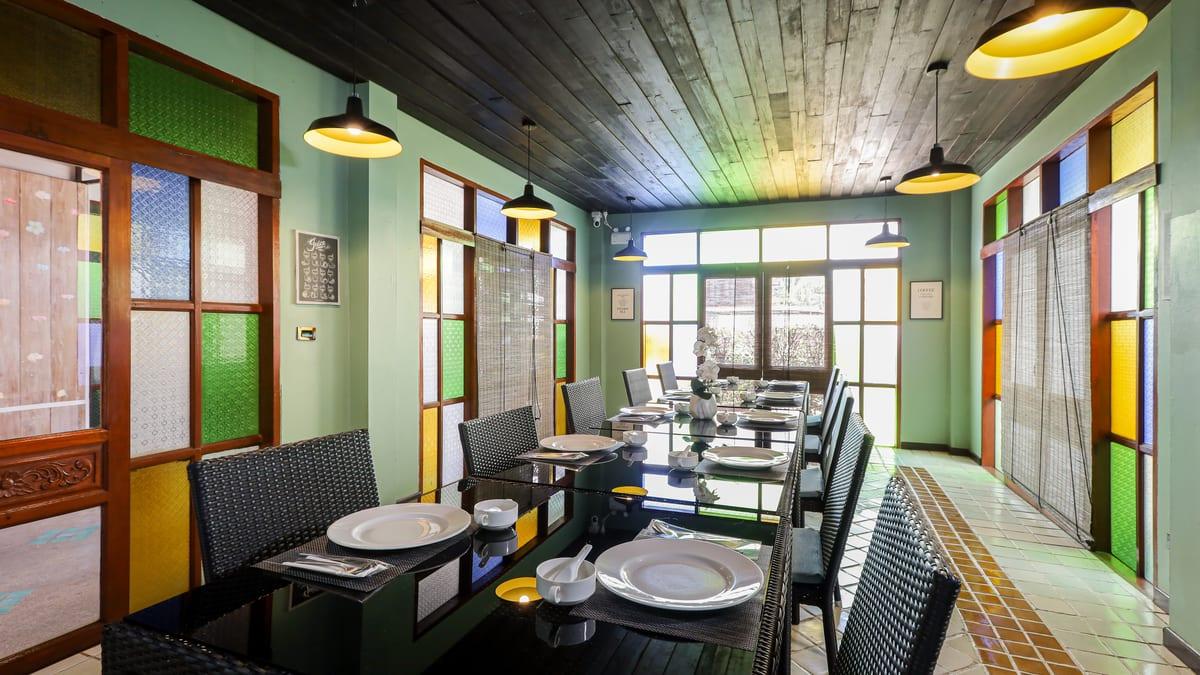
Privacy does a specific job here. Meals happen in a small room rather than an institutional dining hall with the exposure that carries, because the Jintara facilities are built around a maximum of ten clients at any one time. Every client has their own room, and there are no shared dormitories, which matters where body image and social comparison sit close to the centre of the condition.
Thirty-two staff support those ten clients, which means observation is close without being confrontational in how it is delivered. If disordered eating resurfaces during the stay, it is noticed early and handled clinically rather than as a rule broken.

Jintara Rehab is licensed by the Thai Ministry of Public Health as a rehabilitation centre. The clinical information on this page describes Jintara's general approach to supporting clients during the early recovery period. Medical decisions, including medication protocols, are determined by addiction-specialist psychiatrists through our partner hospital pathway. Individual treatment varies based on clinical assessment. This content is for informational purposes and does not constitute medical advice.

Talk with Our Admissions Team
Your enquiry is confidential and goes only to our admissions team.
Common Questions About Eating Disorders and Addiction
If substance addiction is your primary condition and disordered eating is co-occurring, yes. The clinical team works with both at once, through CBT, medical monitoring and nutritional support. If your primary condition is an eating disorder with no substance use component, we refer you to a specialist facility better equipped for it. We treat substance addiction, and we tell you when someone else is the better fit.
Possibly, and where the eating has involved restriction that is part of physical recovery. The team does not treat weight as an outcome to be managed. The focus is nutritional restoration and regular eating patterns, with Denise working on the thinking around food and body image in individual sessions at the same time.
Restrictive eating and purging can produce electrolyte imbalances, including low potassium, which affect cardiac function. Combined with withdrawal, that needs close monitoring. The day two medical workup covers electrolytes and includes an EKG, giving the nursing team a baseline to watch against through the acute phase. Lertkhwan Sukpia leads nursing observation around the clock.
EMDR is available for clients staying 60 days or longer, with a clear assessed clinical need. It is not assigned automatically to 30-day clients. Where the eating and the addiction both appear rooted in unresolved trauma, Denise assesses in the first two weeks whether EMDR is appropriate and what length of stay would support it safely.
Yes. Meal plans are coordinated between the fitness team and the chef from the first week. The goal is nutritional restoration through regular meals, not weight management or a prescribed diet. Where there is a history of disordered eating, the structure of fixed mealtimes is part of the physiological foundation that makes the psychological work possible.
With ten clients and thirty-two staff, returning patterns tend to be noticed early. If the behaviour resurfaces, Denise intensifies individual sessions and the medical team assesses any physical risk. The response is clinical rather than disciplinary. The work is on what triggered the return and what support is needed, not on consequences.
The clearest way is a direct conversation with Darren during admissions. He will tell you honestly whether the clinical needs can be met here or whether a referral makes more sense. We do not take clients we cannot help, and that conversation is free and carries no obligation.
The wider treatment approach at Jintara works the eating and the substance use as one clinical problem, with the referral boundary stated plainly before anyone travels.