
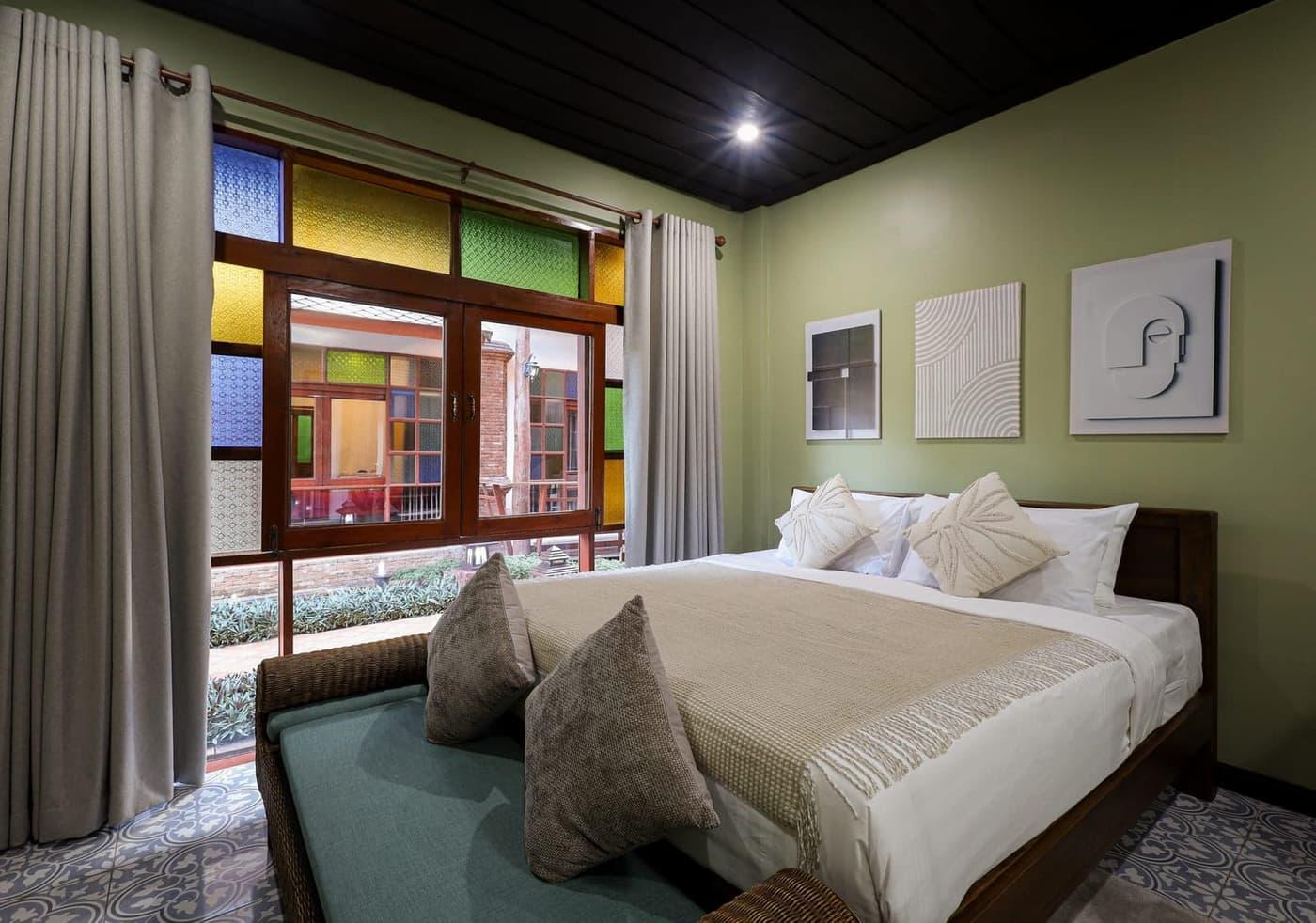
LGBTQ inclusive addiction treatment in Chiang Mai, grounded in clinical practice.
Jintara is a small residential rehab in Chiang Mai with a maximum of 10 clients at any time. Every client receives their own private room, an individual treatment plan, and care from a therapy team with direct experience working with LGBTQ+ people. If you are looking at addiction treatment in Thailand and wondering whether this is a safe environment for you, this page explains what your stay would actually look like.
- Private rooms for every client, no dormitories or shared sleeping arrangements
- All therapists have experience working with LGBTQ+ clients in residential treatment
- Individual treatment plans for every person, no separate LGBTQ track required
- Confidentiality protected under Thailand's Privacy Act, informed consent for all care


Licensed by the Ministry of Public Health.
Accredited under Thailand’s national standard for drug treatment and rehabilitation facilities.
LGBTQ-inclusive treatment at Jintara is built on operational fact rather than policy language
LGBTQ-inclusive treatment is care where the facility's physical design removes barriers before therapy begins.
Many LGBTQ-inclusive treatment pages focus on language rather than operational specifics. This page takes a different approach, because Jintara's inclusion is physical and operational rather than declarative.
Three structural facts carry the argument. First, every client at Jintara has a large private room. There are no dormitories and no shared sleeping arrangements. This removes the most common safety concern people raise about residential rehab. Second, Jintara treats a maximum of 10 clients at one time. With 32 staff and three therapists for 10 clients, the program is already individualised by design. There is no need for a separate LGBTQ track because every person receives an individual care plan regardless. Third, all therapists at Jintara have direct experience working with LGBTQ+ people in a clinical setting.
Many LGBTQ+ people who contact Jintara also arrive with co-occurring mental health conditions, including anxiety, depression, and complex trauma. The clinical model treats these alongside the substance use from the start.
Minority stress and substance use are linked, and the therapy team recognises this
Minority stress refers to the chronic, identity-related stressors that LGBTQ+ people face at higher rates than the general population, including family rejection, internalised shame, discrimination, and concealment of identity. Meyer (2003) identified minority stress as the primary mechanism linking these experiences to elevated mental health risk, including higher rates of substance use disorders in lesbian and gay populations.
At Jintara, the therapy team does not treat every LGBTQ+ client as though sexual orientation or gender identity is the primary clinical issue. The approach mirrors what Jintara does with any client carrying complex trauma: stabilise first, assess carefully, then address the underlying drivers as they become clear.
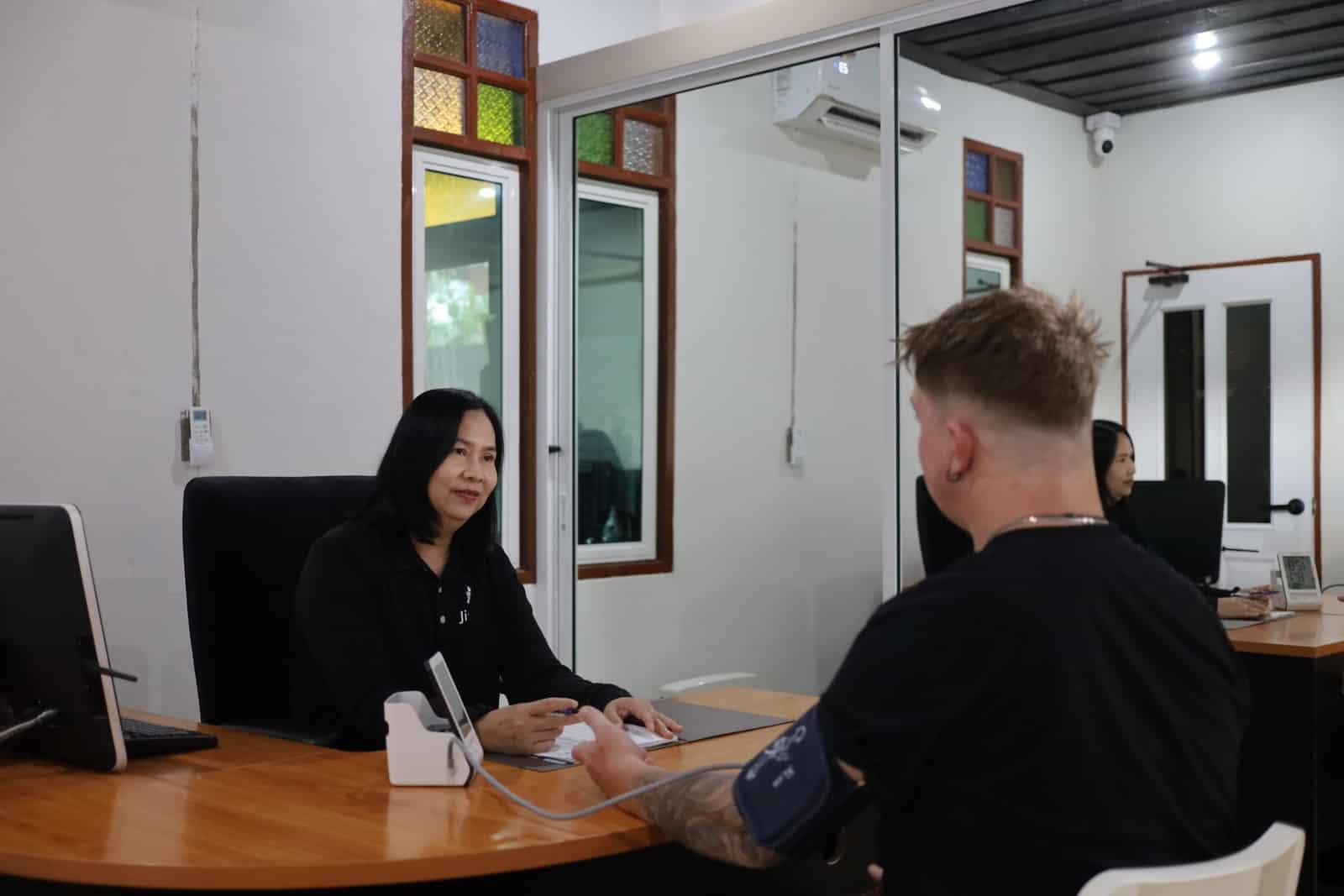
Denise O'Leary, Clinical Director and EMDRIA-certified therapist, applies the same structured assessment to LGBTQ+ clients as to any person in the program. The PHQ-9 and GAD-7 are administered at intake to establish a baseline. The question of whether distress is substance-induced or reflects an underlying condition is answered through observation over the first one to two weeks of sobriety, not through assumption. For clients whose trauma history is the primary driver of their substance use, one-to-one trauma therapy forms a central part of the second month's work.

Private rooms eliminate the most common concern about residential rehab
Every client at Jintara stays in a large private room with an ensuite. There are no dormitories and no shared sleeping areas. This applies to every person in the program, not only LGBTQ+ clients.
Denise confirmed this when asked about accommodation for LGBTQ+ and trauma-survivor clients: "There's not separate areas. It's not big enough to have a separate thing. You don't need a separate area." Privacy comes from the physical structure of the facility.
Bathrooms are private and ensuite. Nursing checks are conducted with a calm, consent-based approach. Any interaction involving sensitive information, including gender history or medication needs, is held within the clinical team and is not disclosed to other clients. If you want to understand what to expect before and on arrival, the admissions page covers the intake process in detail.
The therapy team has direct experience with LGBTQ+ clients in residential treatment
Jintara has three therapists. All three have experience working with LGBTQ+ clients in a residential setting.
Denise O'Leary, Clinical Director, holds a postgraduate qualification in counselling psychology and is an EMDRIA-certified EMDR therapist. She leads the clinical team and conducts individual therapy with every client. Her approach to LGBTQ+ clients mirrors the program's overall clinical philosophy: ask what is driving the substance use, address the underlying conditions with rigour, and avoid attaching labels before the person is sober enough to give you their baseline.
All individual therapy is conducted one-on-one in a private setting. Trauma processing is never done in a group session. EMDR is available for clients who commit to a minimum of 60 days and have a clinically assessed need for trauma processing. For 30-day stays, the focus is on stabilisation, addiction treatment, and equipping the person with tools for recovery after discharge.
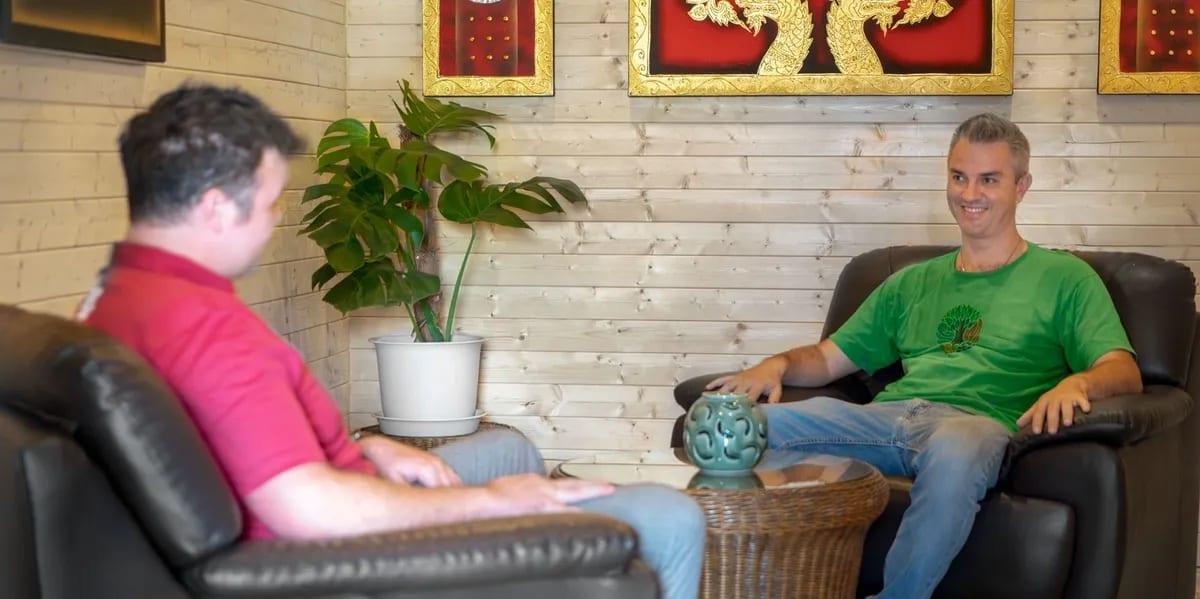
“Getting sober is one thing. Understanding what has been driving the substance use, and working through it at a clinical level, these are completely different things. That is where the real work happens.
Group therapy is facilitated, structured, and psychologically safe
Group therapy is a required part of the program at Jintara. Some LGBTQ+ people worry that a group setting will expose them to judgement or require them to disclose personal details to strangers. In practice, this does not reflect how groups here operate.
Groups are clinically facilitated, not open-floor sharing sessions. The ground rules prohibit aggression, and the facilitator actively manages the room so that no individual controls the conversation. "Who wants to share?" is the standard approach, not a round of mandatory disclosure. Sensitive personal history, including anything related to sexual orientation or gender identity, is handled in individual sessions first. Clients decide with their therapist what, if anything, they wish to raise in a group context.
There is no separate LGBTQ group track. The facility is small enough, and the program individualised enough, that a separate track is neither practical nor necessary. SAMHSA's TIP 42 guidance on co-occurring disorders treats integrated care, rather than parallel or separate tracks, as the guiding approach for people with complex dual diagnosis profiles. For clients whose trauma history warrants EMDR, that work happens individually via bilateral stimulation therapy in the second month.

Confidentiality, hormone therapy, and practical logistics are handled from arrival
Confidentiality at Jintara is governed by Thailand's Privacy Act, which protects all client records from disclosure without written consent. A parent or partner paying for treatment does not have an automatic right to clinical information. The client's right to privacy supersedes the payer's desire for updates.
- Hormone therapy continuation: For clients on hormone therapy, medication continuity is addressed during the pre-admission assessment. The psychiatrist and Lertkhwan Sukpia, Medical Team Lead and Registered Nurse, review all current medications on arrival. The facility's hospital partners, Bangkok Hospital Chiang Mai and RAM Hospital, support medical needs that arise during the stay.
- Thailand's cultural context: Thailand has a broadly accepting cultural attitude toward LGBTQ+ people in most everyday social settings, notably more relaxed than many Western countries in daily life. Chiang Mai in particular has a visible and active LGBTQ+ community. This does not remove all challenges, but for most LGBTQ+ people arriving from more restrictive environments, the external setting is less fraught than expected.

Talk with Our Admissions Team
Your enquiry is confidential and goes only to our admissions team.
Common questions about LGBTQ inclusive treatment at Jintara
Is Jintara an LGBTQ-specific rehab or an LGBTQ-inclusive one?
Jintara is inclusive, not exclusively LGBTQ+. The program treats people with substance use disorders and co-occurring mental health conditions. LGBTQ+ people are regularly and commonly seen. The therapy team has direct experience with LGBTQ+ clients, and the physical facility provides the private accommodation that makes a safe residential stay possible.
Are private rooms guaranteed, or are some rooms shared?
Every client at Jintara has their own large private room with an ensuite bathroom. There are no dormitories and no shared sleeping arrangements. This is standard for every admission, not a special arrangement.
Do the therapists have experience working with LGBTQ+ people specifically?
All therapists at Jintara have direct clinical experience working with LGBTQ+ clients. Denise O'Leary, Clinical Director, holds a postgraduate qualification in counselling psychology and is an EMDRIA-certified EMDR therapist. The clinical approach centres on understanding what is driving the substance use and addressing that through individual treatment.
Will group therapy require me to disclose my sexuality or gender identity?
No. Group therapy at Jintara is clinically facilitated, not an open disclosure session. You share what you choose to share. Anything related to sexual orientation, gender identity, or personal history is handled in individual sessions first. Clients retain agency over their own story.
Can I continue hormone therapy during my stay?
Medication continuity is reviewed during pre-admission. The medical team assesses all current medications on arrival and manages continuity in collaboration with hospital partners in Chiang Mai. Confirm your specific medication requirements during the admissions enquiry.
What happens if another client behaves in a discriminatory way?
Group ground rules are enforced by the clinical facilitator. Discriminatory language and aggression are grounds for immediate intervention. The facility operates a formal client rights and grievance process. Any concern can be raised directly with Denise or with the nursing team, who are available around the clock.
Is Thailand broadly safe and accepting for LGBTQ+ visitors?
Thailand has a culturally tolerant attitude toward LGBTQ+ people in most everyday contexts, and Chiang Mai has a visible LGBTQ+ community. Social discrimination in daily life is considerably less common than in many Western or Southeast Asian countries. For most LGBTQ+ people attending Jintara, the external environment is not a significant concern. Contact the Jintara admissions team to discuss your specific situation before arrival.
Jintara is a small adult residential rehab in Chiang Mai treating a maximum of ten clients at a time, with private rooms for every person in the program.
Jintara Rehab is licensed by the Thai Ministry of Public Health as a rehabilitation centre. The clinical information on this page describes Jintara's general approach to supporting clients during the early recovery period. Medical decisions, including medication protocols, are determined by addiction-specialist psychiatrists through our partner hospital pathway. Individual treatment varies based on clinical assessment. This content is for informational purposes and does not constitute medical advice.