
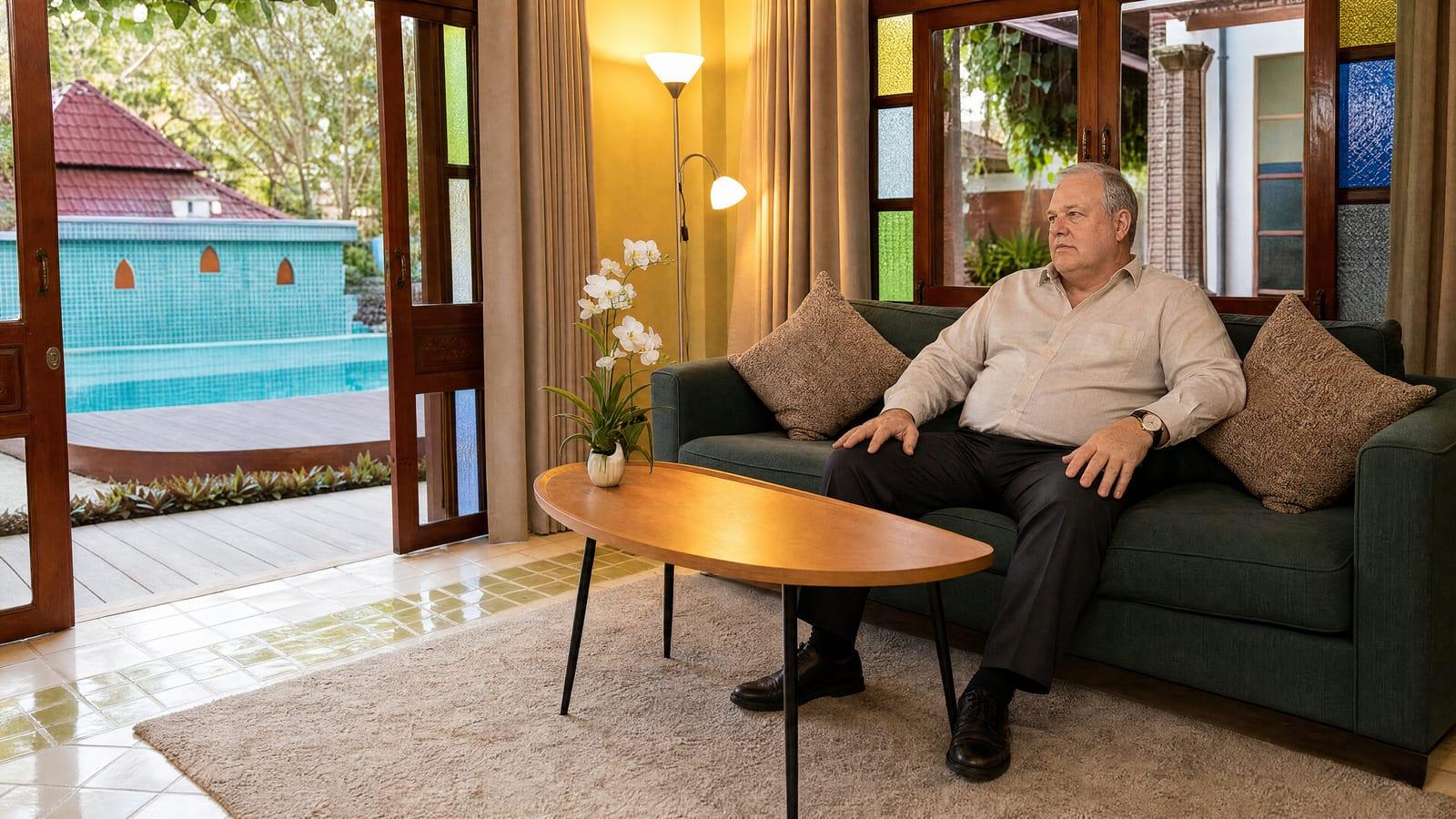
How Jintara treats ADHD and addiction together.
Undiagnosed or poorly managed ADHD is one of the more common reasons people end up self-medicating. Every client at Jintara has a full psychiatric assessment on arrival, so our clinical team can tell true ADHD apart from substance-induced attention problems and build the plan around what is actually there. Our dual diagnosis program treats the ADHD and the addiction in parallel across the 30-day stay.
- Psychiatric assessment on arrival to confirm or rule out ADHD
- A structured daily program that carries the executive-function load
- Therapy adapted for attention and impulsivity in residential care
- Medication reviewed by a visiting psychiatrist where indicated


Licensed by the Ministry of Public Health.
Accredited under Thailand’s national standard for drug treatment and rehabilitation facilities.
ADHD and addiction share more overlap than most people realise.
ADHD is a neurodevelopmental condition of inattention, impulsivity, and restlessness that begins in childhood and carries into adult life. That profile creates a real vulnerability to substances, and NIDA's research on comorbidity has documented substantially elevated rates of substance use disorder in adults with ADHD, with co-occurrence estimated at 25 to 50 percent across clinical populations. The overlap is large enough that clinicians treat the two as connected rather than coincidental.
The connection makes sense once you look at the mechanism. The same brain that struggles to hold attention, sit with boredom, and pause before acting is also the brain that responds fast and gratefully to a substance that quiets the noise. Addressing that underlying reality is part of what mental health treatment alongside addiction means at Jintara, where the neurological driver is treated rather than ignored. People with ADHD often describe the first time a substance made them feel focused, calm, or finally regulated, and that relief is exactly what makes the attachment so understandable.
This is why treating the addiction and leaving the ADHD untouched so often fails. If the substance was doing a job, taking it away without addressing the job leaves a gap the person will try to fill again.
Self-medication is a rational response to symptoms nobody named.
Self-medication is the pattern where a person uses substances not for the high but to manage symptoms that are making ordinary life unworkable. For someone with undiagnosed ADHD, this usually happens with no awareness that ADHD is involved at all, a mechanism NIMH's overview of ADHD in adults describes in the way untreated symptoms drive risky coping. Alcohol slows the racing thoughts, stimulants sharpen concentration, and cannabis takes the edge off the constant irritability of sensory overload. Impulsivity also produces anger-like outbursts, so many clients benefit from the same anger management skills that sit inside our emotion regulation work. The substance works, at least at first, and the habit sets in long before anyone identifies the cause.
Many clients arrive at Jintara having managed undiagnosed ADHD for years. Some have leaned on stimulant addiction to push through the day, others on sedating substances to switch the noise off at night. When they stop, they are not just in withdrawal. They are losing the thing that was filling a neurological gap, which is why the early days feel so exposed, and understanding that difference is what separates treatment that holds from treatment that produces a fortnight of abstinence and a fast return to use.
Some clients arrive already diagnosed and certain. Others arrive with no ADHD history at all and receive that diagnosis for the first time in treatment, once the substance effects clear and their real baseline becomes visible.

“We get clients who come in thinking they have ADHD, and they don't. And we get clients who never knew they had it, and they do. Getting clean is how you find out what is actually there.
Assessment at Jintara separates ADHD from the effects of the substance.
Telling genuine ADHD apart from substance effects is one of the harder calls in dual diagnosis. A fair assessment needs time and a clear head, which is why Jintara's psychiatric assessment is led by a psychiatrist rather than a counsellor and continues once medical detox has resolved the acute withdrawal phase. Stimulants, alcohol, and cannabis all produce attention and impulsivity problems that look almost identical to ADHD. Rushing that call is how people get mislabelled.
The assessment covers substance history, mental health history, childhood development, and how the person presents day to day. Childhood onset is the clearest clue. ADHD that is genuinely present leaves a long trail of focus and organisation difficulty going back years, while substance-induced attention problems tend to arrive with the heavy use and ease when it stops.
If ADHD is confirmed, the plan is adjusted around it. If the symptoms clear with detox and turn out to be substance-induced rather than neurological, that finding is just as clinically important, and it shapes the therapy for the rest of the stay.
Substance-Induced Attention Problems or Underlying ADHD
| Sign | Points to substance-induced | Points to underlying ADHD |
|---|---|---|
| Onset | Attention problems began with heavy use | Present since childhood, long before use |
| After detox | Symptoms ease as the brain clears | Symptoms persist once substances are gone |
| Pattern | Comes and goes with the substance | Steady across settings and years |
| Early history | No early school or focus difficulty | Long record of focus and organisation struggles |
Onset
Points to substance-induced: Attention problems began with heavy use
Points to underlying ADHD: Present since childhood, long before use
After detox
Points to substance-induced: Symptoms ease as the brain clears
Points to underlying ADHD: Symptoms persist once substances are gone
Pattern
Points to substance-induced: Comes and goes with the substance
Points to underlying ADHD: Steady across settings and years
Early history
Points to substance-induced: No early school or focus difficulty
Points to underlying ADHD: Long record of focus and organisation struggles
Structure is therapeutic for ADHD clients, not just logistical.
The structured environment of residential treatment is usually described as a practical necessity. For a client with ADHD it is one of the most therapeutic features of the whole program. External structure, written schedules, consistent routines, and clear expectations all carry the executive-function load that ADHD makes so heavy. When the program decides what happens next, the client can spend their available attention on the actual therapeutic work instead of on trying to organise the day.
The structure does more than keep order. Within it, cognitive behavioural therapy is adapted for clients where impulsivity and attention are in play, and Denise uses an ABC tool simple enough to run mentally rather than on a worksheet, which removes a barrier that trips up a lot of ADHD clients. The aim is not to erase ADHD but to build enough internal structure that the person can function once the external program is gone.
Practical strategies for life after discharge are introduced alongside the therapy: calendar systems, written routines, external accountability, and planning tools. These are not generic life advice. They are compensatory systems designed to work with the neurological profile rather than pretend it will change.

Trauma and ADHD frequently arrive together in residential care.
Growing up with undiagnosed ADHD tends to leave a residue. A childhood of being called lazy, careless, or not trying hard enough, of missed deadlines and social friction, accumulates into something heavier than the attention symptoms alone. By the time an adult reaches treatment, they often carry the neurological features of ADHD, a layer of co-occurring social anxiety, sometimes obsessive-compulsive disorder alongside substance use, and a real trauma history built on top of them. That combination shapes how the therapy is planned.
Not all of that responds to the same tool. For clients whose anxiety and low self-worth are rooted in specific unprocessed experiences, EMDR therapy can be effective, though it is not assigned automatically. EMDR is not standard for every admission. It is primarily relevant for clients staying 60 days or more, it is introduced only after medical stabilisation, and 30-day clients may not reach the processing stage.
The distinction matters for treatment. Some of what looks like ADHD in a trauma survivor is actually hypervigilance, dissociation, and difficulty concentrating under stress. A clinical comparison of youth with ADHD found PTSD at higher rates than in peers without ADHD, so dual diagnosis assessment treats that overlap as something to look for rather than as an exception. Accurate assessment separates the two, and both are treatable.
Individual therapy builds self-understanding, not self-blame.
One of the most consistent findings in working with adults with ADHD is how much the shame gets in the way. A lifetime of being told they are not trying hard enough interferes with recovery as much as the attention symptoms do. That history is part of what gets examined in individual therapy sessions, where understanding that ADHD is a neurological difference rather than a character failure becomes the reframe that changes what recovery means and what is genuinely possible.
Each session helps the client build a clear picture of their own patterns: when impulsivity shows up, what sets off the distractibility, which emotional states drive the urge to use, and which external systems actually help them function. That picture becomes the foundation of the aftercare plan.
Denise draws on motivational interviewing alongside CBT, which suits ADHD presentations well. Motivational interviewing works by helping people find their own reasons for change rather than importing someone else's. For a person whose history is full of external pressure and repeated failure, that approach tends to produce better engagement and better retention.

Medication decisions are handled with care and transparency.
Medication for ADHD in the context of addiction is one of the areas that asks the most of clinical judgement. Our medication protocols are discussed openly with each client during the assessment phase, so nothing about the plan is a surprise. Stimulant medicines such as methylphenidate and amphetamine-based compounds are effective for ADHD but carry a recognised risk for anyone with a history of stimulant misuse, a tension NIDA's guidance on prescription stimulants sets out directly. Any stimulant medication is therefore considered case by case, with the addiction history fully in view. Where the presenting problem is prescription stimulant addiction rather than ADHD with incidental misuse, that pathway is set out in more detail on its own page.
Non-stimulant options are part of the conversation where stimulant exposure is a concern. The point of the medication review is to treat confirmed ADHD and any other psychiatric presentation accurately, working with a visiting psychiatrist rather than reaching for a default.
One thing to be clear about. Jintara does not offer maintenance medication for addiction after detox. Methadone is used only during detox for an opioid withdrawal taper, never as ongoing maintenance. The medication work here is about treating what is actually present, not about swapping one substance for another.
“Once a client's brain clears, we often see a very different picture from what they walked in with. Some ADHD diagnoses disappear. Others become clearer. That clarity is what good treatment actually looks like.
Recovery with ADHD is about building the right systems, not just stopping.
Recovery without ongoing structure is harder for someone with ADHD than for someone without it. The 30-day program provides the external scaffolding, but the aftercare plan is what decides whether that scaffolding travels home with the client. At Jintara the plan is built during the program, not handed over in the final session, so there is time to test it while support is still in place.
The plan pays specific attention to the situations that are hardest to manage alone. Good relapse prevention planning for ADHD clients maps the unstructured time, the transitions between activities, the high-stimulation environments, and the moments of boredom or frustration that used to be handled with a substance, then attaches a specific response to each one. Written plans, named accountability contacts, and rehearsed responses to high-risk states are part of what the client leaves with.
Where ADHD medication has been started or adjusted during the stay, the discharge plan includes a clear referral pathway for continued psychiatric support. Jintara does not manage medication remotely after discharge, but making sure a client has a psychiatrist to continue with is part of the clinical handover.


Talk with Our Admissions Team
Your enquiry is confidential and goes only to our admissions team.
Common Questions About ADHD and Addiction Treatment at Jintara
Can Jintara diagnose ADHD during my stay?
Yes. A visiting psychiatrist conducts a thorough assessment that can confirm or rule out ADHD once your brain chemistry begins to stabilise after detox. Many people arrive with an existing diagnosis that needs reviewing. Others receive an accurate diagnosis for the first time in treatment, once substance effects are no longer masking or mimicking the underlying condition.
I was diagnosed with ADHD as a child. Does that change my treatment?
It gives the clinical team an important starting point. Childhood onset is one of the key criteria for genuine ADHD, which helps separate it from substance-induced attention problems. Your full psychiatric history is reviewed during the assessment, and your treatment plan reflects what is confirmed as present.
Will I be able to take my ADHD medication at Jintara?
Medication is reviewed by our psychiatrist on arrival. Stimulant medicines are considered only with careful attention to your addiction history and current presentation. Non-stimulant alternatives are part of the conversation where stimulants carry a clinical risk. The decision is made collaboratively and transparently with you.
What if my ADHD makes group therapy hard to manage?
Our clinical team is experienced with clients where attention and impulsivity present challenges in a group. Adaptations are made, and individual sessions provide a lower-demand space for deeper work. The program structure itself, with consistent routines and clear expectations, reduces the cognitive load that unmanaged ADHD makes difficult.
How do I know if my addiction is linked to undiagnosed ADHD?
Common patterns include using stimulants to concentrate or feel regulated, using alcohol or cannabis to quiet what feels like constant mental noise, struggling to finish tasks or hold a routine without substances, and a sense that substances made you feel more like yourself rather than less. These are worth discussing with our clinical team on arrival.
Does ADHD make recovery harder?
It adds complexity, not impossibility. Executive-function challenges, impulsivity, and difficulty tolerating boredom are real obstacles in early recovery. Knowing they are present, naming them, and building specific compensatory systems around them significantly improves outcomes. Many people with ADHD and substance use disorder achieve sustained recovery with the right support.
What happens with my ADHD support after I leave Jintara?
Your discharge plan includes referrals for ongoing psychiatric care and any medication management you need. For ADHD specifically, continuity of care with a psychiatrist in your home country or region is part of what we help arrange before you leave.
Is Jintara a good fit if ADHD is my main concern rather than addiction?
Jintara is built around substance use disorder as the primary clinical focus. If ADHD is present alongside addiction, we treat both. If the presenting issue is ADHD without a substance use component, we are likely not the right fit and would refer you to an appropriate specialist service. Honest referral is part of how we operate. If you would like to talk it through first, the admissions details are on our homepage.
Jintara is a small adult residential treatment center in Chiang Mai with a 3.2:1 staff-to-client ratio. ADHD and addiction are treated as co-occurring conditions, with psychiatric oversight throughout the stay.
Jintara Rehab is licensed by the Thai Ministry of Public Health as a rehabilitation centre. The clinical information on this page describes Jintara's general approach to supporting clients during the early recovery period. Medical decisions, including medication protocols, are determined by addiction-specialist psychiatrists through our partner hospital pathway. Individual treatment varies based on clinical assessment. This content is for informational purposes and does not constitute medical advice.