

Medication transparency is built into every detox at Jintara.
Most rehabilitation centres describe their medication approach in broad terms. At Jintara's medical detox program, protocols are written by a psychiatrist, documented across every shift, and adjusted throughout your stay. Understanding what is prescribed, why, and for how long is part of the clinical relationship from day one.
- Psychiatrist-designed detox protocols reviewed continuously throughout your 30-day stay
- CIWA-Ar and COWS scoring applied to guide every medication adjustment
- Gradual tapering schedule coordinated between your nursing team and psychiatrist
- Psychiatric assessment fully included in the program fee, no extra charge

Fully Licensed and Hospital Accredited
Medication protocols at Jintara form a psychiatrist-led clinical safety framework.
A medication protocol is the structured clinical plan governing detox medications, doses, and adjustments. At Jintara, these protocols are not improvised. Every protocol is created on arrival by a psychiatrist with addiction medicine experience, implemented by the nursing team using validated scoring tools aligned with NIAAA's Core Resource on Alcohol, and adjusted based on clinical observation throughout the stay.
The framework operates across three layers: the initial psychiatric assessment and prescription, the daily monitoring and dose adjustment, and the gradual taper toward zero. Each layer is documented in the client's individual clinical file. The nursing team hands that file between shifts with a written summary so there are no information gaps between the nurse on the previous shift and the one beginning the next.
This level of structure is not standard across addiction treatment in Asia. At Jintara, it reflects a commitment to protocol transparency as a component of clinical care. The approach is not about disclosing internal dosing decisions to the public. It is about ensuring that clients and families understand the framework their treatment follows, and can ask informed questions at every stage.
Medication at Jintara is not a background service. It is a documented clinical process with a named responsible clinician.
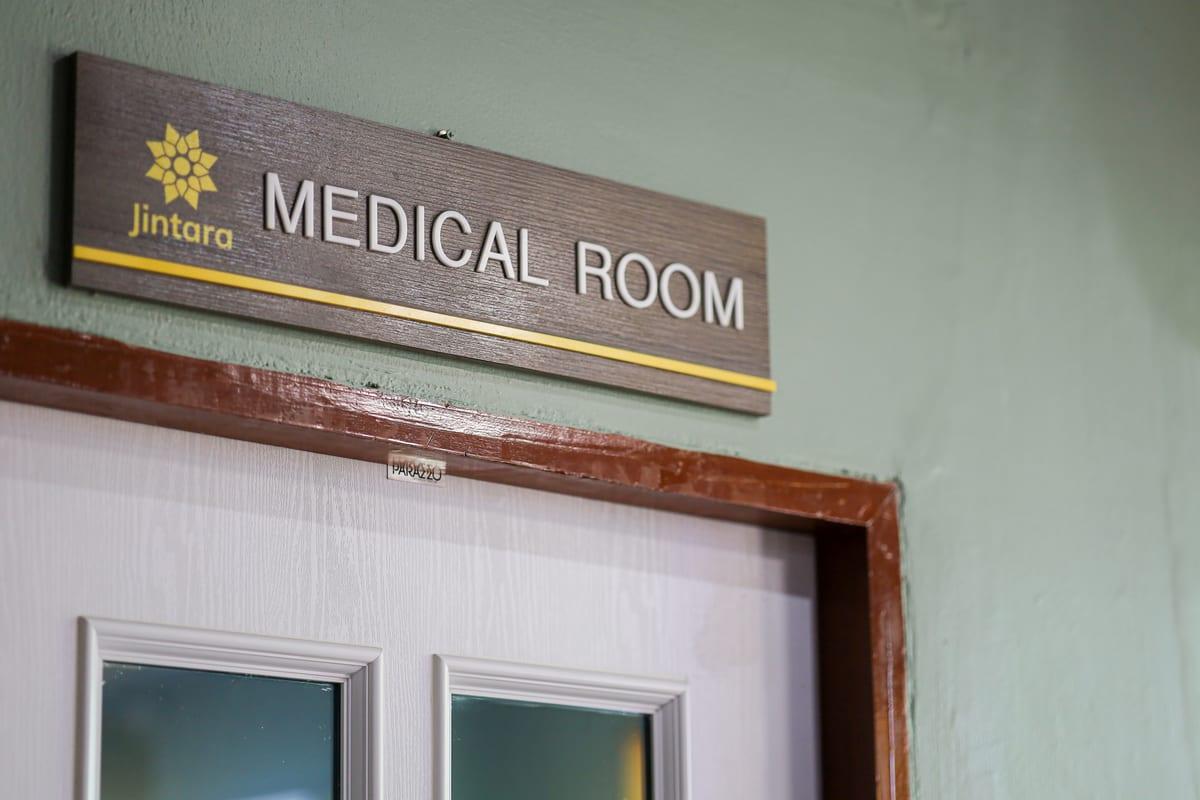
Every detox plan begins with a thorough psychiatric assessment.
Before any medication is prescribed, a psychiatrist meets with each incoming client in a detailed clinical interview. This assessment covers substance history, duration and volume of use, current physical condition, any existing mental health diagnoses, and medications the client is already taking. From this, the psychiatrist builds a personalised protocol specifying which medications are appropriate, the starting doses, and the expected taper timeline.
The psychiatric assessment at Jintara is fully included in the program fee. At many rehabilitation centres, this consultation is billed separately, which sometimes leads clients to decline or delay it. At Jintara, the assessment happens as early as possible after arrival. The only additional cost a client may encounter is the prescription cost for medication itself, which is generally modest in Thailand.
Clients who need additional psychiatric review during their stay, which sometimes happens when medication adjustments are required or when sleep is not improving, see the same psychiatrist wherever possible. For a standard 30-day program, clients typically see the psychiatrist one to three times. Clients with more complex withdrawal profiles, including older clients whose medications clear more slowly with age, may have more frequent reviews. The clinical intake explains what to prepare before arrival, including a full list of existing prescriptions.
Alcohol withdrawal is managed using a validated scoring protocol throughout detox.
Alcohol withdrawal can be life-threatening if not managed correctly. The risks include tonic-clonic seizures, delirium tremens, cardiac complications, and in severe cases, death. This is why alcohol detox requires active medical management rather than observation alone.
At Jintara, alcohol withdrawal is assessed using the Clinical Institute Withdrawal Assessment for Alcohol, Revised (CIWA-Ar), the standard validated tool for measuring the severity of alcohol withdrawal. The CIWA-Ar measures ten withdrawal symptoms and produces a numerical score that guides medication timing and dose. A score above 14 requires assessment every one to two hours. Moderate scores between 8 and 14 are assessed every four to six hours. Once a client stabilises below 8, monitoring reduces to every eight to twelve hours, tapering toward once daily, as established in Sullivan et al. (1989), the original validation study for CIWA-Ar.
Benzodiazepines are used as part of the alcohol withdrawal protocol to manage seizure risk. This is standard clinical practice and should not be confused with treating a benzodiazepine dependency. The benzodiazepine dose reduces alongside the CIWA-Ar score and is withdrawn once the client is medically stable. The alcohol rehab program at Jintara integrates medical detox with therapy from the first day, so clients do not lose treatment time to detox.
When a family is weighing up where to send someone for alcohol detox, the oversight described here is what most needs to be verified by someone other than the facility. An independent survey team assessed Jintara's clinical protocols against the hospital-grade national standard, jointly certified by the Healthcare Accreditation Institute, the Princess Mother National Institute on Drug Abuse Treatment, and the Department of Medical Services. Certificate 25/2569, valid to May 2029.
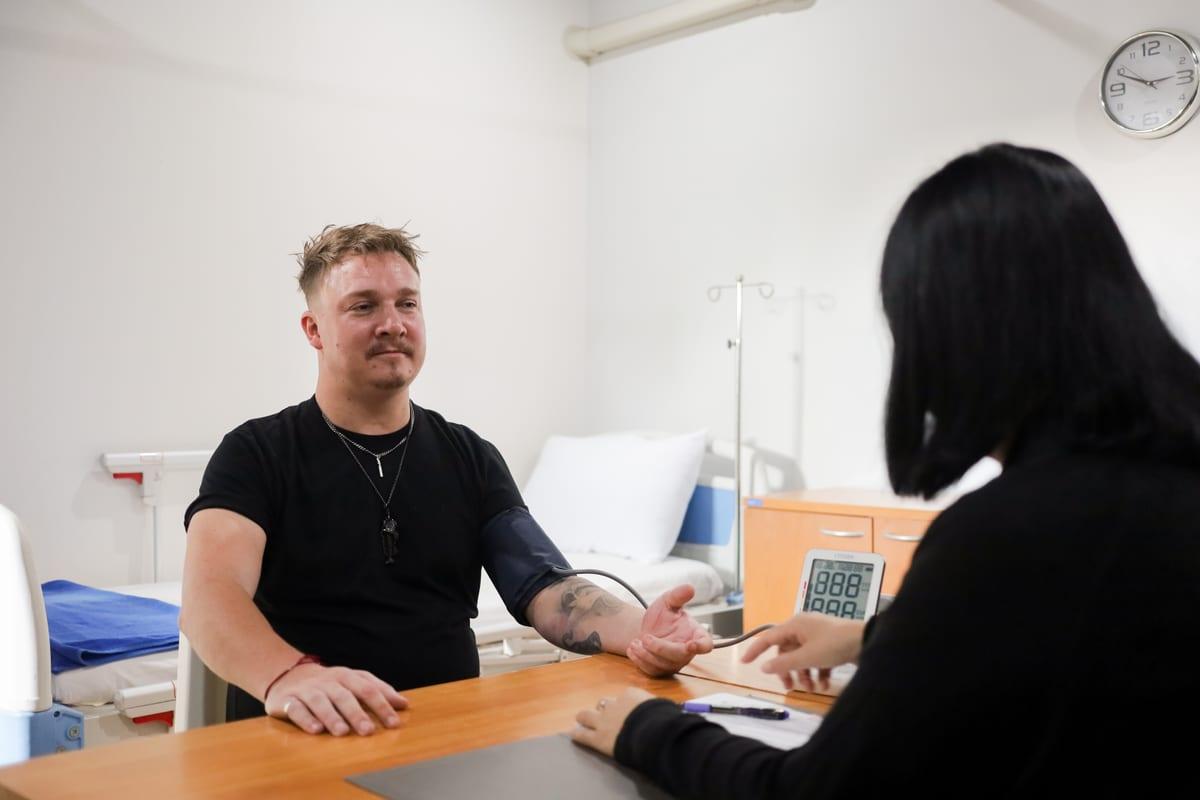
Opioid withdrawal is addressed through a supervised methadone taper.
Opioid withdrawal does not carry the same risk of fatal seizures as alcohol withdrawal, but it is medically significant and, without support, difficult to complete. The physical severity of untreated opioid withdrawal drives most failed attempts to stop without medical help, as described in NIDA's report on the long-term effects of heroin, which documents muscle and bone pain, insomnia, diarrhea, and vomiting among major withdrawal symptoms.
The primary medication used at Jintara for opioid detox is methadone. Methadone is available in Thailand and is well suited to managing opioid withdrawal because it reduces the severity of symptoms while the body adjusts to the absence of opioids. The taper begins at a stabilising dose and reduces gradually across the detox phase, consistent with the SAMHSA Treatment Improvement Protocol on opioid use disorder treatment as the evidence-based standard of care.
Opioid withdrawal is monitored using the Clinical Opiate Withdrawal Scale (COWS), which assesses eleven physical and psychological symptoms to guide dose adjustments. Clients are assessed regularly and the taper schedule is adjusted based on their scores and clinical presentation.
Buprenorphine and its combination products are not legally available in Thailand and are not used at Jintara. Methadone taper during detox is used to manage acute withdrawal only. It is not prescribed as a long-term maintenance treatment. Clients leave without opioid substitution therapy. For information on the full opioid addiction treatment approach at Jintara, including what happens after detox, see the opioid addiction pages.
Benzodiazepine detox requires a gradual clinical taper conducted over months.
Benzodiazepine withdrawal is, in the clinical experience of Jintara's nursing team, often harder than alcohol detox. This is because benzodiazepines embed deeply in the nervous system during long-term use. Cold turkey cessation in people who are physically dependent is unsafe. The ASAM joint clinical practice guideline on benzodiazepine tapering says clinicians should not stop benzodiazepines abruptly in patients at risk of withdrawal, and it treats seizure as a named risk of that course. A carefully managed taper is not a preference for people who have been on benzodiazepines for years. It is a clinical requirement.
There is no equivalent to CIWA-Ar for benzodiazepine withdrawal. Clinical assessment of physical presentation and vital signs guides the taper instead. The taper from therapeutic doses typically takes two to three months to reach zero. After reaching zero, rebound anxiety lasting three weeks or more is expected and normal. This window is clinically significant because the discomfort is real and can feel indistinguishable from the original anxiety the medication was prescribed to treat, which creates a powerful pull toward resuming use.
For clients with dual dependency on alcohol and benzodiazepines, alcohol withdrawal is addressed first. Benzodiazepines are sometimes a necessary component of the alcohol withdrawal protocol. The benzo taper then follows once the alcohol withdrawal has resolved. The benzodiazepine addiction pages cover the broader treatment approach including what to expect from the taper process.

Medications are reviewed and adjusted continuously throughout your stay.
Medication is not prescribed once and left unchanged. At Jintara, the nursing team checks vital signs and withdrawal scores throughout each day, handing observations between shifts with a written clinical summary. The psychiatrist reviews progress and adjusts medication when the clinical picture changes. For a standard 30-day program, most clients see the psychiatrist one to three times, with additional reviews if needed.
Lertkhwan Sukpia, Head Nurse at Jintara, describes the team's approach to medication management: "With our experience, we know how to stabilise clients before symptoms become severe. We always have the assessment, the plan, and the close monitoring. If we see the withdrawal score going in the wrong direction, we review the medication straight away."
The goal of continuous monitoring is to keep clients comfortable enough to participate in therapy without over-sedating them. Over-sedation delays therapeutic engagement and can create its own clinical complications. The nursing team balances these considerations with the psychiatric team daily.

“With our experience, we know how to stabilise clients before symptoms become severe. We always have the plan, and the monitoring is continuous.
Clients' existing prescriptions are assessed and integrated on arrival.
Existing prescriptions are reviewed and categorised on the day of arrival, before any detox medication is prescribed. Clients commonly arrive with medications for physical health conditions, mental health conditions, or both. The nursing team conducts a medication review on the first day, categorising each medication across three clinical groupings: a stable health condition prescription that continues unchanged, a mental health prescription to be reviewed alongside the detox plan, or a medication the client has been taking without a current valid prescription.
Medications without a current prescription are not administered. Clients who need them are assessed by the therapist and, where indicated, referred to the psychiatrist for review. If a client arrives believing they may no longer need a psychiatric medication, the detox phase is not the appropriate time to test that assumption. Adjustments to established psychiatric medications happen after detox is complete and the client is clinically stable.
This careful integration matters most for clients presenting with dual diagnosis, where mental health medication and detox medication can interact in complex ways. The process is a team decision involving the nursing team, the psychiatrist, and the therapist. Clients are informed at each stage of what is being prescribed and why. Informed consent for all treatments and medications is a non-negotiable component of Jintara's client rights framework.

“We encourage clients to use skills over pills. We don't want anyone leaving with more medications than they arrived with.
Long-term pharmaceutical maintenance sits outside Jintara's clinical model.
Jintara does not prescribe or recommend oral relapse prevention medications such as naltrexone, acamprosate, or disulfiram after detox, and the same principle shapes its non-opioid approach to pain relief in detox. The clinical position, confirmed by Denise O'Leary, is direct: "We don't recommend using substances to treat substances." This is a considered clinical position, not a gap in the program.
Naloxone kits are not provided at discharge. Methadone is used only to manage acute withdrawal during the detox phase, not as a post-treatment maintenance prescription. Clients complete treatment without ongoing opioid substitution therapy.
This approach places the focus on psychological tools, therapeutic insight, and structured coping skills that do not require continuing medication. The 30-day program at Jintara is designed to achieve meaningful clinical progress through evidence-based therapy rather than pharmaceutical dependency. Clients leave with documented coping strategies, a personalised aftercare plan, and a clinical summary prepared by the treatment team.
Whether or not medication-assisted treatment after discharge is appropriate for a given individual depends on their full clinical history and the recommendations of their treating clinician at home. If a client or their GP believes ongoing medication is warranted, that decision can be made in consultation with a local specialist after Jintara's program concludes.


Talk with Our Admissions Team
Your enquiry is confidential and goes only to our admissions team.
Common Questions About Medication Protocols at Jintara
Alcohol withdrawal is managed using the Clinical Institute Withdrawal Assessment for Alcohol, Revised (CIWA-Ar) scoring protocol. Benzodiazepines are used to reduce seizure risk during acute withdrawal, with doses reducing as the CIWA-Ar score drops. The specific medication and starting doses are determined by the psychiatrist at initial assessment. No two detox plans are identical.
No. Buprenorphine and its combination products are not legally available in Thailand and are not offered at Jintara. This is a legal constraint, not a clinical preference. Opioid withdrawal is managed using a supervised methadone taper, used for acute detox only and not as long-term maintenance. Clients complete the program without an ongoing opioid substitution prescription.
Benzodiazepine tapers typically take two to three months to complete. Cold turkey cessation carries serious medical risks, including seizures, and is not used. After reaching zero, rebound anxiety lasting several weeks is normal and expected. Clients are informed about this window during treatment and receive clinical support throughout.
Yes. The psychiatric assessment is fully covered by the program fee at Jintara. The only additional cost a client may encounter is the cost of prescribed medication, which is generally modest in Thailand. At many rehabilitation centres, psychiatric consultations are billed separately as an extra charge.
Most clients leave without prescription medication from the program. Jintara does not prescribe post-detox oral relapse prevention medications such as naltrexone, acamprosate, or disulfiram. If a client's own treating clinician at home recommends medication-assisted treatment after discharge, that is a separate clinical decision made outside of Jintara's program.
Existing prescriptions are reviewed on the first day. Health condition prescriptions that are clinically stable continue unchanged. Mental health prescriptions are assessed alongside the detox plan. If adjustments are needed, they are made in consultation with the psychiatrist. The detox phase is generally not the appropriate time to discontinue established psychiatric medications.
Most clients completing a 30-day program see the psychiatrist one to three times. The first meeting occurs on or shortly after arrival to create the detox plan. Follow-up appointments are scheduled if medication adjustment is needed or if a specific clinical concern arises. Clients with more complex withdrawal profiles may have additional reviews. The Jintara admissions team can answer questions about your specific situation before you commit to a start date.
Yes. Jintara's clinical protocols, including the medication management and withdrawal monitoring systems described on this page, were assessed by an independent survey team as part of a joint accreditation from the Healthcare Accreditation Institute, the Princess Mother National Institute on Drug Abuse Treatment, and the Department of Medical Services, Ministry of Public Health. Certificate 25/2569 is valid from May 2026 to May 2029. Jintara is one of only six private rehabs in Thailand to hold this accreditation.
Jintara is a small adult residential rehab in Chiang Mai with psychiatrist-led detox protocols and a 3.2:1 staff-to-client ratio. Medical detox is included in every stay.
Jintara Rehab is licensed by the Thai Ministry of Public Health as a rehabilitation centre. The clinical information on this page describes Jintara's general approach to supporting clients during the early recovery period. Medical decisions, including medication protocols, are determined by addiction-specialist psychiatrists through our partner hospital pathway. Individual treatment varies based on clinical assessment. This content is for informational purposes and does not constitute medical advice.