

Understanding withdrawal symptoms during a medical detox
Withdrawal is uncomfortable and, for some substances, medically serious. At Jintara, a 24/7 awake nursing team monitors every client through the full detox phase, adjusting medication, tracking symptoms, and providing comfort care around the clock. You are never managing this alone in the medical detox program from night one.
- Nurses awake and on-site every hour of the night
- CIWA-Ar and COWS scoring guides every medication decision
- Psychiatrist-led medication plans, reviewed as symptoms change
- Physical and psychological symptoms treated with equal clinical care

Fully Licensed and Hospital Accredited
Withdrawal symptom management is structured medical care, not comfort alone.
Withdrawal symptom management is the clinical process of keeping the body safe as it stops depending on a substance. This is not a matter of waiting it out. For alcohol and benzodiazepines, withdrawal can become life-threatening without structured medical intervention, consistent with SAMHSA's TIP 45 chapter on physical detoxification. For opioids, the physical discomfort is intense enough that unmanaged withdrawal is one of the most common drivers of relapse in early treatment.
- Breath alcohol test: Conducted within the first hour.
- Urine drug screen: Conducted within the first hour.
- Standardised withdrawal symptom assessment: These three checks establish the clinical baseline the team needs before any medication decision is made.
The goal from the first hour is not to eliminate discomfort, which is not medically achievable, but to keep the person safe, prevent dangerous escalation, and create conditions where therapy can begin as soon as the body is stable enough to engage.
“If they know the meds can only do this much, but that it will probably peak on this day and then leave off after that, that information alone can stop a person from running for the hills.
Physical withdrawal symptoms vary by substance and respond to targeted care.
Physical withdrawal differs substantially depending on the substance involved. Alcohol and benzodiazepine withdrawal both carry serious medical risk, including seizure and delirium tremens, and GHB withdrawal in daily users belongs in the same sedative-class risk group, a profile documented in SAMHSA TIP 45 on detoxification. Opioid withdrawal is not typically life-threatening but produces severe physical distress: body aches, sweating, nausea, vomiting, insomnia, and tremor that peak around days four to seven. Stimulant withdrawal presents primarily as fatigue, low mood, and intense cravings rather than dramatic physical symptoms.
- Nausea: Managed with antiemetics.
- Dehydration: Addressed with oral fluids or intravenous support when the person cannot keep liquids down.
- Tremor and rising anxiety: Monitored against the Clinical Institute Withdrawal Assessment for Alcohol, Revised (CIWA-Ar) for alcohol, and the Clinical Opiate Withdrawal Scale (COWS) for opioids.
- Non-pharmaceutical support: Hot showers and baths help with body aches. Cooling with fans and cold compresses addresses drenching sweats. Sleep is supported with trazodone, melatonin, and environmental adjustment: dark rooms, quiet, and consistent routine.
Both tools give the team a scored severity picture rather than a clinical guess. The team's position is that every physical symptom has a clinical response, and it is their job to use it.

The 24/7 awake nursing model catches problems before they escalate.
Jintara's nursing team is awake and on-site through every overnight shift. This is not a passive on-call arrangement. Nurses conduct structured checks at intervals determined by withdrawal scoring, not by waiting for a client to call for help. In early detox, a client with a high withdrawal score is reviewed every one to two hours. As scores stabilise, checks reduce in frequency. As Darren Lockie describes it, the standard is close to hospital-level monitoring, not a hotel service that hands out medication and leaves the rest to the client.
Beyond vital signs and CIWA-Ar or COWS scoring, nurses observe the whole clinical picture. Agitation rising in waves, fragmented sleep followed by worsening distress, physical complaints that do not match the expected withdrawal pattern: these are warning signs that can precede a serious complication. Catching the pattern early allows medication adjustment while the person is still stable, rather than managing a crisis.
Each shift produces documented notes that are handed over in full to the incoming team. The incoming nurse reviews the past five days of records so continuity is maintained regardless of who is on shift. This prevents the situation where a client feels they have to start over every time a new nurse appears. Checks run hourly through the first 48 to 72 hours of acute withdrawal, then taper against the CIWA-Ar or COWS score: every one to two hours at a high score, four to six hours as it moderates, and once daily once a client has stabilised.
For families choosing from overseas, the question is reasonable: does clinical monitoring at a private rehab actually match what a hospital would deliver? The Healthcare Accreditation Institute, Princess Mother National Institute on Drug Abuse Treatment, and Department of Medical Services independently assessed Jintara's overnight nursing protocols, scoring procedures, and shift handover documentation, and confirmed they meet Thailand's national hospital standard. Certificate 25/2569. The same bar hospitals are held to, in a place small enough that your nurse knows your name and withdrawal history before their shift begins.
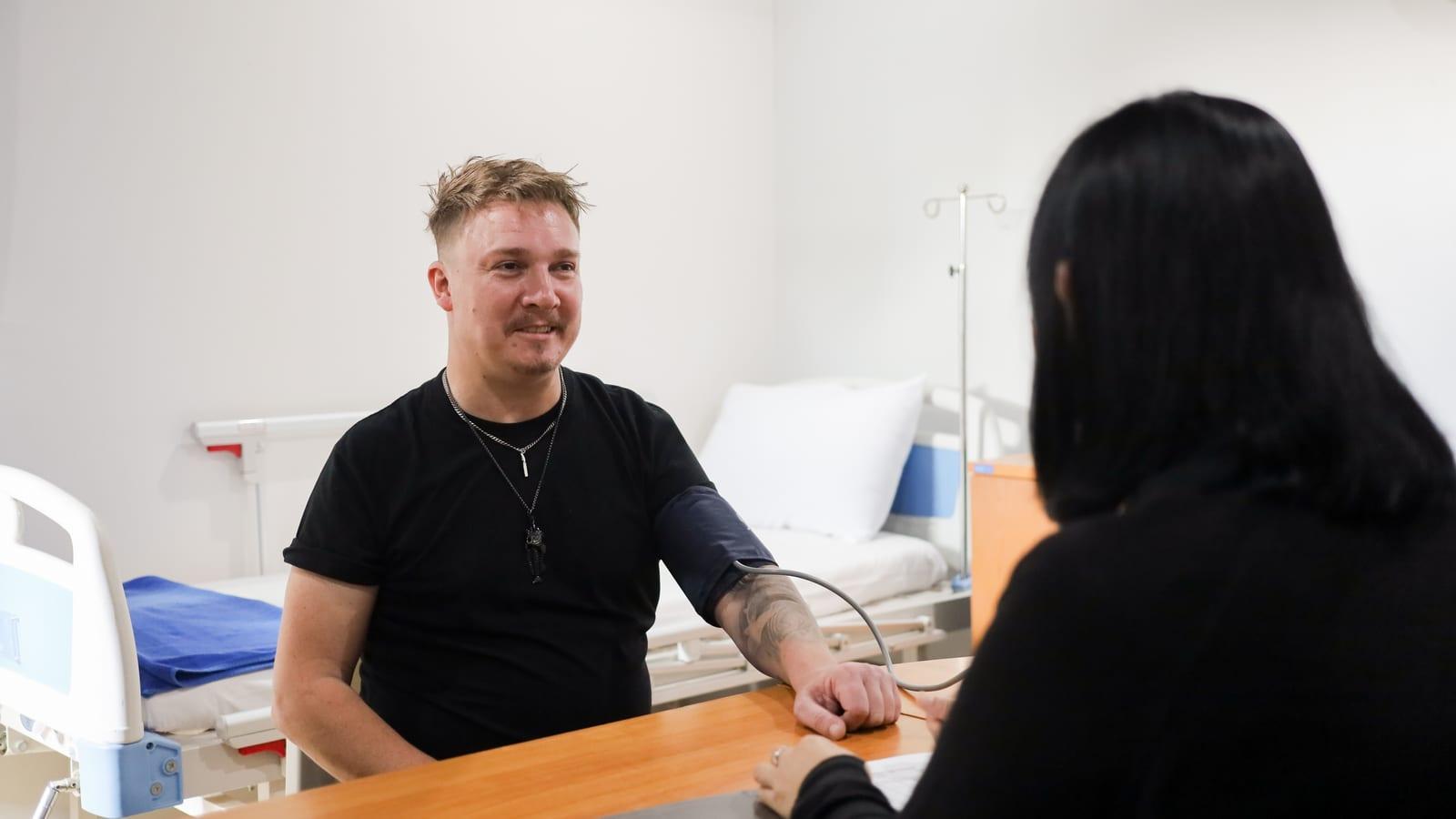
Medication in detox is psychiatrist-led and adjusted in response to symptoms.
The medication plan for each client at Jintara is created by the psychiatrist after an initial assessment. It depends on which substances were used, how severe the withdrawal presentation is, what medical conditions are present, and how the person responds as detox progresses. There is no single-dose protocol applied to everyone.
For alcohol withdrawal, benzodiazepines are used as part of Jintara's medication-assisted detox protocols. For opioid withdrawal, methadone may be used during the taper period, as is standard in opioid detox practice. Jintara does not offer naltrexone, acamprosate, disulfiram, or other oral relapse prevention medications after detox: the clinical position is to avoid using substances to treat substances. For benzodiazepine withdrawal, there is no equivalent to CIWA-Ar. The team uses clinical observation of vitals and presentation to guide the taper rate, which may extend over two to three months.
Nursing reviews medication effectiveness one hour after each new or adjusted dose. If symptoms have not improved, or if side effects have emerged, the plan is escalated back to the psychiatrist. The aim is adequate stabilisation, not over-sedation. A client walking around unable to engage is a medication problem the team will address directly.
Psychological withdrawal symptoms are as real as physical ones.
Withdrawal affects the body and the mind. Anxiety, depression, irritability, low motivation, and intense cravings are all neurological consequences of the brain adjusting to the absence of a substance it has organised itself around. These symptoms are not a sign that the person is weak or failing. They are the expected result of a brain whose reward and regulation systems have been shaped by substance use.
Anxiety during withdrawal can be severe. It presents as racing thoughts, physical tension, a sense of impending doom, and in some cases panic. The team's response combines medication where appropriate with grounding techniques, breathing work, and direct reassurance. The message is consistent: the anxiety is real, it is temporary, and the team has seen this before. Depression, including hopelessness and passive suicidal ideation, is also common in the early withdrawal phase. More than half of people arriving at Jintara have had some thoughts about suicide. The team assesses this directly, using the PHQ-9 and, where flagged, the 8Q screening tool.
Irritability and mood swings are expected. Clients may snap at staff or dissolve into tears without warning. The team treats this as a clinical feature of withdrawal, not a behavioural problem, and responds with validation, personal space, and a steady tone. For clients whose psychological symptoms reflect a co-occurring condition, our dual diagnosis treatment approach runs alongside withdrawal care from the start.

How withdrawal unfolds differs by substance and duration of use.
- Alcohol: Typically begins within six to eight hours of the last drink and reaches its most dangerous point in the twelve to forty-eight hour window. CIWA-Ar scoring guides the response. Severe scores indicating delirium tremens risk require tighter monitoring and faster escalation. According to MedlinePlus medical guidance on alcohol withdrawal, symptoms may begin within eight hours and peak at twenty-four to seventy-two hours.
- Benzodiazepines: For someone who has used for years, withdrawal is often more neurologically prolonged than alcohol withdrawal, as SAMHSA TIP 45 on detoxification describes in its benzo taper protocols. Symptoms can feel less predictable, rebound anxiety can exceed the original anxiety the medication was treating, and the post-zero window, the period after the medication is fully tapered, can involve three or more weeks of rebound anxiety that is normal and expected.
- Opioids: Rarely produce life-threatening medical risk, per NIDA opioid research, but the physical discomfort is significant. COWS scoring tracks severity. The worst period typically falls in days four to seven.
- Stimulants: Primarily a psychological process: low mood, anhedonia, fatigue, and powerful cravings dominate the picture, and the team focuses on emotional containment, sleep support, and protection from impulsive decisions in the early days.
- Polysubstance: Creates layered timelines. Alcohol and benzodiazepines used together require managing two competing peaks with adjusted medication and more frequent reassessment. The nursing team watches closely for undisclosed use, since symptoms that do not match the disclosed history are often the first sign that the full clinical picture has not been shared.
More detail on alcohol detox at Jintara is available.
Therapy during early detox focuses on stability before depth.
During peak withdrawal, intensive trauma processing is not appropriate. The body and the nervous system are under clinical stress, and the priority is stabilisation. Therapy in the first days takes a different form: education about what is happening physiologically, reassurance about what to expect, and practical distress tolerance skills the person can use immediately.
These skills include physiological techniques for bringing the arousal system down. Slow exhalation activates the parasympathetic response. Grounding exercises using the five senses interrupt spiralling anxiety. Validation that the emotional and physical experience is normal and temporary reduces the panic that compounds withdrawal symptoms. Denise O'Leary describes the clinical message as simple: this is how it is going to go, this is what you can expect, you are in a safe place, and all you need to do for now is the next thing on your schedule.
As withdrawal stabilises, therapeutic depth increases. Goal-setting for the post-detox phase begins. Skills for emotional regulation and behavioural activation are introduced. Jintara uses an abbreviated four-module form of dialectical behaviour therapy covering mindfulness, distress tolerance, emotional regulation, and interpersonal effectiveness. Group engagement becomes more clinically relevant as peers who have made it through the worst days provide a living proof of survivability. The full treatment program at Jintara continues building on what begins in these early days.

Non-pharmaceutical comfort measures run alongside clinical care throughout detox.
Clinical medication alone does not make withdrawal survivable. The physical environment, hydration, nutrition, managing pain during withdrawal, and human contact all matter. Jintara's approach treats comfort as a medical output alongside symptom control, not a soft extra.
- Hydration: Clients in acute withdrawal frequently need one to two litres of fluid support, intravenously if they cannot keep oral fluids down.
- Nutrition: Supports brain chemistry recovery. Even basic food and supplements matter during the first days.
- Rest: Encouraged even when sleep is elusive, because the environment is kept dark, cool, and quiet to reduce stimulation during the hours when sleep might be possible.
- Movement: Gentle stretching, walking, or joining a group activity even briefly all reduce the physical restlessness that amplifies withdrawal distress.
- Hot baths, showers, massage and Reiki: Give relief for body aches and anxiety. Massage and Reiki sessions, part of Jintara's holistic treatment program, calm the nervous system in ways that medication alone cannot address.
Hydration is the most commonly underestimated factor. The team's standing message is: your only job right now is to get through today. Food will appear. Someone will tell you where to be. Leave everything else to us.

Hospital escalation is a planned response, not a last resort.
Jintara holds active relationships with Bangkok Hospital Chiang Mai and RAM Hospital. Escalation to hospital care is built into the clinical model as a planned response to specific warning signals, not an emergency improvisation. The team's position, as Darren Lockie states it, is that if there is any concern about a client's safety, the preference is a hospital check now rather than regret later.
- Severe or unusual headaches: Call for immediate escalation.
- Internal pain that does not fit: Pain that does not match the expected withdrawal pattern.
- Seizure activity: Seizure, fever, severe confusion, and hallucinations all require emergency response.
- Rising vital signs: That do not respond to medication.
- Any symptom beyond uncomplicated withdrawal: Overnight nursing covers this directly. A transfer at 2am is handled the same way as a transfer at 2pm: the team acts, explains clearly to the client, and moves quickly.
Clients are told at admission what escalation looks like and under what circumstances it would happen. This removes the fear of the unknown and supports trust in the clinical team's judgement. Most people do not need hospital transfer. But knowing the pathway is in place is part of what allows someone in early withdrawal to let their guard down enough to rest. If you have questions about admissions and what your first days would look like, the admission enquiry is the direct line to the team.

Talk with Our Admissions Team
Your enquiry is confidential and goes only to our admissions team.
Common Questions About Withdrawal Management at Jintara
Managed withdrawal is more comfortable than unmanaged withdrawal, but some discomfort is medically unavoidable. The team's goal is to keep symptoms at a level that is survivable and to prevent dangerous escalation. Medication, comfort measures, and consistent nursing support all reduce the intensity of the experience without eliminating it entirely.
Nursing reassesses frequently. If symptoms are worse than the initial medication plan anticipated, the plan is escalated to the psychiatrist for review and adjustment. No protocol is fixed in place if the clinical picture is not matching it. The team responds to what is actually happening, not to what was expected.
This depends on the substance, the duration of use, and individual physiology. Alcohol withdrawal peaks at twenty-four to seventy-two hours and typically resolves within a week. Opioid withdrawal is most intense from days four to seven. Benzodiazepine taper may take two to three months, with rebound anxiety persisting three or more weeks after reaching zero. The nursing team gives each client a realistic timeline for their specific situation.
Yes. Depression during withdrawal is a neurological consequence of the brain's chemistry adjusting. Dopamine systems depleted by alcohol or stimulants take time to recover. The clinical team treats this directly, assessing for passive ideation and escalating support when needed. For most people, the low mood begins to lift as detox stabilises.
Insomnia is one of the most common withdrawal symptoms and can persist for several days. The team addresses it with medication, environmental adjustment, and reassurance that sleep will return. Clients are encouraged to rest even when sleep is elusive. If insomnia is not resolving, the medication plan is reviewed.
The CIWA-Ar scale for alcohol withdrawal and COWS for opioid withdrawal give numerical severity scores that guide monitoring frequency and medication response. Nurses also watch for behavioural warning signs: agitation rising in waves, confusion, unusual complaints, or vitals that are climbing rather than settling. Early detection is the goal. The team prefers to respond at the first sign of escalation rather than waiting for a crisis.
CIWA-Ar is the Clinical Institute Withdrawal Assessment for Alcohol, Revised, a ten-item validated scale measuring tremor, anxiety, nausea, sweating, sensory disturbances, and orientation. Jintara's nurses score clients at each check. The total determines medication adjustments and how often the next check happens.
COWS is the Clinical Opiate Withdrawal Scale, which measures eleven observable signs of opioid withdrawal including pulse rate, sweating, restlessness, and joint pain. Jintara uses it for any client reporting opioid use. The score guides the taper plan and helps the team judge whether the current medication protocol is sufficient.
Yes. Jintara holds hospital-grade accreditation jointly awarded by three Thai national authorities: the Healthcare Accreditation Institute (HAI), the Princess Mother National Institute on Drug Abuse Treatment (PMNIDAT), and the Department of Medical Services (DMS). Certificate 25/2569, valid 20 May 2026 to 19 May 2029. The accreditation confirms that Jintara's nursing protocols, medication handling, and overnight monitoring procedures meet Thailand's national hospital standard. Jintara is one of only six private rehabs in Thailand to hold it.
You are an adult and you can leave at any time. The team's job is to make that choice as unnecessary as possible by managing symptoms effectively and being honest about the timeline ahead. If you are reaching a point where leaving feels necessary, the team wants to know and to address what is driving that. Staying through the worst days is almost always the decision people are most glad they made. Reach the admissions team directly through the contact page if you have concerns before you arrive.
Jintara is a small adult residential rehab in Chiang Mai with awake overnight nurses and a 3.2:1 staff-to-client ratio. Medical detox is included in every stay.
Jintara Rehab is licensed by the Thai Ministry of Public Health as a rehabilitation centre. The clinical information on this page describes Jintara's general approach to supporting clients during the early recovery period. Medical decisions, including medication protocols, are determined by addiction-specialist psychiatrists through our partner hospital pathway. Individual treatment varies based on clinical assessment. This content is for informational purposes and does not constitute medical advice.