

Alcohol Medical Detox in Chiang Mai, Thailand
On-site medical detox at Jintara is psychiatrist-led through our partner hospitals and supported by our 24/7 nursing staff. A full hospital workup happens on Day 2 and is included in the fee. Therapy starts on Day 1, alongside the detox, not after it.
- Psychiatrist-led protocol through our partner hospitals in Chiang Mai
- 24/7 awake nursing on site, with CIWA-Ar scoring guiding every check
- Day 2 hospital workup at Bangkok Hospital Chiang Mai, included
- Therapy starts on Day 1, alongside the detox, not after it
Fully Licensed and Hospital Accredited
How Medically Supervised Alcohol Detox Works at Jintara
Medical detox at Jintara happens on site, led by a psychiatrist at one of our partner hospitals and supported by our 24/7 nursing team at the centre. You are assessed on arrival, the medications are prescribed that same day, and the clinical lead for your detox sits with the hospital, not with Jintara alone. If anything needs hospital-level care, you go straight to Bangkok Hospital Chiang Mai or Chiang Mai Ram Hospital, a short drive away.
Alcohol is one of the few substances where stopping suddenly carries real risk. This is why alcohol dependence is treated as a medical process, not a willpower problem. This page walks through how medical detox at Jintara is run day by day, what the first week looks like, and why therapy starts on Day 1 rather than waiting for detox to finish.

What Does the Alcohol Withdrawal Experience Feel Like
The withdrawal process begins when someone with physical dependence on alcohol or other drugs stops drinking or reduces their intake. The body enters neurological hyperexcitability, the state that drives seizures and delirium tremens during detox, as the brain adjusts to the absence of alcohol. Alcohol withdrawal symptoms can vary in severity from mild to life threatening, based on how long the person has been consuming the same amount on a daily basis, their physical health, and substance use patterns.
Mild withdrawal symptoms typically appear 6 to 12 hours after the last drink. Anxiety, hand tremors, insomnia, nausea, sleep problems, and elevated blood pressure are common in the first day. Some people confuse early withdrawal with a hangover, but withdrawal worsens over time. Between 24 and 72 hours, symptoms intensify to include raised blood pressure, sweating, agitation, and confusion. Medical supervision during this period detects dangerous changes before they become life threatening.
Severe alcohol withdrawal includes the potential onset of delirium tremens, which develops in approximately 3 to 5 percent of people with alcohol withdrawal syndrome according to StatPearls on alcohol withdrawal syndrome and StatPearls on delirium tremens, and brings confusion, rapid heartbeat, fever, hallucinations, and grand mal convulsions. Without medical intervention, delirium tremens is one of the most dangerous withdrawal syndromes in addiction treatment. Complicating conditions such as heart disease or substance use disorders involving other drugs can increase severity.
Alcohol withdrawal at the severe end is why Jintara's nursing protocols and clinical safeguards were independently assessed by the three national bodies that accredit Thailand's hospitals. The Healthcare Accreditation Institute, the Princess Mother National Institute on Drug Abuse Treatment, and the Department of Medical Services issued certificate 25/2569 confirming those protocols meet the national standard. A family making this decision from a distance does not have to take Jintara's word for it alone.
Every person is treated as an individual. Timelines and approaches vary.
How Jintara Monitors Withdrawal. The CIWA-Ar Protocol
The Clinical Institute Withdrawal Assessment for Alcohol, Revised (CIWA-Ar) is the standardised tool Jintara's nursing team uses to measure how severe withdrawal is and decide how often to check in on you. StatPearls on alcohol withdrawal syndrome describes CIWA-Ar as a validated severity scale: scores of 8 or less are mild, scores between 8 and 15 are moderate, and scores above 15 imply severe withdrawal. When a score is above 14, Jintara's nurses assess every one to two hours. As scores drop, monitoring moves to twice daily, then once daily. The most vulnerable window gets the most frequent attention.
- Nausea and vomiting
- Tremor
- Paroxysmal sweats
- Anxiety
- Agitation
- Tactile disturbances such as itching, pins and needles, or burning
- Auditory disturbances such as sounds that feel too loud or frightening
- Visual disturbances such as sensitivity to light or visual hallucinations
- Headache or fullness in head
- Orientation and clouding of sensorium the patient's awareness of time, place, and person
The psychiatrist prescribes benzodiazepines to ease withdrawal symptoms and reduce the risk of seizures. NIAAA's Core Resource on Alcohol describes benzodiazepines as the gold standard for acute withdrawal symptoms, with the deepest evidence base. The specific medications, dosage, and taper schedule are built around your drinking history and physical condition, and adjusted as symptoms change. Jintara does not offer naltrexone, acamprosate, or disulfiram after detox. These medications are standard in some programs, but not how Jintara approaches recovery. For a full explanation of how CIWA-Ar scoring drives dose decisions throughout detox, see the medication protocols during detox page.
The Medical Team and Day 2 Hospital Workup
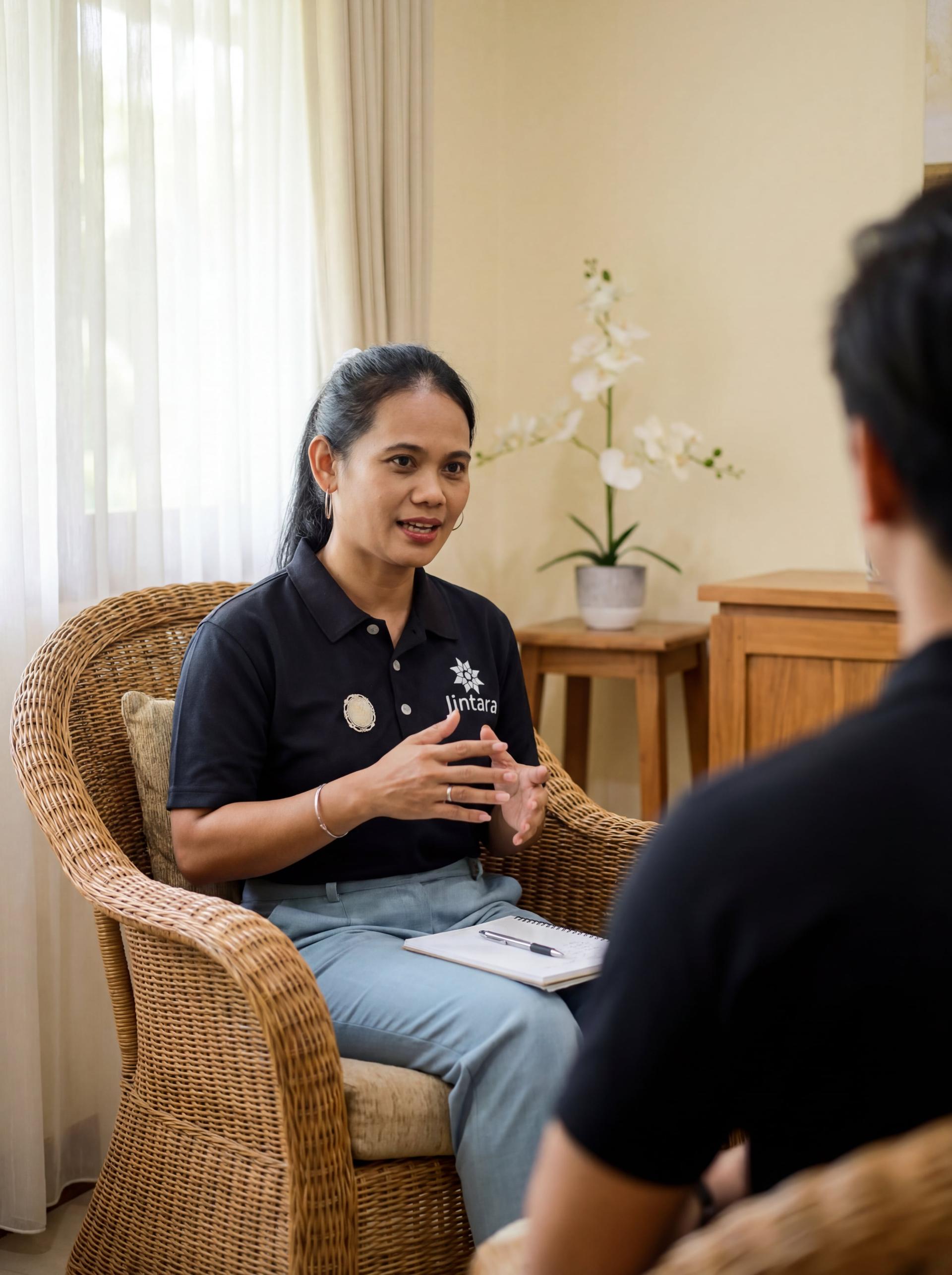
Your first day is with Jintara's psychiatrist. They look at your drinking history, any other conditions, and put the detox plan together with you. The medications are prescribed the same day. The assessment is included in the program fee, not billed separately like at many other centres in Thailand.
On Day 2, Jintara takes you to Bangkok Hospital Chiang Mai or Chiang Mai Ram Hospital for a full workup covering liver function and cardiac testing alongside kidney function and chest X-ray. Long-term drinking often shows up as raised liver enzymes, changes in blood chemistry, or cardiac patterns, the conditions that change how detox is planned, and they need a doctor's eyes on them early, before detox moves deeper. Jintara covers this cost.
Back at Jintara, the nursing team runs 24 hours a day and is awake overnight. During active detox, vitals are checked every four to six hours, with CIWA-Ar scores driving the frequency as part of how we monitor withdrawal. If your CIWA-Ar score is high, you're seen every one to two hours instead. Lertkhwan Sukpia, Jintara's head nurse, decides who needs eyes-on overnight. If anything crosses what can be handled safely on site, the team escalates to hospital without delay.

Therapy Starts on Day 1 Alongside Medical Detox
Most rehabs treat detox as a separate phase. Jintara runs both in parallel as the first step toward recovery from addiction. Therapy starts on the same day as medical detox. During active withdrawal, when people may be sedated from medications, the therapeutic work focuses on supportive care and helping to relieve stress. Denise O'Leary, Jintara's clinical director, puts it this way: “If people are in pretty bad shape and there's a serious detox, it's more supportive. Providing specific information about what to expect. That's helpful for people.”
Early therapy provides information about the withdrawal process, teaches distress tolerance skills for managing cravings and anxiety, and builds the therapeutic relationship before deeper treatment begins. The NIDA treatment overview says co-occurring health issues are usually better treated at the same time rather than separately. This approach means people are not waiting to begin treatment that addresses why they drink alcohol. Treatment programs that separate detox from therapy lose recovery momentum.
“Once someone’s on a medical detox for alcohol, they can do most things, particularly therapy, in parallel.
What Happens After Detox
The full alcohol withdrawal timeline typically takes 5 to 10 days for acute withdrawal to resolve. The detox process includes three phases: evaluation, stabilisation, and entry into continued treatment. After detoxification stabilises and seizures are no longer a risk, the person transitions into the full addiction treatment program. Detox by itself is rarely effective as a treatment modality for alcohol addiction. A plan for continued care matters if the goal is lasting change.
Jintara's 30-day program includes individual therapy twice per week, CBT-based group therapy, physical fitness sessions that help the body recover, and mindfulness components. Aftercare and relapse prevention planning begins in the first week of treatment. Detoxification removes drugs and substances from the body. It does not address alcohol dependence, substance abuse, or the reasons driving self-medication with drugs or other substances. Without addressing these factors, relapse is the most common outcome.
Can You Safely Detox From Alcohol at Home
Detoxing at home carries serious danger, particularly for anyone with a history of heavy or long term drinking. Without medical supervision, CIWA-Ar scoring, and access to medications, moderate withdrawal can escalate to convulsions, delirium tremens, or other life-threatening complications, the exact escalation that makes attempting alcohol detox at home so dangerous. Home detox offers no escalation pathway to hospital when symptoms deteriorate.
Involving medical professionals in the detox process gives patients controlled medications to prevent complications, continuous monitoring to detect life threatening changes in the body, and clinical support to ease the symptoms that drive many people to resume drinking. Professional help during detox can significantly increase the likelihood of successful long term recovery from alcohol addiction and substance use disorders.
Home detox is especially risky when other substances are involved. People mixing alcohol with benzodiazepines or alcohol and opioids face compounded withdrawal risks where two drug timelines run concurrently, and unsupervised cessation of either substance can be fatal. At Jintara, polysubstance cases are assessed on arrival and the detox plan is built around the full substance history, not the primary drug alone.
“There’s real danger in detoxing at home or in a hotel, unless you’re under the care of a psychiatrist and nurses 24 hours a day. Alcohol can be one of the most dangerous detoxes, especially cold turkey.
Who Should Not Attempt Outpatient Alcohol Detox
Not everyone can safely detox outside a residential facility. Several factors raise the risk of severe complications to the point where clinical inpatient care is the only responsible option. Jintara screens for all of the following on arrival, and clients who show these markers are placed on the most intensive monitoring track from Day 1.
- Prior history of withdrawal seizures or delirium tremens: A previous DT episode is the strongest predictor of another one. Outpatient detox is contraindicated.
- Daily intake at the heavy end for extended periods: Roughly six or more standard drinks a day for several months, or heavier intake for weeks, places the nervous system into physical dependence that is unsafe to reverse without medication.
- Co-occurring benzodiazepine, opioid, or sedative use: Combined withdrawal is more dangerous than either alone and needs a psychiatrist-designed taper.
- Significant medical comorbidities: Heart disease, liver disease, poorly controlled diabetes, or a history of cardiac arrhythmia narrow the margin for safe management outside a clinical setting.
- Mental health complications: Active suicidal ideation, psychosis, or severe untreated depression make home detox unsafe because the emotional load during withdrawal is substantial.
- No reliable support at home: Even lower-risk detox requires someone sober present for monitoring. Without that, the safest option is residential care.
If any of the above apply, a residential medical detox is the safer route. Every person is treated as an individual, and the Jintara psychiatrist decides the monitoring level based on the full clinical picture.

Talk with Our Admissions Team
Your enquiry is confidential and goes only to our admissions team.
Common Questions About Alcohol Medical Detox
Acute alcohol withdrawal symptoms typically last 5 to 10 days. Detox symptoms peak within 24 to 72 hours after the last drink. The timeline depends on drinking history, physical health, and duration of addiction to drugs or alcohol.
Yes. Alcohol withdrawal can be life threatening. Approximately 5 percent of people going through alcohol detoxification develop delirium tremens, which includes seizures, confusion, and rapid heartbeat. Medical supervision matters because severe withdrawal can escalate without warning, and the escalation window is often too short for a safe response without clinical monitoring in place.
Benzodiazepines are the standard medications used to manage withdrawal symptoms and prevent convulsions during medical detox. Medication assisted treatment reduces the risk of complications for patients in addiction treatment.
Home detox is not recommended for patients with a history of heavy drinking. Without medical supervision, symptoms can escalate to convulsions. A medically supervised detox in a treatment centre provides drugs for withdrawal, monitoring, and a hospital escalation pathway. The risk of cravings and complications increases without professional addiction treatment.
CIWA-Ar stands for Clinical Institute Withdrawal Assessment for Alcohol, Revised. It is a standardised clinical tool that measures alcohol withdrawal severity on a scale of 0 to 67. The assessment covers ten symptoms including tremor, anxiety, nausea, sweating, and orientation.
Yes. Jintara has awake nursing staff on site around the clock. Nurses check vital signs, administer medications, and document handover reports every shift. During active detox, patients receive visits every one to two hours.
On Day 2, Jintara arranges a full medical workup at Bangkok Hospital Chiang Mai including blood panel, liver function tests, kidney function tests, EKG, and chest X-ray. Jintara pays for this. Results identify underlying conditions and establish a baseline.
Yes. Jintara begins addiction treatment on Day 1 alongside medically supervised detox. During acute withdrawal, therapy focuses on distress tolerance skills. Recovery from substance use disorders requires addressing the psychological factors behind drugs and addiction.
Jintara escalates to Bangkok Hospital Chiang Mai or Chiang Mai Ram Hospital immediately. Both hospitals have addiction psychiatrists. The 24/7 nursing presence means emergencies are identified without delay. Pain, convulsions, or cardiac symptoms trigger immediate transfer.
Medical detox is included in the program fee. The psychiatric assessment, nursing care, and Day 2 hospital workup are covered. The only additional cost is prescription drugs, which are inexpensive in Thailand. See program fees and pricing.
Yes. Jintara holds joint accreditation from the Healthcare Accreditation Institute (HAI), the Princess Mother National Institute on Drug Abuse Treatment (PMNIDAT), and the Department of Medical Services, Ministry of Public Health. These are the three national bodies that accredit Thailand's hospitals. Certificate 25/2569, valid May 2026 to May 2029, confirms Jintara's clinical protocols, including its detox nursing standards, meet the national hospital standard. Jintara is one of only six private rehabs in Thailand to hold this accreditation.
Jintara provides supervised alcohol detox in Chiang Mai alongside dual diagnosis, trauma, and broader addiction treatment in a small adult program.
Jintara Rehab is licensed by the Thai Ministry of Public Health as a rehabilitation centre. The clinical information on this page describes Jintara's general approach to supporting clients during the early recovery period. Medical decisions, including medication protocols, are determined by addiction-specialist psychiatrists through our partner hospital pathway. Individual treatment varies based on clinical assessment. This content is for informational purposes and does not constitute medical advice.