

Mental Health Support Inside Your Thailand Rehab Program
If you are looking for help with your mental health in Thailand, this page explains how mental health support works at Jintara inside the residential program, once detox and stabilisation are underway.

Fully Licensed and Hospital Accredited
How Does Jintara Deliver Mental Health Therapy Inside the Residential Program.
Mental health therapy at Jintara is clinical assessment, structured psychotherapy, and daily skill practice inside a supervised setting. Therapy begins once the body is medically stable. Cognitive behavioural therapy, EMDR when indicated, and psychiatrist-supervised medication review are built into the daily program. That sequence is consistent with NIDA's guidance on co-occurring conditions, which says it is usually better to treat these health issues at the same time rather than separately.
If deeper work is needed, we discuss EMDR access and timing as part of trauma therapy, once you have the energy and sleep to engage. A clinician reviews any medications after detox, making sure changes are paced and explained. Groups are calm and structured. 1:1 stays your anchor. The aim is modest wins stacked daily: less noise in your head, steadier sleep, clearer next steps.

What Sets Mental Health Treatment at Jintara Apart.
Mental health work at Jintara sits inside a small adult residential program with deliberate staffing, a clear medical pathway, and a non-12-step clinical model. The setting is built so therapy can land, not just be delivered.
- About 10 clients to 32 staff: small-group therapy and 1:1 access without the wait of larger facilities
- Adult-only residential setting: 18+ only, calm and private, no mixed-age dynamics
- Day 2 hospital-grade workup: bloods, EKG, chest X-ray, and liver and kidney panel, included at our cost
- Bangkok Hospital escalation pathway: hospital backup if medical or psychiatric care needs to step up
- CBT-core, non-12-step: evidence-based therapy is the model. 12-step peer support is available and optional, never the default
What Is Residential Mental Health Treatment and When Does Therapy Begin.
Residential treatment for mental health means living inside a 24-hour clinical setting where oversight, therapy, and peer support run together. At Jintara, if detox is part of intake, the body stabilises first. Structured therapy begins when sleep and focus can carry it. A few steady truths most people feel in week one:
- Your mind can feel louder before it gets quieter
- Sleep often needs rebuilding first
- Peer support can reduce isolation: especially when you feel ashamed or 'too much'
- The duration can vary: from a few weeks for stabilisation to a few months for deeper therapeutic work
Residential programs can also feel restrictive at times. Some people struggle with limited outside access or the feeling of being 'out of normal life'. Supervised excursions and early aftercare planning help ease that transition back to daily life.
How Does Jintara Approach Mental Health Inside the Program.
Mental health is not a side topic within our rehab program. It is often the core of why change has felt hard. You might be using alcohol or another substance to quiet anxiety. You might feel numb, wired, ashamed, or stuck. You might be functioning on the outside and falling apart in private. Mental health and substance use share overlapping pathways, and each can reinforce the other when only one side is treated. That is why CBT, EMDR, and psychiatrist review are woven into the daily residential structure alongside medical care, not run as a parallel track.
Here is how we keep it workable:
- A steady daily rhythm: that reduces overwhelm
- Calm groups: with clear boundaries and no forced disclosure
- Private 1:1 work: that stays paced to sleep and concentration
- Daily skills practice: so therapy becomes real life, not just insight
We treat this as mental health care inside a residential setting in Chiang Mai, Thailand. You are not pushed into intensity before you have the capacity to hold it. The relationship between family dynamics and mental health presentation is addressed as part of treatment. Our family support approach explains how we involve families without compromising client confidentiality.

What Does Behavioural Health Mean Day to Day.
Behavioural health is the link between daily habits, thought patterns, and how the body and mind hold up. At Jintara, the day-to-day work focuses on routines that reduce cravings, rebuild sleep, and give you coping tools you can actually repeat at home. That can include:
- Sleep and wake timing
- Coping mechanisms you can actually repeat
- Small routines that reduce spirals
- Noticing patterns: so you can identify triggers earlier
These small routines are what carry into life after discharge. We start them early in the program and build the aftercare plan around them, so the habits leaving with you are the same habits you have already practised here.
Which Mental Health Conditions Fit This Residential Setting.
Residential mental health treatment fits when symptoms are too complex or intense for outpatient care, and when daily clinical support is the safer option. Anxiety, depression, PTSD, insomnia, and mood disorders frequently sit alongside substance use, and each can worsen the other when only one side is treated. Jintara supports adults with these presentations through a dual diagnosis program. Substance-induced conditions such as meth psychosis are assessed from the first day of admission and managed with psychiatric support until the brain stabilises. Common mental health issues people describe in their own words:
- "I can't switch off"
- "Nights are the worst"
- "My body is tense all day"
- "I feel numb, then I crash"
A diagnosis can guide safer choices. It helps the team choose the right interventions and avoid the wrong ones. It is not your identity. If you have a history of a mental health condition, we take it seriously while also looking at sleep, routine, and stress load, because those can shift fast in a residential setting.
What Does Effective Mental Health Treatment Look Like Once You Are Stable.
Effective mental health treatment is sequenced, not stacked all at once. Depth and pace move with what your sleep, focus, and nervous system can carry. At Jintara, treatment progresses from symptom relief to skill-building, then insight work, then aftercare planning. The therapy approaches we use are evidence-based psychotherapies, CBT and medication management among them. A simple flow many people recognise:
- Stabilise: sleep, routine, nervous system, safety
- Skill-build: coping tools you can repeat daily
- Clarify: patterns, boundaries, relapse risks
- Plan: aftercare structure that fits real life
Residential mental health treatment typically includes CBT, dialectical behaviour therapy, art therapy, and medication management, depending on the person and the setting. At Jintara, the working set is CBT, DBT skills, EMDR when indicated, and psychiatrist-led medication review, kept grounded in effective treatment rather than performance. Benefits can include a safer environment and more intensive therapy. Drawbacks can include cost and reintegration challenges, which is why aftercare is not an afterthought.
How Do CBT Skills Support Mental Health Between Sessions.
Cognitive behavioural therapy works on the link between thoughts, feelings, and actions. It is one of the most widely studied psychotherapies for anxiety, depression, and PTSD. At Jintara, CBT skill practice runs daily, so the techniques become automatic before discharge rather than staying as theory you understood once in a session. Micro-skills we keep simple and repeatable:
- Worry delay
- Behavioural activation
- Urge surfing
- If/then plans: for high-risk moments
You will also learn cognitive restructuring techniques like thought labelling and testing assumptions. This supports better coping without loading you up with homework. Many people find it more useful to practice one skill well than to collect twenty skills they never use. A steady aim is to manage anxiety in the moment, then build habits that hold when life gets noisy.
How Do 1:1 Sessions and Group Therapy Support Mental Health Recovery.
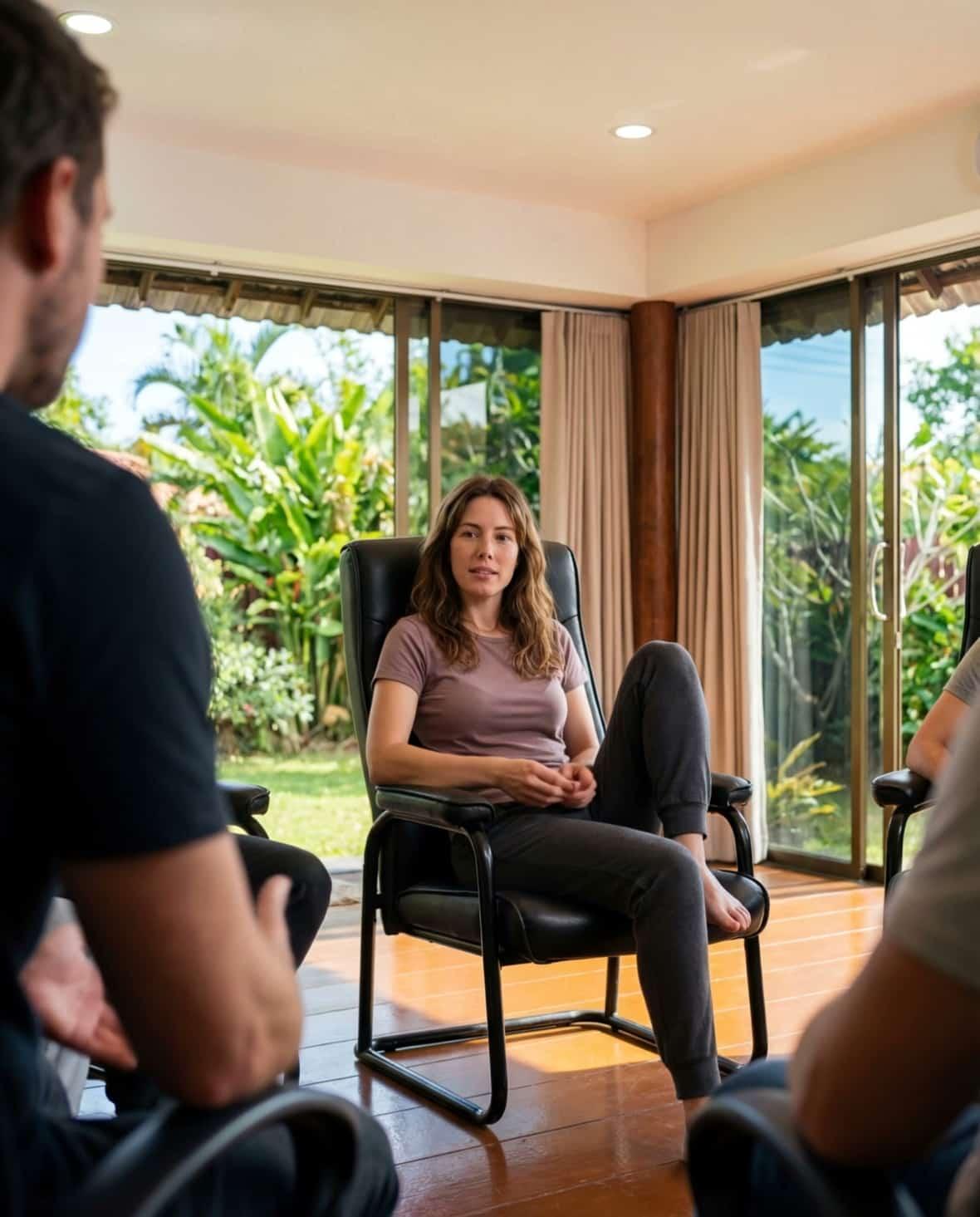
1:1 sessions and groups do different jobs and need each other. 1:1 work sets your personal goals and pace. Groups build shared skills and remind you that you are not the only person working through this. At Jintara, both run inside a structured day so engagement holds up across the week. A simple way to understand the mix:
- 1:1 therapy: private, paced, goal-focused
- Group therapy: calm structure and skills practice
- Between sessions: small actions that show what helps
Groups are structured and guided. You can speak or pass. We adjust intensity if sleep or concentration drops. That is normal. The aim is steady engagement, not pressure.
Which Health Professionals Support Mental Health Work at Jintara.
Mental health work in a residential setting needs more than one pair of hands. The risk of getting that wrong is mistaking withdrawal for an underlying condition, or missing one because the other is louder. At Jintara, the treatment team holds nursing and therapy staff with psychiatrist involvement where medication review is part of the care plan. What this protects you from:
- Guessing what is withdrawal versus anxiety
- Over-reacting to normal early swings
- Making changes too fast
Acute or intensive inpatient programs are different. They are designed for 24/7 secure stabilisation in a hospital-style setting. Residential settings are typically more home-like, but many residential treatment facilities still provide constant supervision and 24/7 support to reduce self-harm risk and keep the environment safer. We keep the tone calm and the steps clear, so you do not have to hold it all alone. Choosing a mental health program from overseas also means trusting that the clinical team can accurately read what is withdrawal, what is an underlying condition, and what is normal early noise. That trust is hard to place from a distance. Jintara is one of only six private rehabs in Thailand to hold accreditation from the Healthcare Accreditation Institute, the Princess Mother National Institute on Drug Abuse Treatment, and the Department of Medical Services, Ministry of Public Health. The same hospital-grade clinical standard applied to Thailand's hospitals was independently verified here. Certificate 25/2569, valid until May 2029.
What Makes an Effective Mental Health Treatment Plan.
A mental health treatment plan should be individualised, evidence-based, and reviewed as symptoms move. At Jintara, plans are built with you after intake assessment, then adjusted as sleep, stability, and progress get tracked. What makes a plan hold up:
- SMART goals: Specific, Measurable, Achievable, Relevant, and time bound
- Interventions: that use evidence-based methods, not guesswork
- Evidence-based practices: that can be repeated when you are tired
- Regular reviews: a treatment plan that is reviewed regularly and adjusted
- Clear progress tracking: a way to track progress and see client progress without extra administrative burden
Your treatment plan is based on what is safe after detox, what you can handle now, and what your life will require after discharge. A treatment plan can include treatment options like CBT skills, DBT skills, group therapy, 1:1 sessions, medication review, and structured routines. One quiet benefit of a clear treatment plan is confidence. You can see what you are doing, why you are doing it, and what comes next.
How Do You Talk with Darren About Mental Health Treatment Suitability.
A short pre-admission call helps confirm whether residential mental health treatment is the right pathway, the right timing, and the right clinical fit. Darren speaks directly with prospective clients to assess suitability and explain what the program can and cannot address. For people unsure where to start, the public treatment locator is a useful baseline reference, but a clinical conversation with the program team is what actually pins down fit.
If you are considering our rehab program in Thailand and you feel unsure, a short call can bring relief. You do not need to explain everything perfectly. You can share what is happening now, what you have tried, and what scares you most.
Our owner Darren will talk you through suitability and timing, including what we can address here and what might need a different pathway. If you are comparing treatment facilities, ask about nights, staffing, group boundaries, and how medication changes are handled. If a stay at Jintara feels like the right fit, the call is free and there is no pressure to commit.

Talk with Our Admissions Team
Your enquiry is confidential and goes only to our admissions team.
Common Questions About Mental Health Support at Jintara
Many people contact us for mental health treatment because anxiety, depression, or insomnia is driving unhealthy coping. Others use alcohol or medication to sleep and it becomes a loop. We are a residential rehab, so substance use is often part of the picture, but the mental side is usually the main work once you stabilise.
We address both together with therapy, routine, and medical input, so you are not asked to 'fix your mind' while your body is still unsettled. If you do not have drinking or substance use issue, we can still advise on fit and point you toward other treatment options if a different service is safer or more appropriate.
Duration varies. Some people need a few weeks for stabilisation. Others stay longer for deeper work in the therapeutic process. The right length depends on sleep, safety, how intense symptoms are, and how much support you have waiting at home.
Many people also underestimate the return home. Transitioning back to daily life can be hard. That is why we build an aftercare plan that includes next steps, support contacts, and a plan you can keep following.
Residential mental health treatment typically includes CBT, DBT, art therapy, and medication management, depending on the setting and the person. Some programs also include recreational therapy, which aims to lower stress and anxiety through relaxation and physical activity.
Holistic mental health treatment considers the whole person, including body, mind, spirit, and emotions. Holistic treatment methods aim to address root causes, not only symptoms. Many people find the tools learned in holistic treatment help manage stress and conflicts in daily life, and can support overall well-being.
Some disorders need specialist pathways and close medical monitoring. If eating risk is primary, a dedicated service may be safer. If eating problems sit alongside substance use, anxiety, or depression, we can discuss fit and the safest next step in plain language.
We do not rush EMDR. If it is indicated, we begin with screening and preparation first. That includes grounding skills, sleep stability, and the ability to notice triggers without becoming overwhelmed.
In practice, EMDR often starts after detox and early stabilisation, not on day one. We plan the pace together so you stay inside your window of tolerance and the work stays safe.
Benefits can include a safer environment, constant supervision in many settings, a clear routine, and intensive support. Drawbacks can include cost, feeling cut off from normal life, and the challenge of reintegration after discharge.
Peer support can reduce isolation and help you feel less alone. It is often one of the quiet strengths of residential work, especially when you feel ashamed or stuck.
Some programs include equine therapy, where guided interactions with horses can help build self-esteem and address trauma-related fears. Some also include yoga therapy, creative approaches, or nature-based supports.
These are not 'magic fixes'. The benefit is that they can lower stress and help your nervous system settle, which can make the rest of residential treatment easier to absorb.
Yes. Jintara holds joint accreditation from three national bodies: the Healthcare Accreditation Institute (HAI), the Princess Mother National Institute on Drug Abuse Treatment (PMNIDAT), and the Department of Medical Services, Ministry of Public Health (DMS). Certificate number 25/2569 is valid from May 2026 to May 2029.
HAI is the body that accredits Thailand's hospitals. Jintara's clinical protocols, including mental health assessment and dual-diagnosis management, were reviewed against that same hospital-grade national standard. That is independent verification, not self-assessment. Jintara is one of only six private rehabs in Thailand to hold this accreditation.
It means an independent national authority reviewed Jintara's clinical processes and confirmed they meet the standard applied to Thailand's hospitals. For mental health treatment, that covers assessment protocols, medication management, dual-diagnosis oversight, and the staffing structure that supports around-the-clock clinical care.
The certificate is public and checkable. It does not change the warmth of the setting, but it does mean the clinical foundation was assessed by the same authority that assesses Thailand's hospitals, not by Jintara itself.
Jintara Rehab is licensed by the Thai Ministry of Public Health as a rehabilitation centre. The clinical information on this page describes Jintara's general approach to supporting clients during the early recovery period. Medical decisions, including medication protocols, are determined by addiction-specialist psychiatrists through our partner hospital pathway. Individual treatment varies based on clinical assessment. This content is for informational purposes and does not constitute medical advice.