

Opioid withdrawal is survivable. Medical supervision makes it manageable.
Opioid detox is physically gruelling but rarely life-threatening. What makes it dangerous is the intensity of discomfort, which drives most people back to using before the worst has passed. At Jintara, medical detox begins with a psychiatrist assessment and a protocol built around your substance history, so that discomfort is managed from the first day.
- Methadone taper available for safe opioid withdrawal management during detox
- Clinical Opiate Withdrawal Scale guides every medication adjustment each shift
- 24/7 nursing observation through the acute withdrawal phase
- Therapy and detox run in parallel from arrival, not in sequence

Fully Licensed and Hospital Accredited
Opioid Medical Detox Is the Supervised Process of Clearing the Substance Safely.
Opioid medical detox is the supervised process of clearing opioids from the body while managing withdrawal. Unlike alcohol or benzodiazepine detox, opioid withdrawal rarely causes life-threatening complications such as seizures. The risk is different: the severity of physical discomfort is high enough that most people cannot get through it without medical support, and the most common outcome of attempting it without structure is relapse.
That is hard to sit with, and most people searching for an answer are coming from a place of exhaustion.
Body aches, insomnia, diarrhoea, sweating, and extreme restlessness hit their peak between days four and seven. Most people entering detox do not know this. They experience the first two days as manageable and assume the worst is over. It is not. A medical protocol that prepares for days four through seven from the beginning changes that trajectory.
According to NIDA's report on the long-term effects of heroin, heroin produces physical dependence, and major withdrawal symptoms peak between 24 and 48 hours after the last dose. At Jintara, opioid addiction treatment includes medical detox as an integrated part of the program, not a waiting room before treatment begins. The same medically supervised protocol covers newer synthetic opioid detox, including nitazenes, because the receptor mechanism and the withdrawal picture are identical. While the nursing team manages the physical withdrawal, the clinical team begins building the therapeutic relationship and introducing the framework the client will use through the rest of their stay.

Opioid Withdrawal Is Rarely Fatal but Still Demands Medical Oversight.
Opioid withdrawal does not cause the cardiac events or seizures associated with alcohol or benzodiazepine withdrawal. The clinical risk concentrates elsewhere: people leaving acute withdrawal often relapse, then take the same dose their body could no longer handle. That gap between expected and actual tolerance is the core of why fentanyl overdose is so likely after abstinence, and it is where overdose deaths occur. Medical oversight closes that gap.
At Jintara, withdrawal monitoring is active through the entire acute phase. Comfort medications reduce the severity of aches, nausea, and insomnia. The Clinical Opiate Withdrawal Scale tells the nursing team whether withdrawal is stabilising or escalating. The presence of a clinical team gives each person a structure to move through rather than a reason to leave.
For families choosing where to trust someone with something this serious, the question is not just whether a place says it can manage opioid detox. It is whether anyone outside that place has verified it can. Jintara's clinical protocols, medication handling, and nursing procedures were independently assessed against the national hospital-grade clinical standard by three government-backed bodies and confirmed to meet it. Held to the same bar a hospital is held to. And small enough that the nurse who ran the first COWS check will still be there on day seven.
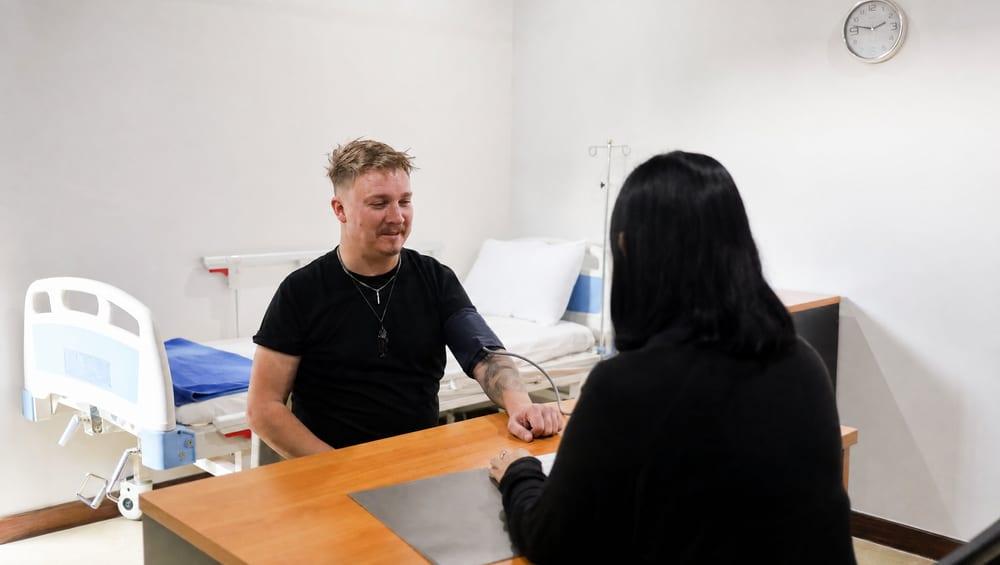
“At the start it is not too bad. Little do they know that the misery comes later. Our job is to prepare them for that, so they know they can get through it.
Every Protocol Begins with a Psychiatrist Assessment on Day One.
Every opioid detox protocol at Jintara is designed during a detailed psychiatrist consultation on the day of arrival. The psychiatrist examines the type of opioid used, the amount and duration of use, what previous detoxes looked like, and what the client's preference is between a faster but more intense withdrawal and a slower, more comfortable taper.
There is no single default protocol. A person coming off long-term high-dose heroin requires a different approach from someone stepping down from prescription codeine. A fentanyl user presents specific challenges because of how deeply the drug binds to opioid receptors and how it distributes in body tissue. Someone who has detoxed before and failed on a fast taper may need a slower, more supported approach the second time.
The admissions process includes this psychiatrist meeting on day one. Medical history, current medications, and any co-occurring health conditions are reviewed at the same session. Nothing is assumed from an intake form. The protocol is written after the conversation.

Methadone Taper Is the Primary Opioid Withdrawal Tool at Jintara.
Methadone is a full opioid agonist that reduces or eliminates withdrawal symptoms during the taper period by binding to the same receptors as heroin and prescription opioids. At Jintara, it is used exclusively for opioid detox, not for long-term maintenance. The dose is adjusted daily based on Clinical Opiate Withdrawal Scale scores and clinical observation, then tapered toward zero over the detox period. Faster tapers run five to seven days, more acute but shorter. Slower tapers run two to four weeks, more comfortable but extending the program.
Many clients, particularly those from the United Kingdom, arrive with a negative association with methadone because of its use in community maintenance clinics. Darren Lockie, Founder and CEO of Jintara, explains the reality in a residential detox setting: "We tell them they do not have to take methadone if they do not want to. But when they get here and try without it, they usually come back to me by day three or four. They cannot do it."
Adjunctive comfort medications support the methadone taper throughout the withdrawal period. NIDA's overview of medications used in opioid addiction treatment provides the pharmacological background for methadone's mechanism. See the full list of medication protocols used at Jintara across all substance types.

The Clinical Opiate Withdrawal Scale Tracks Progress Through Every Shift.
The Clinical Opiate Withdrawal Scale (COWS) is the standardised tool Jintara nurses use to score opioid withdrawal severity at each observation point. It measures eleven signs: pulse rate, sweating, restlessness, pupil size, bone and joint aches, gastrointestinal upset, tremor, yawning, anxiety, skin sensation changes, and gooseflesh. Each item is scored numerically. A combined score above twelve indicates moderate withdrawal requiring active medication adjustment; above twenty-four indicates severe withdrawal.
COWS scores drive medication decisions in real time. If a score rises between checks, the dose is adjusted that same shift rather than waiting for a scheduled review. This tight loop between observation and response prevents the acute phase from escalating unnecessarily. A concurrent validation study of the Clinical Opiate Withdrawal Scale found good agreement with a previously validated withdrawal instrument and internal consistency high enough for clinical use.
The structure of the treatment program at Jintara integrates COWS-guided detox with concurrent therapy from day one, rather than treating the two phases as separate.

“In the first three or four days with a client who has a high COWS score, we check three times a day. When the score comes down, we move to twice daily, then once, until it is stable.
The First Seven Days of Opioid Withdrawal Follow a Predictable Pattern.
Opioid withdrawal follows a recognisable progression. The clinical team explains this to every client before it begins, because knowing what is coming is itself a form of support. Days one through three are deceptively manageable. Early signs such as yawning, dilated pupils, restlessness, and mild anxiety lead most people to assume the process will be straightforward. Days four through seven are when the full weight of withdrawal arrives: body aches, insomnia, diarrhoea, sweating, and a psychological state of anhedonia and irritability that can feel as though it will not end.
Fentanyl users often experience a delayed or prolonged withdrawal curve because of how the drug distributes in body tissue. The WHO fact sheet on opioid overdose risk notes that fentanyl is significantly more potent than morphine, which is why a period of reduced tolerance after detox creates heightened overdose risk if relapse occurs. People coming off long-term high-dose heroin typically report more severe peak symptoms than those stepping down from prescription opioids. The clinical team adjusts the protocol based on these differences as withdrawal progresses.
From week two, physical symptoms begin to resolve. Sleep returns incrementally. Energy rebuilds. The dual diagnosis treatment or broader therapy program, which has been running in parallel since day one, becomes easier to engage with.

Therapy at Jintara Runs Alongside Detox from the First Day.
Therapy at Jintara begins on the day of arrival, running alongside the medical detox rather than waiting for it to resolve. Darren Lockie explains: "Once someone is on a medical detox for opioids or alcohol or anything, they can pretty much do most things in parallel. I do not see any reason why detox should be separate to rehab. They are all one and the same problem."
During the acute withdrawal phase, therapy sessions are lighter. The focus is on psychoeducation, establishing a sense of safety, and beginning to map the client's history. As physical symptoms ease through week two, session depth increases. For clients who started using opioids to manage chronic pain, the clinical team includes an assessment of what non-opioid pain management will look like going forward. Physiotherapy, Thai massage, NSAIDs, and gabapentin are among the options reviewed.
The treatment program at Jintara is built around the individual from the day of arrival, not after detox resolves. The program structure adapts as withdrawal stabilises.

Opioid Detox Resolves Physical Dependency. The Program Addresses the Rest.
Completing opioid detox removes the physical dependency on the substance. It does not address the psychological patterns, trauma history, or social factors that drove the use in the first place. For most clients, those are the more consequential work.
At Jintara, the transition out of acute detox into the full treatment program is managed clinically. Medications are tapered to zero. COWS monitoring continues at reduced frequency until scores confirm stability. The psychiatrist reviews the client's status and adjusts the therapeutic plan as needed. There is no arbitrary handover point where detox ends and treatment begins. The two run together until physical stabilisation is complete and the full program takes over.
Jintara does not recommend oral relapse prevention medications such as naltrexone or acamprosate after detox. The clinical position, stated by Darren Lockie and confirmed by Clinical Director Denise O'Leary, is that the goal is full independence from substances. See program length and pricing for how the 30-day, 60-day, and extended programs accommodate different detox timelines.

Talk with Our Admissions Team
Your enquiry is confidential and goes only to our admissions team.
Common Questions About Opioid Detox at Jintara
Opioid withdrawal is rarely fatal. It does not cause the seizures or cardiac events associated with alcohol or benzodiazepine withdrawal. The primary risk is that the severity of discomfort drives relapse, and people who relapse after a period of abstinence often use their previous dose without realising their tolerance has dropped. That gap is where overdose risk concentrates. Medical oversight prevents it.
The primary medication is a methadone taper, which eliminates withdrawal symptoms by binding to opioid receptors and is then reduced to zero over the detox period. Comfort medications support the taper: ibuprofen and naproxen for body aches, ondansetron for nausea, trazodone for sleep, and magnesium for leg cramps. Buprenorphine and Suboxone are not available at Jintara because they are not legal in Thailand, and which opioid medications are legal in Thailand is worth reading before you travel on an existing script.
No. Methadone at Jintara is used exclusively for the detox period. Long-term maintenance is not the model here. The clinical position is that the goal is full independence from all substances, and the therapy program, aftercare plan, and support structures are the primary tools for achieving that.
Yes, within the bounds of what the psychiatrist determines is medically appropriate. Faster tapers run five to seven days, more intense but shorter. Slower tapers run two to four weeks, more comfortable but extending your stay. The psychiatrist discusses both options at the day-one consultation and factors in your substance history, previous detox attempts, and personal preference.
Acute withdrawal peaks between days four and seven and begins to resolve through week two. Physical symptoms typically clear within two to three weeks. Psychological symptoms such as low mood, low motivation, and disturbed sleep can persist for several weeks beyond that, which is why the therapy program running alongside detox from day one matters.
Fentanyl addiction treatment at Jintara involves a more complex withdrawal protocol because of how deeply the drug binds to opioid receptors and how it distributes in body tissue. The peak withdrawal phase may be delayed or more prolonged compared to heroin or prescription opioids. The protocol is adjusted for this, with closer monitoring in the early days and a slower taper to manage the extended withdrawal curve.
From day one. Sessions during the acute withdrawal phase are lighter in focus, covering psychoeducation, safety, and initial history-taking. As physical symptoms ease, session depth increases. For most clients, deeper therapeutic work is possible from around day ten to fourteen. The goal is that by the time the physical detox resolves, the therapeutic foundation is already in place. Contact Jintara's admissions team to discuss what your first week would look like.
Jintara is a small adult residential rehab in Chiang Mai with 24/7 awake nursing and a psychiatrist-led medical detox included in every stay.
Jintara Rehab is licensed by the Thai Ministry of Public Health as a rehabilitation centre. The clinical information on this page describes Jintara's general approach to supporting clients during the early recovery period. Medical decisions, including medication protocols, are determined by addiction-specialist psychiatrists through our partner hospital pathway. Individual treatment varies based on clinical assessment. This content is for informational purposes and does not constitute medical advice.