

Anxiety and addiction almost always arrive together at Jintara.
Nearly every person who enters our program is managing both. Some know their anxiety came first; others only learn this once substances are removed. Treatment at Jintara addresses both conditions at the same time, with the same clinical team, under one roof. Start with our dual diagnosis program overview.
- Anxiety screening with PHQ-9 and GAD-7 scores from day one
- Individual CBT sessions and group therapy for anxiety management
- EMDR available for anxiety rooted in unprocessed trauma
- 24/7 nursing support for panic, sleep disturbance, and night anxiety


Licensed by the Ministry of Public Health.
Accredited under Thailand’s national standard for drug treatment and rehabilitation facilities.
Anxiety and addiction form a self-reinforcing cycle that worsens both conditions.
Anxiety disorder and addiction are co-occurring conditions where each one continuously intensifies the other. A person experiencing generalised anxiety disorder, social anxiety, or panic disorder often reaches for alcohol, benzodiazepines, cannabis, or in nightlife settings GHB to manage social anxiety, because these substances produce fast, reliable relief (NIMH on anxiety disorders) that therapy and lifestyle change cannot deliver in the same timeframe. The substance works. That is the problem.
Over time, the brain adjusts. The same dose that quieted anxiety three months ago now barely touches it. The person increases use to maintain the effect. When they stop, anxiety surges back, often far worse than it was before they started using. By the time someone calls Jintara, many are not just anxious: they are terrified of what will happen to their mental state if they stop.
This is why treating anxiety and addiction separately rarely produces lasting results. Our dual diagnosis program is built around the clinical reality that the two conditions share the same neurobiological roots and need to be addressed in parallel.

“Most people arrive not realising that what they thought was just anxiety was actually driving their substance use. Once we remove the substance, we can finally see the real picture.
Alcohol and benzodiazepines relieve anxiety acutely but drive it higher over time.
Alcohol suppresses the central nervous system rapidly, which is why it feels effective for anxiety. The problem is that the suppression is temporary and the rebound is real. As alcohol clears the bloodstream, the nervous system overshoots its resting state, producing rebound anxiety: a period of heightened arousal, irritability, and dread that arrives several hours after the last drink. People in this state often drink again to stop it. The pattern becomes self-sustaining. Daily ketamine use produces the same loop on a shorter clock, because the rebound arrives within hours and pushes the next dose earlier in the evening.
Benzodiazepines follow the same pharmacological logic at a more pronounced scale. They bind to the same receptors that alcohol affects, but with greater potency and a longer rebound period. Clients who have been using benzodiazepines daily for months or years often experience severe anxiety as a withdrawal symptom, sometimes indistinguishable from panic disorder. Separating the withdrawal from the underlying condition takes several weeks of careful observation.
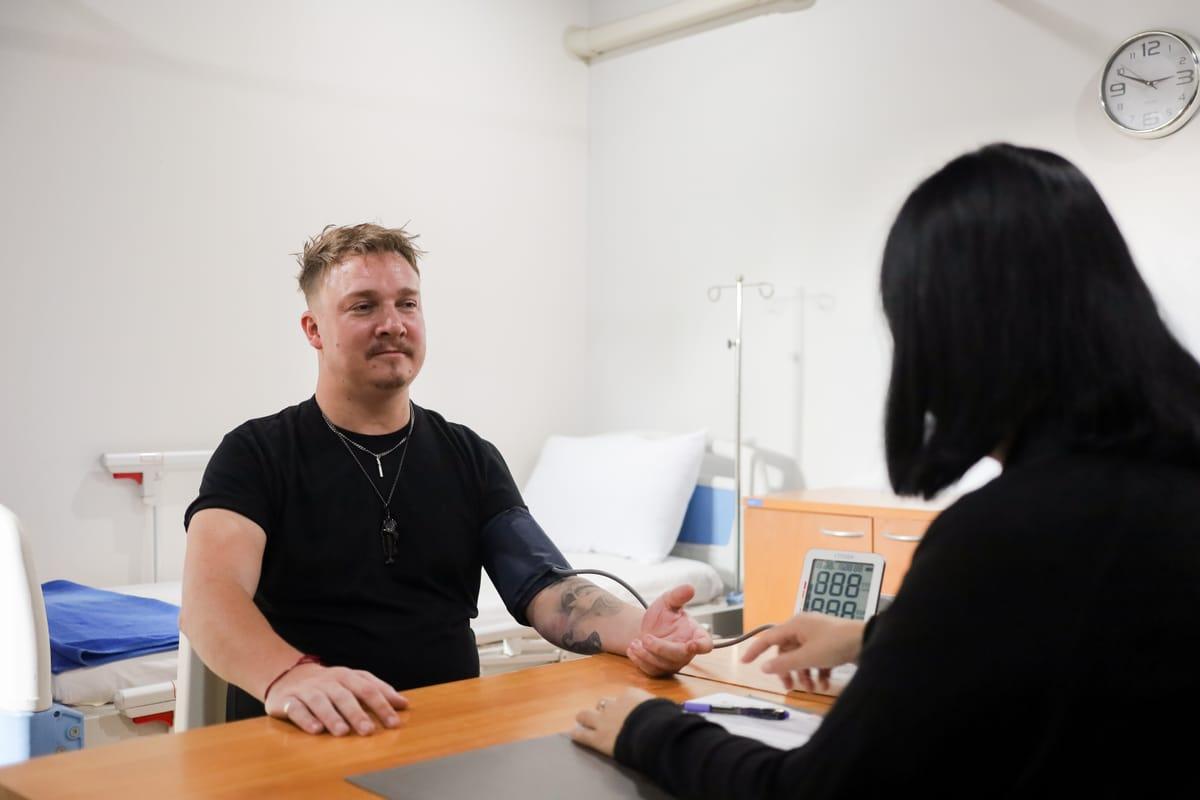
Both alcohol and benzodiazepine withdrawal require medical supervision. Benzodiazepine withdrawal in particular carries risks that make unsupervised cessation dangerous. At Jintara, the nursing team monitors clients around the clock through the acute withdrawal phase, adjusting medication to prevent the anxiety spiral that most commonly drives early departure from treatment.
For families watching this from overseas, the hardest question to answer without evidence is whether the facility is actually equipped for what could happen. Jintara's withdrawal protocols, medication handling, and around-the-clock nursing were independently assessed against Thailand's national standard for drug treatment and rehabilitation facilities by three government authorities, including the one that accredits the country's hospitals: the Healthcare Accreditation Institute, the Princess Mother National Institute on Drug Abuse Treatment, and the Department of Medical Services, Ministry of Public Health. Certificate 25/2569, confirmed May 2026. Held to what a hospital is held to, and still small enough that the nursing team knows exactly who your family member is.
Cannabis and stimulant use create their own anxiety complications in recovery.
Cannabis is the most commonly self-reported substance for anxiety management, yet it is also a well-established driver of anxiety escalation with regular use. Low doses of cannabis may reduce acute anxiety for some people, while higher doses and long-term use are associated with increased anxiety, paranoia, and in some cases substance-induced psychosis, and the cannabis withdrawal period can briefly sharpen that anxiety before it settles. Clients who arrive at Jintara using cannabis for anxiety often find that their baseline anxiety decreases significantly once cannabis use stops, usually within the first two weeks.
Stimulants, including methamphetamine and cocaine, produce a different presentation. Both substances directly activate the fight-or-flight system, meaning that anxiety during active stimulant use is often acute and intense. In early recovery, people recovering from stimulant use frequently experience a crash phase characterised by fatigue, low mood, and flat affect rather than anxiety. As the brain restores its natural dopamine balance over subsequent weeks, anxiety symptoms may re-emerge as an underlying condition that was previously masked.
Jintara's clinical team assesses each substance's contribution to a client's anxiety separately. What looks like a single anxiety disorder on admission often turns out to be a combination of substance-induced symptoms and a pre-existing vulnerability such as social anxiety, which is why the first step in treatment is reaching clarity of mind. For clients whose primary substance is alcohol, the alcohol addiction program provides more detail on what the withdrawal and recovery pathway looks like.

Assessment at Jintara separates substance-induced anxiety from underlying disorder.
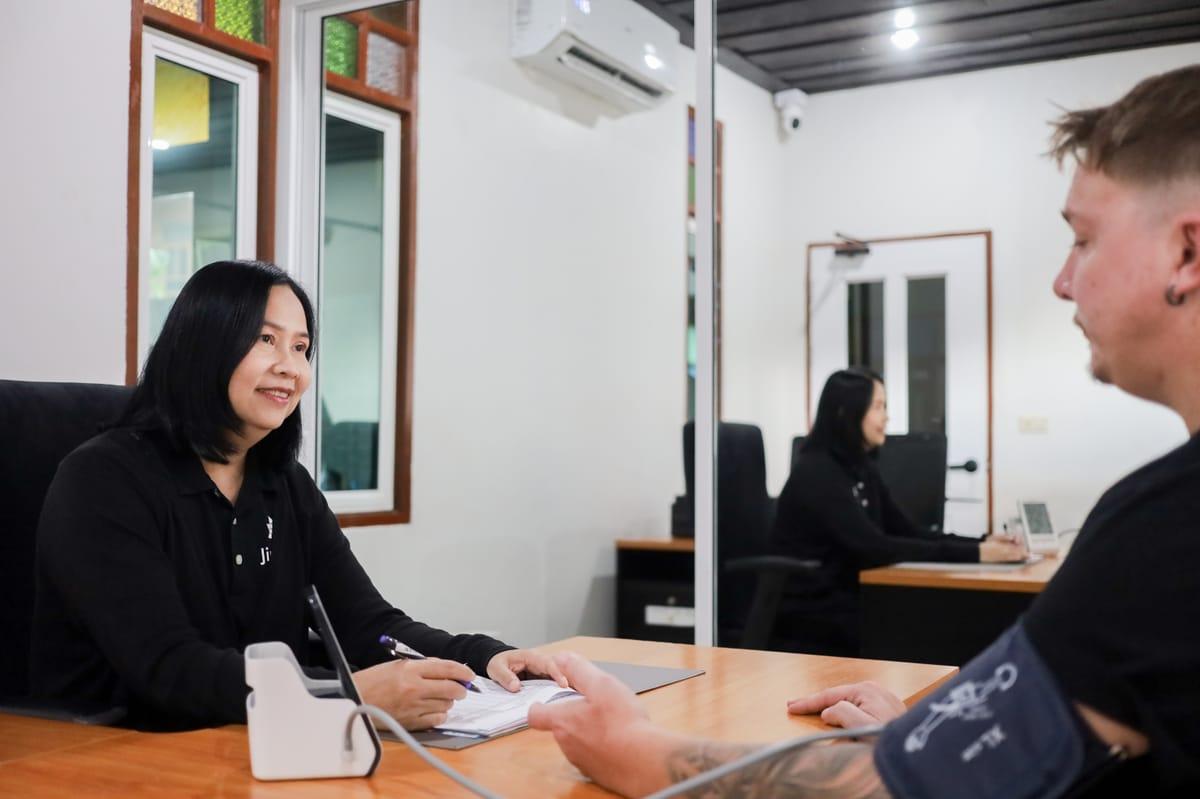
Clinical assessment for co-occurring anxiety begins on the first day of admission. The team uses two validated clinical screening tools: the Patient Health Questionnaire (PHQ-9) for depression and the Generalized Anxiety Disorder scale (GAD-7) for anxiety. These provide a baseline score before any therapeutic work begins. A high GAD-7 on admission does not automatically indicate a clinical anxiety disorder: it may reflect acute withdrawal, fear about entering treatment, or the disorientation of being in a new environment.
The diagnostic picture becomes clearer after two weeks. If a client's GAD-7 score drops significantly and they report feeling calmer, the clinical team can say with reasonable confidence that the anxiety was largely substance-induced. Attention problems can blur the picture further, since ADHD and attention difficulties produce restlessness and poor focus that closely mimic anxiety, so the team weighs both together. If scores remain high or worsen despite stabilisation, the team treats it as an underlying condition that needs its own therapeutic track.
Lertkhwan Sukpia, Jintara's Head Nurse, leads the nursing observation that runs alongside formal screening. Khun Khwan's team tracks sleep quality, appetite, group attendance, and behavioural signs of anxiety throughout each day. Their notes feed directly into Denise's therapy planning. No single tool makes the diagnosis: it is the accumulation of observation over time.
Therapy during detox focuses on stabilisation rather than deep anxiety processing.
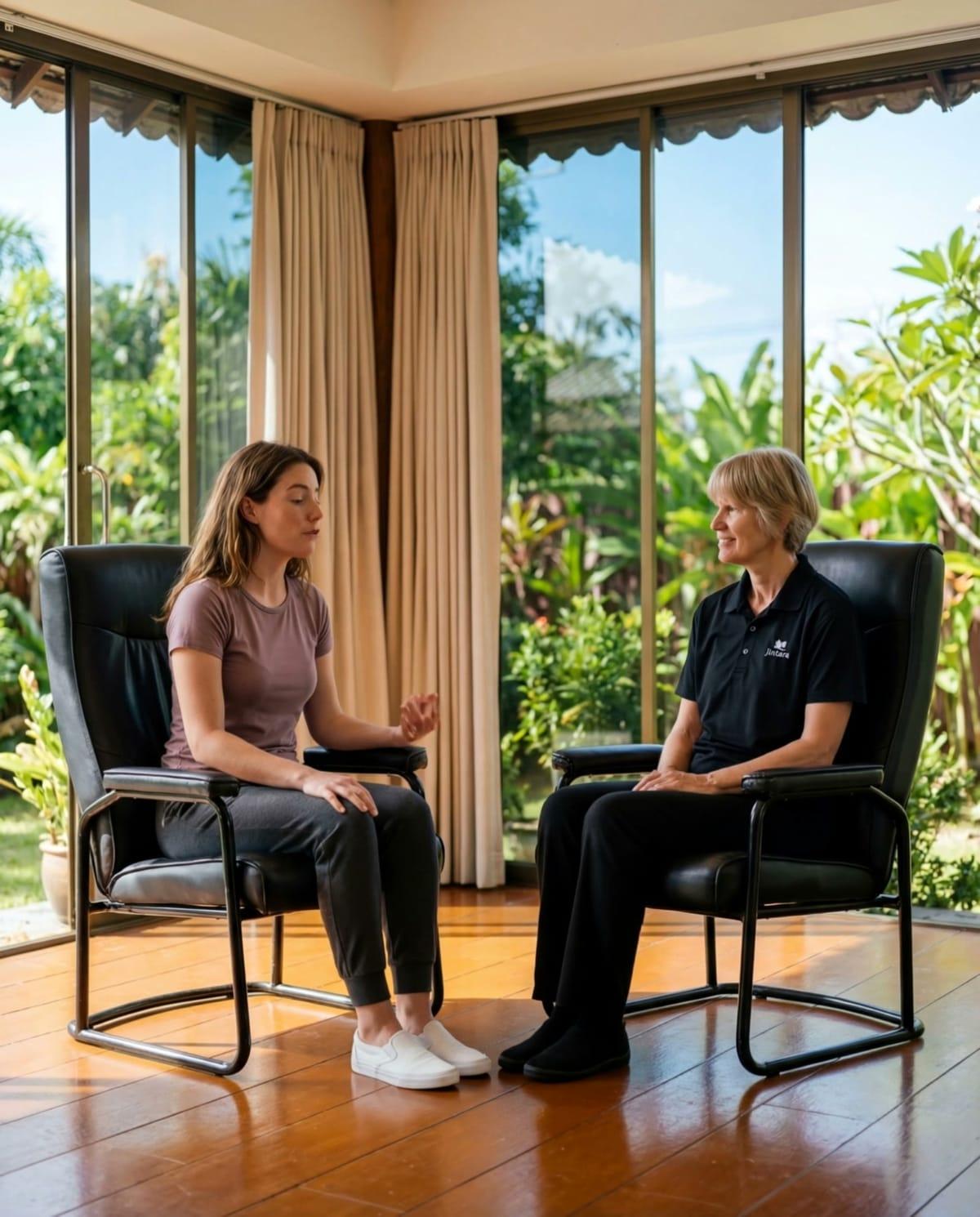
During the first two weeks of a 30-day program, the clinical priority for clients with anxiety is stabilisation, not resolution. Denise does not conduct deep trauma processing or intensive cognitive restructuring during this phase. The reasoning is clear: a client whose nervous system is still recalibrating from withdrawal cannot engage with deeper therapeutic work safely. Opening significant psychological material during this window risks creating distress the client does not yet have the tools to manage.
What stabilisation looks like in practice involves grounding techniques to bring the nervous system down from activation, sleep hygiene work to restore rest patterns, and individual sessions focused on the immediate emotional experience rather than its roots. The structured daily schedule functions as treatment in itself, and for clients whose anxiety sits on top of burnout and substance abuse that removal of daily decisions is itself part of the work: meals at fixed times, groups morning and afternoon, exercise, and a 10 PM curfew that signals the body to rest.
For clients with anxiety, following a schedule removes the most common anxiety driver: open-ended uncertainty. When every hour of the day has a clear next step, the mind has fewer gaps to fill with worst-case thinking. By day 14, many clients describe feeling calmer than they have in months. Our program overview explains the full structure of what a typical week looks like across the 30 days.
“The schedule itself is therapy for anxious clients. When every need is met and every hour has a purpose, the nervous system gets its first real break.
CBT groups and individual sessions target the automatic thought patterns driving anxiety.
Cognitive Behavioural Therapy is the primary psychotherapy approach for anxiety at Jintara. In the group setting, Denise uses the ABC model: identifying the Activating event, the Beliefs formed about it, and the Consequences in emotion and behaviour. For people with anxiety and addiction, automatic negative thoughts tend to be fast, habitual, and highly plausible-feeling. The goal of CBT is not to argue against these thoughts but to slow them down, examine whether they are accurate, and practice generating more balanced interpretations.
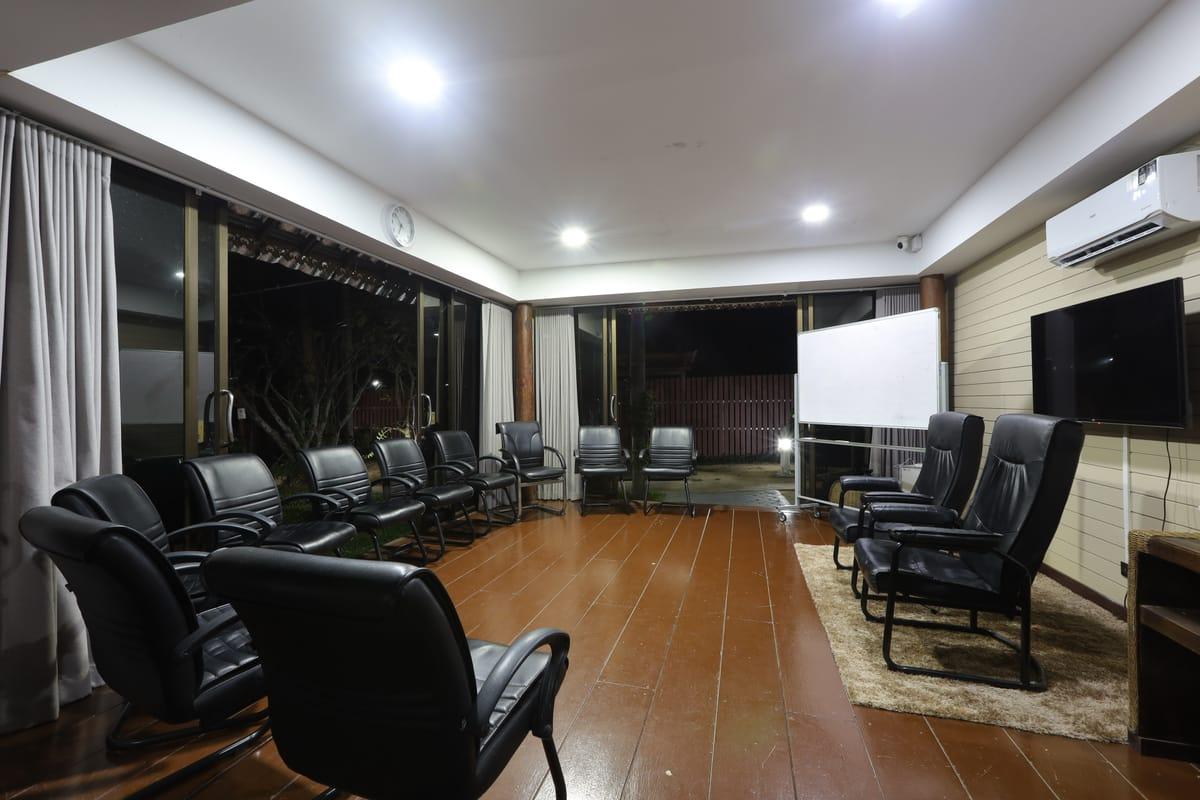
Groups are not separated by diagnosis. A client with anxiety attends the same groups as other clients, because the skills taught, including thought spotting, behavioural activation, and nervous system regulation, are relevant across presentations. The group also provides a social mirror: for someone whose anxiety has led to increasing isolation, attending and surviving a group of up to ten peers is itself a therapeutic act.
Individual sessions address what group therapy cannot reach: the specific fears, the particular thought loops, the relationship patterns that keep anxiety alive. Denise tailors each session to where the client is that day, and where the anxiety takes the shape of OCD and addiction treated together, the work shifts toward graded exposure. Anyone considering treatment for co-occurring anxiety is welcome to speak with our admissions team before committing.
EMDR is available for anxiety rooted in unprocessed trauma after stabilisation.
Not all anxiety is the same. For some clients, anxiety is a learned pattern of fearful thinking that responds well to CBT. For others, it is rooted in specific unprocessed memories: a traumatic event, sustained childhood stress, or repeated experiences of threat that the nervous system has never fully processed. For this second group, CBT alone may reduce symptoms without addressing their origin. EMDR therapy, Eye Movement Desensitization and Reprocessing, is designed for this presentation.
At Jintara, EMDR is not automatically assigned to every client. It requires clinical assessment of readiness, a history of trauma that has been identified and discussed with the therapist, and a minimum commitment to an extended stay. EMDR processing does not begin during a 30-day program. The first month is dedicated to stabilisation and addiction work. Deep trauma processing begins in the second month for clients who commit to 60 days.
For clients on a 30-day program who have anxiety rooted in trauma, the focus is preparation: identifying the specific memories relevant to processing, building the grounding tools that make processing safe, and establishing the therapeutic relationship required for this work. Clients leave with a clear discharge summary so that an EMDR therapist at home can continue exactly where Jintara left off.

Managing anxiety after Jintara begins before the client leaves.
Discharge planning for clients with anxiety focuses on what the clinical team calls a personal relapse early warning system: a written list of the specific thought patterns, behavioural changes, and lifestyle signals that have historically preceded a return to substance use. For clients with anxiety, these signs are often subtle. A gradual reduction in social contact. Skipping exercise days. Anxiety itself intensifying before a pattern of avoidance sets in.
The skills clients take home are concrete. The ABC model can be applied to any anxious thought at any time, without a therapist present. Grounding techniques, sleep hygiene practices, and a daily schedule built around the same rhythm as the one at Jintara provide a nervous system anchor when the external structure of residential care is no longer there.
Ongoing therapy after discharge is encouraged. For anxiety alongside addiction, weekly sessions with a counsellor or psychologist support the momentum built during the stay and form the backbone of ongoing anxiety disorder treatment after discharge. Jintara's clinical team writes a discharge summary that any outside therapist can use to continue the work. For details on program length and costs, see our pricing page. The program does not end at discharge. It moves from a residential setting into the client's own life.


Talk with Our Admissions Team
Your enquiry is confidential and goes only to our admissions team.
Common Questions About Anxiety and Addiction Treatment at Jintara
Is Jintara accredited for treating co-occurring anxiety and addiction?
Yes. Jintara holds joint accreditation from three Thai national authorities: the Healthcare Accreditation Institute (which accredits Thailand's hospitals), the Princess Mother National Institute on Drug Abuse Treatment, and the Department of Medical Services, Ministry of Public Health. Certificate 25/2569, valid from May 2026 to May 2029. This covers the full program, including dual diagnosis assessment, withdrawal management, and clinical therapy.
What does national accreditation mean for someone coming in for anxiety and addiction?
It means an independent survey team assessed Jintara's clinical protocols, medication handling, nursing care, and documentation against Thailand's national standard for drug treatment and rehabilitation facilities, and three national bodies, including the one that inspects Thailand's hospitals, certified that it meets it. For someone with anxiety and addiction where withdrawal from alcohol or benzodiazepines can carry real medical risk, this is the clearest external confirmation that the clinical environment is equipped. The accreditation confirms what was already in place.
If I stop using, will my anxiety go away?
It depends. If your anxiety is primarily substance-induced, it will likely reduce substantially within the first two to four weeks of treatment as your nervous system stabilises. If an underlying anxiety disorder was present before you started using, it will still need treatment once substances are removed. Jintara's assessment process determines which situation applies to you and is the foundation of personalised dual diagnosis anxiety treatment.
Can I take anti-anxiety medication at Jintara?
Yes, if clinically indicated. Jintara does not prescribe benzodiazepines for anxiety management given the dependence risk. Non-addictive options including SSRIs, buspirone, and beta-blockers may be considered depending on your assessment, consistent with NIMH guidance on mental health medications. The psychiatrist determines the appropriate medication based on your specific history and withdrawal status.
What if I have panic attacks during treatment?
Jintara has 24/7 nursing cover and a clinical team trained in de-escalation. If a panic attack occurs during a therapy session, Denise uses a structured technique that typically brings it under control within 15 minutes. If a panic attack occurs at night, nurses provide immediate support. Panic is expected in early treatment: you will not be alone with it.
How do you know whether my anxiety is caused by substances or was there before?
The team uses the GAD-7 screening tool at admission and reassesses after one to two weeks of stabilisation. If your scores improve significantly once substances clear your system, the anxiety was likely substance-induced. If scores persist high despite stabilisation, the team treats it as an underlying condition requiring its own therapeutic track.
Will I receive EMDR therapy for my anxiety?
EMDR is available at Jintara but it is a clinical decision made after assessment. For a 30-day program, the focus is stabilisation and preparation. EMDR processing begins in the second month for clients who commit to 60 days and have a trauma history that warrants it. Denise assesses each client individually during the stay.
Why does anxiety get worse in the first week of treatment?
Withdrawal from alcohol and benzodiazepines causes rebound anxiety as the central nervous system recalibrates. This is a predictable, temporary response, not a sign that treatment is failing. The nursing team monitors this closely and adjusts medication to manage the peak. Most clients notice a clear improvement by the end of week two.
What do I do when anxiety returns after I leave?
Anxiety will return at points after discharge. The goal is to have a clear plan ready when it does, and the clinical team at Jintara builds that plan with you before you leave. Regular exercise, a structured daily routine, ongoing therapy, and limiting stimulants all support baseline anxiety management. Your discharge summary includes your personal early warning signs and the skills to use when they appear.
Jintara is a small adult residential treatment center in Chiang Mai with a 3.2:1 staff-to-client ratio. Anxiety disorder and addiction are treated as co-occurring conditions, not separate clinical tracks.
Jintara Rehab is licensed by the Thai Ministry of Public Health as a rehabilitation centre. The clinical information on this page describes Jintara's general approach to supporting clients during the early recovery period. Medical decisions, including medication protocols, are determined by addiction-specialist psychiatrists through our partner hospital pathway. Individual treatment varies based on clinical assessment. This content is for informational purposes and does not constitute medical advice.