

What Ketamine Addiction Does to the Body and How It Is Treated
Daily ketamine use damages the bladder, hollows out mood, and becomes the only way a person can settle. Jintara treats it as a substance dependence with a physical health problem attached, inside a 30-day residential stay in Chiang Mai with a visiting psychiatrist and awake nursing on site.
- A detailed urinary tract analysis added to the day two medical workup
- Psychiatrist-supervised withdrawal with awake nursing around the clock
- The depression and anxiety underneath the use treated in their own right
- Confidential self-pay treatment with no insurance claim and no third-party record


Fully Licensed and Hospital Accredited
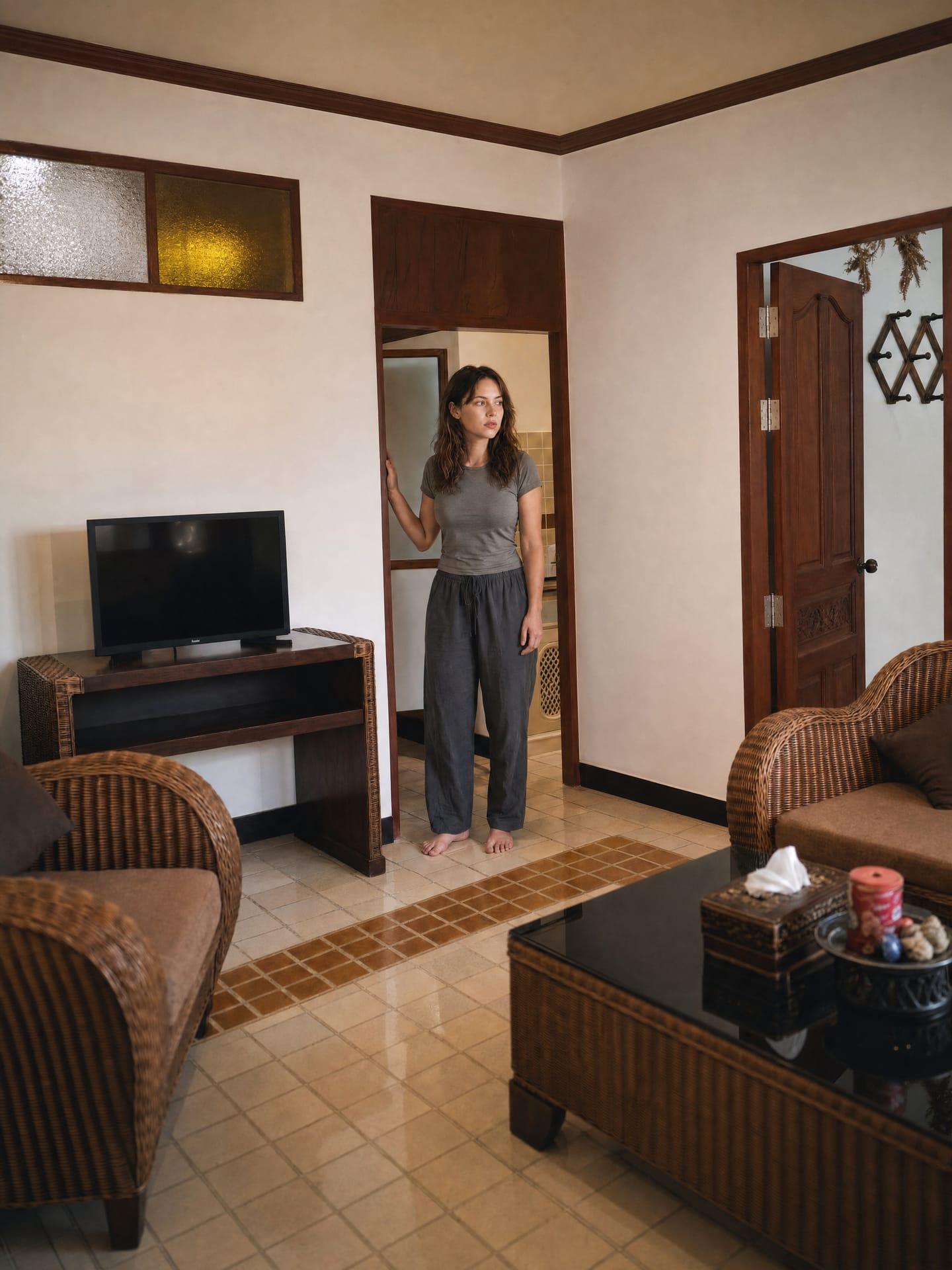
Ketamine Dependence Is Psychological First.
Ketamine addiction is compulsive dissociative drug use that continues while the harm mounts. There is no shaking and no seizure risk on stopping. What happens instead is a slow narrowing of life around one reliable escape, in a body that quietly starts to fail while the person is still going to work.
Ketamine sits inside the broader picture of club drug dependence covering MDMA, GHB and ketamine, though the clinical problems it creates are its own.
- The brain learns an off switch: Ketamine is a dissociative anaesthetic that separates a person from their own distress. The brain learns that emotional pain can be switched off and stops building any other way of coping. Most people describe the same turning point: not a crisis, but the recognition that the drug has become the main way they manage being themselves.
- Tolerance outruns the consequences: The amount needed to reach the same distance from yourself climbs within weeks. People who started at a fraction of a gram on weekends describe grams a day within a year, usually alone, usually in the evening.
- The pattern hides in plain sight: Ketamine is short-acting, so the day can still be worked and the emails still get answered. The escalation shows up in the money, in the withdrawal from people, and in a growing intolerance of any evening without it.
- Anxiety gets worse, not better: The relief is real in the hour it lasts and the rebound is worse than the baseline, which pushes the next dose earlier. Treating the anxiety that sits alongside the substance use is what decides whether stopping holds.
The Advisory Council on the Misuse of Drugs reviewed the evidence in January 2026 and found dependence, impaired cognitive functioning and urinary tract damage all rising with chronic high-dose use.

Ketamine Rarely Arrives on Its Own.
Most people who present with ketamine dependence are using something else with it. In 250 pre-assessment forms submitted to Jintara between December 2021 and July 2026, 56 people named ketamine among the substances they had used.
- With cocaine or methamphetamine: The stimulant carries the night and the ketamine brings it down. Removing one and leaving the other in place usually returns the person to ketamine within weeks, because the reason for the evening dose has not changed.
- With alcohol, benzodiazepines or GHB: The withdrawal is no longer psychological only, and the detox has to be planned around the substance that carries the physical risk. A person who describes ketamine as their problem may need their alcohol withdrawal managed first.
- With sleeping medication: Daily ketamine use wrecks sleep, and the nightly fix for that becomes a dependence of its own.
Assessment on arrival maps the whole pattern rather than the substance named on the enquiry form.





Bladder Pain Is the First Sign People Notice.
Ketamine damages the urinary tract, and for most heavy users that damage is the first consequence they cannot ignore. It starts as urgency and frequency, then burning, then blood, then a bladder that wakes a person through the night. Withdrawal management at this stage belongs in medical detox rather than at home.
The clinical name is ketamine-induced uropathy, first described as ketamine-associated ulcerative cystitis in 2007. It is dose-related and it is progressive.
- It is not rare and it is not slow: The cramping pain people call K cramps sits in the lower abdomen and the flank. It does not require years of use to begin, and it is common in daily users rather than exceptional.
- Stopping is the treatment that matters most: The National Institute on Drug Abuse describes ketamine-induced uropathy as treatable but potentially serious, and symptoms in people who stop early frequently improve.
- Scarred damage does not reverse: Which is the argument for acting now rather than at the next escalation.
Day Two Adds a Detailed Urinary Workup.
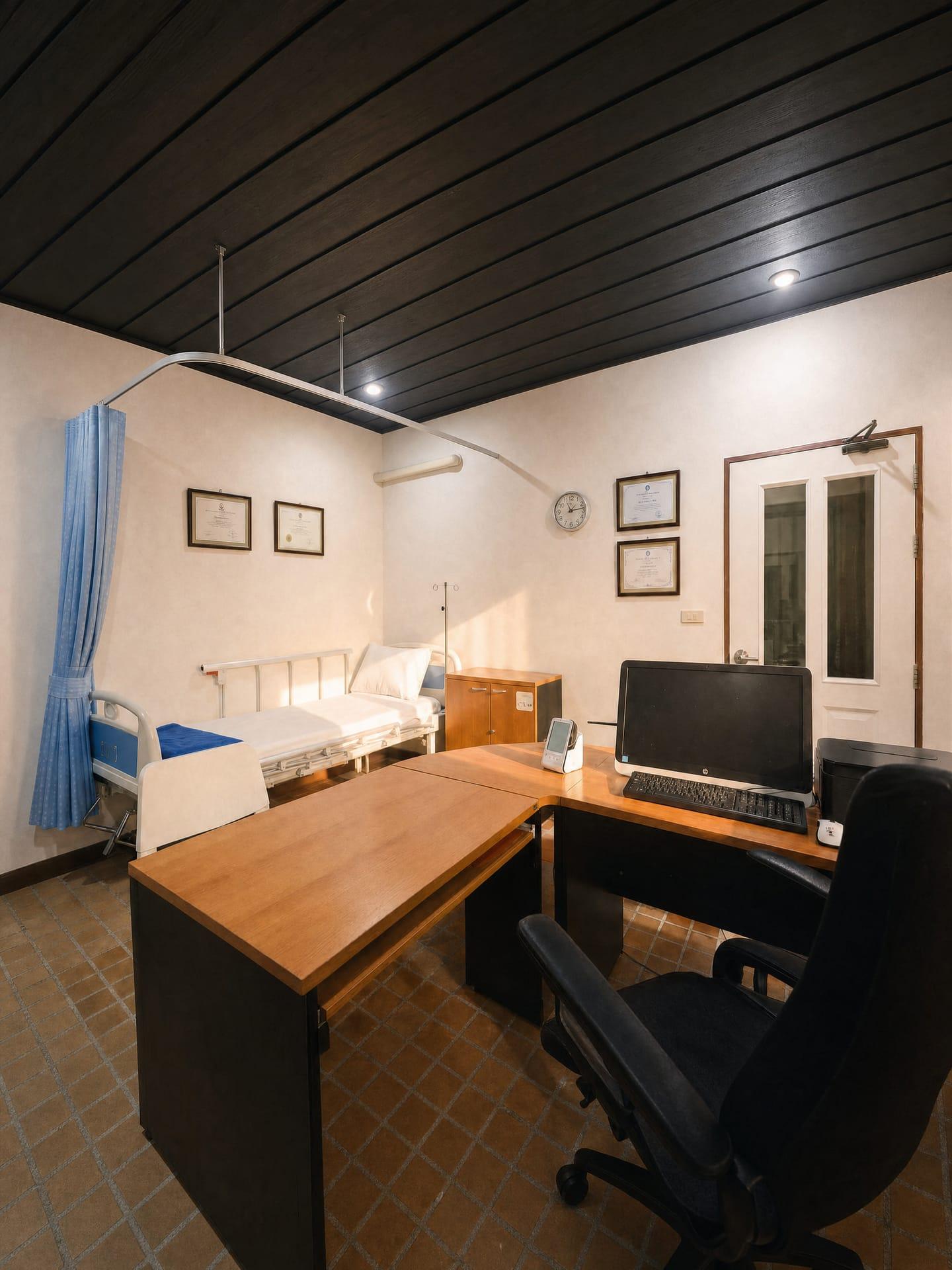
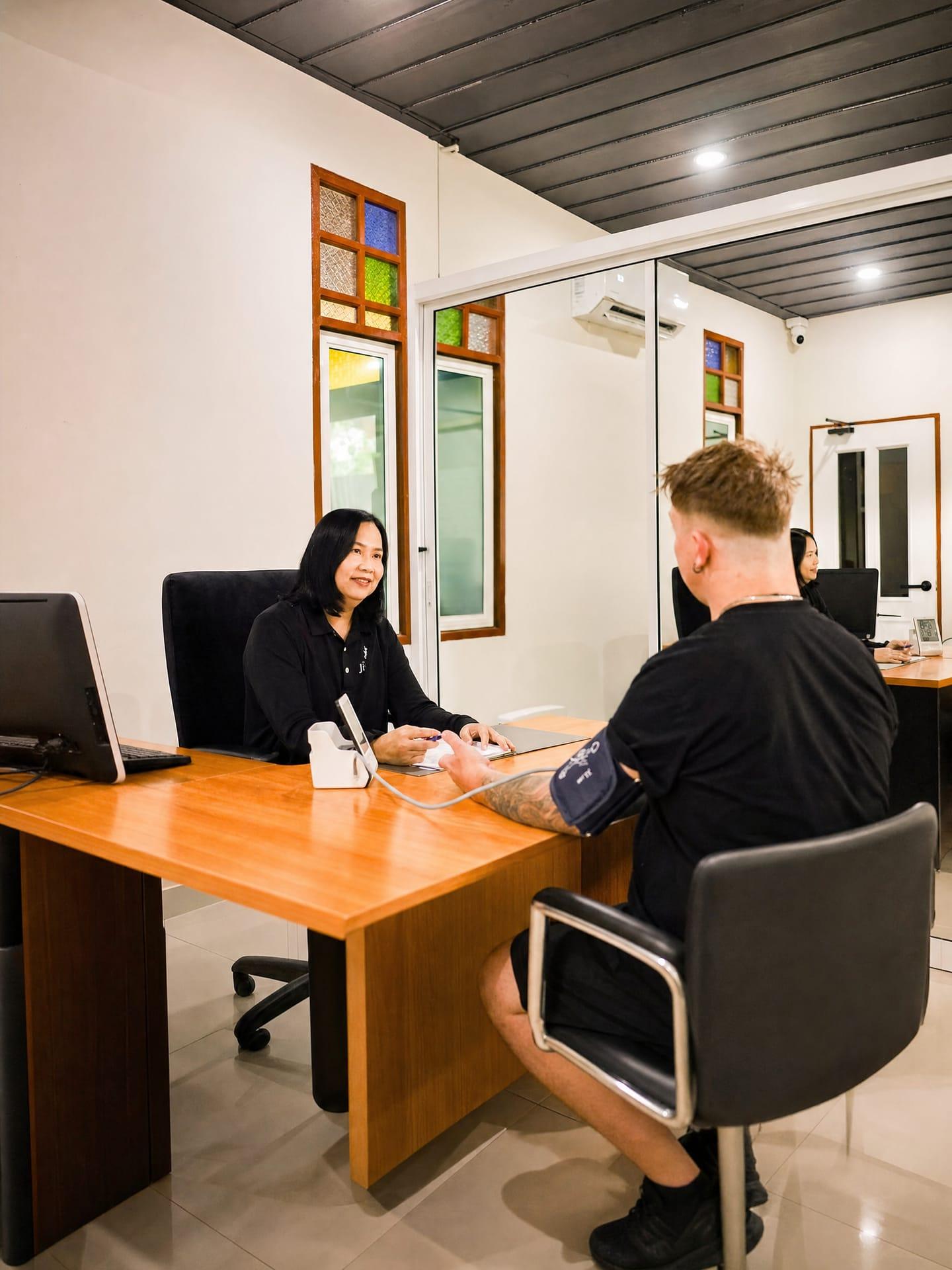
Every Jintara client has a hospital medical workup on day two, at Jintara's expense. Clients arriving with significant ketamine use have a detailed urinary tract analysis added to the day two diagnostic panel, answering one specific question: how much damage is already there, and does it need a urologist now or monitoring through the stay.
- Inflamed but structurally intact: Managed with pain relief, fluids, and the fact that stopping is doing the real work.
- Scarring, retention or bleeding: Needs a specialist. Jintara's hospital partnerships in Chiang Mai are how that referral happens without the client leaving the program.
- The most serious presentations: Sometimes bladder symptoms are severe enough that a person is not safe outside a hospital for the first day or two. That call gets made on arrival rather than discovered later.
The British Association of Urological Surgeons states plainly that regular or prolonged ketamine use can cause serious damage to the bladder and urinary tract. Knowing where a client sits on that spectrum before therapy starts is the point of doing it on day two.
“If someone is coming in on ketamine we will usually do a more detailed urinary tract analysis, because we need to know how the bladder is doing before we plan anything else. It is one of the areas we handle well, and most people have no idea a rehab would even check.

Treatment Runs 30 Days at 12,500 USD.
Jintara's residential program is 30 days at 12,500 USD, and that is the standard stay for ketamine dependence as it is for every other substance. The full cost breakdown sets out what sits inside the fee and what does not.
Fees are structured in 30-day blocks so a client knows what they are committing to before arrival. Anyone who needs longer extends week by week after the first month rather than signing up front for a longer block.
Treatment is confidential self-pay. No insurance claim is submitted and no third-party record is created, which matters to a good proportion of the people who call.
Convert to pounds sterling
What the 12,500 USD Fee Covers and What It Does Not
| Part of the stay | Inside the fee | Outside the fee |
|---|---|---|
| Room and daily living | A private ensuite villa suite held for your full 30 days, with housekeeping, laundry and every meal. The house takes 10 adults at a time, so the room and the staffing are held for you rather than offered to someone else. | Personal spending money. Clients budget for their own cigarettes, coffee and gifts. |
| Transfers | Chiang Mai airport pickup on arrival and the transfer out at the end, plus local transfers to and from the hospital during the stay. | International flights and visa costs, which you book yourself around the start date admissions agrees with you. |
| Day two hospital workup | A full checkup at Bangkok Hospital Chiang Mai covering full blood count, liver and kidney function, a chest X-ray and an ECG. Clients arriving on ketamine have a detailed urinary tract analysis added to it. | Urology care beyond the analysis. If the result shows scarring, retention or bleeding, the specialist treatment is billed separately, though the referral happens without you leaving the program. |
| Detox and nursing | Screening on arrival, then a detox plan set by an addiction psychiatrist. Awake nursing on site day and night, and medication during the stay where it helps sleep, pain or agitation. Nobody is asked to stop using before they fly. | Any prescription you take home after discharge, which is written before you leave rather than left for you to arrange. |
| Therapy | Individual sessions and small adult groups through the whole stay, with trauma-focused work added once the team judges you are steady enough for it. Groups stay small because the house caps at 10. | Trauma processing that runs past the first month. EMDR carries a 60-day minimum, so anyone coming mainly for trauma should plan on a second block. |
| Movement and structure | Fitness and Muay Thai sessions, mindfulness, and supervised outings, scheduled into the week rather than sold as extras. | Anything you choose to buy while you are out on a supervised outing. |
| Aftercare | Aftercare planning through weeks three and four, while thinking has cleared enough to make the plan realistic, plus an initial run of contact after you leave. | Ongoing therapy in your home country, and a urology follow-up at home if bladder symptoms are still active at discharge. |
| What you commit to | One 30-day block at 12,500 USD. A 2,000 USD reservation deposit confirms your start date and holds the room, and the balance is due on arrival or shortly after. | Any extension past the first month. Those are billed week by week afterwards, so you are never signing up front for time you have not used. |
Room and daily living
Inside the fee: A private ensuite villa suite held for your full 30 days, with housekeeping, laundry and every meal. The house takes 10 adults at a time, so the room and the staffing are held for you rather than offered to someone else.
Outside the fee: Personal spending money. Clients budget for their own cigarettes, coffee and gifts.
Transfers
Inside the fee: Chiang Mai airport pickup on arrival and the transfer out at the end, plus local transfers to and from the hospital during the stay.
Outside the fee: International flights and visa costs, which you book yourself around the start date admissions agrees with you.
Day two hospital workup
Inside the fee: A full checkup at Bangkok Hospital Chiang Mai covering full blood count, liver and kidney function, a chest X-ray and an ECG. Clients arriving on ketamine have a detailed urinary tract analysis added to it.
Outside the fee: Urology care beyond the analysis. If the result shows scarring, retention or bleeding, the specialist treatment is billed separately, though the referral happens without you leaving the program.
Detox and nursing
Inside the fee: Screening on arrival, then a detox plan set by an addiction psychiatrist. Awake nursing on site day and night, and medication during the stay where it helps sleep, pain or agitation. Nobody is asked to stop using before they fly.
Outside the fee: Any prescription you take home after discharge, which is written before you leave rather than left for you to arrange.
Therapy
Inside the fee: Individual sessions and small adult groups through the whole stay, with trauma-focused work added once the team judges you are steady enough for it. Groups stay small because the house caps at 10.
Outside the fee: Trauma processing that runs past the first month. EMDR carries a 60-day minimum, so anyone coming mainly for trauma should plan on a second block.
Movement and structure
Inside the fee: Fitness and Muay Thai sessions, mindfulness, and supervised outings, scheduled into the week rather than sold as extras.
Outside the fee: Anything you choose to buy while you are out on a supervised outing.
Aftercare
Inside the fee: Aftercare planning through weeks three and four, while thinking has cleared enough to make the plan realistic, plus an initial run of contact after you leave.
Outside the fee: Ongoing therapy in your home country, and a urology follow-up at home if bladder symptoms are still active at discharge.
What you commit to
Inside the fee: One 30-day block at 12,500 USD. A 2,000 USD reservation deposit confirms your start date and holds the room, and the balance is due on arrival or shortly after.
Outside the fee: Any extension past the first month. Those are billed week by week afterwards, so you are never signing up front for time you have not used.



Ketamine Withdrawal Needs Supervision.
Ketamine withdrawal is primarily psychological, and that is not the same as mild. What it produces is anxiety, craving, insomnia, low mood and perceptual disturbance, arriving all at once in someone whose only method for handling those states has just been removed.
- The first four to seven days are the hardest: Sleep goes first, cravings peak, and the depression the use was covering comes back without the buffer. Bladder pain often gets temporarily worse before it settles, which is a hard few days at home and a manageable few days with nursing available at three in the morning.
- A psychiatrist supervises throughout: Medication is used where it helps sleep, pain or agitation, and prescription decisions are not left to the client. How the team scores and responds to symptoms is set out in withdrawal symptom management.
- Detox and therapy run in parallel: A person on a supervised detox can do almost everything else at the same time, so therapy starts alongside the withdrawal rather than after it.

Some Clients Arrive Through a Prescription.
A growing number of people arrive having come to ketamine through medicine rather than nightlife. A prescription for treatment-resistant depression ends, the relief does not become optional again, and private sourcing follows, then daily use, then a dependence that carries a particular shame because the drug was meant to be the treatment.
The substance side is treated the same way. What is different is the depression underneath, which is treated at Jintara as a condition in its own right, with psychiatric review and therapy through the stay, drawing on the NHS treatment options for depression in adults. No one is asked to justify how the use started.
- Trauma work waits until the dissociation settles: Ketamine produces dissociative states that closely resemble the dissociation many people already carry from trauma. Opening trauma material before the drug is out and the nervous system has settled risks making both problems worse.
- Stabilisation comes first: Detox, sleep, food, and enough weeks of clear thinking that a client can stay present through a difficult session. Only then does trauma-focused work start, and whether it starts during the stay is a clinical decision made by the therapist with the client.
- Trauma processing needs 60 days, not 30: EMDR therapy is available for clients who are ready for it, and it carries a minimum stay of 60 days. Anyone whose main reason for coming is the trauma rather than the ketamine should plan for two months from the start.
“Trauma work does not start while someone is still dissociating daily. We stabilise first, and only then do we open anything. Rushing that with a ketamine client makes both problems worse.

UK ketamine use, ages 16 to 24
In the year ending March 2023, last-year ketamine use among 16 to 24 year olds in England and Wales stood at 3.8 percent. Every other drug type outside cannabis, cocaine and new psychoactive substances sat below one percent.
Source: Office for National Statistics

UK Figures Count Last-Year Use, Not Daily Use.
Prevalence surveys count anyone who used once in twelve months. They do not count grams a day, they do not count bladder damage, and they do not separate the person who tried it at a festival from the person whose evenings have not been sober in two years. Over the ten years to March 2025 the Advisory Council on the Misuse of Drugs recorded a twelve-fold increase in the number of people seeking treatment for ketamine use disorders.
Clients who travel from the UK to Thailand for treatment do so partly for privacy and cost, and partly because the presentation is taken at the weight it actually carries, rather than grouped with party drugs and handled as a habit.

What the First Month Off Ketamine Looks Like.
Nobody is asked to stop using before admission. You fly in still using, the medical team assesses you on arrival, and the withdrawal is managed with a visiting psychiatrist and nursing on site. The admissions process covers what happens between the first call and the arrival transfer, usually within a few days when a bed is available.
- Days one to seven: The worst of the craving, broken sleep and mood collapse, with bladder pain that can spike before it eases. The first week in detail sets out the day-by-day version.
- Days seven to fourteen: Sleep comes back first and appetite second. This is usually where a client starts noticing how much cognitive fog the daily use had been causing.
- Weeks three and four: Thinking clears and the questions become useful: what the ketamine was managing, what replaces it, and what the first fortnight at home looks like. Aftercare planning begins in this window, and for clients with ongoing bladder symptoms it includes a urology follow-up at home.
Recovery from ketamine dependence is not unusually difficult once the substance is out and the reason it was being used is being treated. The people who struggle are the ones who stop the drug and change nothing else.

Talk with Our Admissions Team
Your enquiry is confidential and goes only to our admissions team.
Independently Verified
Jintara is accredited against Thailand’s national quality standard for drug treatment and rehabilitation facilities, jointly certified by the Healthcare Accreditation Institute, the body that accredits Thailand’s hospitals, with the Princess Mother National Institute on Drug Abuse Treatment and the Department of Medical Services, Ministry of Public Health. Certificate no. 25/2569, valid 20 May 2026 to 19 May 2029.
Common Questions About Ketamine Dependence
Yes. Ketamine produces psychological dependence rather than the physical dependence of alcohol or benzodiazepines, and in frequent users that dependence can be severe. Tolerance builds quickly, daily use escalates within months, and stopping brings anxiety, craving, insomnia and low mood. The absence of a dramatic physical withdrawal is one reason people underestimate how difficult stopping is on their own.
K cramps are the abdominal and flank pain caused by ketamine damage to the urinary tract and bladder. They are a warning sign rather than an emergency in most cases, but they indicate that ketamine-induced uropathy has already started. The pain usually improves after stopping. Damage that has already scarred the bladder wall does not reverse, which is why the timing of stopping matters.
Partly, and it depends on how far it has gone. Inflammation and urgency frequently improve within weeks to months of stopping, and many people recover normal function. Structural damage, scarring and reduced bladder capacity are usually permanent. Anyone with blood in the urine, severe urgency or retention should be assessed by a urologist rather than waiting.
Not for seizure risk, which ketamine does not carry. Supervision matters for a different reason. The withdrawal removes the only coping tool a person has been using, at the same time as bladder pain, insomnia and depression peak, and the relapse rate for unsupported home attempts is high. Jintara runs the withdrawal with a visiting psychiatrist and awake nursing on site.
Yes, and this is the more common presentation. Ketamine usually appears alongside cocaine, alcohol, benzodiazepines or sleeping medication. Where alcohol, benzodiazepines or GHB are involved the detox is planned around the substance carrying the physical risk, because those withdrawals can be medically serious. The assessment on arrival maps the whole pattern, not just the substance named on the enquiry.
You are treated the same way on the substance side and differently on the mental health side. The dependence responds to the same structure, and the depression that led to the prescription is treated as a condition in its own right, with psychiatric review and therapy through the stay. Nobody is asked to justify how the use began.
The standard program is 30 days at 12,500 USD, and for most ketamine presentations that is enough to complete withdrawal, settle bladder symptoms and build an aftercare plan. Extensions are booked week by week afterwards. Clients with severe depression or trauma that needs processing usually stay longer, and the team will say so rather than let a person leave halfway through the work.
Treatment at Jintara is confidential self-pay, so no insurance claim is submitted and no third-party record is created. Clients travel from the UK, Australia and Europe partly for that reason. Admissions can talk through what your employer, your family or your prescriber would and would not be told, and nothing is disclosed to anyone without your consent.
Jintara is a small licensed residential rehab in Chiang Mai with a maximum of 10 clients and awake nursing on site around the clock. The admissions team answers enquiries about ketamine directly, before anything is booked.
Jintara Rehab is licensed by the Thai Ministry of Public Health as a rehabilitation centre. The clinical information on this page describes Jintara's general approach to supporting clients during the early recovery period. Medical decisions, including medication protocols, are determined by addiction-specialist psychiatrists through our partner hospital pathway. Individual treatment varies based on clinical assessment. This content is for informational purposes and does not constitute medical advice.