
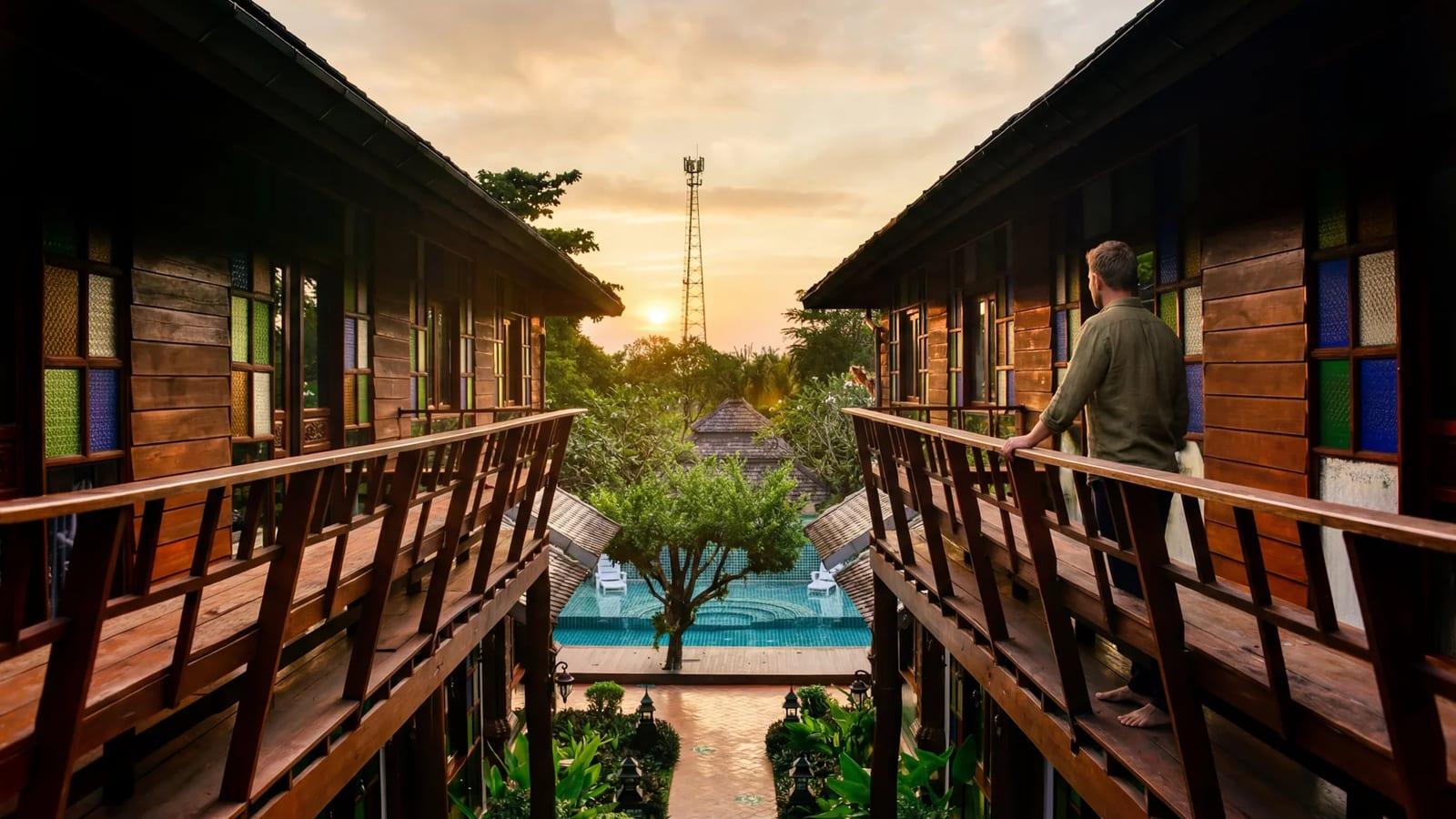
A licensed residential treatment program in Chiang Mai, one connecting flight from London.
Most UK residents who reach this page have already looked at NHS services and priced up private rehab at home. What residential addiction treatment at Jintara actually involves for a UK client is set out below, section by section. The clinical program, the cost, the flight and the handover back to your own GP are all covered.
- Licensed by Thailand's Ministry of Public Health since the facility opened in 2022
- Maximum 10 clients at any time with a 3.2 to 1 staff-to-client ratio
- No NHS record is created for treatment at a private overseas facility
- Airport transfers from Chiang Mai International Airport included in the fee
Fully Licensed and Hospital Accredited
Most UK clients arrive having already tried the routes available at home.
Rehab in Thailand for UK residents is licensed residential addiction treatment in Chiang Mai.
The NHS funds addiction services across the UK, and most of that treatment is delivered in the community rather than as a residential stay. For someone whose alcohol dependence has already survived a community attempt, the next step is residential care, and that is usually where the wait starts. Local authorities commission residential places from finite budgets, a separate funding assessment is required, and the person waiting is still drinking or still using while it runs.
Take the free route first if it is open to you. The position is set out plainly in NHS guidance on alcohol support, which says most people are helped to stop drinking in the community, that inpatient units are reserved for assessed medical need, and that residential rehabilitation usually needs its own funding decision. Come back to the paid options, here or anywhere else, only when it has genuinely been tried and has not held.
Darren Lockie, Jintara's founder, has spent more than 15 years building and running addiction treatment centres in Thailand. Clients from England, Scotland, Wales and Northern Ireland have been treated here since the facility opened, and their reasons are consistent. UK enquiries about ketamine dependence have grown faster than any other substance, and it is treated here as a dependence with a urological problem attached rather than as a party drug habit. Cost, confidentiality, and the clinical value of getting out of the environment that has been sustaining the substance use.
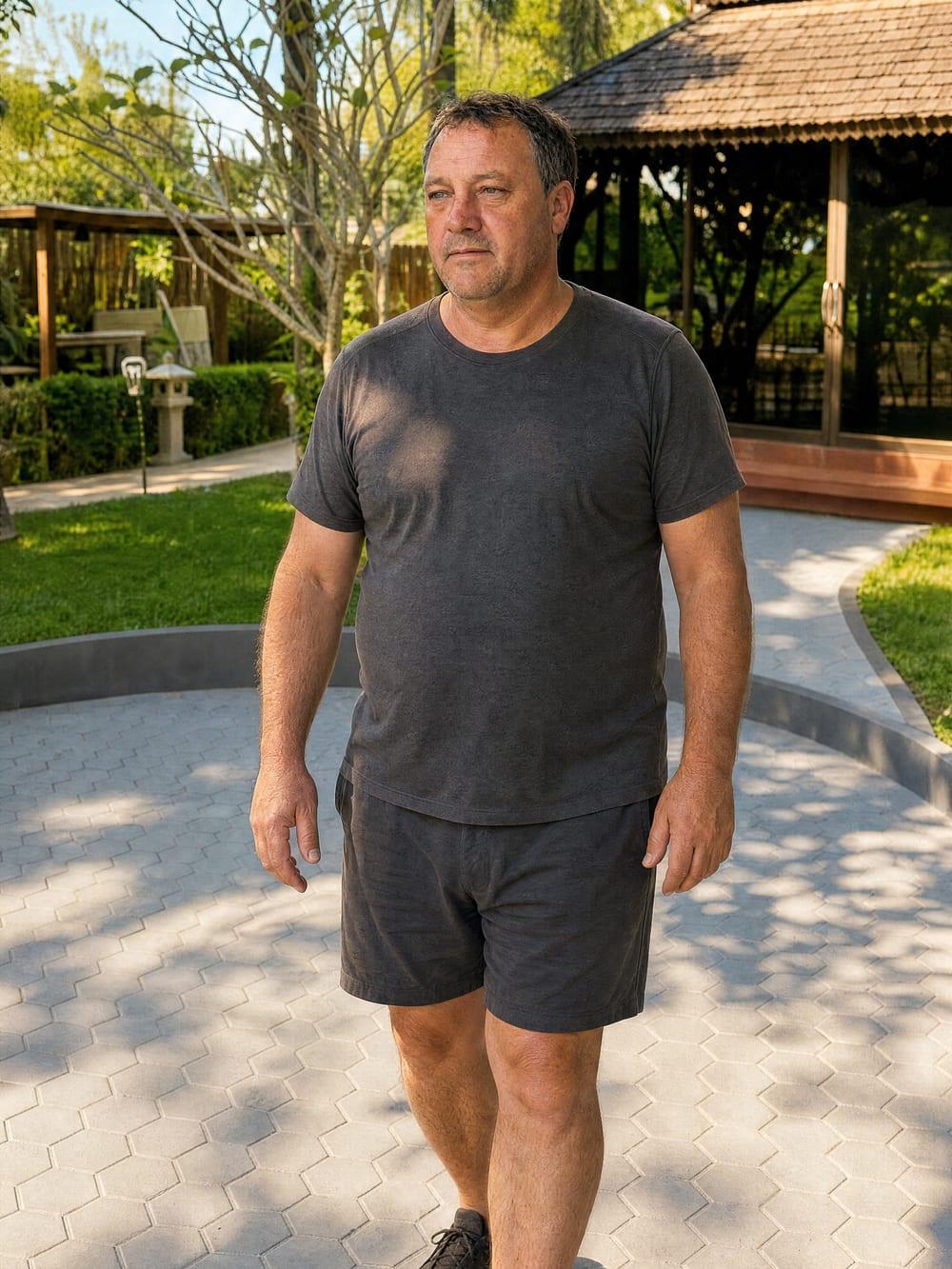
Leaving the UK removes the environment that sustains the substance use.
The clinical case for treatment abroad is not the weather. It is the removal of an active obstacle.
Outpatient treatment sends you home every evening, back to the same kitchen, the same friends, the same routines and the same supply. For a person with a long history of heavy drinking or benzodiazepine dependence, those are not background details. They are the mechanism keeping the use going, and the full Thailand and UK comparison sets the two settings side by side on that point. Residential treatment in Chiang Mai suspends that environment for the whole admission.
The group here never exceeds 10 people, which is small enough to work as a genuine therapeutic community rather than a ward. Clients train at a commercial gym in Chiang Mai alongside the public, eat at local restaurants on supervised outings and take part in structured Saturday excursions. The aim is a real-world recovery, in a place that is quiet, neutral and a long way from what UK clients are trying to interrupt.
Confidentiality carries practical weight. Executives, clinicians, legal professionals and public figures from the UK have been treated here, and colleagues and professional networks at home are not positioned to observe an admission or a discharge.
Clients whose substance use and mental health conditions are tangled together, which describes most of the caseload here, gain the most from that separation.




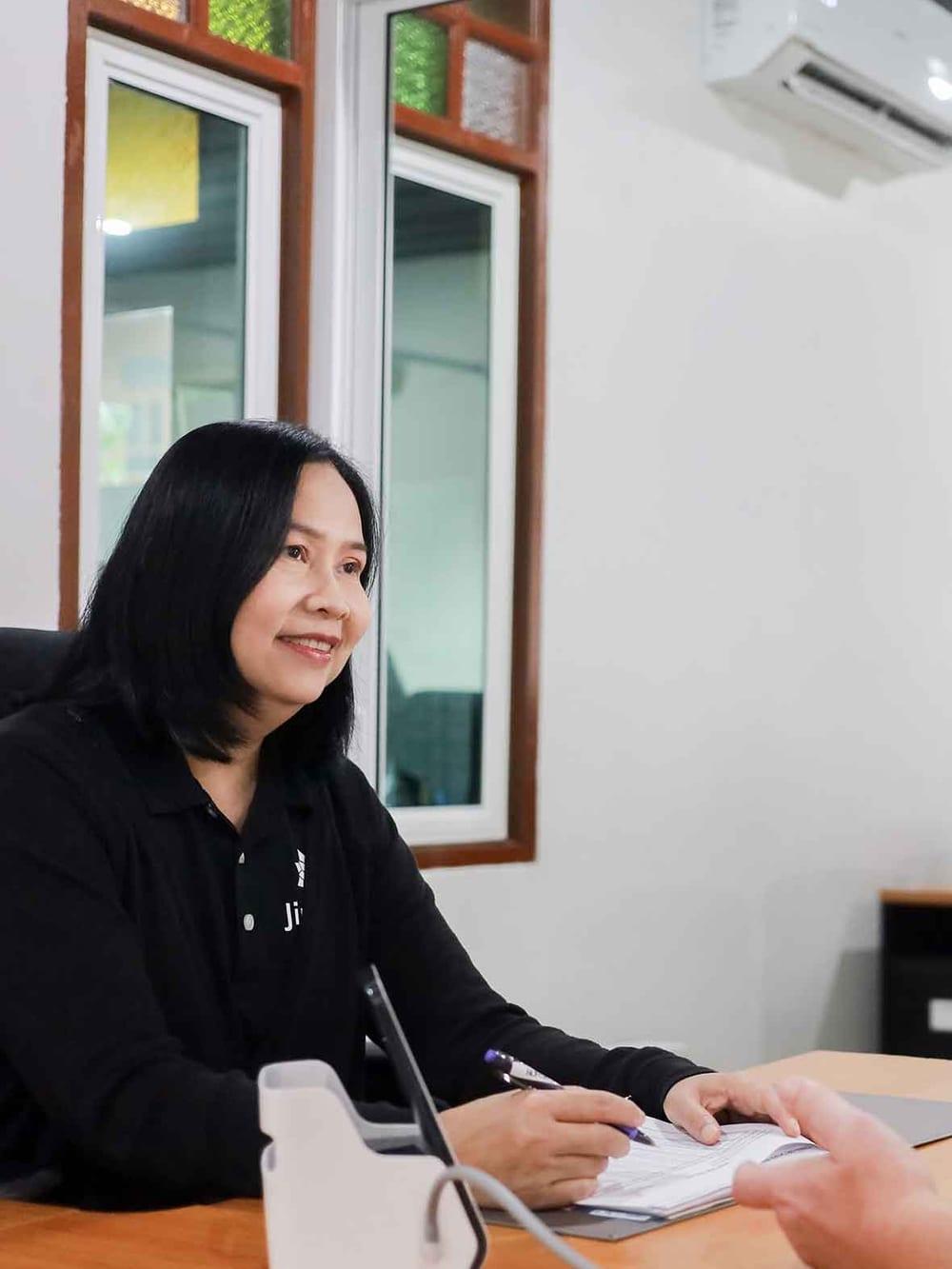
The 30-day program runs to a structured schedule from arrival to discharge.
The standard admission is 30 days. The 30-day program covers medical detox, individual therapy, group therapy, psychoeducation, fitness, holistic sessions and structured discharge planning. Extended stays of 8 or 12 weeks are set at the admissions stage on clinical presentation and history.
The therapy model is cognitive behavioural at its core, with dialectical behaviour therapy skills and trauma work added where the assessment supports it. That places it among the psychological approaches the NIAAA core resource on alcohol sets out as evidence-based. A large share of UK residential provision is built on the twelve-step model, and people who have found that a poor fit often assume residential treatment simply is twelve-step. It is not.
- Morning: Vitals and medication review, then individual or group therapy. Psychoeducation and skills sessions run through to midday.
- Afternoon: Gym on Monday, Wednesday and Friday. Pickleball, a golf driving range, Muay Thai and boxing by physical assessment. Yoga, massage, Reiki and meditation are included in the fee.
- Evening: Lighter group work, recovery reflection and check-ins. Every client has a large private room with an en-suite.
- Weekends: A structured Saturday excursion in and around Chiang Mai, and a Sunday community lunch.
With a maximum of 10 clients and a 3.2 to 1 staff-to-client ratio, the clinical team keeps consistent individual access to every person on the program.

A Ministry of Public Health licence sits behind every admission and every detox.
Medical safety is the question UK families ask first, and it has a documented answer.
Jintara holds a formal licence from Thailand's Ministry of Public Health, which took nine months to obtain before the first client was admitted. Every admission opens with a psychiatrist-led assessment, and where withdrawal is expected the medical detox protocol starts from that assessment rather than the following morning. Head Nurse Lertkhwan Sukpia, known to clients as Khun Khwan, is the named responsible practitioner on that licence. She oversees compliance across the medical procedures behind it.
Alcohol and benzodiazepine withdrawal are scored formally using the Clinical Institute Withdrawal Assessment for Alcohol, Revised (CIWA-Ar), and awake overnight nursing runs on site. NICE guidance on acute alcohol withdrawal tells staff to consider using a tool such as CIWA-Ar as an adjunct to clinical judgement when they assess and monitor patients in acute alcohol withdrawal. Those pieces, with the overnight nursing, run here from the first night of an admission.
Bangkok Hospital Chiang Mai is approximately eight minutes from the facility and Chiang Mai RAM approximately twenty. Both are formal transfer partners with addiction-specialist psychiatrists on staff, and the medical standards page carries the licence conditions and the transfer arrangements in full. On day two of every admission there is a workup at Bangkok Hospital Chiang Mai covering bloods, liver and kidney function, chest X-ray and EKG, included in the fee.
“Our licence from Thailand's Ministry of Public Health took nine months to obtain. We maintain it through ongoing compliance. Many private rehab facilities in other countries operate without an equivalent requirement.

The cost gap between UK private rehab and Jintara survives the flight.
UK private residential rehab is commonly quoted in the region of £12,000 to £18,000 for a 30-day stay.
Most UK readers are comparing against providers like Priory, Castle Craig or Hazelden Betty Ford UK, which is a sensible place to start. Jintara's 30-day residential program is $12,500 USD, and the full fee breakdown sets out what sits inside that figure and what does not. Jintara does not publish rates for those facilities and you should not take a figure for any of them second-hand, including from this page. Ask each provider directly for a written all-in number and an explicit list of what falls outside it.
What matters more than the headline is that exclusion list. The fee here covers the private room with en-suite, all meals, airport transfer, arrival screening, psychiatrist-led detox planning, the day two hospital workup, individual therapy, small adult groups, fitness sessions and supervised outings. Flights, visas, medication brought from home, further off-site medical or dental treatment and personal spending money sit outside it.
Price is one axis of the comparison and clinical density is the other. UK private facilities vary widely on staff-to-client ratio, individual therapy hours and whether medical detox happens on site or is contracted out. Jintara runs 32 staff against a maximum of 10 clients, with three therapists each holding a master's degree in counselling, psychology or a related clinical field, and awake nursing through the night.
Convert to pounds sterling
What the 30-Day Fee Covers
| Inside the fee | Outside the fee | |
|---|---|---|
| Accommodation | Private room with en-suite | Personal spending money |
| Meals | All meals and snacks | Extras on off-site outings |
| Detox | Psychiatrist-led, on site | Medication brought from home |
| Diagnostics | Day two hospital workup | Further off-site treatment |
| Transfers | Chiang Mai airport pickup | International flights |
| Therapy | Individual, group and holistic | Sessions after discharge |
Accommodation
Inside the fee: Private room with en-suite
Outside the fee: Personal spending money
Meals
Inside the fee: All meals and snacks
Outside the fee: Extras on off-site outings
Detox
Inside the fee: Psychiatrist-led, on site
Outside the fee: Medication brought from home
Diagnostics
Inside the fee: Day two hospital workup
Outside the fee: Further off-site treatment
Transfers
Inside the fee: Chiang Mai airport pickup
Outside the fee: International flights
Therapy
Inside the fee: Individual, group and holistic
Outside the fee: Sessions after discharge
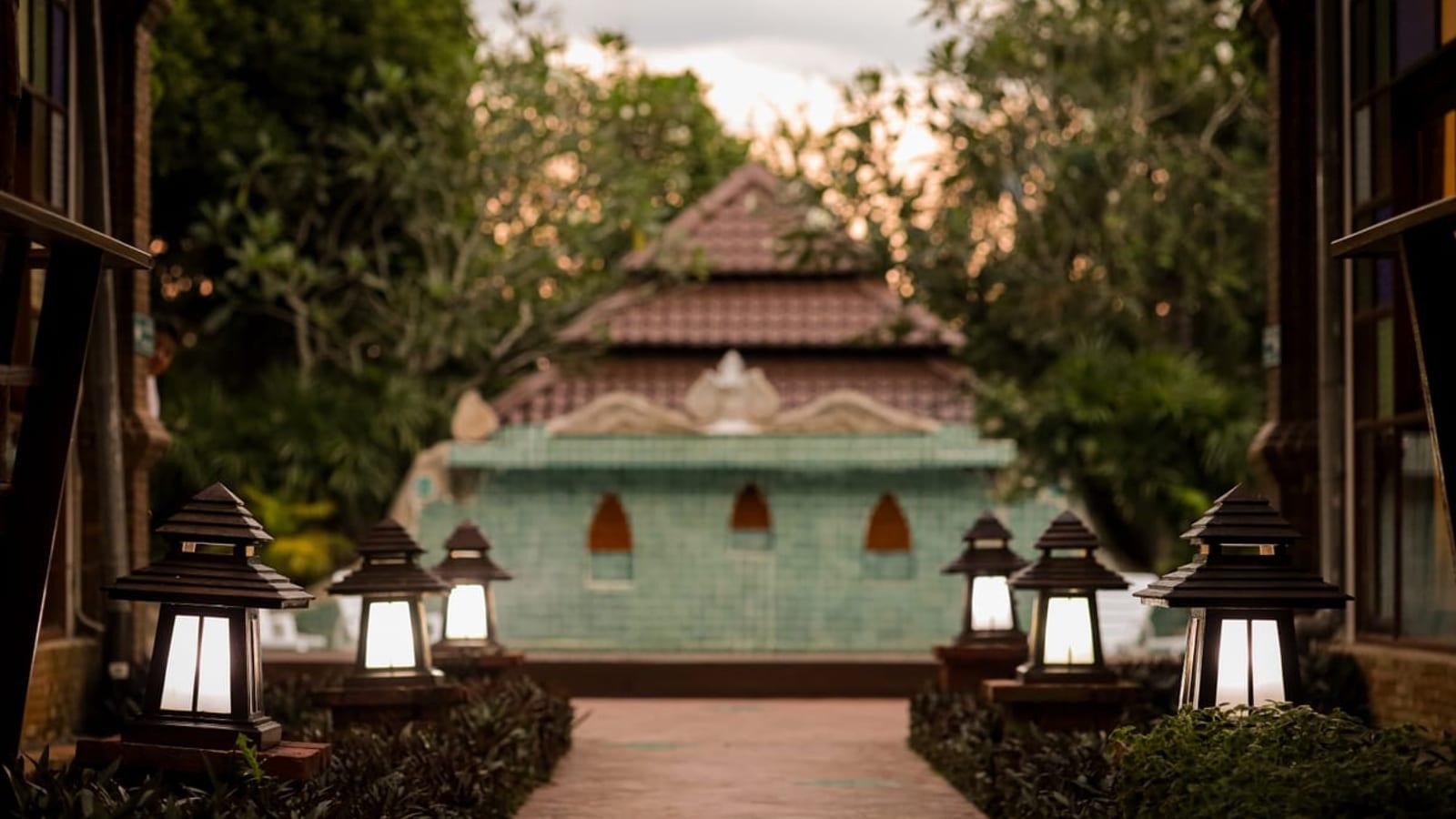

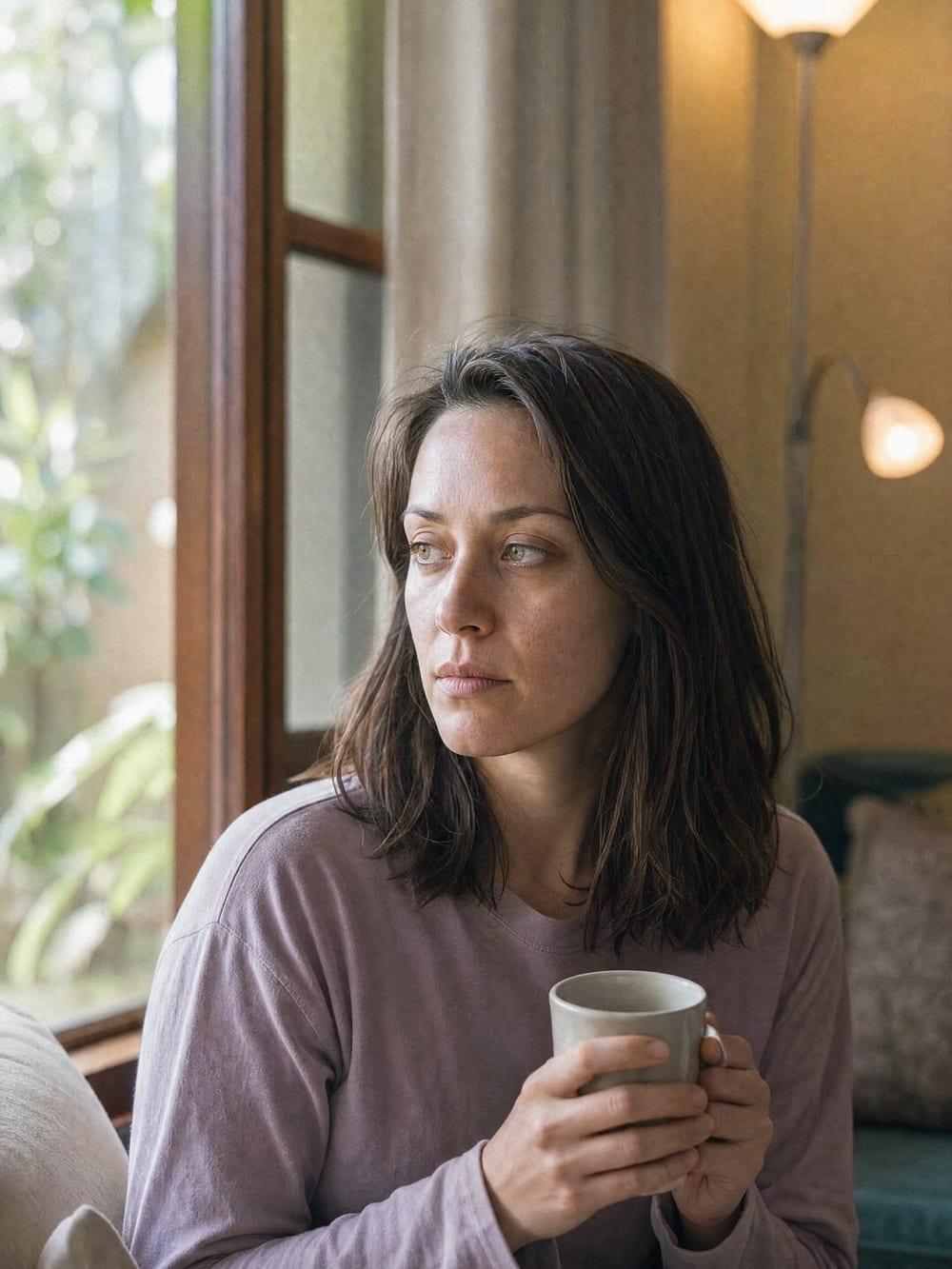
Most UK clients arrive with a mental health condition alongside the addiction.
Depression, anxiety and post-traumatic stress presenting alongside alcohol or benzodiazepine dependence is the most common clinical picture among UK clients here.
Both sides are treated in the same plan, from the first week, and therapy begins during the detox phase wherever the person is stable enough for it. Here the co-occurring conditions are the norm rather than the exception, so the plan is built for both from day one. That is a real difference from residential provision that holds therapy back until detox is finished.
Trauma work is available here where the clinical assessment supports it. It is led by Clinical Director Denise O'Leary, who holds an MA in Counselling Psychology and is certified by the EMDR International Association. A course of EMDR needs a minimum 60-day stay, because the preparation and stabilisation work has to come first. On a 30-day admission the groundwork begins and the skills are useful on their own, but if trauma processing is the reason you are booking, plan for the longer stay.
UK guidance points the same way. Trauma-focused psychological treatment, including EMDR, is what NICE guideline NG116 recommends for adults with post-traumatic stress disorder where it is clinically indicated. That is the standard this program is built to.
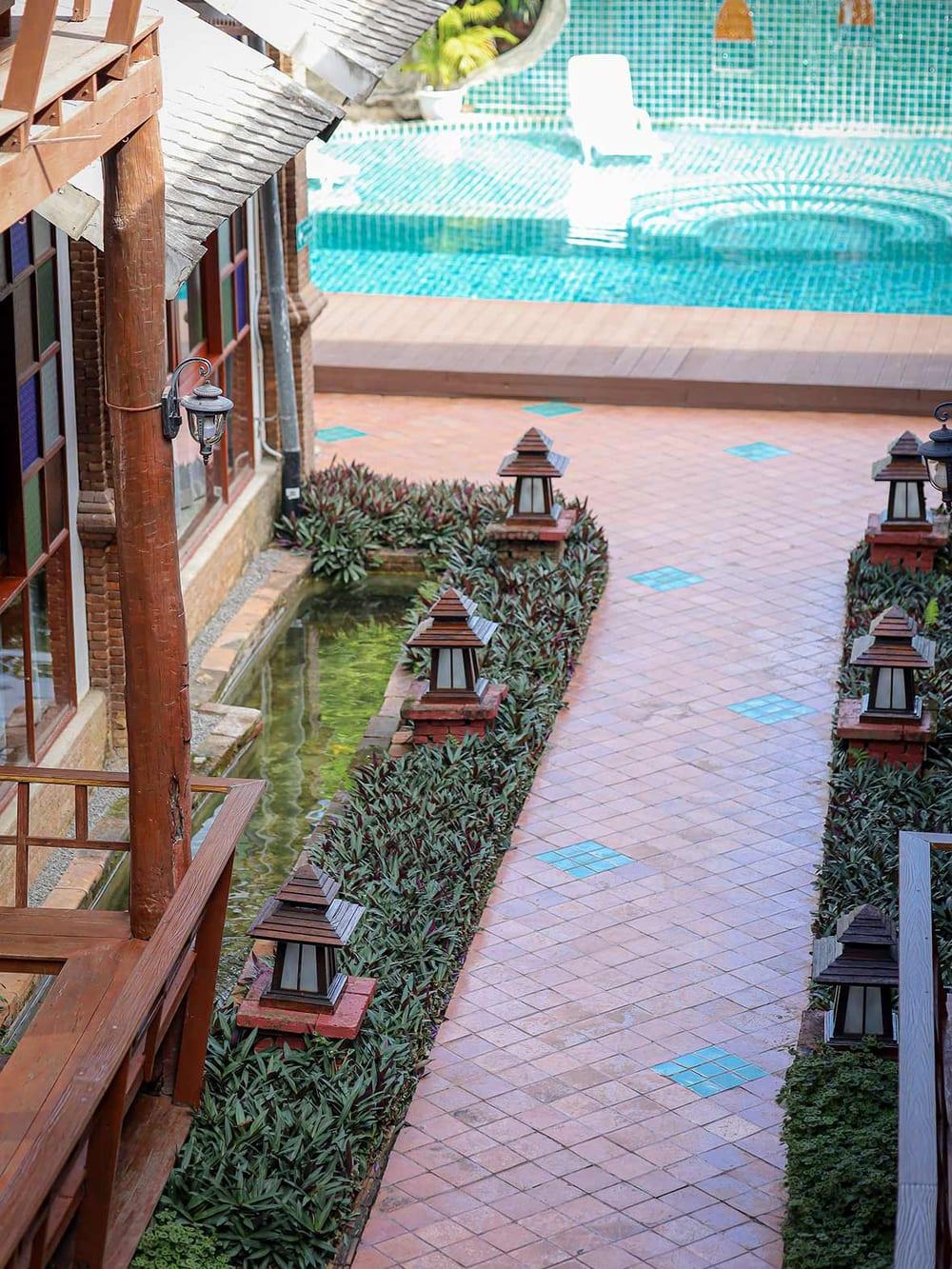
One connection through Bangkok puts you in Chiang Mai from any UK airport.
The trip is a flight from a London gateway to Bangkok, generally with one onward connection, and an airport pickup on arrival.
London to Bangkok runs 11 to 12 hours and the Chiang Mai leg is about one hour. Transfers from Chiang Mai International Airport are included in the fee and coordinated through the same admissions sequence that covers the pre-travel documentation and consent forms, and what the first week actually looks like is set out day by day. Thai Airways, British Airways and Emirates via Dubai all serve the route, as do carriers connecting through Doha.
The visa position needs care, because Thailand's entry rules are mid-change and any specific day count on a facility website can be out of date by the time you fly. Confirm the current rules for your own passport with the Royal Thai Embassy or consulate before you book flights, and tell the admissions team what your permitted stay is so the program length is planned around it.
Two other points UK families raise repeatedly are worth answering here. Travel insurance for the flight is a separate purchase and should be arranged as normal. Prescription medication brought from the UK should be declared at admission so the psychiatrist can reconcile it against the detox plan. The time difference is six hours in UK summer time, which makes family calls easy to schedule at either end of the day.
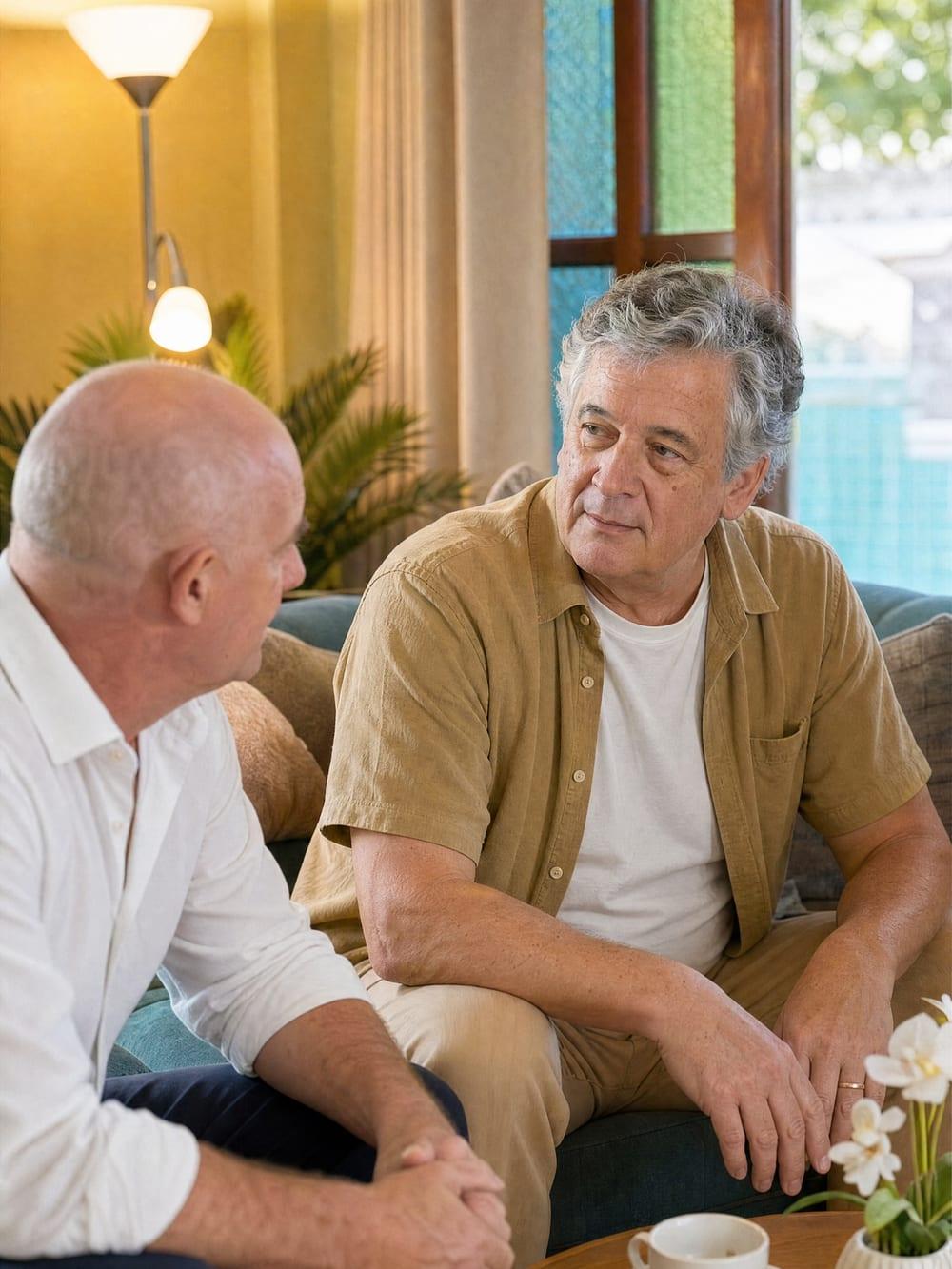
Discharge planning starts in week one and ends with a letter for your GP.
Aftercare planning here begins in the first week of the admission, not in the last few days before departure.
The clinical team works out what each person will need at home early, which leaves time to arrange it. The aftercare plan is built around resources in your own city, because someone flying home to Manchester or Bristol needs support in that city, in that time zone, on a Tuesday evening. Where you consent, a GP liaison letter travels with you, summarising the admission, the clinical progress and the recommendations, so your GP has a clear record and a referral route.
There is a nursing check-in within 24 hours of departure and a one-hour counsellor call at the 28-day mark. There are no alumni groups and no remote group sessions, and that is deliberate. Local support and local accountability hold up better across a six-hour time difference than anything run from Chiang Mai.
Clients with an existing UK therapist or psychiatrist are encouraged to pick those relationships back up, and Jintara does not set out to replace them. Continuity of care after a residential episode is treated as part of the treatment itself by the UK clinical guidelines on drug misuse and dependence, often called the Orange Book. That principle is what the discharge document is built around.
“Aftercare begins in week one. By the time a client leaves, their GP has a letter, their referrals are made, and they know what to expect in the first weeks back home.

Talk with Our Admissions Team
Your enquiry is confidential and goes only to our admissions team.
Independently Verified
Jintara is accredited against Thailand’s national quality standard for drug treatment and rehabilitation facilities, jointly certified by the Healthcare Accreditation Institute, the body that accredits Thailand’s hospitals, with the Princess Mother National Institute on Drug Abuse Treatment and the Department of Medical Services, Ministry of Public Health. Certificate no. 25/2569, valid 20 May 2026 to 19 May 2029.
Common Questions From UK Clients and Families
No. The NHS does not fund residential treatment at private overseas facilities. NHS addiction services refer to UK-based residential providers where local authority funding is approved. UK clients at Jintara pay the program fee personally, through family support, or through a private policy that covers treatment abroad. Confirm any insurance position with your insurer in writing before you book.
The 30-day residential program is $12,500 USD, quoted in US dollars and payable directly. UK private residential rehab is commonly quoted in the region of £12,000 to £18,000 for the same 30 days. Flights, visas and personal spending sit outside the Jintara fee. Ask every provider you are considering, including this one, for a written all-in figure and an explicit exclusion list.
The standard residential program is 30 days. Where a co-occurring mental health condition sits alongside alcohol or benzodiazepine dependence, the SAMHSA TIP 42 guidance on co-occurring disorders treats integrated care for both as the standard, and Jintara's own experience is that it usually needs 8 to 12 weeks in practice. Trauma processing with EMDR needs a minimum 60-day stay, because the preparation work comes first. A 30-day admission is still a clinically meaningful first step for many people.
Chiang Mai is a city of roughly one million people with internationally credentialed private hospitals. Jintara holds a formal licence from Thailand's Ministry of Public Health. Bangkok Hospital Chiang Mai is approximately eight minutes away and Chiang Mai RAM approximately twenty, both formal transfer partners. Blood results and diagnostics come back in hours rather than days.
Nursing staff are awake through the night and a psychiatrist is on call. If a situation needs hospital-level care, transfer goes to Bangkok Hospital Chiang Mai or Chiang Mai RAM, both formal transfer partners with addiction-specialist psychiatrists on staff. Every client also has a full medical workup on day two, which surfaces underlying conditions before the clinical program is properly underway.
Jintara provides discreet documentation. Many UK clients describe the absence as medical treatment, which is what it is. The specific nature of the treatment is not disclosed to any third party without your written consent, and Jintara does not contact employers or family members without it. Discretion is structural at a facility that holds a maximum of 10 people.
You leave with a written aftercare plan and, where you consent, a GP liaison letter summarising the admission. The team maps local therapists and support groups near your home and aims to have the first appointment booked before you fly. There is a nursing check-in within 24 hours of departure and a one-hour counsellor call at the 28-day mark.
Jintara is a small licensed residential rehab in Chiang Mai with a maximum of 10 clients and a 3.2 to 1 staff-to-client ratio. The admissions team answers UK enquiries directly, before anything is booked.
Jintara Rehab is licensed by the Thai Ministry of Public Health as a rehabilitation centre. The clinical information on this page describes Jintara's general approach to supporting clients during the early recovery period. Medical decisions, including medication protocols, are determined by addiction-specialist psychiatrists through our partner hospital pathway. Individual treatment varies based on clinical assessment. This content is for informational purposes and does not constitute medical advice.