
Thailand vs UK Rehab. A Direct Comparison for UK Clients
What the NHS route actually offers, what UK private rehab costs, and how Jintara's clinical model in Chiang Mai compares on detox, therapy and aftercare.
Written by Darren Lockie | Medically reviewed by Denise O'Leary | Published: August 3, 2026 | Last Updated: August 3, 2026
Most people reach this page tired. Either the NHS route has stalled somewhere between a GP appointment and a funding decision, or a private quote has landed that the family cannot meet, and the person who needs treatment is still drinking or still using while everyone works out what to do next. That gap is the thing you are actually trying to close.
This article sets out both UK options honestly, then compares them with what happens at Jintara in Chiang Mai on detox, therapy, cost, travel and aftercare. UK facilities appear here because they are the comparison set you are already holding, not because there is anything wrong with them.
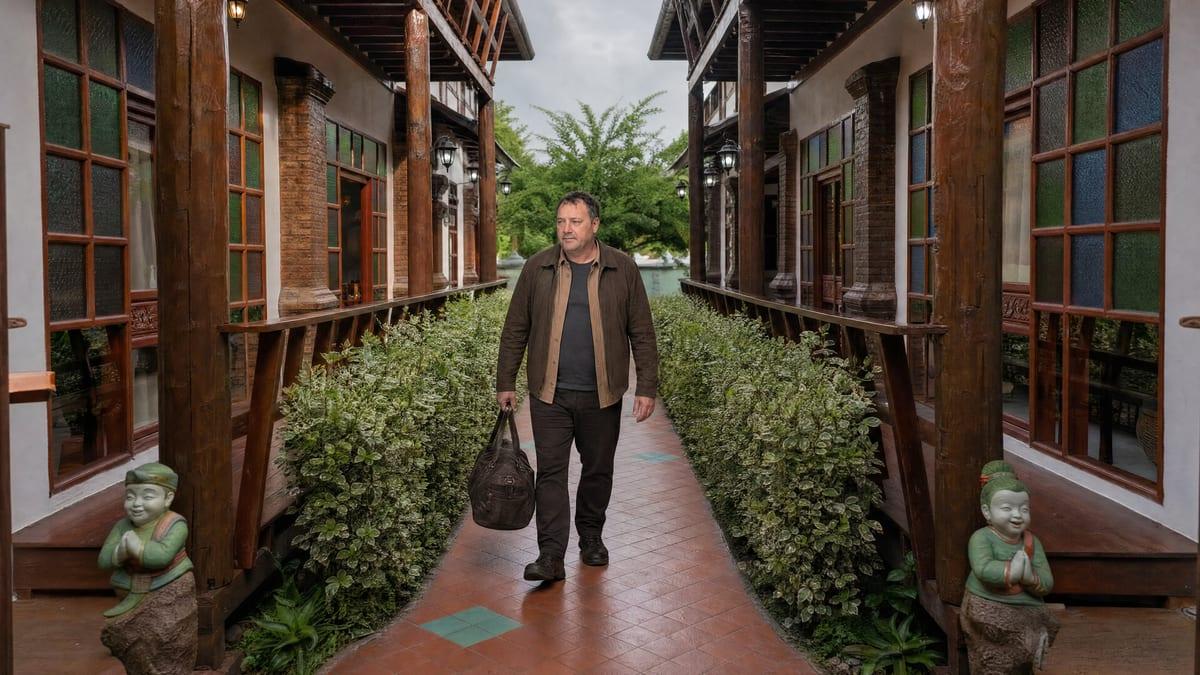
The Thailand and UK comparison is a question about clinical density, not distance.
Thailand versus UK rehab is a comparison of clinical intensity, waiting time and cost, and distance is the least useful variable in that calculation even though it is the one that gets discussed first.
UK readers usually arrive with three options on the table. The first is the NHS and local authority route, which is free at the point of use and community-based for most people. The second is UK private residential rehab, which is immediate but expensive. The third is treatment abroad, which sits at a lower price point and carries the friction of a flight. Jintara publishes what a 30-day stay costs so the third option can be compared with real numbers rather than an enquiry form.
Each option answers a different constraint. If the constraint is money, the NHS route is the honest answer and it is worth taking. If the constraint is time, or a community-based attempt that did not hold, residential treatment becomes the relevant question. The US Surgeon General's report on addiction frames treatment intensity as something matched to assessed clinical need rather than chosen by preference, which is the right way to read the rest of this page.
The NHS route is genuinely worth taking first, and it is mostly community-based.
The NHS pathway for alcohol and drug dependence begins with a GP, leads to a local community service, and delivers most treatment on an outpatient basis rather than as a residential stay. NHS guidance on alcohol support states plainly that most people receive support to stop drinking in the community, that inpatient units are reserved for assessed medical need, and that residential rehabilitation usually requires a separate assessment to determine whether funding exists.
That funding clause is where UK readers most often get stuck. Local authorities commission residential places, budgets are finite, and the assessment adds weeks to a process that has usually already taken months. Independent providers in England are regulated by the Care Quality Commission, which is the register worth checking before any private placement. Meanwhile the person waiting is still drinking or still using, and if you are reading this for a partner, a sibling or an adult child rather than for yourself, that waiting is the part that frightens you.
My position on this has not changed in all the years I have been taking calls from people in socialised health systems. If treatment is free and it is available to you, take it. Come back to the paid options, here or anywhere else, only when the free route has genuinely been tried and has not held. Anyone who tells you to skip it is selling you something.
“We tell people what we specialise in, we tell them what we don't do, and we refer them to rehabs that might be a better fit. That's what transparency looks like.
UK private residential rehab costs several times what it costs in Chiang Mai.
UK private residential rehab is commonly quoted in the region of £12,000 to £18,000 for a 30-day stay, and Jintara's 30-day program is $12,500 USD, which converts to a materially smaller figure even after a return flight from London is added.
Most UK readers are comparing against providers like Priory, Castle Craig or Hazelden Betty Ford UK, which is a sensible place to start. Jintara does not publish figures for those facilities and you should not take a rate for any of them second-hand, including from this page. Ask each provider directly for a written all-in figure and an explicit list of what falls outside it.
What matters more than the headline number is that exclusion list, and the full cost breakdown sets out both sides of ours in detail. At Jintara the fee covers the private villa suite, all meals, airport transfer, arrival screening, psychiatrist-supervised detox planning, twenty-four-hour awake nursing, the day two hospital assessment, individual therapy, small adult groups, fitness sessions and supervised outings. Flights, visas, prescription medication brought from home, any additional off-site medical or dental treatment, and personal spending money sit outside it.
What to compare, side by side
| UK private residential | Jintara, Chiang Mai | |
|---|---|---|
| 30-day fee | Commonly £12,000 to £18,000 | $12,500 USD |
| Detox | Ask if included in writing | Included, psychiatrist-led |
| Day 2 hospital workup | Ask if included | Included in the fee |
| Group size | Ask the provider | Ten adults maximum |
| Payment route | Insurance or self-pay | Self-pay, no direct billing |
| Aftercare base | Local to the facility | Your own UK city |
30-day fee
UK private residential: Commonly £12,000 to £18,000
Jintara, Chiang Mai: $12,500 USD
Detox
UK private residential: Ask if included in writing
Jintara, Chiang Mai: Included, psychiatrist-led
Day 2 hospital workup
UK private residential: Ask if included
Jintara, Chiang Mai: Included in the fee
Group size
UK private residential: Ask the provider
Jintara, Chiang Mai: Ten adults maximum
Payment route
UK private residential: Insurance or self-pay
Jintara, Chiang Mai: Self-pay, no direct billing
Aftercare base
UK private residential: Local to the facility
Jintara, Chiang Mai: Your own UK city
Medical detox at Jintara runs to the same clinical standards a UK unit would apply.
Alcohol and benzodiazepine withdrawal are managed at Jintara using formal severity scoring, awake overnight nursing and a documented hospital escalation route, which is the standard NICE guidance on acute alcohol withdrawal sets for any setting managing dependent drinkers.
- Withdrawal scoring Severity is scored using the Clinical Institute Withdrawal Assessment for Alcohol, Revised (CIWA-Ar). Scores above 14 trigger rescoring every one to two hours, scores between 8 and 14 every four to six hours, and once a client settles below 8 the interval extends to every eight to twelve hours and then to daily.
- Who is awake at night The nursing team is led by Lertkhwan Sukpia, known to clients as Khun Khwan, and nurses are awake and doing rounds through the night rather than sleeping on site and available on call.
- The day two workup Every client is assessed on arrival by an addiction psychiatrist who sets the detox and medication plan. On day two there is a full workup at Bangkok Hospital Chiang Mai covering bloods, liver and kidney function, chest X-ray and EKG, included in the fee.
- If it goes wrong Bangkok Hospital Chiang Mai is approximately eight minutes from the facility and Chiang Mai RAM is approximately twenty. Both are formal transfer partners with addiction-specialist psychiatrists on staff, not simply the nearest hospitals on a map.
The therapy model at Jintara is cognitive behavioural at its core, not twelve-step.
Jintara runs a cognitive behavioural program with dialectical behaviour therapy skills and trauma work added where the clinical assessment supports it, which places it alongside the psychological interventions NICE recommends for alcohol dependence rather than inside the mutual-aid tradition.
This matters for UK readers for a specific reason. A large share of UK residential provision is built on the twelve-step model, and people who have already found that framework a poor fit often assume residential treatment simply is twelve-step. It is not. Clients who want peer support after discharge are pointed toward SMART Recovery or AA in their own area, whichever they will actually attend.

Being straight about one thing matters more than the marketing does. EMDR works best for clients staying 60 days or longer, because the preparation and stabilisation work has to come first, and not everyone will reach the processing stage inside a 30-day stay. The groundwork begins early and the skills are useful on their own, but if trauma processing is the reason you are booking, plan for the longer admission rather than expecting it inside a month.
Therapists hold post-graduate qualifications, each with a master's degree in counselling, psychology or a related clinical field. Clinical Director Denise O'Leary holds an MA in Counselling Psychology and is certified by the EMDR International Association. Individual sessions run daily, and groups stay small because the facility never holds more than ten adults.
Travel from the UK is the easy part, and the visa position is the part to check yourself.
The practical shape of the trip is a return flight from a London gateway to Chiang Mai, generally with one connection, and an airport pickup on arrival by June, the client liaison. Vitals are checked on arrival, the addiction psychiatrist completes the admission assessment, and where detox is indicated the medical protocol begins from that assessment rather than the following morning. The admissions process sets out the sequence from first call to arrival.
The visa position needs care, because Thailand's entry rules changed on 15 September 2026 and any specific day count you read on a facility website can be out of date by the time you fly. The 60-day exemption introduced in July 2024 was replaced on that date by a revised framework of 30-day and 15-day exemptions with a shorter visa-on-arrival list, approved by the Cabinet in May 2026. What that means for one passport on one date is not something to take from any facility's website, including this one.
Ask This
Confirm the current entry rules for your own passport with the Royal Thai Embassy or consulate before you book flights, and tell our admissions team what your permitted stay is so the program length is planned around it.
Two other points UK families raise repeatedly are worth answering. Travel insurance for the flight is a separate purchase and should be arranged normally. Prescription medication brought from the UK should be declared at admission so the psychiatrist can reconcile it against the detox plan. The time difference is six hours in UK summer time, which makes family calls easy to schedule at either end of the day.
Aftercare is built around a clinician in your own city, not a group in Thailand.
Aftercare planning at Jintara starts in the first week and is designed around resources in the client's home country, which for UK clients means a named local therapist, a local peer support group and a written discharge document before departure.
The reasoning is practical rather than philosophical. Someone who flies home to Manchester or Bristol needs support in that city, in that time zone, on a Tuesday evening, and a recovery group meeting in Chiang Mai cannot provide that. Aftercare planning is documented in full, and the UK clinical guidelines on drug misuse and dependence, often called the Orange Book, treat continuity of care after a residential episode as part of the treatment itself.

In practice the team maps AA, NA or SMART Recovery meetings near the client's home, helps find a specialist in their area, and aims to book the first appointment before departure. There is a nursing check-in within twenty-four hours of leaving and a one-hour counsellor call at the twenty-eight day mark. The one instruction the clinical team gives above all others is to fly straight home rather than extend the trip as a holiday.
“Because we're in Thailand, and our clients are taking off to all sorts of different places and all sorts of different time zones, we help them identify what their aftercare support is going to look like when they get home.
Frequently asked questions.
- How much does private rehab cost in the UK compared with Thailand? UK private residential rehab is commonly quoted in the region of £12,000 to £18,000 for 30 days, though rates vary by provider and none of those figures are ours to publish. Jintara's 30-day program is $12,500 USD, which covers accommodation, all meals, detox oversight, therapy, the day two hospital workup and supervised outings. Flights and visa costs sit outside that figure. Ask any UK provider for a written all-in quote before comparing.
- Will BUPA or AXA pay for treatment at Jintara? Jintara does not bill insurers directly. Some clients claim afterwards under out-of-network behavioural health benefits, supported by detailed itemised receipts and a clinical summary from the treating psychiatrist. Whether a specific policy allows an overseas residential claim depends entirely on that policy and its exclusions, so check the wording with your insurer before booking rather than after.
- How long is the NHS waiting time for residential rehab? Waiting time varies by local authority, because residential placements are commissioned locally and funded from finite budgets, and a separate funding assessment sits between the community service and any residential place. Published treatment statistics for England are updated annually by the Office for Health Improvement and Disparities. The practical answer is to ask your local service what the current wait actually looks like for the pathway you are on.
- Is the clinical standard in Thailand comparable to the UK? Jintara holds a Ministry of Public Health licence and a joint hospital-grade accreditation issued by the Healthcare Accreditation Institute, the Princess Mother National Institute on Drug Abuse Treatment, and Thailand's Department of Medical Services under certificate 25/2569. It is one of only six private rehabs in Thailand holding that joint accreditation. Ask any facility, in any country, to show you its equivalent.
- Does Jintara offer EMDR and DBT, or only twelve-step work? Jintara is not a twelve-step facility. The program is cognitive behavioural at its core, with dialectical behaviour therapy skills and EMDR available where clinically appropriate. EMDR works best for stays of 60 days or longer because stabilisation and preparation come first, so not everyone reaches the processing stage in a 30-day admission. Clients who want peer support after discharge are pointed toward SMART Recovery or AA near home.
- What visa do I need as a UK citizen? Thailand's exemption framework changed on 15 September 2026, so the honest answer is that it depends on the rules in force on the day you arrive. The 60-day exemption introduced in July 2024 was replaced by a revised structure of 30-day and 15-day exemptions, and a 30-day program plus travel days usually needs the in-country extension. Confirm the current position for your own passport with the Royal Thai Embassy or consulate rather than relying on any facility's website, and the admissions team will plan the program length around your permitted stay.
- What happens to my treatment when I get back to the UK? Your discharge document names a therapist in your area, lists local peer support meetings, and sets out a schedule for the first days home. The team aims to book that first UK appointment before you fly. A nurse checks in within twenty-four hours of departure and your counsellor calls at the twenty-eight day mark for a one-hour review.
- Where can I read more about how Jintara actually works? The program pages set out the daily clinical schedule, the detox protocols and the therapy model in detail, and the pricing page lists every inclusion and exclusion with no gated download. Jintara is a ten-bed adult residential facility in Chiang Mai, not a large campus. For a question specific to your own situation, the first call is with Darren rather than a salesperson.

Talk with Our Admissions Team
Your enquiry is confidential and goes only to our admissions team.