

Treating behavioural addiction as part of a whole-person recovery plan.
Jintara is a specialist substance use and mental health facility in Chiang Mai. We treat gambling, sex, and shopping addictions when they occur alongside a primary substance use diagnosis. If you are looking for support with both, our dual diagnosis treatment model addresses the full picture.


Fully Licensed and Hospital Accredited

Behavioural addiction activates the same reward circuits as substance dependence.
Behavioural addiction is a compulsive behavioural pattern that engages the same dopamine reward system as substances. This is not a question of willpower. It is a neurological pattern, documented in NIDA's Drugs and the Brain chapter on how drugs affect the brain's reward system.
- Shared mechanism: a stimulus triggers a dopamine release.
- Learned seeking: the brain learns to seek that trigger.
- Compulsive loop: the behaviour becomes progressively more compulsive and difficult to stop without clinical support.
What this means clinically is that the therapeutic tools developed for substance use, cognitive behavioural therapy, motivational interviewing, and distress tolerance work, transfer directly to behavioural patterns. Peer-reviewed research supports an assumption of common mechanisms underlying both behavioural and substance-related addiction. At Jintara, this is why we can address a gambling or shopping secondary within the same alcohol addiction treatment or drug treatment program without a separate track.
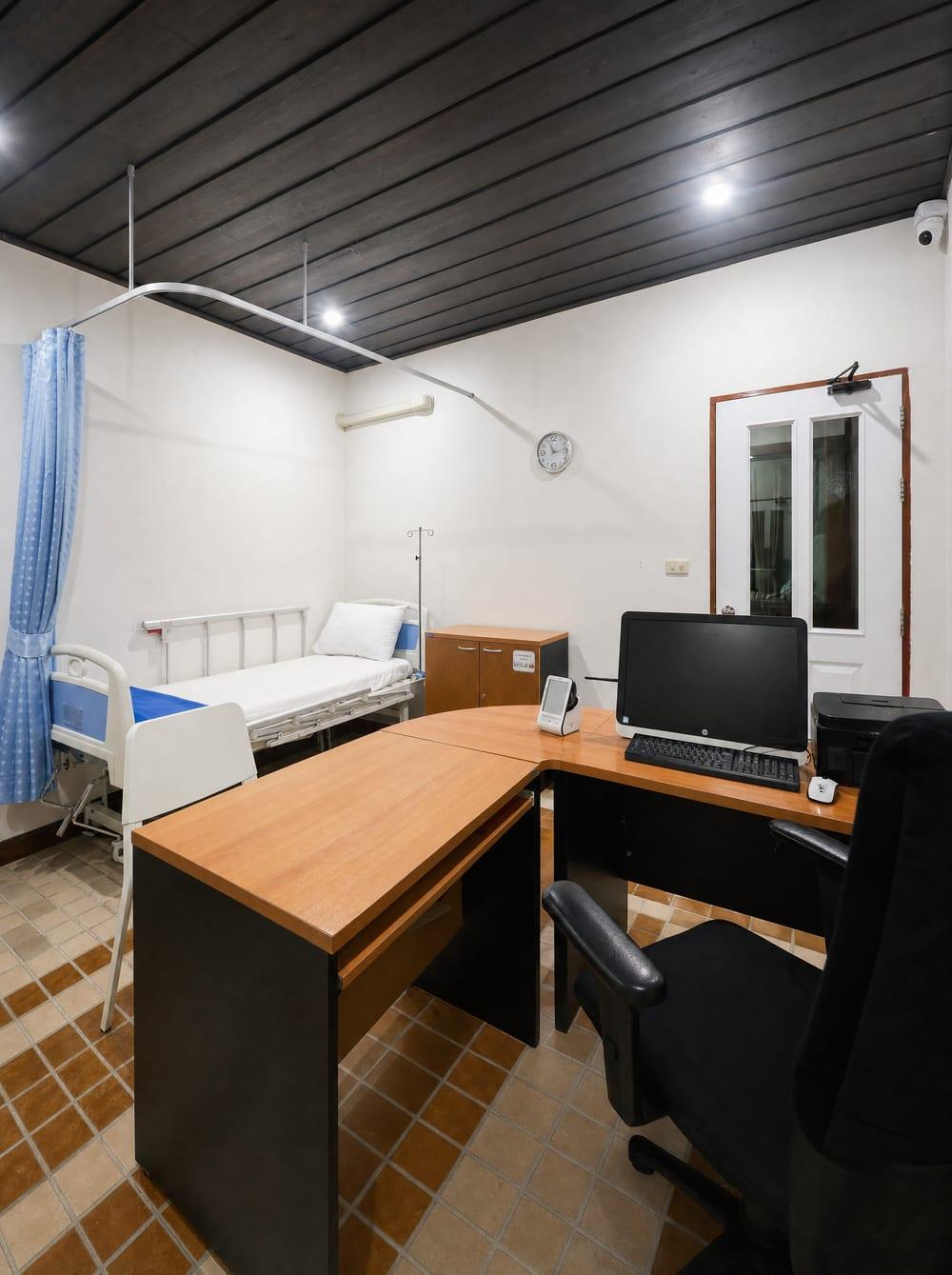
At Jintara, behavioural addiction is treated only when it is secondary to substance use.
This is the distinction that separates Jintara from generalist rehabilitation centres, and it matters for anyone searching for help with a behavioural pattern. NIDA's research on comorbidity confirms that treating the primary diagnosis with awareness of the co-occurring condition produces better outcomes than addressing each in isolation.
- Substance use specialist: Jintara is a substance use specialist.
- Primary diagnosis: every client who enters the program has a primary diagnosis of substance use.
- Co-occurring pattern: the behavioural pattern, where present, is treated as a co-occurring condition within that framework.
Darren Lockie, who has spent 15 years building addiction treatment facilities in Thailand, puts it plainly: a specialist goes deep where a generalist goes wide. When a rehab treats all ages, all compulsions, and all behavioural patterns in one group, every modality is diluted. Jintara's CBT groups, its therapy team, and its clinical protocols are built around substance use and the mental health conditions that drive it. That depth of focus produces better outcomes for the people we are equipped to treat. Visit Jintara Rehab for an overview of the full program.
“When you have a rehab that deals with all ages, all addictions, all compulsions, all behaviour, you are a generalist. We know everything about substance. So we are specialists, and that is one of our unique selling points.






Gambling, sex, and shopping addictions are accepted as secondary diagnoses.
The three behavioural patterns Jintara accepts alongside a primary substance use diagnosis respond well to the same CBT and motivational interviewing framework applied to the substance side. They do not require a separate program or separate group.
- Gambling: accepted as a secondary diagnosis alongside substance use.
- Compulsive sexual behaviour: accepted as a secondary diagnosis alongside substance use.
- Compulsive shopping: accepted as a secondary diagnosis alongside substance use.
Gambling requires additional consideration around electronics access. Clients with a gambling secondary are spoken to during the admissions process about device restrictions while in residence, since online access would undermine the work. Compulsive sexual behaviour is addressed in individual sessions. The group environment is carefully managed to ensure it remains therapeutically appropriate for all clients present, which is one of the practical reasons Jintara screens this carefully at intake. EMDR trauma therapy may also be relevant where the behavioural pattern is rooted in unresolved trauma.

The therapy stack for behavioural patterns is the same as for substance use.
The primary modality at Jintara is cognitive behavioural therapy (CBT), and it transfers directly to behavioural addictions. CBT targets the automatic negative thought patterns and behavioural loops that sustain compulsive behaviour. Clients learn to identify the activating event, examine the beliefs driving the response, and change the consequence. This ABC model applies as clearly to a gambling urge as to a craving for alcohol. A Cochrane review of psychological therapies for pathological and problem gambling found CBT reduced gambling symptom severity compared with control at post-treatment.
- Cognitive behavioural therapy: the primary modality, applied to both substance use and behavioural loops.
- Motivational interviewing: integrated into every individual session, particularly in the early phase when ambivalence is highest.
- Abbreviated DBT: addresses distress tolerance and emotion regulation, both of which are directly relevant to compulsive behavioural patterns.
Motivational interviewing (MI) is integrated into every individual session, particularly in the early phase when ambivalence is highest. Denise O'Leary, Clinical Director, describes MI as a communication technique that helps people discover their own motivation rather than responding to external pressure. Abbreviated dialectical behaviour therapy (DBT) addresses distress tolerance and emotion regulation, both of which are directly relevant to compulsive behavioural patterns. The same dysregulation that produces anger management difficulties can underpin a compulsive behaviour, where a repeated action discharges tension rather than resolving it. For anyone weighing up how this compares to what is available closer to home, the pre-admission guide outlines what the first week looks like.

Behavioural patterns are assessed on arrival before the treatment plan is set.
Every client at Jintara undergoes a psychiatric assessment on the first day of arrival. This assessment surfaces co-occurring behavioural patterns before the individual treatment plan is finalised. Clinical screening tools including the PHQ-9 for depression and GAD-7 for anxiety establish a baseline. Where a behavioural pattern is identified, it is incorporated into the treatment plan rather than addressed reactively mid-program.
The clinical team uses the assessment period to distinguish between substance-induced behavioural changes and behavioural patterns that predate or exist independently of the substance use. Some clients arrive convinced they have a compulsive gambling problem, and after a period of sobriety the urgency reduces significantly. Others present with a pattern that is clearly separate. The assessment creates the clinical clarity needed to plan the right response. Lertkhwan Sukpia, our medical team lead, oversees nursing through this initial phase and monitors for the behavioural signs, isolation, agitation, compulsive device use, that indicate the pattern needs specific clinical attention.
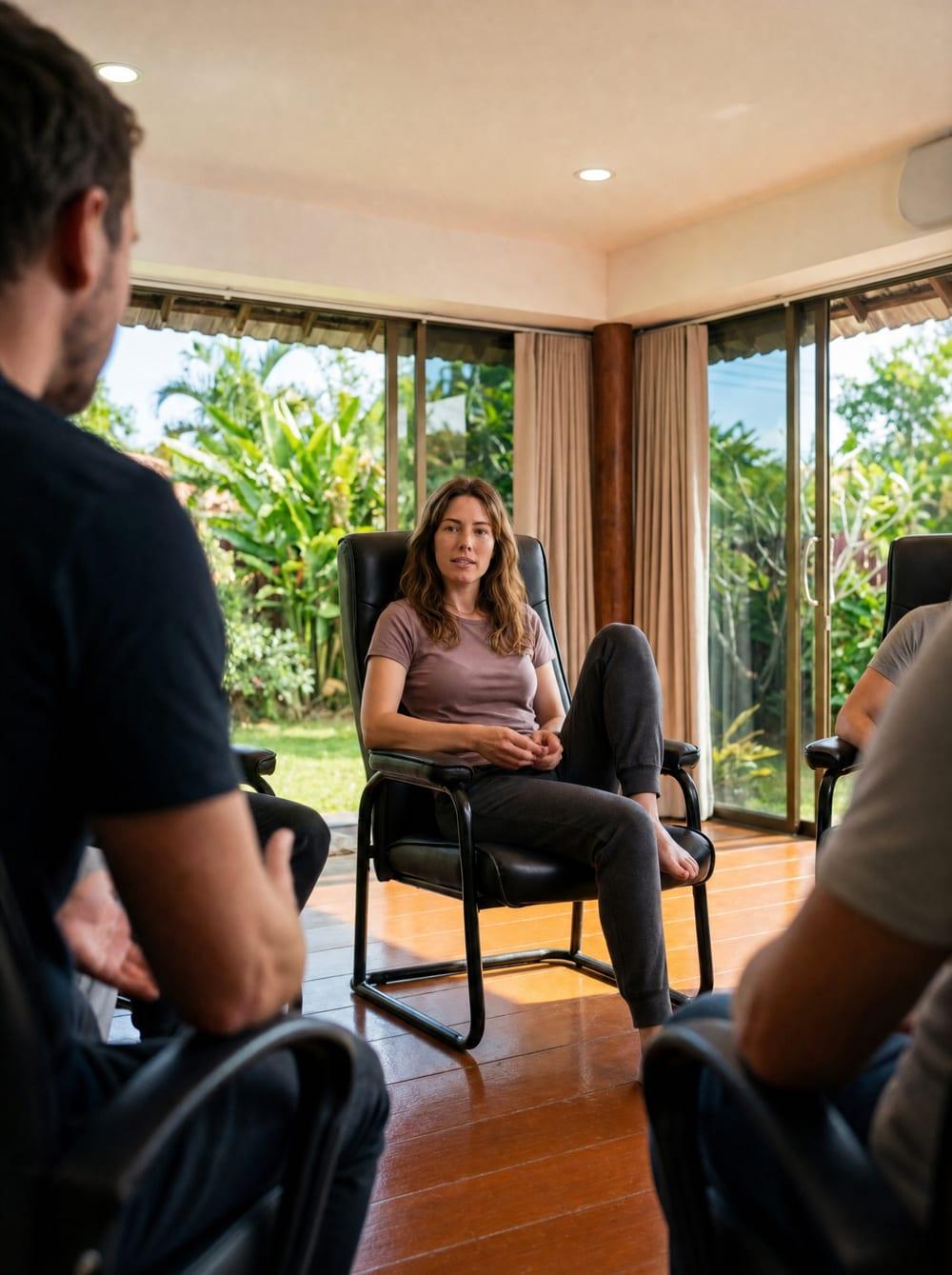
A specialist substance group produces better outcomes than a generalist behavioural group.
One of the practical arguments for Jintara's specialist model is what happens in group therapy. A group built around shared substance use and mental health can go deep. Clients recognise each other's patterns, share relevant coping strategies, and hold each other accountable in ways that are specific and meaningful. When a group is diluted across eating disorders, gaming disorders, screen addiction, and substance use simultaneously, the depth disappears.
Denise O'Leary, who leads the clinical groups, structures sessions to build on the universal themes present in a substance-use group: relapse warning signs, automatic thought patterns, emotion regulation, and rebuilding a vision of a meaningful life. These themes apply directly to the gambling or shopping secondary. The person in recovery for alcohol with a gambling secondary is not in a separate track. They are in the same group, hearing the same psychoeducation, and applying it to both dimensions of their recovery. This is what the medically supervised detox phase prepares clients for: stable enough to engage in the therapeutic work that follows.

Relapse prevention for behavioural patterns begins before discharge.
Relapse in the behavioural dimension often follows the same early warning pattern as substance relapse: a gradual reduction in supportive activities, increased isolation, and a return to the thinking patterns that preceded the compulsive behaviour. Denise O'Leary's groups specifically teach clients to recognise these early warning signs across both the substance and the behavioural side, because the pattern is the same.
Before discharge, every client leaves with a relapse prevention plan that covers their specific profile. For someone with a gambling secondary, this may include agreed boundaries around online access, identified triggers connected to the gambling urge, and a support structure for the first weeks at home. The plan is not generic. It is built in individual sessions with the therapist and reviewed with the clinical team before the client leaves. Denise O'Leary's approach focuses on identifying early warning signs specific to each person before they escalate. Three-month and twelve-month post-discharge follow-up checks track progress and provide an early opportunity to intervene if the pattern resurfaces. For families making this decision from overseas, the hardest part of choosing is often that private weight: what if I got it wrong? Knowing that an independent national authority has already checked the place takes some of that weight off. The Healthcare Accreditation Institute, the Department of Medical Services, and the Princess Mother National Institute on Drug Abuse Treatment, the three bodies that set Thailand's hospital clinical standards, jointly assessed Jintara's protocols and confirmed they meet the national standard. That joint assessment is the basis of Jintara's hospital-grade accreditation, certificate 25/2569. Proven to a hospital's bar, and still small enough to know them by name.

Jintara does not treat gaming disorders or eating disorders as primary conditions.
Jintara does not treat gaming disorder, internet addiction, or eating disorders as primary conditions. This is not a gap in the program. It is a deliberate clinical and ethical boundary. The facility's staffing model, its clinical protocols, and its group structure are built for substance use and the mental health conditions that accompany it. Extending the scope to primary behavioural diagnoses without the specialised infrastructure would produce worse outcomes for those clients and dilute the program for the people Jintara is equipped to help.
If you or someone you know is seeking treatment primarily for gaming disorder, internet addiction, or an eating disorder, with no significant substance use component, Jintara is not the right fit. Darren Lockie's position is consistent on this: the ethical response is an honest referral to a facility that specialises in what you need. We would rather give you the right referral than the wrong admission. The admissions team will tell you directly on the first call whether your profile is a strong fit. There is no pressure and no sales script.
“We don't do eating disorders. We don't do gaming unless it is secondary. But gambling, shopping, sex, if it is secondary to addiction, we will deal with it. Everyone who comes here has substance use and mental health. We are over 30, and we are specialists.

Talk with Our Admissions Team
Your enquiry is confidential and goes only to our admissions team.
Independently Verified
Jintara is accredited against Thailand’s national quality standard for drug treatment and rehabilitation facilities, jointly certified by the Healthcare Accreditation Institute, the body that accredits Thailand’s hospitals, with the Princess Mother National Institute on Drug Abuse Treatment and the Department of Medical Services, Ministry of Public Health. Certificate no. 25/2569, valid 20 May 2026 to 19 May 2029.
Common Questions About Behavioral Addiction Treatment at Jintara
No. Jintara accepts gambling, sex, and shopping addictions only when they occur alongside a primary substance use diagnosis. If substance use is not your primary issue, the admissions team will tell you honestly on the first call and refer you to a facility better suited to your profile.
Gambling, compulsive sexual behaviour, and compulsive shopping are the three behavioural patterns accepted as co-occurring secondaries. Each is addressed within the same CBT and motivational interviewing framework applied to the substance side, rather than in a separate program.
Jintara's clinical team, protocols, and group structure are built around substance use. Admitting primary gaming or eating disorder clients without the specialised staffing those diagnoses require would produce worse outcomes. The ethical position is to refer those clients to facilities that specialise in those areas. The admissions team handles this referral directly.
A psychiatrist conducts an assessment on the first day. Clinical screening tools including the PHQ-9 and GAD-7 establish a baseline, and any co-occurring behavioural pattern is incorporated into the individual treatment plan before the formal program begins. The plan is reviewed and adjusted as you stabilise through the first week.
Access to devices for clients with a gambling secondary is discussed during the admissions process. The practical goal is to remove access to the specific trigger, not to cut off all communication. This is agreed between the client and the admissions team before arrival so there are no surprises.
Cognitive behavioural therapy is the primary modality. Motivational interviewing is integrated into every individual session. Abbreviated DBT covers distress tolerance and emotion regulation. The same tools that address the substance use also address the compulsive behavioural pattern.
Yes, provided alcohol is the primary diagnosis. The treatment plan will address both dimensions. You will receive the same therapy groups, individual sessions, and psychiatric support as any other client, with the gambling pattern worked into your individual relapse prevention plan and addressed specifically in sessions with your therapist. To understand the full cost and structure of a stay, visit Jintara's admissions and pricing information.
Yes. Jintara Wellness Center and Rehab holds joint accreditation from three national bodies: the Healthcare Accreditation Institute, the Princess Mother National Institute on Drug Abuse Treatment, and the Department of Medical Services, Ministry of Public Health. Certificate 25/2569, valid 20 May 2026 to 19 May 2029. The Healthcare Accreditation Institute is the same body that accredits Thailand's hospitals. Jintara is one of only six private rehabs in Thailand to hold this accreditation.