

Sleeping Pills and Alcohol Create a Serious Respiratory Risk
Sleeping pills and alcohol both slow the central nervous system. When taken together, the effects compound in ways that can stop breathing during sleep. If you or someone close to you is combining these substances, the risks are not theoretical. Jintara's medical detox team in Chiang Mai manages both dependencies simultaneously, with sleeping pill addiction treatment available from the first day of assessment.
- Sleeping pills and alcohol together suppress the respiratory drive. This can cause breathing to stop during sleep without warning.
- Both substances require medically supervised withdrawal. Stopping either abruptly carries a risk of seizure.
- Jintara's 30-day medical detox manages both dependencies simultaneously with 24-hour nursing throughout.


Licensed by the Ministry of Public Health.
Accredited under Thailand’s national standard for drug treatment and rehabilitation facilities.
Sleeping Pills and Alcohol Are Both Central Nervous System Depressants
Sleeping pills and alcohol are both central nervous system depressants that compound each other's risks. CNS depressants slow brain activity by enhancing gamma-aminobutyric acid (GABA), the brain's primary inhibitory neurotransmitter. Alcohol does this through multiple receptor pathways. Benzodiazepines (diazepam, temazepam, nitrazepam), Z-drugs (zolpidem, zopiclone), and barbiturates all act on the same GABA system via slightly different mechanisms. When both are present simultaneously, the suppression of brain activity is additive and in some cases synergistic. Synergistic means the combined effect exceeds what either substance would produce independently, not merely adding to it.
This is not a dosage question. A person who has developed tolerance to both substances may feel relatively functional on the amounts they are using. But tolerance to the sedative effects of a substance does not confer equivalent tolerance to its respiratory effects. The brain's drive to breathe is one of the most primitive regulatory functions we have, and it is not protected by the same adaptive mechanisms that dull a person's subjective sense of sedation. This is the reason the combination carries life-threatening risk even in people who have used both substances for years without apparent incident.
The reason this combination requires medically managed detox rather than home withdrawal is concrete: stop either substance and two physiological withdrawal processes begin simultaneously, with overlapping seizure risks that require clinical management.

Respiratory Depression Is the Primary Medical Danger of This Combination
Respiratory depression occurs when the combined CNS-suppressing effect of alcohol and sleeping pills reduces the drive to breathe below the threshold needed to maintain adequate blood oxygen, and the brain does not signal the body to compensate. This is the mechanism behind overdose death in CNS depressant combinations. Neither alcohol poisoning alone nor sleeping pill overdose alone has as consistent a record of causing death at moderate-to-high doses as the combination does. The synergy between these two drug classes is one of the most well-documented interactions in clinical toxicology, confirmed through decades of emergency medicine data and supported by the National Institute on Drug Abuse's research into prescription CNS depressants.
What makes this particularly relevant for people using both substances regularly is that the pattern often involves sleeping. Most people who combine alcohol and sleeping pills do so at night, to lose consciousness and stay asleep. This means the period of highest physiological risk is the period of lowest behavioural awareness. There is no moment at which a person is more unable to recognise a medical emergency than when they are unconscious.
The risk associated with benzodiazepine and alcohol co-use is well-established in addiction medicine. Clinical guidelines across emergency and addiction medicine consistently flag this combination as requiring immediate medical attention when regular use is present.
Most People Who Combine These Substances Did Not Start with That Intention
Alcohol and sleeping pill dependency often develops in stages, beginning with a single substance and adding the second to manage the side effects of the first. Understanding how it develops matters, because most people in this situation do not think of themselves as having a dependency problem until someone else names it for them.
A common trajectory: alcohol use increases over time, often for social reasons or as a way to wind down after work. As tolerance develops, the sleep-inducing effect of alcohol diminishes. The person begins waking at 2 or 3 in the morning, experiencing the early rebound anxiety that characterises alcohol withdrawal between drinks. A GP prescribes a short course of sleeping pills, typically a Z-drug or a benzodiazepine. The pills restore sleep temporarily, then tolerance develops to those too. Before long the person is using both, each to compensate for the deficits created by the other.
People in this situation often do not identify as having a dependency problem. They are managing a sleep problem. The alcohol is something they have always done. The pills are prescribed. The reality is physical dependence on two substances with real interaction risks, and many people are never told this clearly.
Jintara sees this presentation regularly, often in executive and professional clients who have maintained functional careers throughout. The alcohol addiction treatment pathway at Jintara addresses both the substance dependency and the underlying sleep disruption that frequently sits behind it.
“We want people leaving us with fewer medications than they came in with. If someone arrived relying on sleeping pills and alcohol to get through the night, addressing the sleep pattern is as important as managing the withdrawal.
Overdose Risk from This Combination Is Higher Than Either Substance Presents Alone
Overdose from combining sleeping pills and alcohol occurs more readily than with either substance alone, because the synergistic suppression of respiratory function leaves no physiological margin for error. The FDA boxed warning on benzodiazepines states that serious harm, including overdose, is more likely when this class is combined with alcohol or opioids. The same combination risk applies when a Z-drug is taken with alcohol.
Tolerance leads to dose escalation over time, and the margin between the dose that produces sleep and the dose that produces apnea narrows considerably at higher doses. The unpredictability of alcohol content across different drink types means the actual dose on any given night may be higher than intended. Combining these substances also affects judgement and memory in ways that can lead to re-dosing: taking another sleeping pill after having already taken one, because the first has not yet taken effect and the person has partially forgotten.
The risk is not confined to people using illicitly sourced substances. It applies to prescribed sleeping medication taken alongside alcohol in amounts that most people would not consider unusual.

Withdrawal from Two Depressants Requires More Than One Detox Protocol
Withdrawing from both alcohol and sleeping pills at the same time presents a more complex clinical picture than either withdrawal managed in isolation, because the seizure risks and withdrawal timelines overlap in ways that require careful sequencing. Addressing polydrug depressant withdrawal without medical supervision carries a serious risk of seizure, delirium, and cardiovascular instability, at a level higher than for either substance alone.
Alcohol withdrawal has its own timeline. Severe symptoms may present within hours of the last drink and peak around 72 hours, as documented in StatPearls on alcohol withdrawal syndrome, and can include seizures and delirium tremens. The Clinical Institute Withdrawal Assessment for Alcohol, Revised (CIWA-Ar) is the validated scoring tool Jintara's medical team uses to gauge withdrawal severity and adjust the protocol. Assessment frequency is set by score:
- Score above 14: Reassessment every one to two hours.
- Score 8 to 14: Reassessment every four to six hours.
- Score below 8: Frequency reduces, tapering to daily assessments once stable.
Benzodiazepine and Z-drug withdrawal follows a different timeline, often considerably longer. Taper duration can extend two to three months for people with significant long-term dependency. Denise O'Leary notes the minimum window after reaching zero dose before a person is considered through withdrawal is three weeks. Rebound anxiety is common in this period even after full discontinuation. There is no single validated scale equivalent to CIWA-Ar for benzodiazepine withdrawal; clinical assessment via vital signs and presentation guides management at Jintara. For a family arranging care from overseas, verifying the clinical rigor behind those systems is genuinely difficult. Jintara's dual-depressant detox protocols, including 24-hour nursing, CIWA-Ar monitoring, and individually managed benzodiazepine tapers, have been independently assessed and confirmed by three national authorities: the Healthcare Accreditation Institute (HAI), the Princess Mother National Institute on Drug Abuse Treatment (PMNIDAT), and the Department of Medical Services, Ministry of Public Health (DMS), under certificate 25/2569. Held to what hospitals are held to. Small enough that the team will know the person by name on day one.

Medical Detox for Combined Depressant Dependency Follows a Structured Protocol
Medical detox for sleeping pill and alcohol combined dependency begins with a full assessment of both substance use histories, current health status, and any psychiatric conditions that may be driving the sleep pattern. At Jintara, this assessment is conducted by a psychiatrist and clinical director within the first 24 to 48 hours of admission, before the detox medication plan is set. The taper plan for a person who has taken 10mg of diazepam nightly for three months looks very different from the plan for someone who has been using 30mg of temazepam for three years, which is why the individual history matters before any protocol is set.
The protocol during detox covers four things consistently:
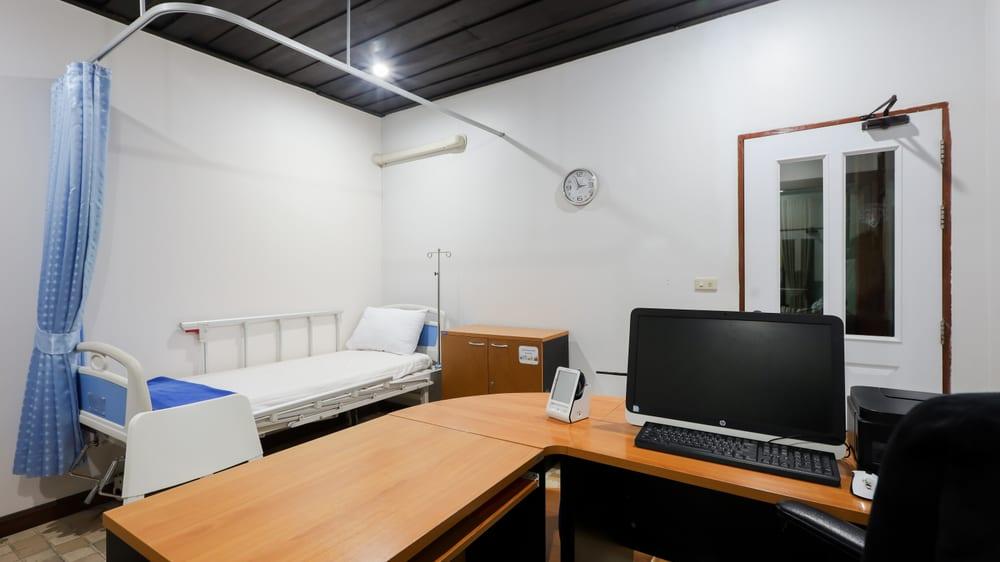
- 24-hour nursing on site: Nursing staff are present and awake throughout the detox period, not available on call.
- Vital signs at regular intervals: Recorded consistently and used to guide medication decisions, not just logged.
- CIWA-Ar scoring: Governs the alcohol withdrawal management protocol. Score determines assessment frequency and medication adjustments.
- Benzodiazepine taper via clinical assessment: Managed individually, not by a standardised scale. Taper rate adjusts based on withdrawal symptoms, sleep quality, and vital sign stability. The aim is always the minimum effective medication load.
All sleeping medications at Jintara are dispensed by nursing staff. There is no self-administration. According to the World Health Organization's clinical guidelines for withdrawal management in closed settings, supervised withdrawal management is the clinical standard because unsupervised withdrawal from this substance combination carries disproportionate risk relative to most other drug classes. These clinical protocols are independently assessed under Jintara's national accreditation by three national authorities: the Healthcare Accreditation Institute (HAI), the Princess Mother National Institute on Drug Abuse Treatment (PMNIDAT), and the Department of Medical Services, Ministry of Public Health (DMS), certificate 25/2569.
Sleep Without Sedatives Is Achievable with the Right Clinical Support
Post-detox insomnia is one of the most common reasons people return to alcohol or sleeping pills. Jintara treats it as a core clinical problem, not something to sort out after discharge. The clinical philosophy, which Denise O'Leary describes as "skills over pills", is that the most durable path to restorative sleep does not involve substituting one sedative for another.
In the early post-detox weeks, trazodone may be used for sleep support. It is not a benzodiazepine, carries minimal dependency risk at therapeutic doses, and is appropriate for short-term use while natural sleep architecture begins to reassert itself. Melatonin is available as a natural adjunct. What Jintara avoids, consistent with the position that substances should not be used to treat substance dependency, is prescribing further benzodiazepines or Z-drugs to manage withdrawal-related insomnia.
Beyond medication, therapeutic input addresses sleep directly. Cognitive behavioural approaches to insomnia, sleep hygiene work, and where trauma is driving the sleep disruption, EMDR therapy, are all available within the program. Many clients find that by week three of the 30-day stay, sleep is beginning to normalise on its own, consistent with the timelines for GABA receptor recovery after extended depressant use. For clients whose insomnia persists beyond the acute recovery window, the dual diagnosis support pathway provides ongoing clinical management as part of aftercare planning.


Talk with Our Admissions Team
Your enquiry is confidential and goes only to our admissions team.
Common Questions About Sleeping Pills and Alcohol
Why are sleeping pills and alcohol dangerous when taken together?
Both substances depress the central nervous system through overlapping mechanisms. Alcohol suppresses brain activity through multiple pathways; benzodiazepines and Z-drugs act on GABA receptors. When combined, the suppression of the respiratory drive is more powerful than either substance produces alone. During sleep, when the arousal response is already reduced, this can cause breathing to slow to a dangerous level without the person waking.
What is respiratory depression and why does it matter here?
Respiratory depression is a reduction in the drive to breathe, caused here by the combined CNS-suppressing effects of alcohol and sedative medication. It matters because breathing is not a conscious act during sleep. It depends on automated brainstem signalling. When that signalling is suppressed beyond a threshold, the body does not compensate, blood oxygen falls, and in serious cases breathing stops. This is the mechanism behind overdose deaths in people using both substance classes.
Can you die from combining sleeping pills and alcohol?
Yes. This combination is one of the most well-documented causes of drug-related death in toxicology records, particularly when both substances are used at higher doses. The risk exists even in people who have used both substances for years without apparent incident, because tolerance to the subjective sedative effects does not equal tolerance to the respiratory effects.
How long does withdrawal take when both substances are involved?
The acute alcohol withdrawal period typically peaks within 24 to 72 hours and resolves within five to seven days. Benzodiazepine or Z-drug withdrawal is longer, with tapers that can extend two to three months for significant dependency. Most people are not fully clear of benzodiazepine withdrawal until at least three weeks after reaching zero dose, because rebound anxiety is common in the post-zero window. The 30-day program at Jintara covers the acute phase, with aftercare planning accounting for the longer benzodiazepine timeline.
Do both substances need to be withdrawn at the same time?
They are managed together but sequenced. Alcohol withdrawal is managed first because it carries the more acute seizure risk in the short term. Benzodiazepine or Z-drug taper follows a longer schedule. In some cases, benzos are used as part of the alcohol withdrawal protocol because they are effective seizure prevention agents, so the two processes overlap medically rather than run in strict sequence. This is a clinical decision made case by case.
Can you stop taking sleeping pills without medical help?
Stopping benzodiazepines or Z-drugs abruptly, particularly after extended use or at high doses, carries a genuine risk of seizure. This is not a question of willpower or discomfort tolerance. Benzodiazepine withdrawal is one of the few substance withdrawal syndromes that can be life-threatening when unsupervised. A medically supervised taper is the standard clinical recommendation, not an optional extra.
How does Jintara manage sleep after detox?
Sleep management post-detox focuses on restoring natural sleep architecture rather than replacing one sedative with another. Short-term use of trazodone may be included in the early recovery period. Sleep hygiene, structured daily routine, and therapeutic work including CBT-based insomnia approaches and EMDR where trauma is a factor are the primary tools. Most clients begin to sleep more naturally by week three of the 30-day program. For questions about how this works in practice, contact Jintara's admissions team at jintararehab.com.
Is recovery from combined sleeping pill and alcohol dependency harder than from either alone?
It is more complex, which is different from harder. The withdrawal requires more careful sequencing, takes longer, and requires a more sustained level of medical supervision. But recovery outcomes for people with dual CNS depressant dependency are not categorically worse than for single-substance dependency when the detox and rehabilitation process is properly structured. The key variable is whether both substances are addressed clinically rather than one being treated and the other managed separately.
Is Jintara accredited to manage combined sleeping pill and alcohol detox?
Yes. Jintara holds joint accreditation from three national authorities: the Healthcare Accreditation Institute (HAI, the body that certifies Thailand's hospitals), the Princess Mother National Institute on Drug Abuse Treatment (PMNIDAT), and the Department of Medical Services, Ministry of Public Health (DMS). Certificate number 25/2569 covers both facility categories and was assessed across clinical protocols, medication handling, and nursing standards. The dual CNS depressant withdrawal management process falls within the scope of the accredited clinical systems.
What does national accreditation mean for a family choosing a detox facility?
It means three national authorities, including the body that audits Thailand's hospitals, have reviewed the clinical protocols and confirmed they meet the national standard for drug treatment and rehabilitation facilities. For a family who cannot assess clinical quality directly, certificate 25/2569 is a credential you can ask to see, not a marketing statement. The accreditation covers medication dispensing, nursing provision, and clinical assessment processes, which are the specific systems that matter most when managing a complex dual-depressant withdrawal from overseas.
Jintara is a small adult residential rehab in Chiang Mai with a 3.2:1 staff-to-client ratio. Combined sleeping pill and alcohol detox is managed by a licensed psychiatrist and monitored 24 hours a day by nursing staff throughout the 30-day program.
Jintara Rehab is licensed by the Thai Ministry of Public Health as a rehabilitation centre. The clinical information on this page describes Jintara's general approach to supporting clients during the early recovery period. Medical decisions, including medication protocols, are determined by addiction-specialist psychiatrists through our partner hospital pathway. Individual treatment varies based on clinical assessment. This content is for informational purposes and does not constitute medical advice.