

The Medical Dangers of Alcohol Withdrawal
Alcohol withdrawal carries real risks of seizures, delirium tremens, and cardiac events that home care cannot manage. Jintara provides medically supervised alcohol rehab with 24/7 awake nursing, CIWA-Ar monitoring, and a direct escalation pathway to Bangkok Hospital Chiang Mai.
- CIWA-Ar monitoring around the clock, not just at scheduled checkpoints
- 24/7 awake nursing with a direct escalation pathway to Bangkok Hospital Chiang Mai
- Day-two medical workup including ECG, full bloodwork, and organ function at the centre's expense
- Maximum ten clients at any time, with a psychiatrist-led clinical plan from day one
Fully Licensed and Hospital Accredited
The Most Dangerous Detox in Everyday Substance Use.
Alcohol withdrawal is the most dangerous detox in everyday substance use. Unsupervised, it carries a real risk of withdrawal seizures, typically between 8 and 48 hours after alcohol cessation, delirium tremens with historically as high as 20 percent mortality, now around 1 percent with treatment, alcohol hallucinosis, and Wernicke encephalopathy. These are documented complications of alcohol withdrawal syndrome, not rare curiosities. Patients with a prior complicated withdrawal should not cut down without medical advice.
The cultural framing of alcohol is wrong about almost everything that matters clinically. Alcohol is socially normalised, legal, and woven into work and family life. Quitting is treated as a personal-discipline problem, not a medical event. So when people decide to stop, they often try it at home, expecting a few rough nights and a hangover-grade exit. For someone who has been drinking heavily for years, this is the single most dangerous decision they could make.
This page covers what actually goes wrong during alcohol withdrawal, why each complication is so dangerous, and what safe medical detoxification looks like.

Seizure Risk. The First Life-Threatening Window.
Alcohol is a central nervous system depressant. After months or years of heavy use, the brain compensates by upregulating excitatory pathways. When alcohol stops, the inhibitory effect disappears but the upregulated excitatory activity does not. The result, in roughly 5 to 10 percent of people detoxing without medication, is a withdrawal seizure.
The clinical timing is well-established, with three distinct phases of escalating risk.
- Hours 0 to 6: Tremors, anxiety, sweating begin. Vital signs rise.
- Hours 6 to 24: Peak anxiety, nausea, vomiting, and muscle aches.
- Hours 8 to 48: Typical alcohol-related seizure window. The most dangerous window without clinical support.
A first seizure can come without warning, in sleep, in the shower, or while driving. A single seizure is not necessarily fatal on its own, but the consequences of one in the wrong setting often are. This is why CIWA-Ar (Clinical Institute Withdrawal Assessment for Alcohol, Revised) scoring is mandatory in any clinical detox. Benzodiazepines are the standard preventive medication, dosed against the CIWA-Ar score rather than the clock. At Jintara, CIWA-Ar scoring tracks clients across the full alcohol withdrawal timeline, so a rising score is caught and acted on before a seizure occurs, not after.

Delirium Tremens. The Most Lethal Complication.
Delirium tremens (DTs) is the most severe form of alcohol withdrawal. It typically begins on day 2 to 4 after the last drink, sometimes later. It is unpredictable. A withdrawal that has looked manageable for two days can tip into DTs without obvious warning.
The symptoms are distinctive and escalate rapidly.
- Severe confusion: Disorientation that progresses rapidly and does not respond to reassurance.
- Vivid hallucinations: Visual or tactile, often involving insects or animals. Distinct from ordinary anxiety.
- Autonomic instability: High pulse, high blood pressure, profuse sweating, and fever that can become dangerous.
- Severe tremors: Tremors so severe they prevent normal movement or communication.
Historically, delirium tremens carried mortality as high as 20 percent. With treatment the rate is now around 1 percent. DTs is the most common reason a clinical detox escalates to hospital transfer. Jintara operates with established escalation protocols to Bangkok Hospital Chiang Mai and RAM Hospital, so the transfer happens in minutes with a documented clinical handover, not hours after an emergency call.
Cardiac and Organ Complications During Withdrawal.
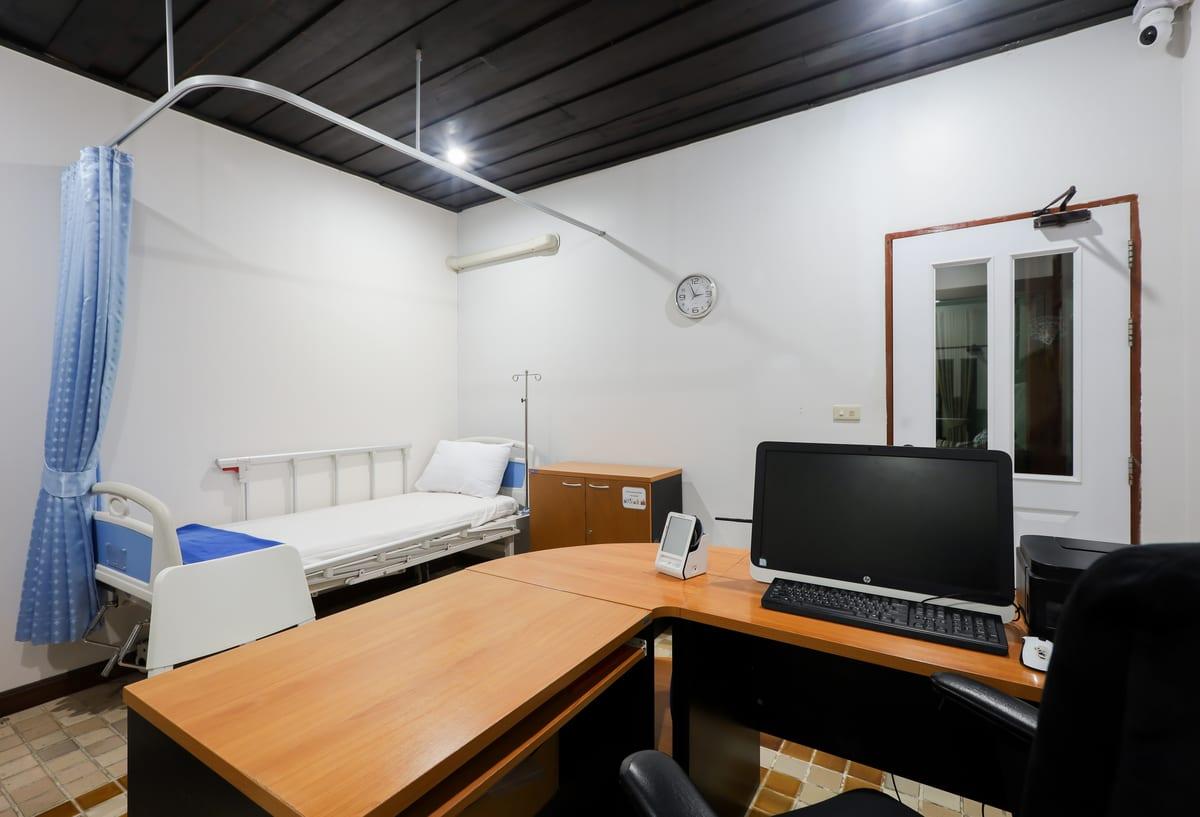
Heavy long-term drinking damages the cardiovascular system in ways that become acute during withdrawal. Common cardiac complications include arrhythmias (particularly atrial fibrillation), hypertensive crises, myocardial infarction in older clients or those with pre-existing coronary disease, and cardiomyopathy decompensation. The autonomic instability of acute alcohol withdrawal, including rapid pulse, surging blood pressure, and vascular spasm, puts unusual stress on a system that may already be compromised.
Organ damage extends beyond the heart. Long-term heavy drinking affects liver function, kidney resilience, pancreatic health, and brain chemistry, each of which interacts with the medication decisions made during detox.
- Liver: Alcoholic hepatitis, cirrhosis, and impaired function reduce the body's ability to clear medications safely. This affects every benzodiazepine dosing decision during detox.
- Pancreas: Alcoholic pancreatitis can flare during acute withdrawal, presenting as severe abdominal pain that requires immediate hospital evaluation.
- Brain: Wernicke-Korsakoff syndrome, caused by thiamine deficiency common in heavy drinkers, can develop or worsen during acute withdrawal. Parenteral thiamine supplementation is standard early in the detox.
- Blood: Cell counts are commonly disturbed in heavy drinkers due to nutritional deficiency, marrow suppression, and direct alcohol toxicity.
The day-two medical workup at Jintara catches all of these. As Darren Lockie puts it: "A lot of clients have not been to a hospital in many, many, many years. We do pick up things that just have not been dealt with."
Why Hospital Partnership Changes the Outcome.
A medical detox without a working hospital relationship is a half-built safety system. The most dangerous moments in alcohol detox are not the routine ones. They are the rare ones: a DT crisis, a cardiac event, severe pancreatitis that needs ICU-level care quickly.
Jintara's clinical team operates with established escalation protocols to two Chiang Mai hospitals: Bangkok Hospital Chiang Mai and RAM Hospital. The pathway is documented, the medical handover is standardised, and the transfer happens by ambulance with clinical staff continuity. The receiving doctor knows what is coming before the patient arrives.
A facility without this kind of partnership is one call away from a cold introduction to a hospital that has never seen the person. For anyone whose withdrawal tips past the point a residential facility can manage, that delay matters.
The escalation protocols and clinical safety systems behind that response are part of what was independently verified when Jintara earned hospital-grade accreditation certified by three national bodies: the Healthcare Accreditation Institute, PMNIDAT, and the Department of Medical Services, Ministry of Public Health. That accreditation means the systems described on this page were not self-assessed. They were inspected by the authority that accredits Thailand's hospitals and confirmed to meet the standard. A family choosing between facilities does not have to take our word for it. For enquiries about the clinical intake process, the admissions team takes calls directly.
Why Home Detox Is Not an Option After Heavy Drinking.
Attempting alcohol detox at home after extended heavy use is the single most dangerous decision a person in active alcohol use disorder can make. The specific failure modes are not theoretical.
- Unwitnessed seizure: A withdrawal seizure happens and no one is present to call for help.
- Missed DT onset: Delirium tremens onset is misread as the worst night of the flu until the person becomes unresponsive.
- Cardiac event without escalation: Cardiac symptoms get attributed to anxiety until the event is well underway.
- Restart and rebound: The person restarts drinking to ease symptoms, which works briefly, then triggers a worse withdrawal cycle when they stop again.
If you are reading this on behalf of someone in active heavy drinking who has decided to quit, the practical message is: get them to a supervised alcohol detox without delay. If that is not immediately possible, call a doctor or an emergency service before the withdrawal phase begins, not after. In Thailand, emergency services are reached on 1669.

“There's significant risk of detoxing at home or in a hotel, unless under the care of a psychiatrist and nurses 24 hours a day, which is what we provide. Detox for alcohol, surprisingly, can be one of the most dangerous, stopping cold turkey. I really don't like self-detoxing anything. Trying to do it without that is very, very risky.
The Deepest Danger Is How We Frame Alcohol.
Much of what makes alcohol detox so dangerous is not the chemistry alone. It is the framing. Most people would not attempt a heroin detox at home because the cultural narrative around heroin is honest. Alcohol carries no such narrative.
Quitting drinking is treated as a willpower problem, not a clinical event. The medical reality, for someone with sustained heavy use, is that quitting is a clinical event that can kill them within 72 hours if it goes wrong. The complications above are not rare. They are the standard catalogue any addiction medicine textbook lists for alcohol withdrawal.
If you or someone close to you is preparing to stop drinking after a long period of heavy use, the safest first call is to admissions. We will ask about the drinking pattern, recent quantity, prior detox attempts, prior seizures, current medications, and any other substances. The call is free and there is no obligation to enrol. Jintara takes on a maximum of ten clients at any time, so every clinical assessment is personal, not scripted.

Talk with Our Admissions Team
Your enquiry is confidential and goes only to our admissions team.
Common Questions About Alcohol Detox Complications
Yes. Severe alcohol withdrawal can be fatal, primarily through delirium tremens. Historically mortality was as high as 20 percent. With treatment the rate is now around 1 percent. Severe seizures, cardiac complications, or aspiration pneumonia also carry risk.
The most severe form of alcohol withdrawal. Onset typically day 2 to 4 after the last drink. Symptoms include severe confusion, vivid hallucinations, agitation, autonomic instability (high pulse, high blood pressure, sweating, fever), and severe tremors. Historically mortality was as high as 20 percent. With treatment the rate is now around 1 percent.
Long-term heavy drinking causes the brain to upregulate excitatory pathways to compensate for alcohol's depressant effect. When alcohol stops, the upregulation does not. The result is a seizure-prone state; alcohol-related seizures typically occur between 8 and 48 hours after the last drink. Benzodiazepines, dosed against CIWA-Ar scores, are the standard preventive protocol.
Roughly 3 to 5 percent of people in alcohol withdrawal develop full DTs. The risk is higher with prior DTs, severe withdrawal, prolonged heavy drinking, older age, or co-existing medical conditions. The consequences when it does occur make planning around the risk non-negotiable.
Not safely after extended heavy drinking. Risks include unwitnessed seizure, missed DT onset, cardiac event without an escalation pathway, and restart-and-rebound cycles that worsen each subsequent attempt. Medical supervision is the standard of care.
Confusion or disorientation. Hallucinations. Severe shaking. Rapid pulse. Profuse sweating. High blood pressure. Fever. Any seizure activity. If any of these appear in someone in active withdrawal, treat it as an emergency and call medical services. In Thailand, dial 1669.
CIWA-Ar is the named scoring tool used by nursing staff to track withdrawal severity. It guides medication dosing decisions on objective measures, not subjective impression. It catches escalating severity before it tips over a clinical threshold.
A person transferred from a medical detox setting arrives with documented vital signs, CIWA-Ar scores, medication history, and clinical handover. Treatment typically involves IV benzodiazepines, IV fluids, electrolyte replacement, thiamine, and continuous monitoring. ICU admission is sometimes required.
Acute symptoms peak within the first 72 hours and ease over days 3 to 7. DTs, when it occurs, usually resolves within 5 days with proper treatment. Sleep disturbance, anxiety, and mood changes can persist for weeks as the brain rebalances. The acute medical danger window closes after the first week.
Prior history of withdrawal seizures or DTs, prolonged heavy daily drinking, advanced age, co-existing cardiac or liver disease, malnutrition, simultaneous use of other substances (especially benzodiazepines or opioids), and attempting detox without medical supervision. Any combination strengthens the case for inpatient medical detox.
Yes. Jintara holds joint accreditation from the Healthcare Accreditation Institute (HAI), the Princess Mother National Institute on Drug Abuse Treatment (PMNIDAT), and the Department of Medical Services, Ministry of Public Health. Certificate no. 25/2569 covers both facility categories and is valid from 20 May 2026 to 19 May 2029. Accreditation means the clinical protocols described on this page, including the CIWA-Ar monitoring, medication systems, and hospital escalation pathway, were independently inspected and confirmed to meet the national standard applied to Thailand's hospitals. Jintara is one of only six private rehabs in Thailand to hold this certification.
It means the safety systems around you were not written in-house and left at that. They were reviewed by three national authorities, the same ones that assess Thailand's hospitals, and confirmed to meet the clinical standard. That does not change the neuroscience of alcohol withdrawal. What it changes is the confidence a family can have that the protocols in place have been tested by people whose job is to find the gaps.
Jintara is a small adult residential rehab in Chiang Mai with 24/7 awake nursing and on-site medical detox. If you are concerned about someone in active alcohol withdrawal, call our admissions team or dial 1669 in Thailand.
Jintara Rehab is licensed by the Thai Ministry of Public Health as a rehabilitation centre. The clinical information on this page describes Jintara's general approach to supporting clients during the early recovery period. Medical decisions, including medication protocols, are determined by addiction-specialist psychiatrists through our partner hospital pathway. Individual treatment varies based on clinical assessment. This content is for informational purposes and does not constitute medical advice.