

Kratom Creates Real Opioid Dependence and Needs Medical Detox to Resolve.
Kratom is widely sold and often marketed as a natural supplement, but its active compound binds to the same opioid receptors as heroin and prescription painkillers, the same pharmacology that drives tianeptine addiction in other products sold as supplements. At Jintara, medical detox for kratom follows the same clinical protocols used for opioid withdrawal. If someone close to you is using kratom daily and cannot stop, read about our approach to addiction treatment in Thailand.
Fully Licensed and Hospital Accredited

Kratom Dependence Forms Through the Same Opioid Pathway as Heroin.
Kratom addiction is physical and psychological dependence on mitragynine, the primary alkaloid in kratom leaves, which acts as a partial agonist at mu-opioid receptors in the brain. This receptor binding is the same mechanism responsible for dependence on heroin, fentanyl, and prescription opioids, and it explains why daily kratom users develop tolerance, experience withdrawal, and find it difficult to stop without clinical support (NIDA's kratom research summary).
- Same receptor mechanism as heroin and prescription opioids Mitragynine is a partial agonist at mu-opioid receptors. Tolerance, withdrawal, and craving follow from the same pharmacological pathway.
- Legal status does not reduce clinical risk Kratom is legal in many countries, but its pharmacological profile is opioid-class. Dependence develops at similar rates to other opioid-type substances.
- Many people do not recognise their use as addiction Kratom is often used for pain management, productivity, or to manage an existing opioid dependency. By the time people seek help, daily use is typically established over months or years.
Jintara treats kratom dependency using opioid withdrawal protocols that meet the clinical standards of private residential facilities in Australia, the UK, and the United States. Understanding the mechanism removes a significant obstacle to asking for help. For people already managing the receptor binding seen in opioid addiction, the kratom withdrawal process follows a familiar clinical trajectory.

Kratom Withdrawal Follows an Opioid-Like Pattern That Peaks in the First Four Days.
Kratom withdrawal typically begins within 12 to 24 hours of the last dose and follows a trajectory similar to short-acting opioid withdrawal, with peak intensity occurring on days two to four and the acute phase resolving within five to ten days for most people.
- Physical symptoms Muscle aches, restlessness, sweating, nausea, and insomnia are the most commonly reported physical symptoms.
- Psychological symptoms Anxiety, irritability, and low mood tend to be more pronounced and more distressing than the physical symptoms for many people.
- Post-acute withdrawal Sleep disturbance, cravings, and mood instability can persist for several weeks beyond the acute phase and are addressed within Jintara's 30-day program.
Kratom is one of several opioid-class dependencies treated within Jintara's drug addiction treatment program, alongside heroin use disorder, prescription opioids, and polysubstance presentations.
“Kratom is a very difficult opioid to get off. Even though it's legal, you have to come off it the same way you come off heroin.
Jintara Uses the Clinical Opiate Withdrawal Scale to Guide Every Medication Decision.
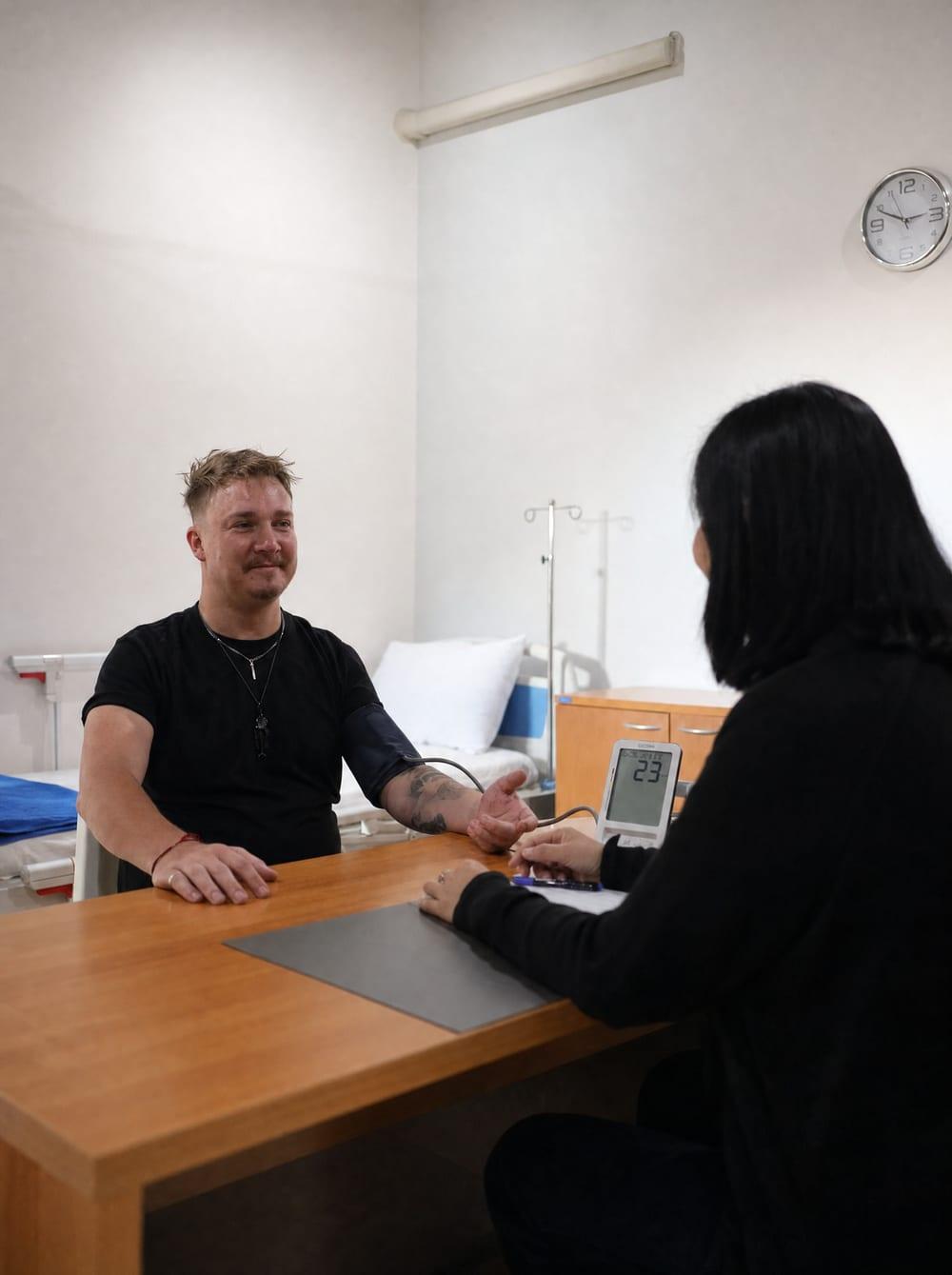
COWS-based monitoring means that medication during kratom detox is adjusted in response to measured symptom severity rather than administered on a fixed schedule. The Clinical Opiate Withdrawal Scale (COWS) is the validated assessment tool used internationally for opioid withdrawal management (NCBI Bookshelf on opioid withdrawal management), and at Jintara it is scored repeatedly across the acute detox period.
- Eleven symptom categories Scoring covers resting pulse, sweating, tremors, pupil size, bone and joint aches, runny nose, gastrointestinal disturbance, anxiety, irritability, and gooseflesh.
- Score-driven medication adjustments A higher score triggers more frequent observations and a more active medication intervention. A stabilising score progressively reduces intervention intensity.
- Prevents both under-treatment and over-treatment Under-treatment leaves the person in unnecessary distress. Over-treatment introduces its own risks. The COWS score keeps the clinical response calibrated.
Kratom detox is one of the opioid-class presentations treated inside Jintara's medical detox program.

Awake Nursing Through the Night Means Symptoms Are Caught Before They Escalate.
Jintara's nursing team works in awake shifts around the clock, which means every person in acute kratom detox is physically checked at least every one to two hours during the early stages of withdrawal. Vital signs are documented, mental state and behavioural signs are observed, and medication is prepared and administered as directed by the COWS score and the prescribing psychiatrist.
- Awake nursing, not on-call coverage In many centres, nurses work day hours only or are available on-call. At Jintara, a nurse is present on the floor through every night of detox.
- Proactive observation reduces physical risk Sleep disruption, agitation, and physical distress are more manageable when assessed and treated before they peak rather than after.
- Round-the-clock availability A person in the worst hours of withdrawal knows that help is immediately available. This reduces both physical risk and the anxiety that amplifies withdrawal distress.
For a family watching from the other side of the world, the most pressing question is not whether the facility has a nurse on call but whether that nurse is physically present on the floor at 3am on the second night of withdrawal. Jintara's overnight nursing protocols, medication handling standards, and escalation thresholds were independently assessed against Thailand's hospital-grade accreditation standard by the three national bodies that set it: the Healthcare Accreditation Institute, PMNIDAT, and the Department of Medical Services (certificate 25/2569, valid May 2026 to May 2029). Proven to the standard Thailand's hospitals are held to, and small enough for a nurse to know your son by name. The same awake nursing standard applies across all complex withdrawal presentations at Jintara, including benzodiazepine withdrawal.




The 30-Day Program at Jintara Accommodates Every Stage of Kratom Recovery.
Jintara accommodates a maximum of ten clients at any time. The ratio of approximately 32 staff to a maximum of ten clients means that every person in the program receives individual clinical attention rather than standardised group throughput. For kratom treatment, where the detox period, the post-acute window, and the behavioural therapy component all require different types of clinical engagement, this ratio matters.
The first week is dominated by medical detox, COWS monitoring, the psychiatric workup, and orientation. From week two onwards, individual therapy sessions, group work, and structured activities take on more weight as the medical picture stabilises.
- Week one: Medical detox, COWS-scored monitoring, psychiatrist assessment, day-two medical workup, and orientation to the treatment environment.
- Weeks two and three: Individual therapy daily, group sessions, fitness activity, and management of post-acute withdrawal symptoms including sleep and mood instability.
- Week four: Discharge planning, relapse prevention work, aftercare referrals, and family involvement where appropriate.
Lertkhwan Sukpia, the nursing lead at Jintara, coordinates the nursing team's work with the clinical and medical teams throughout the stay. Her knowledge of kratom withdrawal informs how the nursing schedule is adjusted in the first week.


Every Admission Begins With a Psychiatrist Assessment Before Any Medication Is Prescribed.
The first step in kratom treatment at Jintara is a detailed assessment conducted by a visiting psychiatrist. This is not a brief intake screen. It covers current kratom use patterns, the history of use, prior treatment, co-occurring mental health conditions, physical health, current medications, and any risk factors relevant to detox management.
- Day-two full medical workup Blood tests, an electrocardiogram, and a chest X-ray are completed at Jintara's expense. The workup confirms that any underlying health conditions are identified before they become relevant during detox.
- Psychiatrist involvement throughout Medication adjustments, the management of post-acute symptoms, and any dual-diagnosis considerations are all within the psychiatrist's scope from the first day to discharge.
- Ongoing assessment adjustments For some clients, additional assessment sessions are required during the first week as the clinical picture becomes clearer and medication protocols are adjusted.
Information about the pre-admission assessment and what to expect in the first 24 hours is available on the admissions pages.

Therapy Addresses the Belief That Natural Substances Cannot Cause Real Harm.
The therapeutic component of kratom treatment targets both the behavioural patterns that sustained use and the cognitive distortions that prevented someone from recognising a problem sooner. The most common distortion in kratom cases is the equivalence of natural with harmless. That belief is what delayed recognition for many of the people who arrive here, and it is the belief therapy has to unpick first.
- Identifying the function kratom was serving If kratom was used to manage anxiety, that anxiety needs to be addressed. If it substituted for another opioid, the underlying dependency needs to be addressed directly.
- Cognitive behavioural approaches Therapists work individually and in small groups, using cognitive behavioural methods, to examine the function kratom was serving and to challenge the reasoning that maintained use despite its costs.
- EMDR where trauma underlies substance use Therapeutic work at Jintara includes EMDR sessions conducted by Denise O'Leary, who holds EMDRIA certification. Therapy continues through the post-acute withdrawal period.



Post-Acute Withdrawal Continues for Three Weeks After the Last Dose Reaches Zero.
Post-acute withdrawal syndrome (PAWS) refers to the cluster of symptoms that persist beyond the acute detox phase: sleep disturbance, mood instability, difficulty concentrating, low motivation, and intermittent cravings. These are a neurological reality of opioid receptor recovery, and they are present to some degree in most people completing opioid-class withdrawal including kratom.
- Timeline Denise O'Leary, Jintara's Clinical Director, describes the window directly: 'You're not done withdrawing until about three weeks after you get to zero.' Weeks two to four are when PAWS symptoms are most disruptive.
- Highest risk of early departure The PAWS period is also when the risk of leaving treatment early is highest. The person feels better relative to acute detox but has not yet stabilised neurologically.
- Integrated management PAWS management at Jintara is integrated into the standard 30-day program. Medical monitoring continues, therapy addresses mood and motivational aspects, and sleep support is provided.
When co-occurring mental health conditions are present, the PAWS period overlaps with dual diagnosis treatment work and requires careful coordination between the medical and clinical teams.

Two Hospital Partners in Chiang Mai Are Available If a Medical Transfer Becomes Necessary.
Jintara has confirmed hospital transfer agreements with Bangkok Hospital Chiang Mai and RAM Hospital, both in Chiang Mai. These are the facilities used when a client's condition during detox requires diagnostic capacity, monitoring, or intervention that falls outside what a residential rehabilitation centre can provide on-site. Kratom has been associated with medical complications requiring emergency care, documented in CDC adverse event data.
- Transfer threshold set on the cautious side Vital sign trends moving in a dangerous direction, withdrawal complications requiring IV access, or unrelated medical events are all grounds for a hospital assessment. The standard is to escalate proactively.
- Jintara manages the transfer Clients and their families do not organise hospital access. Jintara manages the transfer directly, accompanies the client, and communicates with the receiving hospital.
More information about Jintara's residential facilities in Chiang Mai and their proximity to the city's hospital district is available on the facilities page.

What Is Included in Jintara's Kratom Treatment Program.
Jintara's treatment fee covers a private room, on-site medical detox, Day 2 hospital workup at Bangkok Hospital Chiang Mai, daily individual and group therapy, psychiatrist access throughout, and aftercare planning. All clients receive:
- Private rooms in a calm, residential setting
- On-site medical detox with COWS-scored monitoring
- Day-2 diagnostics: blood tests, ECG, chest X-ray
- Daily individual and group therapy from week two
- 24/7 awake nursing throughout the detox period
- Fitness and wellness activities adjusted to medical status
- Supervised Saturday excursions and a structured Sunday lunch
- Written relapse prevention plan and aftercare coordination
The about the team page includes full profiles of the clinical, nursing, and therapeutic staff who deliver the program.

Leaving Before the Therapy Work Is Finished Significantly Increases the Risk of Returning to Use.
The risk of returning to kratom use after detox-only treatment is high. Detox resolves physical dependence but does not address the reasons use developed, the cognitive patterns that sustained it, or the post-acute neurological instability that creates vulnerability in weeks two and three.
- Physically well is not the same as ready Denise O'Leary's framing is consistent: 'If you're cured just after detox and expect that everything will be fine, most people will relapse pretty quickly because they haven't dealt with the why you do what you do.'
- The 'natural is safe' belief often returns The cognitive distortion about kratom being natural and harmless often returns quickly after the acute discomfort passes if the cognitive work has not been completed.
- No financial penalties for leaving Clients are adults and their decisions are respected. The clinical team's responsibility is to confirm that if someone leaves early, they do so with a clear understanding of what remains unfinished.
The same early-departure risks apply across opioid-class treatments at Jintara, including prescription drug addiction where physical stabilisation is often confused with recovery. Jintara treats kratom dependency with the same clinical rigour applied to all opioid-class substances.

Talk with Our Admissions Team
Your enquiry is confidential and goes only to our admissions team.
Independently Verified
Jintara is accredited against Thailand’s national quality standard for drug treatment and rehabilitation facilities, jointly certified by the Healthcare Accreditation Institute, the body that accredits Thailand’s hospitals, with the Princess Mother National Institute on Drug Abuse Treatment and the Department of Medical Services, Ministry of Public Health. Certificate no. 25/2569, valid 20 May 2026 to 19 May 2029.
Common Questions About Kratom Addiction Treatment in Thailand
Yes. Kratom's primary active alkaloid, mitragynine, acts as a partial agonist at mu-opioid receptors. This is the same receptor pathway responsible for dependence on heroin, morphine, and prescription opioids. Daily users develop tolerance and experience physical withdrawal when they stop, which is why kratom's legal status does not indicate safety. Kratom's legal status and natural origin do not change its pharmacological profile.
Kratom withdrawal closely resembles short-acting opioid withdrawal. Physical symptoms include muscle aches, restlessness, sweating, nausea, and insomnia. Psychological symptoms, particularly anxiety, irritability, and low mood, are often reported as more distressing than the physical symptoms. The acute phase typically peaks on days two to four and resolves within five to ten days. Sleep disturbance and mood instability can persist for several weeks beyond this.
Jintara has treated kratom dependency as part of its residential program and uses protocols developed for opioid withdrawal management, including the Clinical Opiate Withdrawal Scale (COWS) for symptom-scored medication adjustment. The approach is the same whether someone is withdrawing from kratom, prescription opioids, or heroin: psychiatrist-led assessment, 24-hour awake nursing, and symptom-specific medication rather than a fixed protocol.
It is possible to complete kratom withdrawal without medical supervision, and some people do. The risks are significantly higher without support. Severe anxiety and insomnia during acute withdrawal create a strong pull toward relapse. Without scored monitoring, there is no way to identify when symptoms are escalating beyond a manageable threshold. People with underlying health conditions, high daily doses, or long-term use histories are at greater risk from unmanaged withdrawal.
The acute detox phase typically concludes within seven to ten days. The 30-day residential program is designed to extend well beyond acute detox, because post-acute withdrawal symptoms including sleep disruption, low mood, and cravings can persist for up to three weeks after the last dose reaches zero. Leaving after acute detox without completing the therapy component significantly increases the risk of returning to kratom use.
Methadone may be used as part of a short-term taper during the acute detox phase for some opioid withdrawals, but it is not used as ongoing maintenance treatment. Jintara does not offer or recommend long-term opioid substitution therapy. The approach is to achieve abstinence through medically supported detox followed by therapeutic and behavioural work rather than replacing one substance with another on a sustained basis.
Jintara's medical team works entirely in English, and Darren Lockie, the founder, is Australian. The facility is licensed by Thailand's Ministry of Public Health and has hospital transfer agreements with internationally recognised private hospitals in Chiang Mai. Thailand's cost of care is significantly lower than equivalent private residential facilities in Australia, the UK, or the United States for the same clinical standard.
Individual therapy begins from the first week and continues throughout the 30-day stay. Group sessions run daily from week two. The therapeutic approach draws on cognitive behavioural methods and motivational techniques, with EMDR available where trauma underlies the substance use. The kratom-specific therapeutic focus is on examining the function use was serving and building functional alternatives, as well as addressing the cognitive distortion that natural substances carry lower addiction risk.
Discharge planning begins in week three. This covers aftercare support, continued therapy in the home country or region, relapse prevention planning, and family involvement where appropriate. Jintara does not prescribe maintenance medications at discharge. The team provides referrals for outpatient support and maintains contact with clients in the months following discharge.
Kratom is legal to possess and consume in Thailand. It left the narcotics list in 2021, and the Kratom Plant Act now governs sale and use. Mixing kratom with other drugs remains illegal, and legal sale is still restricted. Legal availability does not change the medical need for supervised withdrawal if someone cannot stop.
Yes. Jintara Wellness Center and Rehab holds joint accreditation from the Healthcare Accreditation Institute (HAI), the Princess Mother National Institute on Drug Abuse Treatment (PMNIDAT), and the Department of Medical Services, Ministry of Public Health (certificate no. 25/2569, valid 20 May 2026 to 19 May 2029). The accreditation covers the facility's clinical standards across both categories of services it operates. What the survey team assessed includes nursing protocols, medication management, documentation standards, and emergency escalation procedures. These are the same protocols applied to kratom withdrawal management. Jintara is one of only six private rehabs in Thailand to hold this accreditation.
No. Jintara is a licensed private residential addiction treatment centre, not a hospital. The hospital-grade accreditation means Jintara's clinical standards, nursing protocols, and medication procedures were assessed by the Healthcare Accreditation Institute, the same national body that accredits Thailand's hospitals. Hospital-grade describes the standard the facility's care was held to, not the type of facility. For medical situations requiring diagnostic capacity or intervention beyond what a residential centre can provide on-site, Jintara has transfer agreements with Bangkok Hospital Chiang Mai and RAM Hospital.