

Opioid detox at Jintara is medically supervised, not a three-day quick fix.
Most people approaching opioid addiction treatment arrive expecting a short, sharp process. Medical reality is different. Opioid withdrawal follows a delayed-peak pattern, and a safe taper requires monitoring built around the specific substance, dose, and history of each person.
- Psychiatrist-led assessment and individualised medication plan within the first 24 hours
- Clinical Opiate Withdrawal Scale scoring throughout the full taper period
- Methadone taper or supported withdrawal, chosen collaboratively with the treating psychiatrist
- 24-hour awake nursing with regular vital signs monitoring throughout detox


Fully Licensed and Hospital Accredited
Opioid Detox Is Not a Three-Day Event.
Opioid detox is the medically supervised process of clearing opioids from the body safely. The misconception that this takes three days comes from marketing, not medicine. For most people with opioid use disorder, acute withdrawal alone spans two to four weeks, depending on the opioid, the dose, and how long it has been used.
Many people arrive expecting a rapid three-day detox. The clinical reality is different. The length of an opioid taper is set by the medical team for each person, based on the substance, the dose, and how long it has been used. For fentanyl and other long-acting opioids, the timeline is longer still.
According to NIDA's opioid research overview, opioid use disorder is a chronic, relapsing condition. The acute withdrawal phase alone spans weeks for most people presenting to treatment, not days. The purpose of medically supervised detox is not to accelerate withdrawal beyond what the body can safely manage. It is to keep withdrawal within a tolerable range, monitor for complications, and adjust medications in response to what is actually happening, not what was predicted, and it does not carry the cardiac risks of ibogaine treatment.
The first step in opioid recovery is understanding the real timeline, and working with a clinical team that will be honest about it.
The Delayed Misery Pattern in Opioid Withdrawal.
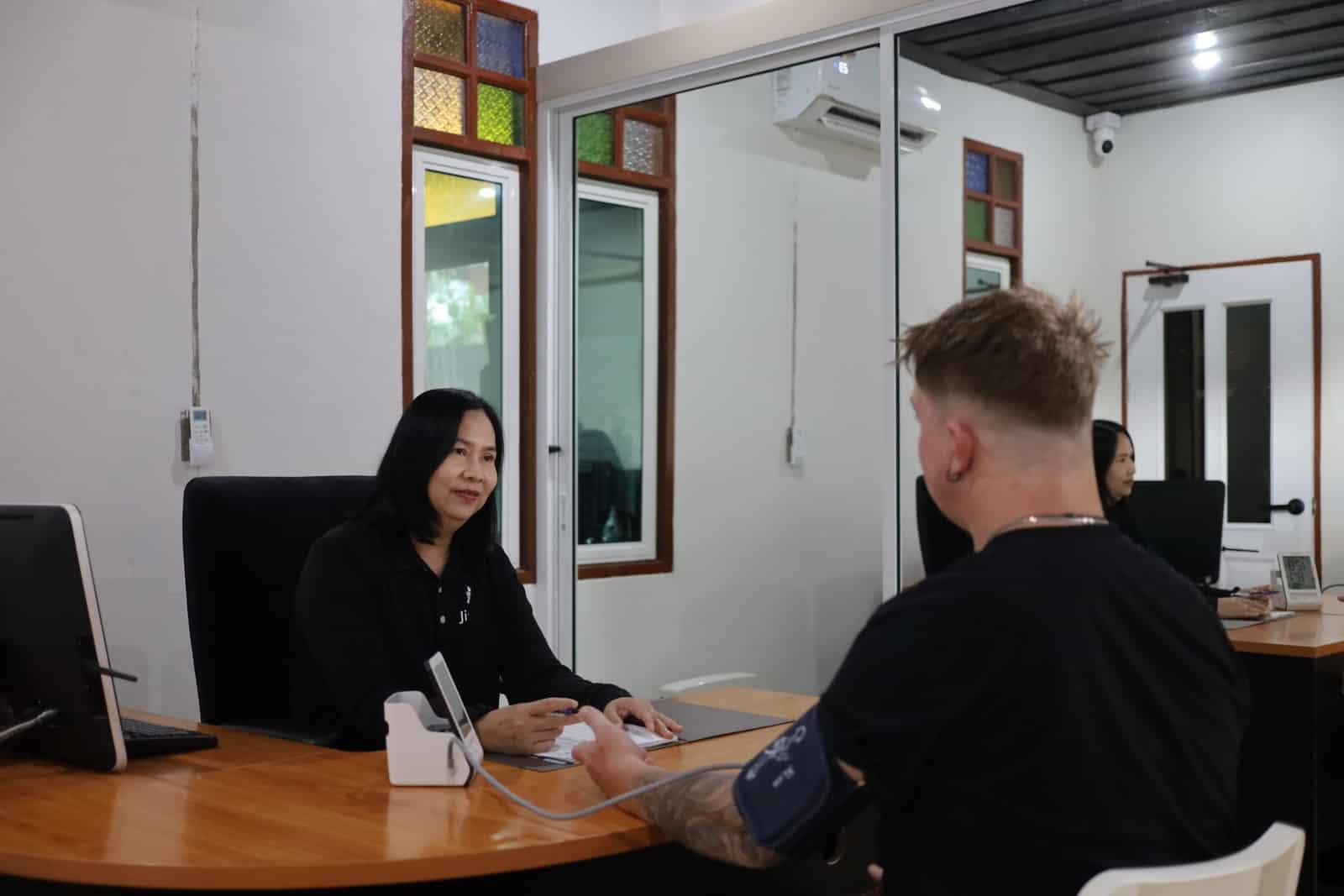
Opioid withdrawal follows a characteristic delayed-peak pattern that catches most people off guard. The first 24 to 48 hours often feel manageable, sometimes even less uncomfortable than expected. Days four to seven bring the full intensity of physical symptoms: muscle aches, sweating, insomnia, diarrhea, nausea, anxiety, and a restlessness that makes sitting still feel impossible.
Denise O'Leary, Clinical Director at Jintara, describes what her team prepares clients for in early detox: "They're going to be going, 'Oh, geez, Louise, that's not as bad as I thought.' Relief. And little do they know that the misery comes later. Our job is to kind of prepare them for that."
The practical consequence of this pattern is that clients who start the first week of treatment feeling relatively settled sometimes resist medication or minimise the clinical picture. Jintara's nursing team uses this window to explain what is coming, establish trust, and confirm that the support structure is in place before symptoms peak.

“They're going to be going, oh, geez, Louise, that's not as bad as I thought. Little do they know that the misery comes later. Our job is to kind of prepare them for that.
How Jintara Scores Withdrawal Severity and Adjusts Medication.
Jintara uses the Clinical Opiate Withdrawal Scale (COWS) to score opioid withdrawal severity at regular intervals throughout detox, with medication adjusted in response to those scores rather than on a fixed dosing schedule. COWS is a validated 11-item scale that measures the objective and subjective signs of opioid withdrawal, giving the nursing team a consistent, comparable picture at each check. SAMHSA's TIP 63 Chapter 3B on methadone documents the Clinical Opioid Withdrawal Scale as one approach to scoring opioid withdrawal before dose decisions.
In the early days of detox, nurses check COWS scores up to three times daily in clients with elevated readings. As scores fall and the clinical picture stabilises, monitoring shifts to twice daily, then once daily. This is consistent with Lertkhwan Sukpia's description of how nursing care is calibrated: the interval tightens when the score is high and loosens as the client stabilises.
Vital signs are documented alongside every COWS assessment. Nursing staff remain awake on site through every shift. Escalation pathways to Bangkok Hospital Chiang Mai and RAM Hospital are in place for the rare cases where observation alone is insufficient.
Choosing a detox facility from overseas often comes down to a trust question: are the monitoring protocols they describe the ones they actually use? The Healthcare Accreditation Institute, the same national body that accredits Thailand's hospitals, independently assessed Jintara's clinical processes alongside the national drug-treatment authority and the Department of Medical Services. That joint assessment, certificate no. 25/2569, valid from May 2026 to May 2029, is a third-party answer from three government authorities.
The treatment program runs alongside detox from the first week, not after it.
Medication for Opioid Detox. Why Methadone Gets an Unfair Reputation.
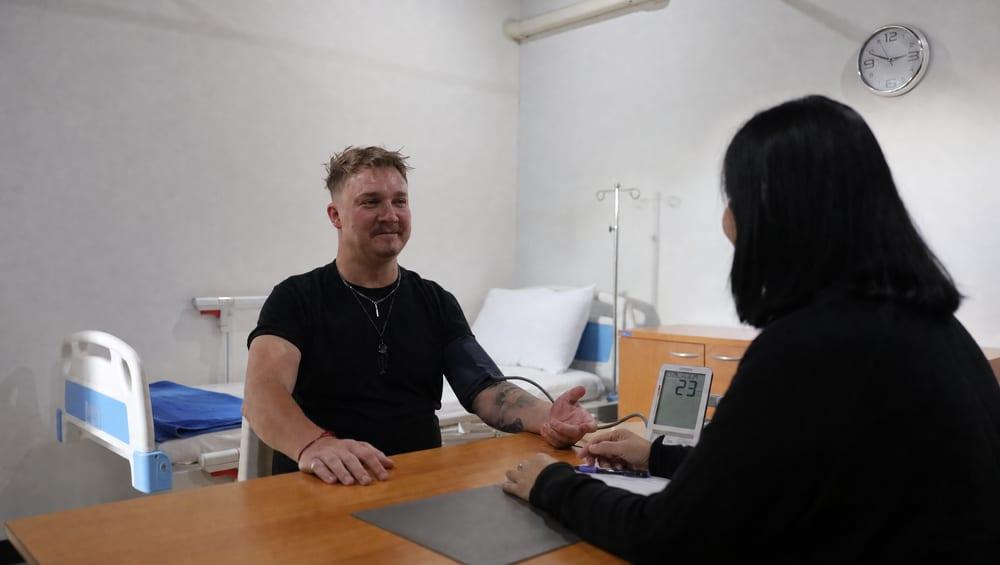
Methadone is Jintara's primary opioid detox medication because it is legal in Thailand, clinically effective for a taper-based withdrawal, and when used as a short-term protocol rather than long-term maintenance, carries no dependence risk beyond what the opioid itself has already created. The MedlinePlus overview of opioid misuse and addiction describes methadone as a clinically established medication for managing opioid withdrawal. The confusion around methadone comes from how it is used in certain countries, where people queue outside clinics indefinitely without a plan to taper off. That is a maintenance model. This stigma is strongest in the UK and Australian markets, where street-based maintenance programs have shaped public perception. What Jintara uses is a taper set to the individual's substance, dose, and history, adjusted to their progress and reduced under clinical supervision.
Buprenorphine and Suboxone are not available options at Jintara. Both are illegal to supply in Thailand. If a client arrives with a prescription for Suboxone from their home country, the clinical team will taper them off it rather than allow unsupervised continuation, and the methadone vs Suboxone difference is what makes that taper workable rather than punishing.
For clients who prefer to avoid methadone, a supported cold turkey approach using comfort medications including clonidine and benzodiazepines is available. In practice, the clinical team finds that many who begin unsupported withdrawal choose to switch to a methadone taper within the first few days, when the discomfort at peak intensity becomes the deciding factor.
All medication decisions are made collaboratively: the psychiatrist outlines the options, explains the clinical reasoning, and the client chooses their preferred approach with full information.

“A typical decision is a long taper versus a slower taper for people coming in on opioids. There are pros and cons to both, and we collaborate with the client on which one fits.
What Happens in the First 24 Hours at Jintara.
In the first 24 hours at Jintara, every person in opioid withdrawal meets the attending psychiatrist, completes arrival nursing assessments, and begins a medical detox plan built around their specific substance history, dose, and current withdrawal status. The intake process is thorough by design: a breath alcohol reading, urine drug screen, and initial COWS scoring give the nursing team an immediate clinical picture, while the psychiatrist meeting produces the medication plan.
Lertkhwan Sukpia, Jintara's Head Nurse, describes the handover from intake to overnight care: the team identifies which clients need close observation and which are stable, confirms medication timing, and walks every client through what the next several days will look like. The first night is managed with reassurance, regular checks, and a clear protocol for escalation.
From the first day, clients are informed about the timeline: what withdrawal will feel like at each stage, when to expect the worst, and how the nursing team will respond. Education about the process reduces fear, and reduced fear reduces the physiological stress response that amplifies withdrawal symptoms.

The Day-Two Hospital Workup and What It Reveals.
On the second day of every admission, Jintara takes each client to Bangkok Hospital Chiang Mai or RAM Hospital for a full medical assessment at no additional cost to the client. The workup includes a full blood spectrum, liver function test, kidney function test, EKG, and chest X-ray.
For people withdrawing from opioids, this workup is particularly relevant. Long-term opioid use affects liver function, cardiovascular health, and immune status in ways that may not be obvious on arrival. Identifying abnormal results on day two allows the clinical team to adjust the detox protocol before those findings become complications. In cases of IV drug use, infectious disease screening is added to the standard panel.
The full cost of this assessment is included in the program pricing. There is no separate billing for the hospital visit, the psychiatric assessment on arrival, or the nursing care throughout detox. This is a deliberate part of Jintara's model: no hidden costs in the middle of a medical process is a clinical principle, not just a commercial one.

Fentanyl, Heroin, and Prescription Opioids. Why the Substance Shapes the Protocol.
The type of opioid, how long it has been used, and the daily dose all determine how Jintara's psychiatrist designs the detox protocol. Heroin produces withdrawal symptoms within 12 to 24 hours of the last dose. Prescription opioids such as oxycodone and codeine typically take 24 to 36 hours before symptoms appear, and the overall arc is longer. For fentanyl addiction specifically, the picture is most complex: according to NIDA's opioids overview, fentanyl is 50 to 100 times more potent than morphine, which is why the clearance timeline can run considerably beyond what heroin or short-acting opioids require.
The contamination of street supplies with fentanyl has added a layer of uncertainty for clients who believe they have been using heroin or prescription tablets. Many arrive not knowing exactly what they have been taking, and it is this hidden potency that drives the overdose danger of contaminated fentanyl the clinical team screens for on arrival. The clinical response to this is a conservative approach: start with a protocol calibrated for a potent opioid, observe, and adjust based on what the COWS scores and clinical presentation reveal.
Polysubstance use involving opioids alongside alcohol or benzodiazepines creates additional complexity. In these cases, the team manages the most medically dangerous withdrawal pathway first. For dual diagnosis treatment needs arising from underlying anxiety, trauma, or mood disorders, the clinical team addresses these alongside the physical detox.

Therapy Starts Alongside Detox, Not After It.
At Jintara, therapy begins from the first week of the program, running alongside medical detox rather than waiting until withdrawal symptoms fully resolve. Most rehabilitation facilities treat detox and therapy as sequential phases. Jintara treats them as parallel processes, because the skills a client learns in therapy during early detox are the same skills they will use when cravings hit in the weeks after discharge.
In early detox, Denise O'Leary's clinical approach focuses on stabilisation rather than deep processing. Distress tolerance skills, breathing techniques to reduce physiological arousal, and the kind of accurate, non-alarming information that reduces fear are the primary tools. Jintara uses a condensed but complete form of DBT, covering all four modules: mindfulness, distress tolerance, emotional regulation, and interpersonal effectiveness. Group sessions and individual therapy begin as soon as a client is physically able to attend, which is typically within the first two to three days.
For clients with underlying trauma, EMDR therapy is available at Jintara. SAMHSA's guidance on substance use disorder treatment for people with co-occurring disorders supports integrated treatment addressing both substance use and mental health conditions concurrently rather than in sequence. It is not assigned automatically. It is introduced after medical stabilisation and is most relevant for clients completing 60-day or longer programs. For 30-day clients, EMDR may begin at Jintara and continue with a trained therapist at home.
With a maximum of ten clients at any time and three therapists on staff, the clinical team has the capacity to reach each client individually. That ratio is not a selling point. It is what makes concurrent therapy in early detox possible.


Talk with Our Admissions Team
Your enquiry is confidential and goes only to our admissions team.
Common Questions About Opioid Detox
Opioid withdrawal produces muscle aches, sweating, chills, insomnia, nausea, vomiting, diarrhea, anxiety, and restlessness. In the early stages, the symptoms are often milder than expected. The peak of physical discomfort typically occurs between days four and seven, after which intensity gradually reduces over the following weeks.
Acute opioid withdrawal typically lasts two to four weeks, depending on the opioid type, the dose, and the length of use. Fentanyl and long-acting opioids generally require a longer detox window. Three days is not a clinically realistic timeline for most people presenting to treatment with opioid dependence. At Jintara the detox is individualised by the medical team and sits inside a minimum 30-day program.
Opioid withdrawal is not directly life-threatening in the way that alcohol or benzodiazepine withdrawal can be. The primary risks are dehydration from vomiting and diarrhea, cardiovascular stress, and the psychiatric risk of impulsive decisions during the peak discomfort window. Medical supervision is important not because withdrawal will kill you, but because unsupervised withdrawal is both more dangerous and less likely to succeed.
The primary medication is a methadone taper. Buprenorphine and Suboxone cannot be prescribed in Thailand. For clients who prefer to avoid methadone, a supported approach using comfort medications such as clonidine is available. All decisions are made between the client and the treating psychiatrist, with clear explanation of the clinical reasoning behind each option.
A supported withdrawal without a methadone taper is possible at Jintara and some clients choose this path. Comfort medications to reduce specific symptoms are still used. In practice, a significant proportion of people who begin unsupported withdrawal at peak intensity find they want to switch to a taper protocol within the first three to four days. The clinical team supports either approach and will not pressure a choice.
Fentanyl is considerably more potent than heroin and accumulates in body tissue, which means the withdrawal arc can be longer and the peak more intense. Street supply contamination has also made it common for people to be withdrawing from fentanyl without knowing it. Jintara's clinical team accounts for this by using a conservative detox protocol calibrated to the presentation, not just the disclosed substance history.
The daily structure combines medical monitoring with early therapy and supported activity. COWS scores and vitals are checked at regular intervals. Therapy sessions begin within the first few days. Meals, outdoor time, and access to holistic sessions such as massage and gentle exercise are available from day one. The structure is deliberately simple: the goal in the first week is stabilisation, rest, and preparation for the work ahead.
Yes. Therapy runs from the first week alongside medical detox. Cognitive behavioural therapy, dialectical behaviour therapy skills, and individual sessions with Jintara's clinical team begin as soon as a client is physically able to participate. The detox is not a separate phase before treatment. It is the beginning of treatment. For admissions questions, the Jintara team can walk you through the next step.
Yes. The Healthcare Accreditation Institute, the national body that accredits Thailand's hospitals, assessed Jintara's clinical processes alongside the Princess Mother National Institute on Drug Abuse Treatment and the Department of Medical Services, Ministry of Public Health. That joint assessment resulted in accreditation certificate no. 25/2569, valid from May 2026 to May 2029. The accreditation covers clinical governance and facility standards, not individual outcomes.
Jintara is a small adult residential rehab in Chiang Mai with a 3.2:1 staff-to-client ratio. Opioid detox is individualised and medically supervised, with COWS-scored nursing assessments and a psychiatrist-led medication plan throughout, inside a minimum 30-day program.
Jintara Rehab is licensed by the Thai Ministry of Public Health as a rehabilitation centre. The clinical information on this page describes Jintara's general approach to supporting clients during the early recovery period. Medical decisions, including medication protocols, are determined by addiction-specialist psychiatrists through our partner hospital pathway. Individual treatment varies based on clinical assessment. This content is for informational purposes and does not constitute medical advice.