

Chiang Mai or Phuket. How to Choose Where to Do Rehab in Thailand
Phuket is an island built around tourism. Chiang Mai is an inland city in the northern mountains. The difference between them changes what your first four weeks feel like far more than the photographs suggest, and this page compares the two environments on the points that actually affect a recovery.
- Phuket's visitor economy runs on nightlife. Chiang Mai's runs on temples, universities and trades
- Northern Thailand is cooler and drier through most of the treatment year
- Both cities have private hospitals, so the transfer relationship is what matters
- Chiang Mai has one real environmental drawback, and this page names it
Licensed by the Ministry of Public Health.
Accredited under Thailand’s national standard for drug treatment and rehabilitation facilities.
The Choice Is About Environment, Not About Which Place Photographs Better
Most people arrive at this comparison having already decided on Thailand. The remaining question is which part of it. That question usually gets answered with photographs, which is the least useful way to answer it, because both places photograph beautifully and neither photograph tells you anything about what week two feels like.
Three things actually change the outcome. The first is how far the treatment environment sits from the drinking and party economy, because proximity is not a test of willpower, it is a daily variable. The second is climate, because detox is physically hard and heat and humidity make it harder. The third is medical escalation, meaning how quickly a client can be moved to a hospital with intensive care if a withdrawal complication appears. Everything else, the view included, is secondary.
This page compares the two environments on those three points, then on travel and on the cost of the surrounding city. It does not compare facilities and it does not rank other providers. Our guide to choosing a rehab in Thailand covers how to check a facility. Jintara runs a single rehab in Chiang Mai, so the closing section sets out what choosing the north means here specifically.

Phuket's Economy Is Built on Tourism, and That Changes What Surrounds a Treatment Program
Phuket is Thailand's largest island and its best-known international beach destination. The visitor economy is the main economy. That scale produces real advantages: direct international flights into one airport, a large English-speaking service sector, and private hospitals well used to treating foreign patients.
It also produces the thing that matters clinically. Alcohol is everywhere, visible, cheap and social, and the parts of the island most people know are organised around it. For someone in the first month of treatment for alcohol use, that is not a neutral background. A residential program controls what happens inside the property, but it does not control what a client sees on a transfer, on an excursion or on a hospital run, and it does not control what happens if someone decides to leave against advice. The distance between the program and the nearest bar is a real number, and on an island built for holidays it is usually a short one.
There is a second, quieter point about the island climate. Phuket's dry season runs from December through March, which means the wet season covers the remaining eight months of the year and the island takes a heavy annual rainfall. A program that uses outdoor time as part of its structure loses more of it there than most brochures suggest.
None of this makes treatment in Phuket wrong. People recover there. It means the environment does less of the work, so the program has to do more of it.
Chiang Mai Is an Inland City With a Different Daily Rhythm
Chiang Mai sits in a mountain basin in the far north, roughly 700 kilometres north of Bangkok. There is no coastline in the province. It was the capital of the Lanna kingdom and the old city still runs on temples, markets, craft trades, universities and a long-established community of foreign residents rather than on a beach strip.
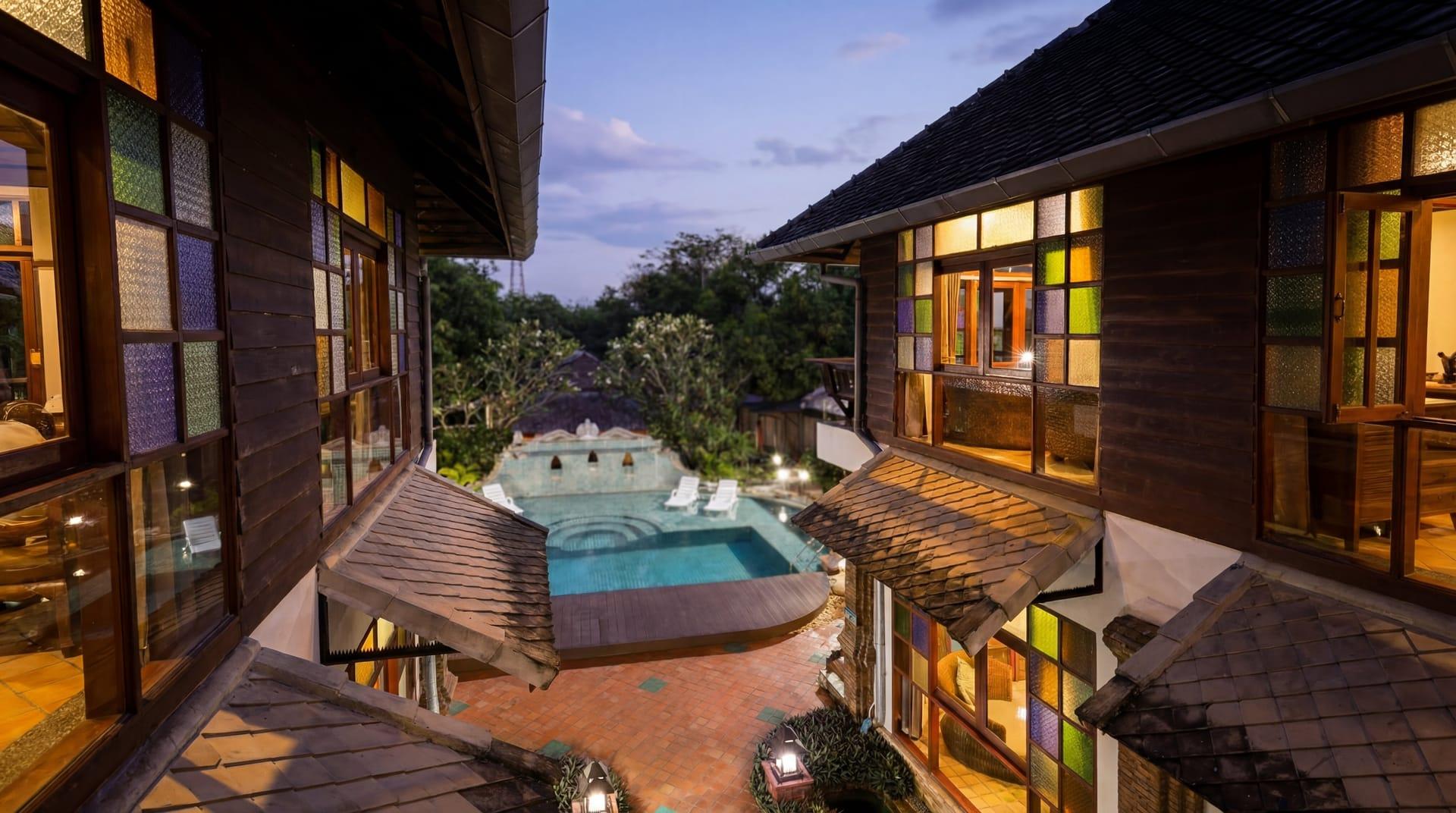
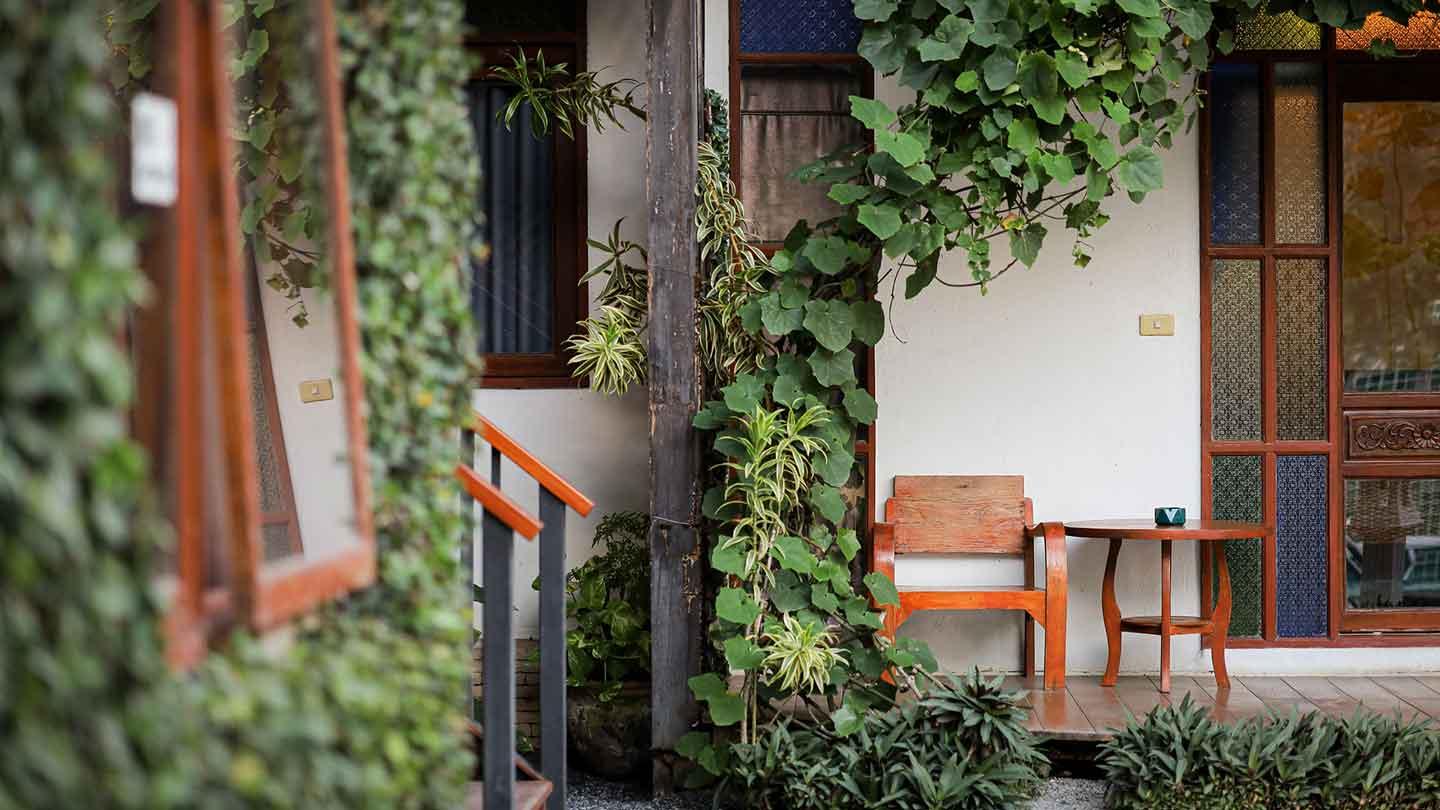
Jintara sits on the southern edge of Chiang Mai, away from the city center, among fields, orchards and small villages. The practical effect is separation. A nightlife economy exists in Chiang Mai, as it does in any city of that size, but it is not what the surrounding district is for and it is not what a client passes on an ordinary day. The default view from the property is open ground and trees, and the default sound is not a bar.
The second effect is climate. Northern Thailand is cooler and drier than the southern islands through most of the year, and the gap is widest in the months when people travel from a southern hemisphere winter. Detox is physically demanding and sleep is already disrupted. Lower humidity and cooler nights are not a comfort detail in that first fortnight, they are the difference between sleeping badly and not sleeping at all.
Chiang Mai's Real Drawback Is the Smoke Season, and It Should Change Your Timing Rather Than Your Decision
Northern Thailand has a smoke-haze period in the late dry season, caused by agricultural and forest burning across the wider region. It runs roughly from mid-February through April and is at its worst in March. The severity varies year to year and the mountain basin works against the city, because smoke settles rather than disperses. In the 2026 season the air deteriorated sharply in early March, and IQAir ranked Chiang Mai among the world's ten most polluted cities on 4 March. This is the one genuine environmental disadvantage the north carries against the islands, and a comparison that leaves it out is not a comparison.
Here is the honest version. For most people it changes the timing question rather than the location question, because a 30 day admission can usually be scheduled before or after the worst weeks. For a smaller group it changes more. Anyone with asthma, COPD, another significant respiratory condition, or a cardiac history where air quality is a clinical factor should raise it during the admission assessment and should expect it to affect the recommendation. That conversation belongs in a clinical assessment, not in a brochure.
What a facility does about it matters too, and it is a fair question to put to any provider in the north. Ask about indoor air filtration, whether outdoor programming moves inside on bad days, whether excursion destinations are chosen around the readings, and whether the clinical team watches the daily numbers rather than the seasonal average.
- Ask about filtration: Air purifiers in the shared living areas and in bedrooms, not one unit in a reception room. Jintara runs purifiers in the lounge and bedrooms and the buildings are air conditioned throughout.
- Ask about excursions: Outdoor destinations should be chosen around the daily readings during the season. A viewpoint excursion on a bad-air day is both pointless and avoidable.
- Ask about your own history: Respiratory and cardiac history should be raised at assessment. For some people the honest answer is to move the admission date rather than the destination.

“The burning season is in March. We have air purifiers in the lounge and in the bedrooms, and everything is air conditioned. We're very honest about it. We do our best to minimise any risk to the clients, and we're careful about where we take them on excursions.
Hospital Access Is the Comparison That Actually Carries Clinical Weight
Every serious residential program in Thailand should be judged on one question before any other: what happens when a detox goes wrong at three in the morning. Withdrawal from alcohol and from benzodiazepines can produce seizures and medical emergencies that need a hospital, not a clinic, as SAMHSA's TIP 45 chapter on physical detoxification sets out.
Both Chiang Mai and Phuket have private hospitals accustomed to international patients. The variable is not whether a hospital exists, it is the transfer relationship and the transfer time from the specific property. A named partner hospital with an established pathway is a different thing from a hospital that happens to be nearby.
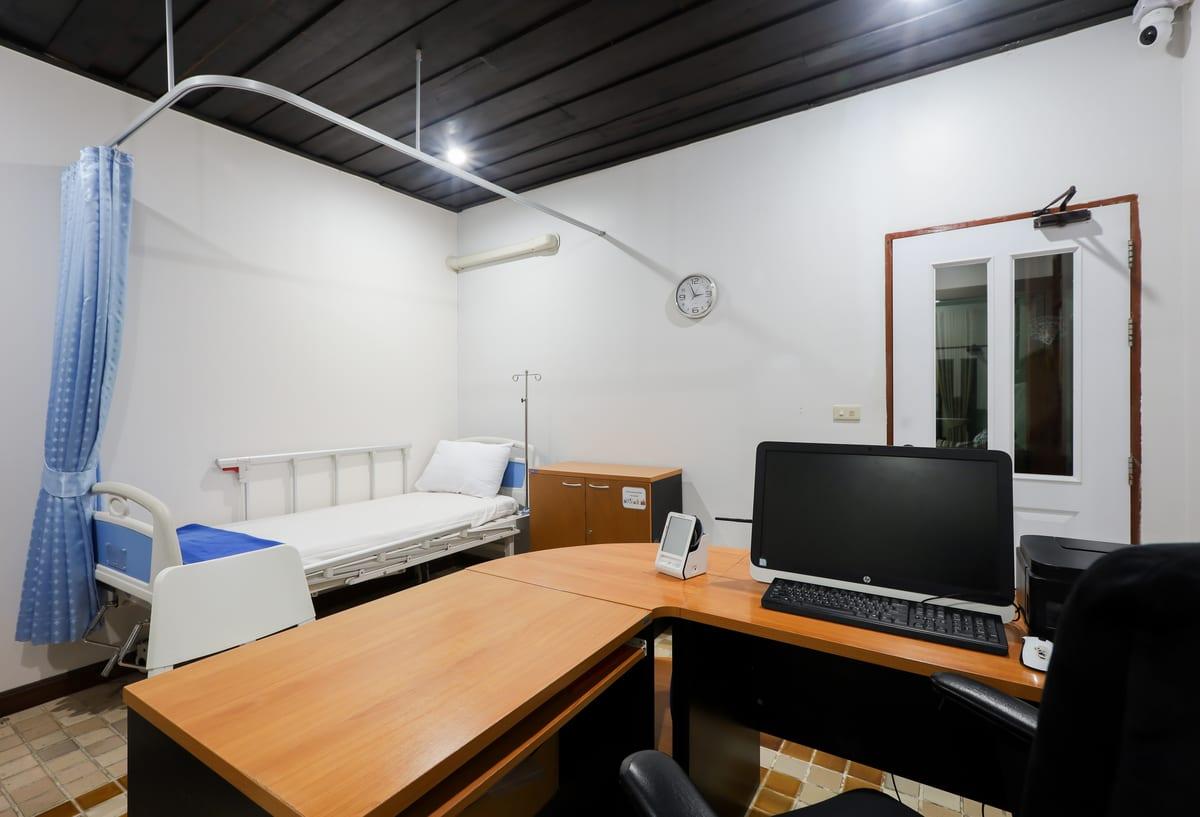
Jintara's partner hospitals are Bangkok Hospital Chiang Mai and Chiang Mai Ram Hospital, and the program runs awake nursing through the night with defined triggers for transfer rather than a judgement call made in the moment. When you compare any two facilities in any two cities, ask both for the hospital name, the transfer time and the written trigger list. A provider that cannot answer all three has told you something.
Travel, and Why the Extra Domestic Leg Is Usually Not the Deciding Factor
Phuket has the stronger long-haul position. It carries direct services from Sydney, Melbourne and Perth, and seasonal direct services from several European cities. Chiang Mai International Airport flies direct to regional Asian hubs including Singapore, Kuala Lumpur, Hong Kong, Taipei, Seoul and Abu Dhabi, but it has no scheduled direct service to Australia, the United Kingdom or Europe. Clients from those countries connect through Bangkok and take a short domestic flight north.
People weight this far more heavily than it deserves. It is one additional leg on one day, at the start of a program measured in weeks, and admissions teams arrange the connection routinely. It matters in exactly two situations: an urgent admission where a single day counts, and a client whose physical state makes a connection genuinely difficult. Both are worth raising with admissions directly rather than deciding alone from a flight-search screen.
For clients already living in Asia the calculation inverts, because Chiang Mai is a direct flight from several of the region's hubs and no Bangkok connection is needed at all.
The return journey deserves more thought than the outbound one, and it rarely gets any. Leaving treatment through an airport built around duty-free alcohol and holiday bars is a different exit from leaving through a quieter regional one, and aftercare planning should account for the trip home.
Cost of the Surrounding City, and What It Does and Does Not Change
Phuket is one of the more expensive places in Thailand. Chiang Mai is substantially cheaper across accommodation, food and transport. That gap does not appear in the treatment fee, which is set by the program rather than by the postcode, but it does appear in three places people forget: what family pay if they travel to visit, what a client spends on an extended stay after the program ends, and what step-down or sober-living accommodation costs if the plan includes one.
For a family flying in for a visit week, or for a client who plans to stay in the country for a month of consolidation afterwards, that difference is not trivial. It is often the largest single variable in the total cost of the trip after the fee itself.
Jintara's fee is published and applies wherever a client travels from. The full figure and what it includes sit on the pricing page rather than being repeated here, so there is one source for it.
What Choosing Chiang Mai Means at Jintara Specifically
Jintara is a small adult-only residential program on the southern edge of Chiang Mai, with 32 staff for a maximum of ten clients, a ratio of roughly 3.2 to 1. It is licensed by the Thai Ministry of Public Health under licence SFT.50.13-11116. It is accredited against Thailand's national quality standard for drug treatment and rehabilitation facilities. Certificate 25/2569, valid from 20 May 2026 to 19 May 2029, was issued jointly by the Healthcare Accreditation Institute, the Princess Mother National Institute on Drug Abuse Treatment, and the Department of Medical Services, as set out on the accreditation page.
That accreditation is a Thai national standard. Jintara does not hold and does not claim JCI or CARF accreditation, which are international hospital and behavioural-health standards awarded by other bodies. If a comparison you read elsewhere treats those three as interchangeable, they are not, and any provider should be able to tell you precisely which one it holds.
The environment argument for this location is the one this page has already made. Separation from the drinking economy rather than a short walk from it. A cooler and drier climate through most of the treatment year. Established hospital transfer relationships in the city. And a smoke season that is disclosed rather than hidden, and planned around rather than ignored.
If none of that settles it, the useful next step is not more reading. It is a conversation with admissions about your own withdrawal risk, your respiratory history and your timing, because those three things decide this more reliably than any comparison page can.
Talk with Our Admissions Team
Your enquiry is confidential and goes only to our admissions team.
Common Questions About Choosing Between Chiang Mai and Phuket
Is Chiang Mai or Phuket better for rehab?
Neither is better in general. Phuket has more direct long-haul flights and a coastal climate, and its wet season runs eight months of the year. Chiang Mai is cooler, drier through most of the year, further from the nightlife economy, and cheaper for visiting family. Chiang Mai's drawback is the late dry-season smoke haze. The right answer depends on your withdrawal risk, your respiratory health and your travel timing.
Does the Chiang Mai burning season affect treatment?
It affects timing more than it affects treatment. The season runs roughly mid-February to April and peaks in March, so most admissions can be scheduled before or after the worst weeks. Anyone with asthma, COPD, another respiratory condition, or a cardiac history where air quality is a clinical factor should raise it in the admission assessment, because it can change the recommendation.
Is it harder to get to Chiang Mai than Phuket?
From Australia, the UK and Europe it is usually one extra domestic leg through Bangkok, because Chiang Mai has no scheduled direct service from those countries. For a program measured in weeks that is a small cost on a single day, and admissions teams arrange the connection routinely. From within Asia the position reverses, because Chiang Mai flies direct to several regional hubs.
Which has better hospital access, Chiang Mai or Phuket?
Both cities have private hospitals used to international patients. The question that matters is not the city, it is whether the specific facility has a named partner hospital, a known transfer time and written triggers for transferring a client. Ask any provider in either city for all three.
Is rehab cheaper in Chiang Mai than Phuket?
The treatment fee is set by the program, not by the city. What does change is everything around it. Visiting family pay less for accommodation and food in Chiang Mai, and any extended stay after the program costs less. Jintara's fee is published on the pricing page and applies wherever a client travels from.
Does Jintara have a facility in Phuket?
No. Jintara operates one facility, on the southern edge of Chiang Mai, with a maximum of ten clients at a time. There is no second site and no Phuket location.
Jintara is a small adult residential rehab on the southern edge of Chiang Mai. This page compares recovery environments, not providers, and is general information rather than clinical advice. Withdrawal risk and respiratory history should be assessed individually.
Jintara Rehab is licensed by the Thai Ministry of Public Health as a rehabilitation centre. The clinical information on this page describes Jintara's general approach to supporting clients during the early recovery period. Medical decisions, including medication protocols, are determined by addiction-specialist psychiatrists through our partner hospital pathway. Individual treatment varies based on clinical assessment. This content is for informational purposes and does not constitute medical advice.