

Things to Do in Chiang Mai During Rehab, and Why They Count as Treatment
People search this because they are afraid a residential month means thirty days behind a gate. The honest answer is that most of the month is structured, the time outside the clinic is deliberate rather than recreational, and the reason it exists is that a brain in early recovery has to relearn that ordinary things can feel good.
- Why relearning enjoyment without a substance is a clinical objective
- What the program schedules outside the clinic, and what it deliberately does not
- The unscheduled hours, which are the ones that actually carry risk
- What a visiting family member does with their days here


Fully Licensed and Hospital Accredited
Why This Page Is Not a List of Things to Do
Two different people type this search, and they want opposite things.
The first is someone weighing up thirty days of residential treatment who has not said the real fear out loud. It is not usually a fear of therapy. It is a fear of confinement, of being bored into misery in a compound in a country they do not know, with nothing between one group session and the next. That fear is worth taking seriously, because it stops people from booking.
The second is a husband, a mother or an adult child who has already decided to come with someone, or to be nearby while they are admitted, and who now has to work out what they personally do with a week in a city they did not choose.
Neither of them is well served by a list of temples and waterfalls. So this page does not publish one. It sets out what time outside the clinic is actually for, why it is scheduled the way it is, and what the city does and does not offer someone who cannot drink. If what you want is the operational detail of how a day out is planned and supervised, how excursions work inside the program covers it properly. If you want the program itself, start at rehab in Chiang Mai.

The Clinical Reason Doing Things Matters, and It Is Not Entertainment
The most useful thing to understand about early recovery is that it is not neutral. It is flat.
Repeated heavy substance use produces dopamine surges far larger than anything ordinary life delivers, and the brain compensates by turning the system down. The result, once the substance is removed, is a period in which nothing feels like much. Food is fine. A view is fine. A conversation is fine. Nothing lands. NIDA's overview of treatment and recovery shows that dopamine function can recover, at least in part, after a long abstinence. Sensitivity returns gradually, and at Jintara it is practised through repeated exposure to ordinary rewards rather than through waiting.
That is the whole clinical argument for structured time outside the clinic. It is not a break from treatment and it is not a perk attached to the fee. It is the part of the month where a person finds out, in a real setting rather than in a group room, that a morning can be worth having without a drink in it. Somebody who has spent a decade organising every enjoyable evening around a substance has no recent evidence that this is possible. Producing that evidence, deliberately and repeatedly, is a treatment objective.
It is also where the harder skills get rehearsed. Being in public sober, managing the moment a craving arrives with other people around, tolerating an ordinary Saturday without a chemical shortcut. Those are the exact situations that decide what happens six months after discharge, and they cannot be practised inside a compound. The holistic and mindfulness work done on site is the other half of the same effort, run indoors and under supervision.
What the Program Actually Schedules Outside the Clinic
The honest shape of a residential month is that it is mostly structured, and the time outside the clinic is a small, deliberate part of it rather than the bulk.
At Jintara the main off-site day is Saturday, usually a full day, built around one destination inside roughly a ninety minute radius, with a proper meal in it. Groups are small because the house is small, a maximum of ten clients with around thirty two staff, and nursing and support staff go along rather than staying behind. Options are chosen at the low to medium end of stimulation on purpose. Nobody is put on a quad bike in week two.
Three things about that day are worth stating plainly, because they are the ones people get wrong:
The detail of how a day out is planned, who clears each client to attend, how the group is supervised, and what happens if someone becomes overwhelmed in public all sits on the program page linked above rather than here. It is worth reading before admission if predictability helps you settle, because knowing the shape of a day is itself an anxiety reducer.
- It is paced to the person, not to the itinerary: Whether a given client goes at all on a given week is a clinical decision taken by the nursing team on the day, based on sleep, vitals, mobility and how they are coping. Somebody who stays behind is not in trouble and is not left alone.
- It is not the same as free time: An off-site day is supervised and has rules. The group stays together. That structure is what makes it usable in early recovery, and it is also why it does not resemble a holiday.
- The destination is the least important part: The therapeutic value sits in doing something enjoyable, in a group, without a substance in the room. The elephants are a delivery mechanism.
What Chiang Mai Gives a Person Who Cannot Drink
Cities are not equivalent for this. What surrounds a treatment program shapes what a client can safely practise in, and Chiang Mai has a specific character that happens to suit the job.
It is an inland city in a mountain basin in the far north, historically the Lanna capital, and its daytime life runs on temples, markets, craft trades, coffee, universities and the countryside immediately outside it rather than on a beach strip and an evening economy. That matters in a very ordinary way. A morning here can be spent somewhere pleasant and genuinely interesting without alcohol being the organising principle of the outing, and it can be done at a cost low enough that it is a normal Saturday rather than a special occasion.
There is also real countryside within an hour of the door. Forest, waterfalls, reservoirs, cave systems, gardens and mountain villages. Time in natural settings is not a decorative detail in early recovery: it is one of the cheapest available interventions for a nervous system that is still recalibrating, and the distances here make it repeatable rather than a once-a-month expedition.
The honest qualification is seasonal. In the northern burning months the air quality in the valley deteriorates, and outdoor plans shift indoors when it does. Nobody sensible schedules a long walk through smoke, and the program does not pretend the season is not there.
None of this is a reason on its own to choose a treatment program. It is a reason that structured time outside the clinic is practical here, rather than a line in a brochure that turns out to mean a supervised trip to a shopping mall.

The Hours Nobody Schedules, and Why They Carry the Risk
The question behind this search is usually about the wrong hours. People picture the empty ones and worry about boredom. Clinically, the empty ones are worth attention for a different reason.
Boredom in early recovery is not a comfort problem. It is a relapse mechanism, and the reason is the flatness described above: an unoccupied evening in a brain that cannot yet feel much is exactly the state in which using starts to look like a solution rather than a problem. A program that fills every waking hour is not the answer either, because a person who never has unstructured time never rehearses handling it, and discharge hands them an entire life of it at once.
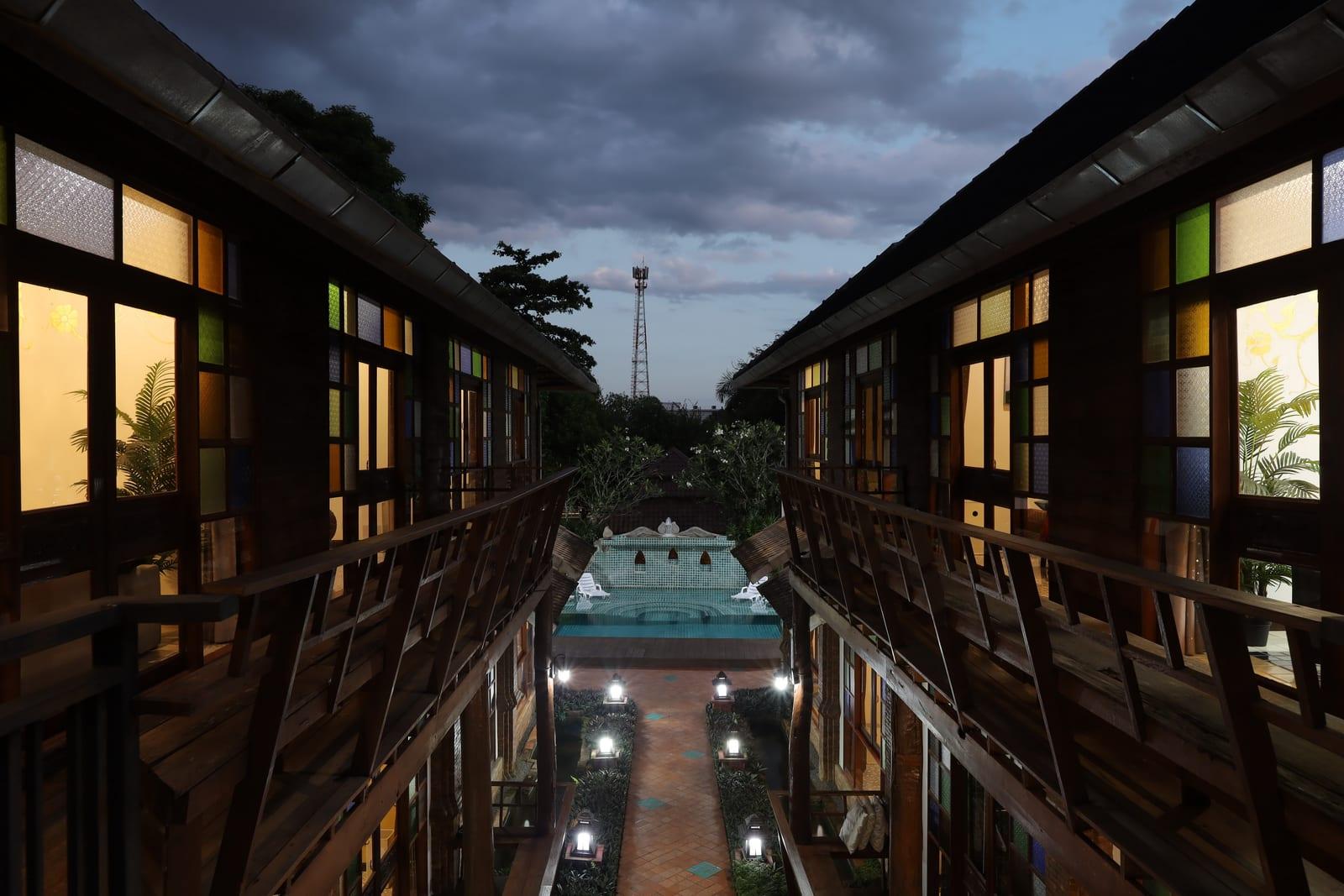
What actually exists in the gaps here is domestic rather than dramatic. A pool. A gym and courts, with pickleball and badminton being the two things people actually end up playing, described honestly by staff as a chuckle rather than a workout regime. Reading. Meals with the same nine people. Sitting outside. The fitness and nutrition side of the program is where the physical part of that is structured, because exercise in early recovery has a direct mechanism behind it rather than a wellness rationale.
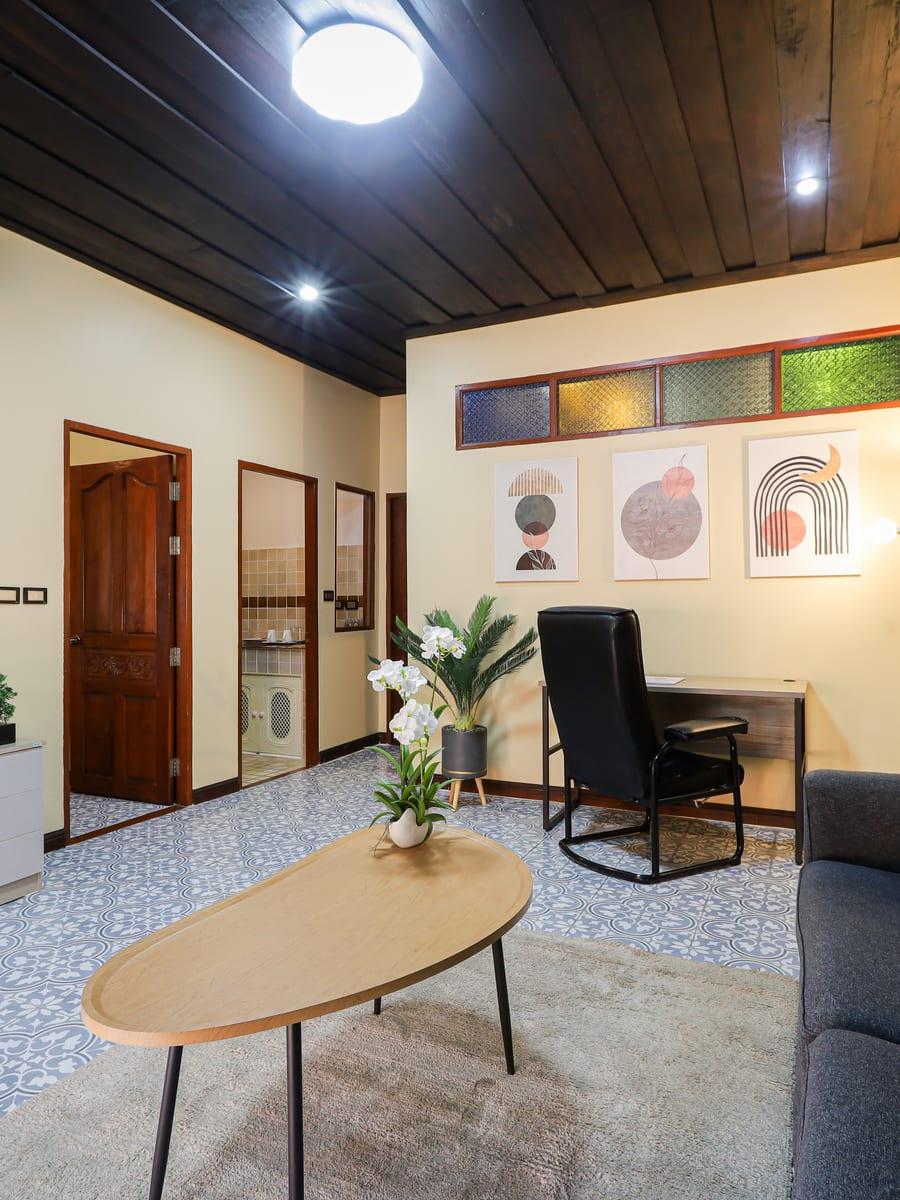
The other thing in the gaps is the group. Most of the hours in a residential month are spent with the other clients rather than with a clinician, which is why the size of the house matters more than the facilities do. Ten people is small enough that a bad evening is noticed by somebody. What the facility is actually like is worth looking at with that in mind rather than as a property listing.
If You Have Already Been to the Elephants Five Times
A real and increasingly common case. Some clients already live in Thailand, some in Chiang Mai itself, and for them the standard off-site day is not novel. They have seen the caves. They have done the cooking school with visiting relatives. The temple is at the end of their road.
The program's position on this is not that they should be excused. It is that they have misunderstood what the day is for, which is an easy mistake to make when the day is described by its destination.
It applies more widely than to residents. Anybody who arrives thinking of these outings as sightseeing will grade them as sightseeing, decide that a waterfall is not worth a Saturday, and quietly opt out of the part of the month where the actual rehearsal happens. The destination is the excuse for the exercise, and the exercise is being out in the world, in company, enjoying something, with no substance available and no need for one.
“Clients who are already in Thailand, sometimes from Chiang Mai itself, find some of the excursions are not super interesting to them. But keep in mind, the excursions aren't just to go to a certain excursion. They are the ability to have sober fun in a group of people without the need for drugs or alcohol. A lot of people think they are just excursions, but there is a lot more to the therapeutic value. Even if they have been to the elephants five times, we still want them to go, to experience what the excursion provides them in terms of the therapeutic program.
What a Visiting Family Member Does With Their Days Here
This is the half of the search that almost nobody writes for, and it deserves a straight answer rather than a tourist page.
Start with the part that changes the plan. Family contact during treatment is structured and consent-based rather than continuous. Communication sessions are offered from week three, with written consent, and they are not mandated, because the first fortnight is medical stabilisation and the opening of the psychological work, and unfiltered contact with home during it tends to import the exact dynamics the person came here to examine. Any visit is agreed case by case with the clinical team and depends on the stage of treatment. So a trip built around daily access to the person will not work, and it is better to know that before booking flights than after landing.
What that leaves, for anyone who comes anyway, is an unusual and slightly disorienting week: a city they did not choose, a person they cannot see on demand, and the first genuinely empty days many of them have had in years. The useful reframe is that this is the first week in a long time that is not being spent managing somebody else's crisis, and spending it well is not selfish. It is the beginning of the family's own recovery, which is a real clinical concern rather than a courtesy. Support for families sets out what the program asks of relatives and what it does not.
Practically, Chiang Mai is an easy city to be alone in. It is small, walkable in the old quarter, cheap, used to foreign visitors and not aggressive about it. There is enough to fill quiet days and enough quiet to think in. If you are coming, tell admissions before you book, because they will tell you honestly what contact is realistic in the week you have chosen rather than letting you find out on arrival.
Whether Staying On in Chiang Mai Afterwards Helps
People ask this a lot, usually in a version that sounds like a good idea. The month went well, the city is calm and cheap, home is where the problem is. Why not stay another few weeks and consolidate.
The program's own aftercare position is more sceptical than that, and it is worth hearing before the flights are changed. The standing advice is to go straight home, because the recovery has to work in the life the person actually has, and the gap between leaving treatment and starting the real thing is where a great deal of relapse lives. A pleasant extra month somewhere neutral can quietly become a way of postponing the return rather than preparing for it. How discharge and aftercare are planned sets that out in full, and the plan is built during the stay rather than at the end of it.
None of which makes an extended stay automatically wrong. Sometimes it is the right call for clinical reasons, and where it is, it is a decision made with the clinical team as part of a plan with a purpose and an end date, not a lifestyle choice made in the last week because the weather is good. The distinction is not subtle and it is usually obvious to everyone except the person making it.
How to Weigh Any of This When You Are Choosing a Program
The one thing not to do is choose a facility on the strength of its excursion list. Photographs of elephants and waterfalls are the easiest thing in this industry to produce and the least informative thing to compare, and the places with the best galleries are not reliably the places with the best clinical care.
Four questions are more useful, and all four can be asked in a single call:
The cost of the program and what is included sits on the pricing and inclusions page rather than here, and the clinical detail of the first days, including how withdrawal is monitored, is on medical detox. If the fear underneath the search was really about being confined and bored for a month, say that out loud to admissions. It is a much more common opening question than people assume, and it is an easier one to answer honestly than most.
- Is the off-site time clinically governed: Ask who decides whether a client goes out on a given day and on what grounds. If the answer is anything other than the medical team, the outings are being run as hospitality rather than as treatment.
- Who goes with the group: Nursing and support staff attending, rather than a driver and a guide, is the difference between a supervised clinical activity and a day trip with a supervisor's title attached.
- What happens to the person who cannot go: The answer tells you how the program treats a bad week. Structured care on site, meals and staff contact is a very different answer from an empty building.
- What fills the unscheduled hours: Ask what an ordinary Tuesday evening looks like. The people who have thought about it will have an answer immediately, and the clinical team rather than the marketing will be the ones giving it.

Talk with Our Admissions Team
Your enquiry is confidential and goes only to our admissions team.
Common Questions About Time Outside the Clinic
No. The month is structured rather than confined. There is a scheduled off-site day, usually Saturday and usually a full day, alongside on-site activity, a pool, a gym and courts, and unscheduled time. Whether a particular client attends a particular outing is a clinical decision taken by the nursing team on the day, based on sleep, vitals, mobility and how they are coping, so the first week may be spent on site while withdrawal settles.
They do something specific. Heavy substance use downregulates the brain's reward system, so early recovery is flat rather than neutral, and sensitivity returns through repeated exposure to ordinary rewards. A supervised day out is where a person gets evidence, in a real setting, that an enjoyable day is possible without a substance in it, and where being in public sober gets rehearsed. The destination is the delivery mechanism rather than the point.
A great deal, which is part of why the city suits this. Chiang Mai is an inland city whose daytime life runs on temples, markets, craft trades, coffee and the countryside immediately outside it rather than on an evening economy. Forest, waterfalls, reservoirs, caves, gardens and mountain villages all sit within about an hour, and costs are low enough that an outing is an ordinary Saturday rather than a special occasion. In the northern burning months, air quality moves plans indoors.
Plan for less access than you expect. Family contact is structured and consent-based, communication sessions are offered from week three with written consent and are not mandated, and visits are agreed case by case with the clinical team depending on the stage of treatment. Tell admissions before booking flights so you know what is realistic for the week you are choosing. Chiang Mai is a small, walkable, inexpensive city that is easy to be alone in, and the week is worth spending on yourself rather than on waiting.
The program still encourages it, and the reason is that the therapeutic value is not in the destination. If you have already been to the caves and the elephants, what you have not done recently is spend a whole day out, in a group, enjoying something, with no substance available. That is the exercise. Attendance in any given week is still a clinical judgement made on the day rather than an obligation.
The standing aftercare advice is to go straight home, because recovery has to work in the life you actually have and the gap between discharge and starting that life is where a lot of relapse happens. An extended stay is sometimes the right clinical call, but when it is, it is planned with the clinical team with a purpose and an end date rather than decided in the final week because the weather is good.
Jintara is a small adult residential rehab in Hang Dong District outside Chiang Mai, with a maximum of ten clients. Nothing on this page is clinical advice. Whether any client attends any off-site activity is a decision made by the clinical team on the day, and program suitability is assessed individually.
Jintara Rehab is licensed by the Thai Ministry of Public Health as a rehabilitation centre. The clinical information on this page describes Jintara's general approach to supporting clients during the early recovery period. Medical decisions, including medication protocols, are determined by addiction-specialist psychiatrists through our partner hospital pathway. Individual treatment varies based on clinical assessment. This content is for informational purposes and does not constitute medical advice.