

Private Rehab in Chiang Mai. What the Word Luxury Actually Buys
Luxury is an amenity claim and any facility can make it. Private is a clinical claim and it can be checked. This page separates the two, sets out what single occupancy, a small client group and real confidentiality are worth during treatment, and is honest about the point where Jintara stops being the right answer.
- Luxury is an amenity claim. Private is a staffing claim, and it can be checked
- Single occupancy stops being decoration on the second night of a detox
- Discretion is either a written policy or a promise, and the two differ
- Jintara is small and clinical rather than a resort, and says so plainly


Fully Licensed and Hospital Accredited
Most People Searching for Luxury Rehab Want Three Specific Things
Nobody wants gold taps. That is not what the word is doing.
The query arrives three ways now. Typed into Google. Spoken into a phone in the car. Put to ChatGPT at two in the morning as a full sentence, because the person asking would rather not say it out loud to anyone who can hear them. The channel changes. The request underneath does not, and it is always the same three things.
- Their own room: Not for comfort, although comfort is real. Because withdrawing in front of a stranger in a shared room is one of the most common reasons people put admission off for another month.
- A small client group: People picture a ward. They want a household rather than an institution, where staff know their name in the first two days instead of the second week.
- That nobody finds out: Voiced last and felt first. For business owners, senior professionals and parents, being seen is a larger fear than withdrawal.
Luxury is the one word available for all three, so it is the word people reach for. It is a poor word for the job. It describes a price bracket rather than a clinical arrangement, and every facility in every bracket is free to use it, which is why it tells you nothing. This page answers the three real requests instead. Jintara runs a single rehab in Chiang Mai, so the closing sections set out where this program fits and where it does not.
Luxury Is an Amenity Claim. Private Is a Clinical One
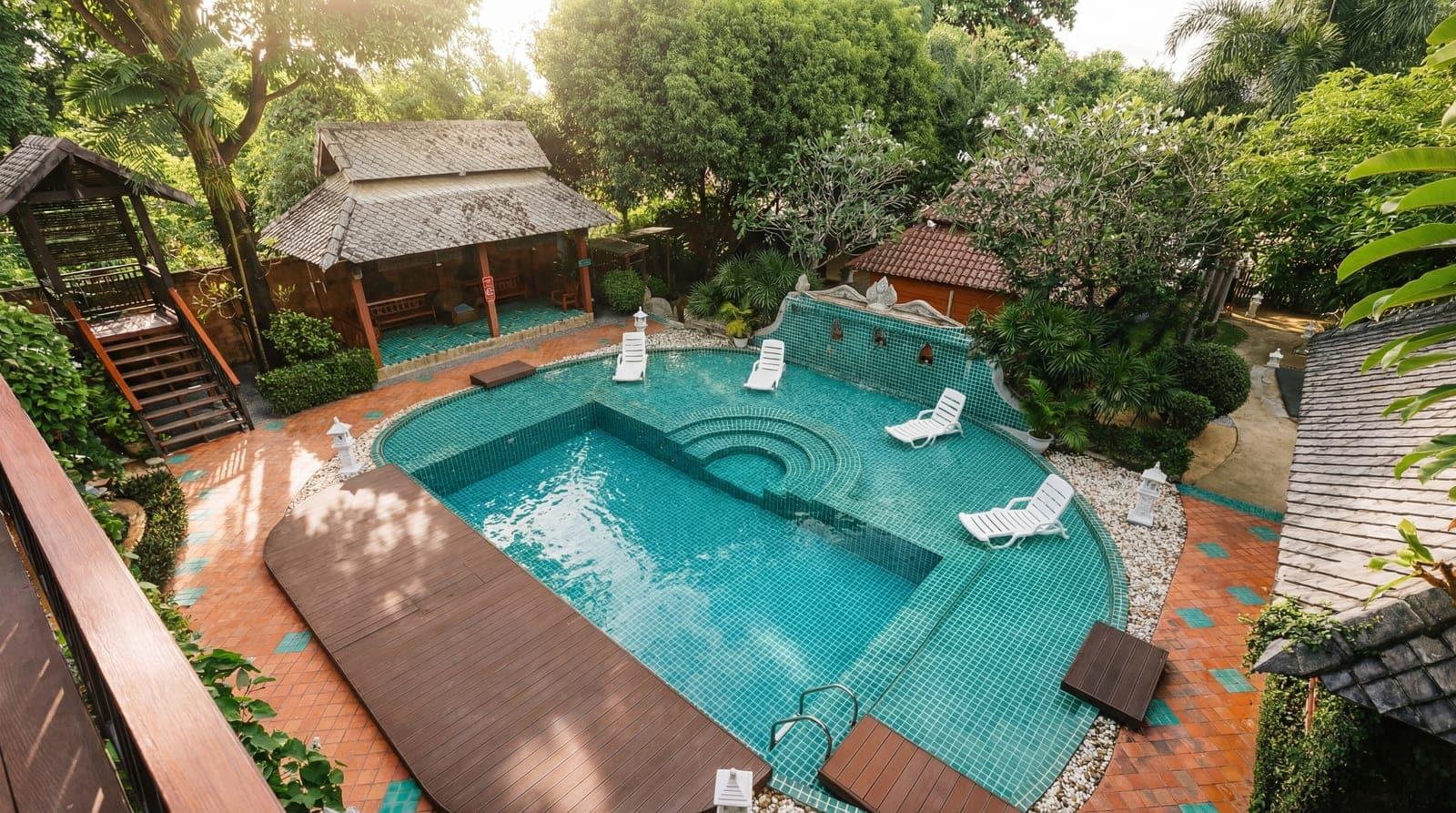
An amenity claim describes what a place looks like. A pool, a view, teak, a private chef. It is real and it is not nothing, because a person lives there for thirty days and the surroundings affect mood, sleep and willingness to stay. It is also unverifiable in the way that matters, because the photographs are chosen by the facility and every brochure in this category looks the same.
A clinical claim describes what happens to a person. How many clients share one therapist. Whether the psychiatrist is on site or on the phone. Whether a nurse is awake at three in the morning or asleep down the corridor. Whether detox happens on the property or is subcontracted to a hospital and handed back afterwards. Those are numbers and arrangements. They can be asked for, and they can be compared between two facilities in a single afternoon.
The two claims come apart more often than people expect, and the reason is dull. A building is paid for once. Staff are paid every month. So a facility can be genuinely beautiful and clinically thin, and another can be modest and clinically dense. The clinical case for staying small is argued separately, and it turns on ratios rather than on surfaces.
The useful question is therefore not whether a place is luxurious. It is which of the three requests above a facility can actually answer, and what evidence it offers for each.
Single Occupancy, and Why the Room Stops Being Decoration Once Detox Starts
Every client at Jintara has a private en-suite room, and it is inside the program fee rather than sold as an upgrade. That second part matters more than it sounds. Where a private room is an upgrade, the standard offer is a shared one, and the people who most need privacy are usually the least able to ask for it during an intake call.
Here is why the room is clinical rather than cosmetic. Withdrawal disturbs sleep for the first week and often longer. Sweating, restlessness, vivid dreams and being wide awake at four in the morning are ordinary parts of it. A person doing that beside a stranger sleeps worse, and sleep is one of the few variables that visibly changes how the first fortnight goes. Privacy also gives somewhere to put the days that go badly. Therapy in the second week routinely opens material a person has avoided for twenty years, and there needs to be a door between that session and the dinner table.
There is a second effect people only notice once they arrive. Having a room of your own is what makes a small group tolerable. Ten adults living closely together will find each other difficult at some point in a month. Somewhere to withdraw to for an hour is what stops that from becoming a reason to leave early.
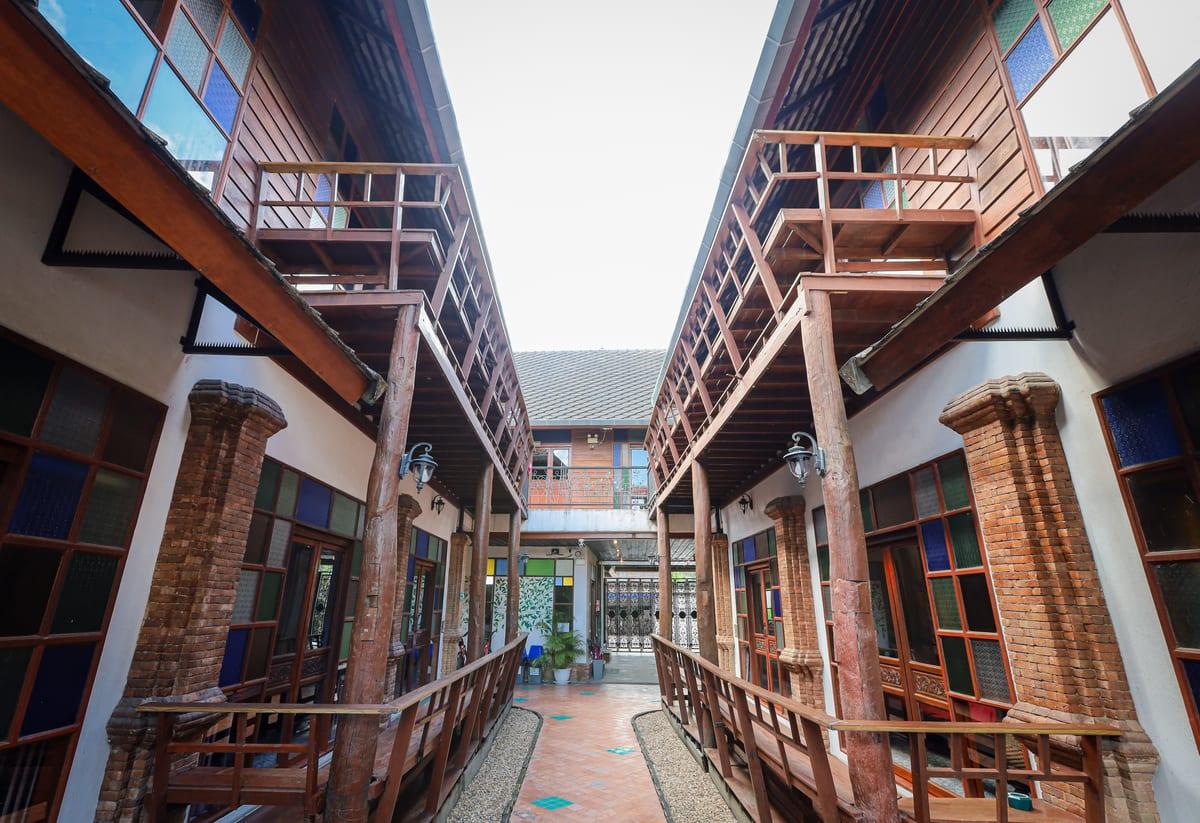
None of this requires a resort. It requires a door, a bathroom and a bed that is yours for the whole stay. The buildings themselves are teak, stained glass and gardens rather than marble, and they are photographed as they are.
Staff Ratio Is the Number That Decides Whether Private Means Anything
Jintara runs a maximum of ten clients at any time with around 32 staff, roughly 3.2 staff to every client. Three full-time therapists carry the individual and group work, which puts each caseload at three to four people at full occupancy. A consulting psychiatrist assesses every client on arrival. Nursing is awake through the night during detox rather than on call from home.
Those numbers are the argument. A private room inside a sixty-bed facility with eight therapists is a pleasant room attached to a queue. Individual therapy gets rationed. The treatment plan is a template with a name on it. The person who notices you have gone quiet is another client rather than a clinician.
At a ratio of 3.2 to 1 the arrangement inverts. The plan is built around the person because there is capacity to build it. A change in mood on a Tuesday reaches the therapist the same day rather than at the next scheduled review. The founder screens every admission himself, which is only possible at ten clients, and it is the reason the group in the room tends to fit together.
This is also the honest limit of the model, and it runs the other way. Ten beds cannot fund four psychiatric subspecialties, a dedicated eating disorder team or a large peer community. Where a clinical picture needs that depth, a bigger facility is the better answer, and the people who deliver it here will say so during screening rather than after admission.
- Ask for the caseload, not the headcount: Total staff includes kitchen, grounds and drivers. The number that changes treatment is clients per therapist at full occupancy.
- Ask where the psychiatrist sits: On site for assessment and medication review is a different service from a telehealth call booked for next week.
- Ask who is awake overnight: Awake nursing during detox and on-call nursing are two arrangements that get described with the same phrase.
“I don't want to be a one size fits all rehab, so every client that comes is just a little bit different. A client asked to be taken to mass on a Sunday. We don't generally do that, but of course we took him. His glasses had broken a week and a half earlier at his previous rehab and they refused to fix them. We fixed them in one hour. He said, when you say you are going to do it, it just happens.
Discretion, and What Confidentiality Means When It Is Written Down
Discretion is the request people make last and worry about most, and it is where the gap between marketing and policy is widest. Every facility says it is confidential. The question is what that sentence is attached to.
At Jintara, confidentiality sits under Thailand's Personal Data Protection Act 2019. The operating commitment is specific: the facility never confirms nor denies that a person is there to any third party without written authorisation. Family contact during treatment is consent-based rather than automatic. Communication sessions are offered from week three and are not mandated. Medical records belong to the client, who can request a summary, a full copy, or a direct transfer to a named professional at any point during or after the stay.
The limits are published as well, and that is the part which makes the rest credible. Disclosure is required where there is imminent risk of self-harm, a credible threat of violence, a child-harm disclosure, or a medical emergency needing hospital transfer. A facility claiming no limits at all has either not thought about it or is not telling you the truth.
Treatment in another country adds a layer no policy can manufacture. Nobody in a client's professional or social circle is in Chiang Mai. There is no chance encounter in a car park at home, and no colleague recognised in a waiting room. For people whose main fear is being seen, geography does work that a privacy policy cannot.
What Jintara Is Not
This is an adult-only residential treatment program in Hang Dong District, outside Chiang Mai. It is not a wellness resort, it is not a retreat, and it is not a five star hotel with a therapist attached. The days are structured. Phones are put away for most groups. Attendance at the morning program is expected rather than optional. Medical detox runs on site with observations through the night, and that shapes the first week far more than the grounds do.
If the priority is a hotel experience with light therapeutic content, this is the wrong program, and a referral elsewhere is the better outcome for everybody. Admissions are declined on fit regularly: people who are too young for the group, people whose clinical needs exceed what ten beds can safely hold, and people who have been sent by their family rather than choosing to come.
One further thing belongs here rather than in the small print. Jintara holds Thai Ministry of Public Health accreditation, certificate 25/2569, valid from 20 May 2026 to 19 May 2029, under licence SFD 50:13-106, and is one of only six private rehabs in Thailand holding it. It does not hold and does not claim JCI or CARF accreditation, which are international hospital and behavioural-health standards awarded by other bodies. Marketing in this category treats the three as interchangeable. They are not, and any facility should be able to say precisely which one it holds and who issued it.
What a Private Program in Chiang Mai Costs, and What Changes the Number
Private residential treatment in Thailand spans roughly $3,000 to more than $20,000 USD a month, and the spread is explained almost entirely by staffing rather than by decor. A facility at the lower end is not cheating anyone. It is running a different model, usually with a higher client count per therapist and detox handled off site.
Jintara's 30 day program is $12,500 USD, which sits mid-range for the international market and near the top of the Thai one. The fee is inclusive rather than modular, and that is the part worth checking against any other quote, because the number people compare is rarely the number they pay. Included here: the psychiatrist assessment on arrival, the day two hospital workup at Bangkok Hospital Chiang Mai, awake nursing, the full detox protocol, all individual and group therapy, holistic sessions, excursions, the private room, all meals and airport transfers. Chiang Mai International Airport is under ten kilometres away and the transfer is arranged rather than left to the client.
The comparison people usually want is against home. A program with this staffing ratio in Australia, the United Kingdom or the United States typically runs two to three times higher, and the gap is a labour-cost difference rather than a quality one. Exactly what the fee covers is set out in full on the pricing page rather than repeated here, so there is a single source for it.
How to Test Any Chiang Mai Facility That Calls Itself Private or Luxury
Six questions separate the claim from the arrangement, and they work on any facility in any city. Ask them in one call. The answers arrive quickly or they do not arrive at all, and both outcomes tell you something.
A facility that answers all six with specifics is telling you the truth about being private. A facility that answers with adjectives is telling you about its photography.
For anyone weighing this program in particular, the useful next step is not more reading. The admissions conversation covers withdrawal risk, whether the group is the right fit, and whether ten beds can safely hold the clinical picture, and it ends in a referral elsewhere when the answer is no.
- How many clients are in the house today: And what the stated maximum is. The gap between the two is worth hearing said out loud.
- How many therapists, and what caseload each carries: At full occupancy, not at average occupancy. Ask for the number, not the ratio of total staff.
- Is the private room standard or an upgrade: And is it en suite. If it is an upgrade, ask what the standard room is.
- Is detox on site, and who is awake overnight: On site with awake nursing, on site with on-call nursing, and subcontracted to a hospital are three different products.
- Which accreditation, by name and certificate number: And which body issued it. A facility that cannot produce the number does not hold it.
- Do you ever confirm a client is there: And under what written policy, with what exceptions. Vagueness here is the answer.

Talk with Our Admissions Team
Your enquiry is confidential and goes only to our admissions team.
Common Questions About Choosing a Private Rehab in Chiang Mai
Several Chiang Mai facilities describe themselves that way, and the word is not regulated, so it carries no fixed meaning. What people usually want from it is a private room, a small client group and real confidentiality. Those three are checkable. Ask for the client maximum, the caseload per therapist and the written confidentiality policy, and the claim resolves into facts.
Private describes the clinical arrangement: single occupancy, a small client group, a named confidentiality policy and a staffing ratio that lets treatment be built around one person. Luxury describes the surroundings. The two often travel together and they are not the same thing, and a facility can be genuinely beautiful while running a thin clinical team.
Yes. Every client has a private en-suite room and it is included in the program fee rather than sold as an upgrade. That matters during detox, when sleep is already disturbed, and in the second and third weeks, when therapy opens material that needs somewhere private to land afterwards.
Confidentiality at Jintara sits under Thailand's Personal Data Protection Act 2019, and the facility never confirms nor denies that a person is a client without written authorisation. Disclosure is required only for imminent self-harm risk, a credible threat of violence, a child-harm disclosure or a medical emergency. Distance adds what policy cannot: nobody from a client's professional circle is in Chiang Mai.
Private residential treatment in Thailand runs from roughly $3,000 to more than $20,000 USD a month, and staffing rather than decor explains most of the spread. Jintara's 30 day program is $12,500 USD, inclusive of the private room, medical detox, awake nursing, all therapy, meals and airport transfers. The full inclusions list is on the pricing page.
No. It is a small adult-only residential treatment program in Hang Dong District outside Chiang Mai, with a maximum of ten clients, structured days, phones away during most groups and medical detox on site. Anyone whose priority is a hotel experience with light therapeutic content is a better fit somewhere else, and admissions will say so.
Jintara is a small adult residential rehab in Hang Dong District outside Chiang Mai, with a maximum of ten clients. This page describes a treatment model rather than comparing providers, and is general information rather than clinical advice. Suitability is assessed individually.
Jintara Rehab is licensed by the Thai Ministry of Public Health as a rehabilitation centre. The clinical information on this page describes Jintara's general approach to supporting clients during the early recovery period. Medical decisions, including medication protocols, are determined by addiction-specialist psychiatrists through our partner hospital pathway. Individual treatment varies based on clinical assessment. This content is for informational purposes and does not constitute medical advice.