

Your Rights as a Client at Jintara
Jintara is a licensed Thai treatment centre. Every client holds five core rights. Confidentiality protected under Thailand's Personal Data Protection Act. Informed consent before any treatment or medication. The right to decline or change a therapy without losing care. A clear grievance process with named escalation steps. Access to your own medical records on request. These rights are written into your admissions paperwork, not promised verbally.
- Confidentiality protected under Thailand's Personal Data Protection Act 2019
- Informed consent required before any treatment, medication, or therapy
- Right to decline or change a therapy at any point during treatment
- Clear grievance process with named escalation steps, up to Ministry of Public Health


Fully Licensed and Hospital Accredited
Your Rights Are Not Suspended at the Door
Client rights at Jintara are the five documented protections that govern every stage of your care from the moment you arrive to the point of discharge.
A common worry before admission: once you sign in, do you lose control of what happens next? At Jintara, no. You keep the right to know what is being recommended, the right to ask why, the right to say no, and the right to leave. This is stated on day one because pretending otherwise damages trust, and trust is what makes treatment work.
This page sets out the rights you hold, the policies behind them, and what to do if a right has been crossed. If anything is unclear, ask the admissions team before you book.
Your Right to Confidentiality
Jintara operates under Thailand's Personal Data Protection Act 2019 (PDPA), which sets the legal floor for how we collect, store, and share information about you.
In practice this means three things. We do not confirm to anyone that you are a client without your written permission. We do not share clinical notes, photos, or therapy content with family, employers, or insurers without a signed release naming exactly what may be shared and with whom. We keep records in locked physical files and access-controlled systems, separate from any communal area.
In small, tight-knit communities where clients would recognise each other, Darren admits only one client at a time. Two clients who recognise each other have already broken their own privacy, even when staff maintain strict confidentiality. This is a real operational limit applied consistently.
Privacy continues after discharge. Anyone who calls asking about you, including a family member, gets the same answer: we cannot confirm or deny that the person is or was a client.
How Informed Consent Works at Jintara
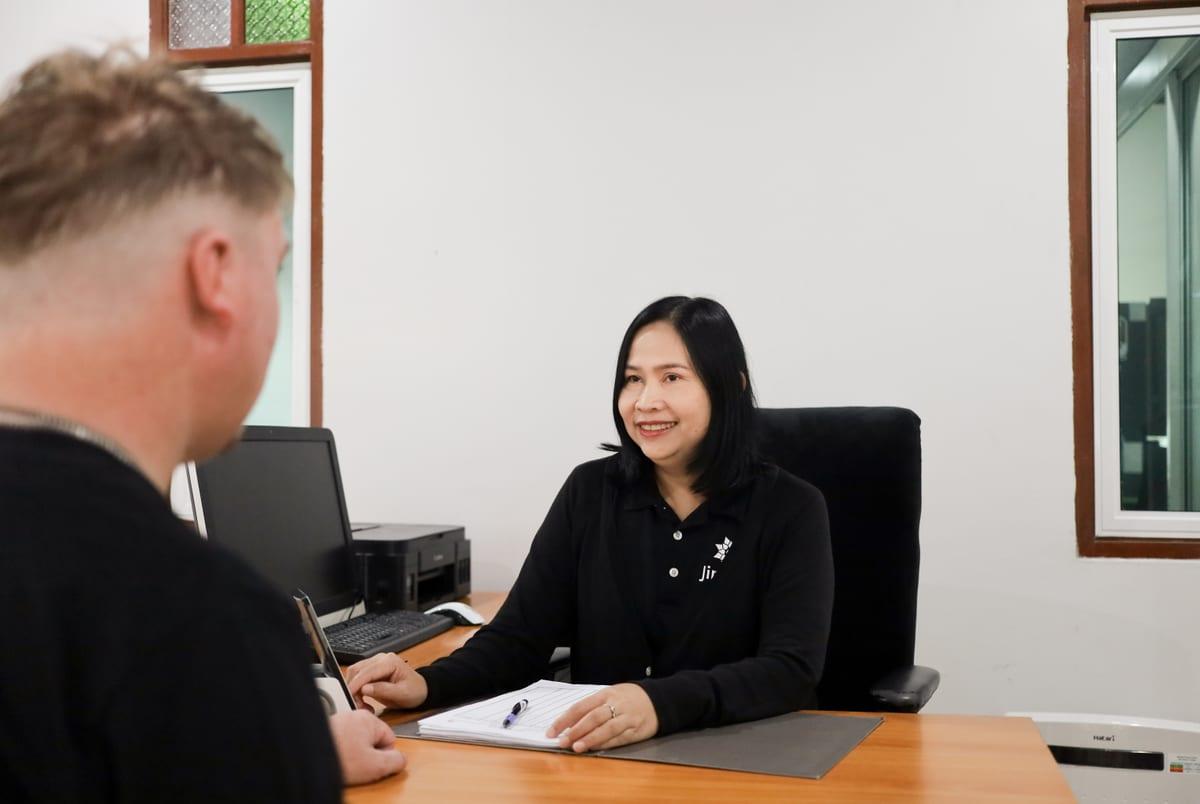
Informed consent is not a single signature. It is a sequence of conversations.
Before you arrive, the admissions team sends a consent pack covering admission to the facility, drug and alcohol testing on arrival, baseline medical screening, and our policy if you arrive intoxicated. You sign these before travel. If you arrive over the threshold for safe admission, we follow a defined safety protocol explained in the same paperwork.
After arrival, our Clinical Director Denise O'Leary walks you through the proposed treatment plan. The first job is to make sure you understand what is being done and why, so you can consent to it and engage with it once it starts.
Specific consent points, in plain language:
- Medication consent. Any medication, including detox protocols, is named, the purpose explained, side effects covered, and the alternative discussed. You can decline.
- Therapy modality consent. EMDR is offered, not assigned. The same applies to group work, family sessions, and any holistic component across the program. Consent is recorded in your file.
- Activity consent. Off-site excursions and the day-two medical workup are at our cost. You can opt out of specific elements. We explain what we lose clinically if you do.
Consent is recorded in your file. You can ask to see what you signed at any time.
Your Right to Decline or Change a Therapy
You can stop a therapy that is not working for you. This includes EMDR, individual sessions with a specific therapist, group attendance, and any holistic component. The clinical team adjusts the plan with you, in writing, and the change goes into your file.
What you cannot do is opt out of basic safety care without ending the program. If you decline vital signs checks during medical detox, for example, we cannot keep you under medical supervision and would need to discuss either a modified plan or discharge. We are honest about this on day one.
Disagreement is part of recovery, not a problem to suppress. The rehabs that listen are the ones the client trusts. We listen, we adjust where it is clinically safe, and we tell you when it is not.
How to Raise a Grievance at Jintara
If you have a complaint, the path is clear. Most issues are resolved at the first step.
- Step 1. Raise it with your primary therapist, in your next scheduled session or sooner if urgent.
- Step 2. If unresolved, escalate to the clinical director. A meeting is offered within two business days.
- Step 3. If still unresolved, escalate to the founder, Darren Lockie, who takes complaints directly.
- Step 4. If you remain dissatisfied, you may submit a formal complaint to Thailand's Ministry of Public Health under your rights as a patient at a licensed treatment centre.
We do not retaliate for complaints. Filing a grievance does not affect your treatment plan, discharge plan, or any onward referral we provide. To discuss something privately before raising it formally, contact us and ask for a confidential call.
Accessing Your Medical Records
Your file belongs to your care. The information in it belongs to you.
We keep a complete physical and digital record from day one. That includes intake screening, signed consent forms, medication administered, daily clinical observations, therapy notes, discharge plan, and aftercare paperwork.
You can request a summary of your stay for your GP or outpatient therapist, a full copy of your records, or a direct transfer of clinical notes to a named professional outside Jintara with your written authorisation.
Requests can be made during your stay or after discharge. We will not refuse a records request from a current or former client.
Communication With Family During Treatment
Your family is not automatically inside your treatment. They are included only with your authorisation.
At intake you decide who can be told you are at Jintara, who can call the facility, and what they can be told. You can change this list at any time and we document the change.
Family sessions are offered when clinically indicated and only with your consent. The same applies to letters, gifts arriving at the facility, and visits.
When Confidentiality Has Limits
Confidentiality protects you from outside disclosure. It does not protect anyone from immediate risk of harm.
Thai law, like most jurisdictions, requires a treatment centre to act when there is a credible risk of serious harm. In practice, the limits we apply are:
- Imminent risk of suicide or self-harm. We act to keep you safe and inform the contact you nominated at intake.
- Credible threat of violence to another person. We act to protect that person.
- Disclosure of harm to a child. We follow Thai mandatory reporting requirements.
- A medical emergency requiring hospital transfer. We share the minimum clinical detail needed for safe handover to our hospital partners.
These limits are standard for any licensed clinical facility. We name them upfront. They are included in your admissions pack before you arrive.

Why the Rights, Not the Brochure, Matter
Some treatment centres treat client rights as a wall plaque. They reference confidentiality without publishing how it works. They mention consent without naming what you sign. They describe a complaint process without saying who handles it.
That question, whether rights on paper translate to rights in the room, is exactly what independent accreditation covers. The Healthcare Accreditation Institute, which certifies Thailand's hospitals, jointly assessed Jintara's clinical governance alongside the Princess Mother National Institute on Drug Abuse Treatment and the Department of Medical Services. Certificate 25/2569, one part of Jintara's licensing and third-party recognition, means three national government authorities already reviewed how consent is documented, how grievances are handled, and how patient rights are enforced. You do not have to take our word for it.
Jintara takes a different position. The rights on this page are written into your admissions pack, signed at multiple points during treatment, and reviewed at discharge. If a clinician crosses one of them, that is a serious internal matter, not a misunderstanding.
We treat your rights as part of the clinical work, not as legal cover for the organisation. Confidentiality at Jintara protects your privacy. It does not hide our practices.
With a maximum of ten clients at any time and a 3.2:1 staff-to-client ratio, the team has the capacity to apply these standards with every client. Rights are part of the clinical relationship, not the paperwork around it.

Talk with Our Admissions Team
Your enquiry is confidential and goes only to our admissions team.
Common Questions About Your Rights at Jintara
We operate under Thailand's Personal Data Protection Act 2019. We do not confirm or deny anyone is a client. Records are stored in locked physical files and access-controlled systems. Sharing requires your signed release naming exactly what may be shared and with whom. The same protections apply during and after your stay.
Yes. EMDR is offered, not assigned. The same applies to group work and family sessions. If a therapy is not working for you, raise it with your primary therapist. The clinical team adjusts the plan with you and updates your file in writing.
You discuss the disagreement with your primary therapist. If unresolved, the clinical director joins the conversation. The plan is then either adjusted, kept and explained more fully, or replaced. We document the change. Disagreement is not penalised.
Request a summary or full copy from the clinical team during your stay or by email after discharge. We will not refuse a records request from a current or former client.
A family member can call us. We will not confirm you are a client, will not share any clinical detail, and will not pass on a message unless you have authorised that contact in writing during intake.
We act to keep you safe and contact the person you named at intake as your emergency contact. This is a documented limit to confidentiality and we explain it in your admissions pack before you arrive.
Only with your signed authorisation that names the insurer, the time period covered, and the type of information released. You can withdraw the authorisation at any time, and we stop sharing from that point forward.
Step one is your primary therapist. Step two is the clinical director. Step three is Darren Lockie, the founder. Step four, if needed, is a complaint to Thailand's Ministry of Public Health. We do not retaliate at any step.
Yes. Treatment is voluntary. We will discuss the clinical risks of an early exit, work through a safe discharge plan if time allows, and provide a copy of your records and an aftercare referral.
You sign separate consents for admission, drug and alcohol testing, the day-two medical workup, medication, and therapy modalities. Each sits in your file. You can ask to see what you signed at any time.
Yes. As part of Jintara's hospital-grade accreditation, the Healthcare Accreditation Institute, the Princess Mother National Institute on Drug Abuse Treatment, and Thailand's Department of Medical Services reviewed the facility's clinical governance procedures. That includes how informed consent is documented, how the grievance process is structured, and how patient rights are enforced during treatment. Certificate 25/2569, valid May 2026 to May 2029, is the outcome of that review. Jintara is one of only six private rehabs in Thailand to hold it.
Accreditation is not self-declared. The HAI assessment checks whether a facility's documented procedures match what happens in practice, including consent workflows, grievance escalation paths, and clinical record-keeping. When a national authority that sets standards for Thailand's hospitals has already carried out that check, families do not have to rely solely on what the facility says about itself.
Jintara is a small adult residential rehab in Chiang Mai with a 3.2:1 staff-to-client ratio. These rights apply to every client from day one. If you have a question not answered here, call admissions before you book.