
English-Speaking Rehab in Thailand When You Already Live in the Region
Most rehab pages are written for someone deciding whether to fly here. This one is written for the person who is already in Bangkok, Manila, Ho Chi Minh City, Singapore or Chiang Mai itself, and whose real questions are about language, visa status, work and the family who are three hours away rather than thirty.
- What English-speaking means once the psychiatrist and the group start
- The public Thai system and the private English one are different products
- Visa rules are mid-change, so the page cites the change instead of a number
- Admission by road or a domestic flight, without leaving the region
Licensed by the Ministry of Public Health.
Accredited under Thailand’s national standard for drug treatment and rehabilitation facilities.
What Changes When You Already Live in the Region
A person searching from Sydney or Manchester is asking one question. Should I leave the country for treatment.
A person searching from Bangkok, Manila, Ho Chi Minh City, Dubai or a condo in Chiang Mai is asking something else entirely. They have already left. The travel argument was settled years ago by a job or a partner or a business. What they want to know is narrower and more practical: what treatment exists in English near where they live, what a month in residential care does to their visa and their work, and whether their family can reach them without an international trip.
A steady share of enquiries here come from that second group rather than from the long-haul markets. The pattern is consistent enough to be worth writing for. The person has usually been managing the problem alone for a long time, often without a doctor they trust in their own language, and often without telling anyone in their professional circle, which in a smaller expatriate community is a circle where everybody knows everybody.
This page answers the resident's version of the question. If you are still deciding whether to travel at all, rehab in Asia for expats and international professionals covers that decision, and rehab in Chiang Mai covers the program itself.
What English Speaking Means Once Treatment Actually Starts
Almost every private facility in Thailand says it offers treatment in English. The phrase covers a wide range, and the difference only shows up after admission, when it is expensive to discover.
Reception in English is not the same as therapy in English. Addiction treatment is delivered almost entirely through language. A group session works because eight people can follow a fast, emotional conversation and interrupt it. A psychiatric assessment turns on shades of meaning in how a person describes their sleep, their mood and their drinking. Trauma work is language at its most careful. An interpreter in that room changes the work, and it is the sort of change nobody puts in a brochure.
The questions that resolve it are short. Are the therapists delivering individual and group sessions native or fluent English speakers. Does the psychiatrist assess in English directly or through a translator. Are the nursing observations during detox taken by staff who can understand a person describing a symptom at three in the morning. Are the consent forms, the treatment plan and the discharge summary written in English.
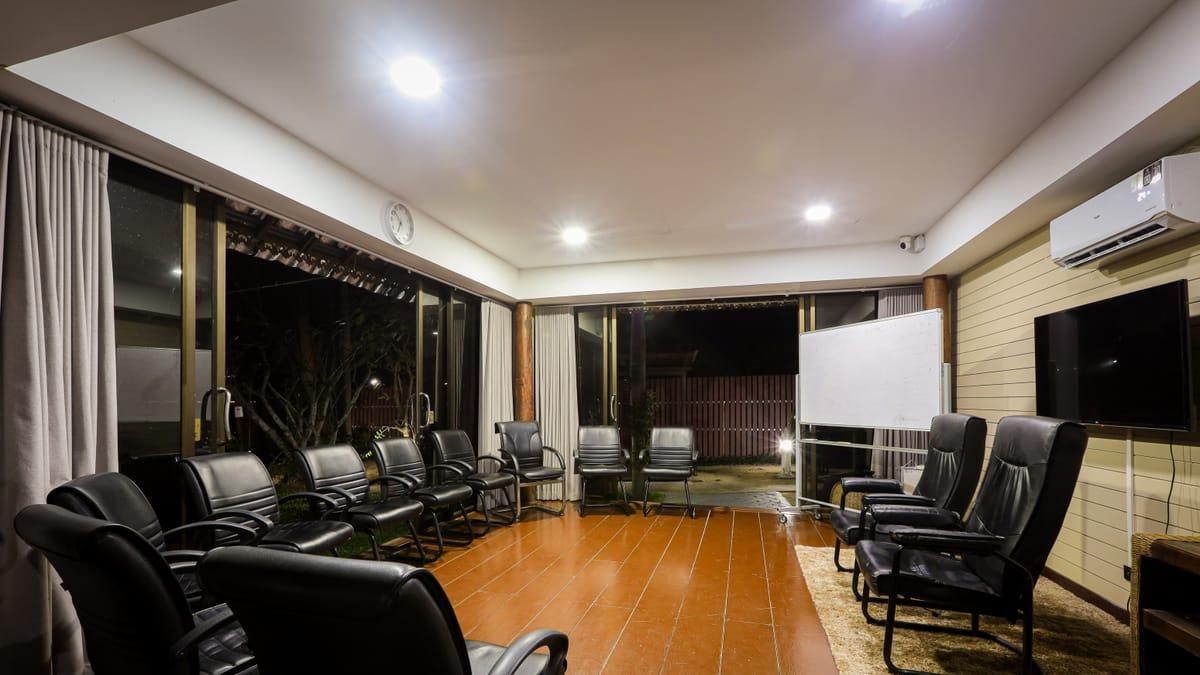
At Jintara the answer is that the clinical program runs in English throughout. Three full-time therapists carry the individual and group work. A consulting psychiatrist assesses every client on arrival. Nursing is awake through the night during detox rather than on call. The clinical team is international, and the group in the house is an English-speaking group, which matters as much as the staffing does, because most of the hours in a residential month are spent with the other nine people rather than with a clinician.
Thailand Has a Public Treatment System and a Private One, and They Are Different Products
Anyone living in Thailand should know that a public addiction treatment system exists here, because it is rarely mentioned on private facility websites and that silence is not honest.
The Princess Mother National Institute on Drug Abuse Treatment, formerly the Thanyarak Institute, sits under Thailand's Ministry of Public Health and anchors a national network with regional hospitals across the country. It carries a very large caseload, it has been running since 1959, and it publishes its own clinical research. It is a real treatment system rather than a token one.
It is also built for the population it serves. Services are delivered in Thai, the model is designed around Thai residents and Thai funding, and whether a foreign resident can access a given program, on what terms and at what cost, is a question for that hospital and for your provincial health office. It is not a question a private facility should answer on your behalf, and this page will not.
The honest summary is that these are two different products. If you read and speak Thai comfortably, or you have a Thai spouse who can carry the process with you, the public route is a legitimate answer and it is far cheaper. If your treatment needs to happen in your own language, and if privacy from your own community is part of what you are buying, private English-language residential care is the category you are actually shopping in. Within that category the checkable thing is accreditation. Jintara holds national accreditation against Thailand's quality standard for drug treatment and rehabilitation facilities, certificate 25/2569, valid from 20 May 2026 to 19 May 2029, under licence SFT.50.13-11116. What that accreditation was assessed against is published rather than summarised, and it was certified jointly by the Healthcare Accreditation Institute, that same national institute, and the Department of Medical Services.
Visa Status and Length of Stay While You Are in Treatment
This is the section where most websites state a number, and it is the section where a number is most likely to be wrong.
Thailand's entry rules are mid-change, and any specific day count on a facility website can be out of date by the time you travel. What that means for one passport on one date is not something to take from any facility's website, including this one.
Two situations are worth separating, because they are not the same problem.
Neither case is a reason to delay a phone call. The pre-admission conversation covers documentation before anything is booked, and the admissions process sets out what is needed and in what order. What Jintara does not do is tell you what your immigration status is. That comes from the Royal Thai Embassy or consulate for your nationality, or from an immigration lawyer if your situation is complicated.
- You already hold a long-stay permission: Work, marriage, retirement, education and the newer long-stay categories are governed by that permission rather than by the tourist exemption, and a later change to tourist stamps does not rewrite them. A 30 day residential stay usually sits inside a life you are already living here.
- You are in the region on a short stay or an exemption: The permitted period depends on your nationality and on whether the revised rules have taken effect on the day you arrive. Confirm it with the Thai embassy or consulate for your passport before you book anything, and tell admissions what you are told.
Work, Employers and the Question of a Permit
A work permit in Thailand is tied to an employer and to a visa category, so the effect of a month away depends on your permit type, your contract and your employer's own process. Those are specific facts about your situation, and a general answer on a website is worth nothing against them. Ask your HR department, or an immigration lawyer, before you assume either the best case or the worst.
What can be said generally is that a month is a manageable absence for most employed people, and that it is usually handled as leave. Thirty days is shorter than a serious surgical recovery and considerably shorter than what an untreated problem eventually costs the same employer. What to tell an employer about a month away is a separate question from the legal one, and it deserves its own thought rather than a decision made in a panic on a Sunday night.
On documentation, admissions can provide what a clinical absence normally requires, including a medical certificate and confirmation of dates for whoever needs them. Nothing is sent anywhere without your written authorisation, and the facility does not contact an employer on its own initiative under any circumstances.
Admission Without an International Flight
If you already live in Thailand, the whole travel question collapses into a domestic one. Chiang Mai is reachable by domestic flight from every major Thai city and by road from anywhere in the north. There is no long-haul leg, no jet lag arriving into the first days of a detox, and no thirty hour journey home at the end of it.
For people living elsewhere in the region the calculation inverts compared with the long-haul markets. Chiang Mai has direct regional routes rather than only a Bangkok connection, and the journey is short enough that a family member can accompany someone to admission and be home the next day. That is a materially different proposition from what a client flying from Perth or London faces, and it changes who can realistically be involved on the day.
Chiang Mai International Airport is under ten kilometres from the facility and the transfer is arranged and included, whether the flight was ninety minutes or fifteen hours. Arriving by car is equally normal.
The timing question is clinical rather than logistical. How quickly someone should be admitted depends on withdrawal risk, which is assessed before a date is set. Alcohol and benzodiazepine withdrawal in particular are medical events rather than uncomfortable weeks, and how detox is run and monitored is the part of the program that decides whether waiting another month is safe. Being close by is an advantage here, because a short journey removes one of the practical reasons people postpone.

Family Who Are Three Hours Away Rather Than Thirty
Distance is usually treated as the cost of overseas treatment. For people already living in the region it is the opposite, and it is worth planning around rather than leaving to chance.
Family contact during treatment at Jintara is structured and consent-based rather than continuous. Communication sessions are offered from week three, with written consent, and they are not mandated. The reason is clinical instead of administrative. The first fortnight is medical stabilisation and the beginning of the psychological work, and unfiltered contact with home during it tends to import the exact dynamics the person came here to look at. By week three there is something to say, and someone able to say it.
What that opens for regional families is a visit that is actually possible rather than theoretical. Arrangements around visits are made with the clinical team and depend on the stage of treatment, so they are agreed case by case with admissions rather than assumed. If the person you are worried about lives in Chiang Mai already, or elsewhere in Thailand, and you are reading this from Manila or Melbourne, support for families covers how to approach the conversation before anyone books anything.

Discretion When the Circle You Move In Is Small
Expatriate and regional professional communities are small. In a given city the people who could afford private residential treatment often know one another, do business with one another, or share schools and clubs. The risk of being recognised is not paranoia, it is arithmetic.
Two things address it here. The first is written policy. Confidentiality operates under Thailand's Personal Data Protection Act 2019, and the facility never confirms nor denies that a person is a client to any third party without written authorisation. The limits are published as well, which is the part that makes the rest credible: disclosure is required where there is imminent risk of self-harm, a credible threat of violence, a child-harm disclosure or a medical emergency needing hospital transfer. How client rights and consent work is set out in full rather than promised in a sentence.
The second is an operational limit that costs the business money, which is usually how you tell whether a policy is real. Where a client comes from a small national community in which senior families all know each other, only one client from that community is admitted at a time. Two people who recognise each other have already broken their own privacy, however careful the staff are.
“I lived in the Philippines. Filipinos at the highest level who can afford treatment outside, they all know each other's family names. Family name is so important. I only take one Filipino at a time to preserve confidentiality and privacy, and they love that. Same in Bhutan. We only take one at a time, because they all know each other.
How to Work Out Whether This Is Your Answer
Four questions settle most of it, and they can be answered in one call rather than over three weeks of reading.
If the answers point somewhere else, that is a useful outcome rather than a failed one. Admissions declines on fit regularly, including clinical pictures that ten beds cannot safely hold, and says so during screening rather than after arrival.
The programs, what the fee covers and what is included are set out on the pricing and inclusions page rather than repeated here. Everything else is a conversation.
- Does the treatment need to happen in your language: If yes, the public Thai system is probably not the route and the private English-language category is where you are shopping.
- Is withdrawal a medical risk: Daily heavy alcohol use, benzodiazepines or a history of seizures make this a medical question with a timeline, not a scheduling preference.
- Can your immigration status carry a month: Confirm the permitted period with the embassy or consulate for your passport, then tell admissions what you were told rather than the other way round.
- Who needs to know, and who does not: Decide this deliberately before you tell anyone. It is easier to widen the circle later than to narrow it.

Talk with Our Admissions Team
Your enquiry is confidential and goes only to our admissions team.
Common Questions From People Already Living in the Region
Is there an English-speaking rehab in Thailand for residents?
Yes. Several private facilities run their clinical program in English, and residents of Thailand and the wider region use them for the same reasons visitors do. The thing to check is how far the English goes: whether the therapists delivering group and individual sessions are fluent, whether the psychiatrist assesses directly rather than through a translator, and whether treatment documents are written in English. At Jintara the clinical program runs in English throughout and the client group is an English-speaking group.
Can I go to rehab in Thailand if I already live here on a work visa?
Long-stay permissions such as work, marriage, retirement and education are governed by that permission rather than by the tourist exemption, so a 30 day residential stay usually sits inside the status you already hold. The specifics depend on your permit and your employer, so confirm them with your HR department or an immigration lawyer, and tell admissions what you are told before any date is set.
How long can I stay in Thailand for treatment?
That depends on your nationality and on which rules are in force on the day you arrive. Confirm the current period with the Royal Thai Embassy or consulate for your passport rather than relying on any facility's website, including this one.
What is the difference between Thai public addiction treatment and a private rehab?
Thailand has a public system anchored by the Princess Mother National Institute on Drug Abuse Treatment, formerly the Thanyarak Institute, under the Ministry of Public Health, with regional hospitals across the country. It is delivered in Thai and designed around Thai residents and Thai funding. Private English-language residential treatment is a different product, bought mainly for language, client numbers and confidentiality. Access and cost in the public system are questions for that hospital and your provincial health office.
Can my family visit if they live in the region?
Family contact is structured rather than continuous. Communication sessions are offered from week three with written consent and are not mandated, because the first fortnight is medical stabilisation and the start of the psychological work. Visits are arranged with the clinical team and depend on the stage of treatment, so they are agreed case by case with admissions rather than assumed.
Do I have to fly internationally to be admitted?
No. Chiang Mai is reachable by domestic flight from every major Thai city and by road from anywhere in the north, and there are direct regional routes rather than only a Bangkok connection. Airport transfer from Chiang Mai International Airport is arranged and included, and the airport is under ten kilometres from the facility. Arriving by car is equally normal.
Jintara is a small adult residential rehab on the southern edge of Chiang Mai, with a maximum of ten clients. Nothing on this page is immigration, employment or clinical advice. Visa and work permit questions are settled by the Royal Thai Embassy or consulate for your passport, and clinical suitability is assessed individually.
Jintara Rehab is licensed by the Thai Ministry of Public Health as a rehabilitation centre. The clinical information on this page describes Jintara's general approach to supporting clients during the early recovery period. Medical decisions, including medication protocols, are determined by addiction-specialist psychiatrists through our partner hospital pathway. Individual treatment varies based on clinical assessment. This content is for informational purposes and does not constitute medical advice.