
How to Choose a Rehab in Thailand, and What to Check Before You Book
You choose a rehab in Thailand by checking five things before you book: the licence and accreditation, who is awake overnight during detox, the therapists' qualifications, how many clients live there, and the plan for going home. Then match the length of stay and the region to your own needs. If you're weighing up centres right now, you can talk it through with Darren.
- Check the licence and ask to see the accreditation certificate
- Ask who is awake overnight during detox
- Compare what each fee includes before you compare prices
- Know when Thailand is the wrong choice
Licensed by the Ministry of Public Health.
Accredited under Thailand’s national standard for drug treatment and rehabilitation facilities.
Is Thailand a good place for rehab?
Thailand is a good place for residential rehab for many adults, because a licensed centre there can run medical detox and daily therapy away from the pressures of home. Thailand is the wrong choice in three cases: a medical emergency happening now, anyone under 18, and anyone whose care has to stay close to home.
- A medical emergency right now: Rehab is not emergency care. If someone has chest pain, trouble breathing, a seizure, is severely intoxicated or is talking about suicide, call your local emergency number or go to the nearest hospital. In Thailand, the number is 1669.
- Anyone under 18: Jintara is adult-only and does not treat children. Your family doctor or a young people's service in your own country is the right first call.
- Care that has to stay near home: If you can't leave children or work for a month, or your own doctor wants you treated locally, a program at home may suit you better. That's a fair choice.
Jintara does not treat schizophrenia, active or unmedicated psychosis, or borderline personality disorder as the main condition. An eating disorder that needs a specialist medical program is also not a fit. If that's you, the team will say so on the first call and point you to a better-suited setting. You can raise anything you're unsure about in the admission assessment.
Where in Thailand should you go for rehab?
The centre matters more than the region, but the region shapes every day of your stay. Chiang Mai is inland, cooler and quieter. Phuket and the islands are coastal holiday areas with more nightlife. Bangkok is a large, busy city with major hospitals. Hua Hin is a smaller seaside town south of Bangkok. Pick the place that keeps you furthest from your own triggers.
People recover in every one of these places. The difference is how much work the setting does for you.
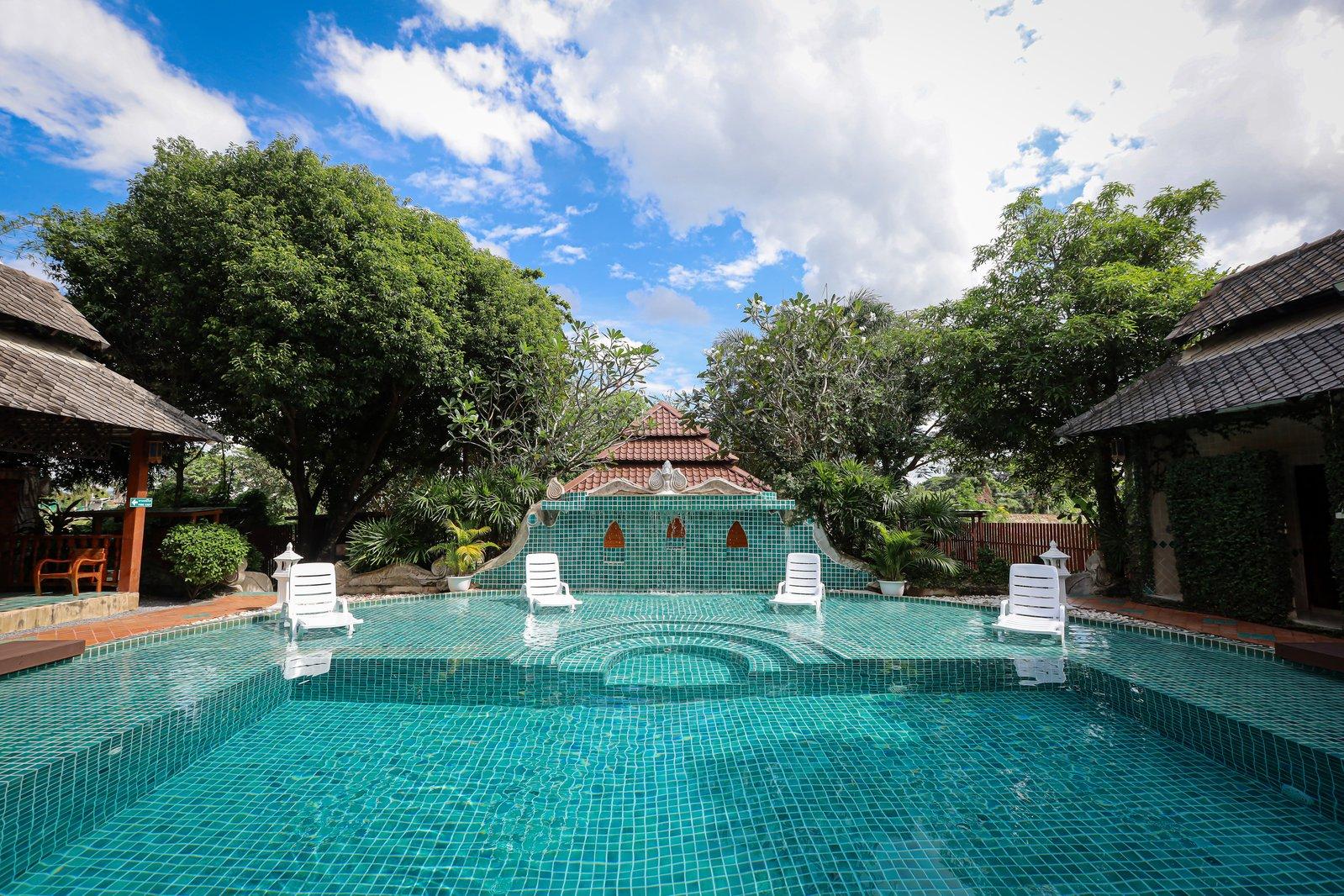
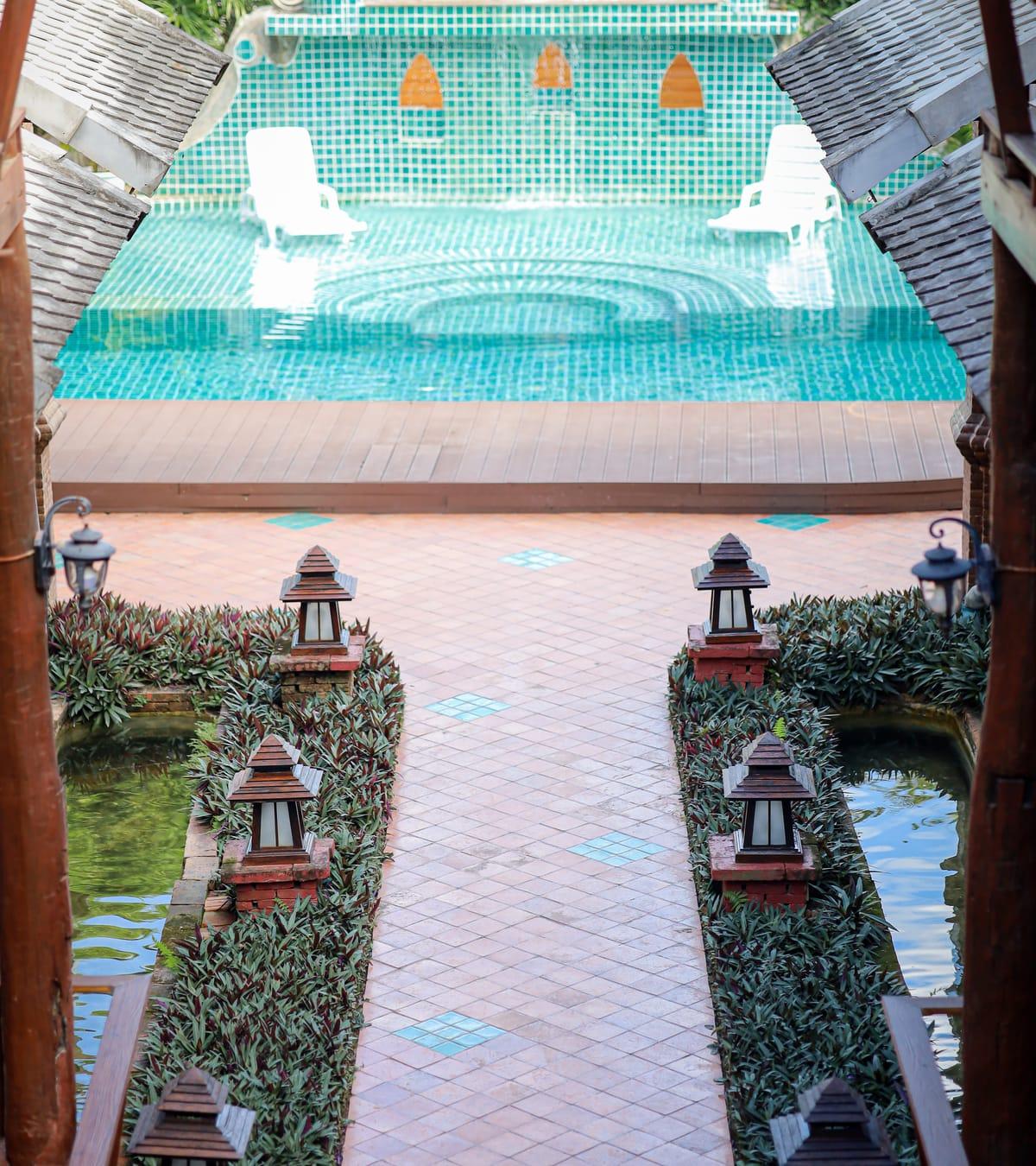
Jintara is on the southern edge of Chiang Mai, among fields and small villages, with ten clients at most. We're honest about the smoke season: for most people it only affects the timing of a stay. If you have asthma, COPD or a cardiac history, raise it before you book. Our Chiang Mai vs Phuket rehab comparison sets out the two in more detail.
Each row in the table below ends with the question worth asking a centre in that area.
Rehab Regions in Thailand, and What to Ask in Each
| Region | What daily life is like | Ask before you book |
|---|---|---|
| Chiang Mai | Inland city in the northern mountains, no coastline. Cooler and drier than the south for most of the year. Smoke haze from regional burning, roughly mid-February to April, worst in March. | How do you plan around the smoke season? Do you filter the air indoors? |
| Phuket | Thailand's largest island and its best-known beach destination. The most direct long-haul flights. Bars and alcohol are part of daily life around the main areas. | How far is the centre from the nightlife, and what do clients pass on excursions? |
| Bangkok | The capital. Main international airports and the largest hospitals. Busy, built-up and loud. | How much quiet and outdoor time does a normal day include? |
| The islands (such as Koh Samui) | Quieter than Phuket, reached by ferry or a short flight. | How would a client reach a hospital with intensive care at night, and how long would it take? |
| Hua Hin | Smaller seaside town on the Gulf, a few hours' drive south of Bangkok. | Which hospital do you use, and how far away is it? |
Chiang Mai
What daily life is like: Inland city in the northern mountains, no coastline. Cooler and drier than the south for most of the year. Smoke haze from regional burning, roughly mid-February to April, worst in March.
Ask before you book: How do you plan around the smoke season? Do you filter the air indoors?
Phuket
What daily life is like: Thailand's largest island and its best-known beach destination. The most direct long-haul flights. Bars and alcohol are part of daily life around the main areas.
Ask before you book: How far is the centre from the nightlife, and what do clients pass on excursions?
Bangkok
What daily life is like: The capital. Main international airports and the largest hospitals. Busy, built-up and loud.
Ask before you book: How much quiet and outdoor time does a normal day include?
The islands (such as Koh Samui)
What daily life is like: Quieter than Phuket, reached by ferry or a short flight.
Ask before you book: How would a client reach a hospital with intensive care at night, and how long would it take?
Hua Hin
What daily life is like: Smaller seaside town on the Gulf, a few hours' drive south of Bangkok.
Ask before you book: Which hospital do you use, and how far away is it?
How long should a rehab stay in Thailand be?
Most people stay 30 to 60 days, and 30 days is the shortest stay at Jintara. A 60- or 90-day stay gives more time for trauma work and for practising new routines before you go home. At Jintara you pay in 30-day blocks and add extra time week by week, so nobody has to commit to 90 days on the first day.
- 30 days: Medical detox, a psychiatric assessment, daily therapy and a written relapse plan to take home.
- 60 days: Everything in 30 days, plus time for EMDR therapy if it's clinically right for you. Month one prepares for it. Month two has 90-minute sessions three to four times a week. EMDR is not offered on a 30-day stay, so if trauma is part of the picture, plan for at least 60 days.
- 90 days: Available for people who need longer. Your therapist will talk this through with you, week by week.
You don't have to decide the full length before you arrive. Many people book 30 days and extend once they see how it's going.
What does a month cost, and what should the fee include?
Jintara's 30-day program costs USD 12,500. That fee includes medical detox and the psychiatric assessment, and prescribed medication is the only extra. Prices across Thailand vary a lot, so compare what each fee covers before you compare the headline number.
- Included: Medical detox on site, a psychiatric assessment on your first day, and a day-two health check at Bangkok Hospital Chiang Mai (full blood panel, liver and kidney function, EKG and chest X-ray), which Jintara pays for in most cases.
- Not included: Prescribed medication.
- How payment works: You pay in 30-day blocks, and we never take payment for more than 30 days at a time. Extra time is billed week by week. The deposit and the block you're in are non-refundable, and there are no cash refunds. We'd rather you know that before you book.
Ask every centre: is detox on site and in the fee? Is the psychiatrist in the fee? What gets billed on top? What's refundable if you leave early? Our rehab pricing page lists everything the fee covers.
How do you check a rehab in Thailand before you book?
Check five things: the licence and accreditation, the medical set-up for detox, the therapists' qualifications, the group size and the aftercare plan. Ask every centre on your list the same questions, in writing, and compare the answers side by side.
To check Jintara's certificate, ask us for a copy, or confirm it by facility name with the Princess Mother National Institute on Drug Abuse Treatment or the Department of Medical Services. National and international standards are different things, so ask any centre exactly which one it holds. Our page on how Jintara's accreditation works shows the certificate and the bodies behind it.
A vague answer to any of these questions tells you something. Our list of red flags when choosing a rehab covers the warning signs to watch for.
The table below shows each check, the question to send, and Jintara's own answer, so you can hold us to the same standard.
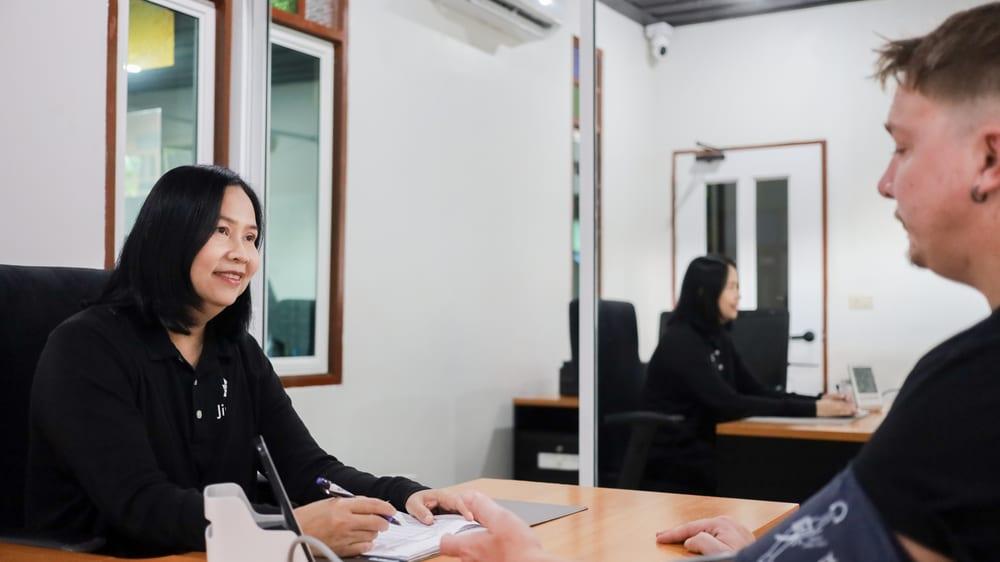
Five Checks Before You Book, With Jintara's Answers
| Check | What to ask | Jintara's answer |
|---|---|---|
| Licence and accreditation | Which Thai licence do you hold? Which body accredited you, and can I see the certificate? | Licensed by Thailand's Ministry of Public Health as a residential drug rehabilitation centre. Accredited against Thailand's national quality standard for drug treatment and rehabilitation facilities, certificate 25/2569, valid to 19 May 2029. |
| Detox at night | Who is awake overnight? Is there a doctor on site? Which hospital do you use, and when do you transfer? | Registered nurses are awake on site 24 hours a day. There is no doctor on site: addiction-specialist psychiatrists from Bangkok Hospital Chiang Mai and Chiang Mai Ram provide psychiatric care. A client can be moved to hospital at any hour. |
| Therapists | What qualifications do your therapists hold? | Every therapist holds a postgraduate clinical qualification, at master's level. Three therapists work full time on site. |
| Group size | How many clients live there at once, at the busiest time of year? | Ten at most, with 32 staff. |
| Aftercare | When does planning for home start, and what do I leave with? | Planning starts in the first week. You leave with a written relapse plan, medication guidance, aftercare referrals and a discharge report. |
Licence and accreditation
What to ask: Which Thai licence do you hold? Which body accredited you, and can I see the certificate?
Jintara's answer: Licensed by Thailand's Ministry of Public Health as a residential drug rehabilitation centre. Accredited against Thailand's national quality standard for drug treatment and rehabilitation facilities, certificate 25/2569, valid to 19 May 2029.
Detox at night
What to ask: Who is awake overnight? Is there a doctor on site? Which hospital do you use, and when do you transfer?
Jintara's answer: Registered nurses are awake on site 24 hours a day. There is no doctor on site: addiction-specialist psychiatrists from Bangkok Hospital Chiang Mai and Chiang Mai Ram provide psychiatric care. A client can be moved to hospital at any hour.
Therapists
What to ask: What qualifications do your therapists hold?
Jintara's answer: Every therapist holds a postgraduate clinical qualification, at master's level. Three therapists work full time on site.
Group size
What to ask: How many clients live there at once, at the busiest time of year?
Jintara's answer: Ten at most, with 32 staff.
Aftercare
What to ask: When does planning for home start, and what do I leave with?
Jintara's answer: Planning starts in the first week. You leave with a written relapse plan, medication guidance, aftercare referrals and a discharge report.
Will insurance pay for rehab in Thailand, and do you need a visa?
Jintara does not accept insurance or bill insurers directly, so you pay the centre yourself. Some health plans repay part of the cost afterwards, so ask your insurer in writing before you travel. On entry, many passport holders can stay up to 30 days without a visa, and that limit matters for longer stays.
- Ask your insurer: Do you cover residential treatment abroad, what paperwork do you need, and how much will you repay? Get the answers in writing.
- US clients: Read how international health insurance for rehab usually works.
- Australian clients: Many pay through early release of superannuation.
- Visa-free entry: Under rules in force from 15 September 2026, passport holders from 60 countries and territories can enter Thailand without a visa for up to 30 days. An extension of up to 30 more days may be granted, at the immigration officer's discretion. Other nationalities have different rules.
- A 30-day stay: A 30-day program plus travel days can run past 30 days, so check your dates before you book flights.
- 60 or 90 days: Sort out your visa before you fly. Our visa and travel guide for US clients walks through the steps.
Does therapy start during detox?
At Jintara, therapy starts on your first day and runs alongside detox, with no gap between the two. Centres differ on this, so ask each one directly. Detox is step one of the work, not the whole plan, and starting therapy early means the first week counts.
- Day one: You see the psychiatrist and start therapy.
- Early detox: A nurse checks on you every one to two hours, day and night.
- Day two: The hospital health check.
You can read more about medical detox at Jintara, including what makes the team move someone to hospital.
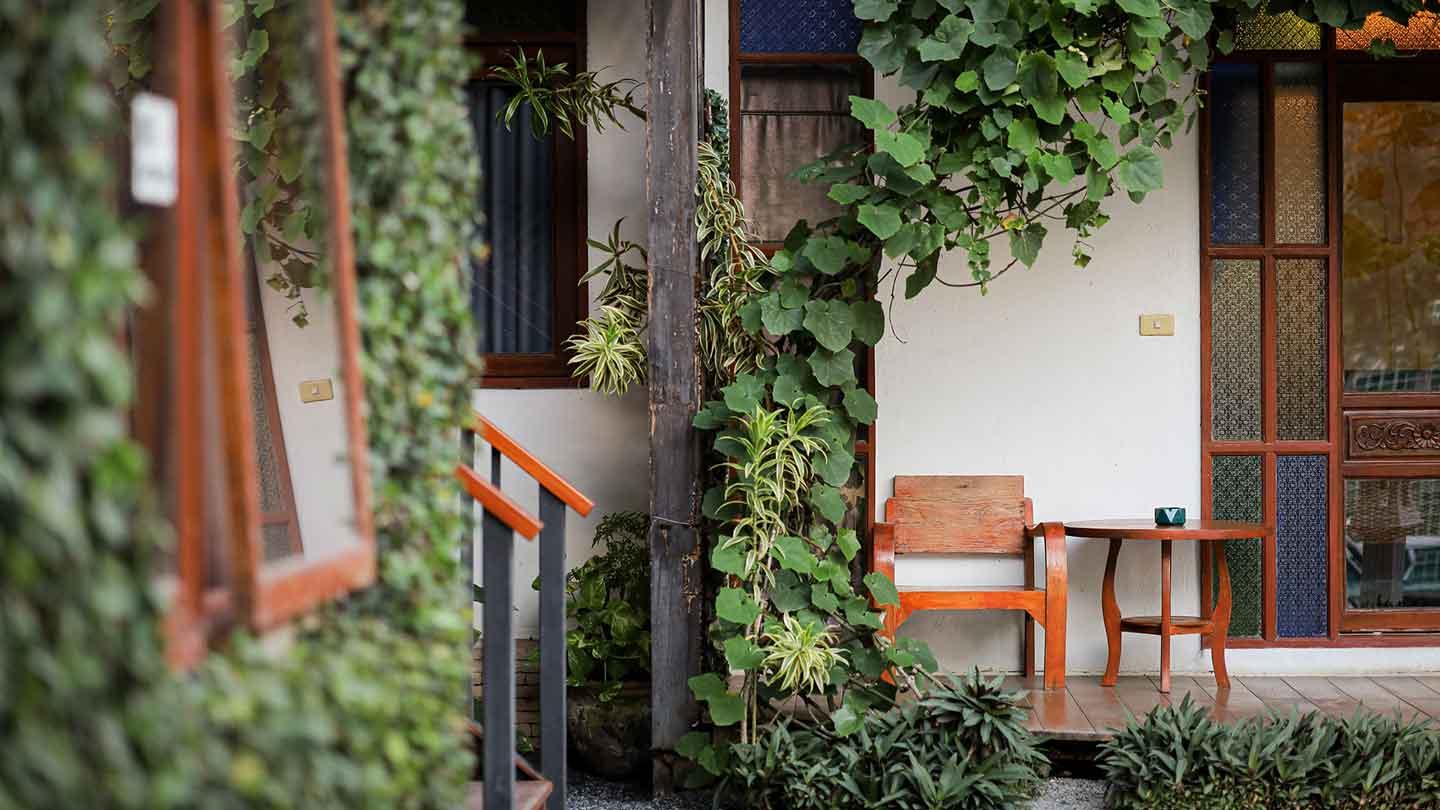
Talk with Our Admissions Team
Your enquiry is confidential and goes only to our admissions team.
Questions People Ask Before Choosing
Do I have to pay for 60 or 90 days up front?
No. Jintara charges in 30-day blocks and never takes payment for more than 30 days at a time. Extra time is billed week by week, so you can decide to stay longer once you're here.
Is there a doctor on site at Jintara?
No. Registered nurses are awake on site around the clock, and psychiatric care comes from addiction-specialist psychiatrists at two partner hospitals in Chiang Mai. Hospital transfer is available at any hour.
Should I stay on in Thailand for a holiday after rehab?
We advise going straight home. The weeks after discharge are when new routines need the most protection. Your discharge pack includes a journey-home plan and an emergency card, and our aftercare planning starts in your first week.
Jintara Rehab is licensed by the Thai Ministry of Public Health as a rehabilitation centre. The clinical information on this page describes Jintara's general approach to supporting clients during the early recovery period. Medical decisions, including medication protocols, are determined by addiction-specialist psychiatrists through our partner hospital pathway. Individual treatment varies based on clinical assessment. This content is for informational purposes and does not constitute medical advice.