
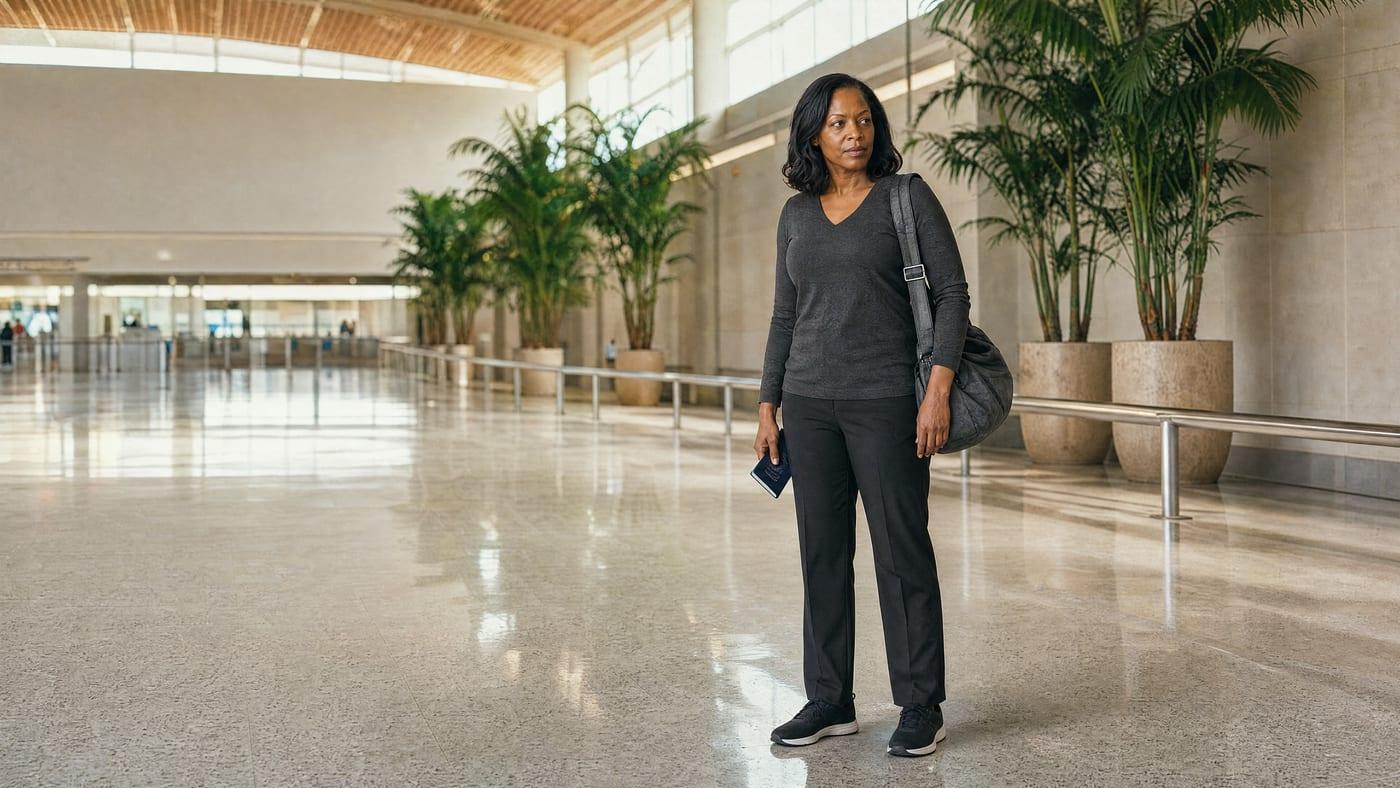
How Americans Reach Jintara in Chiang Mai
One or two connections and the better part of a day in the air. The flying is the part people brace for, and the part at the far end, the bit that usually goes wrong when you arrange it yourself, is the part Jintara handles.
- One or two connections from any US city, 15 to 21 hours door to door
- A US passport is stamped in on arrival with nothing to apply for first
- A nurse and a support worker collect you from the arrivals hall
- Both airport transfers sit inside the fee, medication aside
Fully Licensed and Hospital Accredited
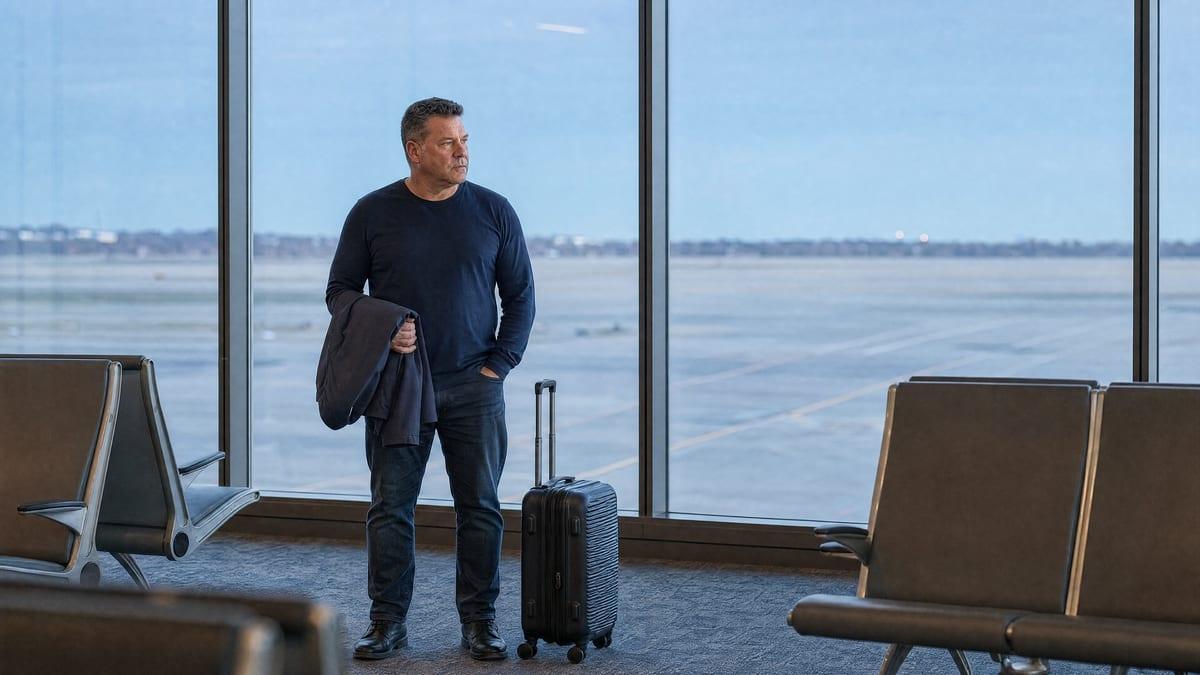
Every US Route Changes Planes At Least Once.
There are no direct flights from the United States to Chiang Mai. Every route changes at least once, and total travel time runs about 15 to 21 hours depending on where you start. West Coast departures are the shortest. East Coast departures add roughly four hours.
Most people connect through Bangkok, then take a short domestic hop north to Chiang Mai International. Taipei works well from the West Coast and keeps the total time in airports down. A Gulf hub such as Doha or Dubai is the third option and suits some East Coast departures. Economy return fares from US hubs sit between USD $400 and $900 for most of the year, depending on season and how early you book. Airfare is the one travel cost that sits outside your program fee, which covers the stay itself, both airport transfers, meals, laundry and excursions. Chiang Mai International is small and calm rather than a hub, and on a normal day you are through immigration and out in well under an hour.

Total time is the long-haul leg plus the connection plus the hop to Chiang Mai. The ranges below are door to door, so they include a typical layover rather than flight time alone.
Flight Time From Each US Region and How to Book It
| Departing | Door to door | Book it this way |
|---|---|---|
| West Coast | About 15 to 17 hours | Route through Taipei to keep total airport time down, then the hop to Chiang Mai |
| Central | About 17 to 20 hours | Bangkok is usually the cleanest connection, kept airside so you never clear immigration twice |
| East Coast | About 19 to 21 hours | A Gulf hub splits the long leg, or Bangkok if you would rather change once |
West Coast
Door to door: About 15 to 17 hours
Book it this way: Route through Taipei to keep total airport time down, then the hop to Chiang Mai
Central
Door to door: About 17 to 20 hours
Book it this way: Bangkok is usually the cleanest connection, kept airside so you never clear immigration twice
East Coast
Door to door: About 19 to 21 hours
Book it this way: A Gulf hub splits the long leg, or Bangkok if you would rather change once
US Passport Holders Are Stamped In at the Desk When They Land.
You do not apply for a visa before flying. A US passport is stamped in at the immigration desk when you land, free of charge, with nothing to fill in beforehand. The length that stamp grants is set on the day you physically arrive, not the day you book, and right now that distinction matters.
That stamp is 30 days. Thailand's revised visa exemption scheme took effect on 15 September 2026, replacing the 60-day exemption that had run since July 2024. The Tourism Authority of Thailand recorded the cabinet approval in May 2026, and the revised conditions moved 54 countries to a 30-day exemption and three to 15 days. A 30-day program plus the travel days either side runs past that stamp, so most clients extend once in country. The Thai Immigration Bureau grants an extension of not more than 30 days at its Chiang Mai office, and admissions helps with the paperwork. The Royal Thai Embassy in Washington DC is the source to check in the week before you fly. Your admissions contact will have asked about your dates long before then, because the stay length, the stamp and the extension have to line up, and if you're considering a stay longer than 30 days that conversation happens before you book anything.
- File the arrival card first: Every non-Thai national files the Thailand Digital Arrival Card online within the 72 hours before you land, which produces your QR code.
- No medical visa exists: There's no visa category for a private rehabilitation facility in Thailand, so your standard entry stamp is the correct documentation.
- If your stay runs longer: The Thai Immigration Bureau handles an extension of stay at its Chiang Mai office, and Jintara staff have been through the process with clients before.
- Passport validity: Bring a passport valid for at least six months beyond the date you intend to leave, and a return or onward ticket.
File the arrival card at home rather than trying to solve it in a departure lounge on four hours of sleep. It is the one step in the whole process that people miss, and it is the easiest one to get right.
Your Body Clock Moves Eleven to Fifteen Hours.
Chiang Mai is UTC+7. New York sits at UTC-4 in summer and UTC-5 in winter, which puts Chiang Mai 11 to 12 hours ahead. Los Angeles sits at UTC-7 and UTC-8, so the gap there is 14 to 15 hours. That is close to the largest time shift Jintara clients make, and it shapes your first two days more than the flight does.
Plan to lose 24 to 48 hours to it, and treat that as normal rather than as a bad start. Nothing in the first 48 hours of the residential program asks you to be operating at full capacity, because the clinical ramp is deliberately gradual. Day one is orientation and rest with no group session in it. Your full medical workup happens on day two, at Jintara's expense, which gives you a night's sleep before anybody asks you detailed questions. A few things make the shift easier. Book a daytime or early evening departure so you can sleep on the long leg. Drink water and skip alcohol in the air. And if you are managing alcohol or benzodiazepine dependence, speak to your own doctor before you fly, because a long-haul flight is not the place to start a withdrawal.
A Nurse and a Support Worker Meet You in the Arrivals Hall.
A registered nurse and a support worker drive to Chiang Mai International and meet you inside the arrivals hall. There is no taxi and no transfer company, and the pickup is already inside your fee in both directions. The assessment starts the moment you meet them, before you have been anywhere near a clinical room, and that is deliberate.
In most arrivals none of it is needed. The protocol exists because alcohol withdrawal can move faster than a timetable, and the escalation route is fixed before you land rather than improvised: Bangkok Hospital Chiang Mai is roughly 8 minutes from the facility and Chiang Mai RAM roughly 20. Where medical detox on arrival looks likely it has already been talked through with you on the pre-admission call, so nothing about it is improvised on the day. If the nurse reads real risk in the arrivals hall, the car goes to the hospital instead of the facility. A place that sends a driver finds out on day two what a nurse can see in the first two minutes. It is also why the admissions process pushes for a midday landing rather than a red-eye. A first read done in daylight, with a full shift on at a facility half an hour away, is a better read than one done at midnight.
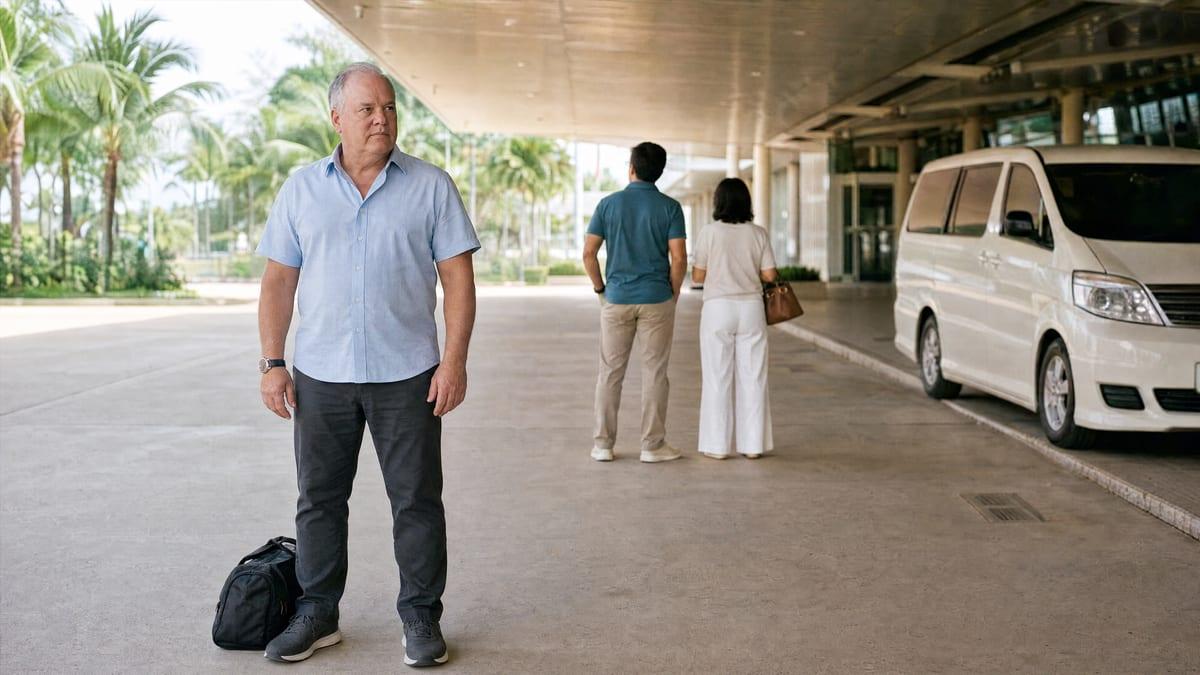
“When we do the airport pickup, we send a nurse and a support worker. We assess them visually and just by talking to them when they arrive. If we feel that there's risk, we don't go to Jintara. We take them straight to hospital.
Three Things Belong in Your Hand Luggage and Not the Hold.
Your side of the preparation is short. Documents, medication and insurance are the whole list, and each of the three belongs in your carry-on rather than a checked bag. Everything else can be replaced in Chiang Mai within a day of landing.
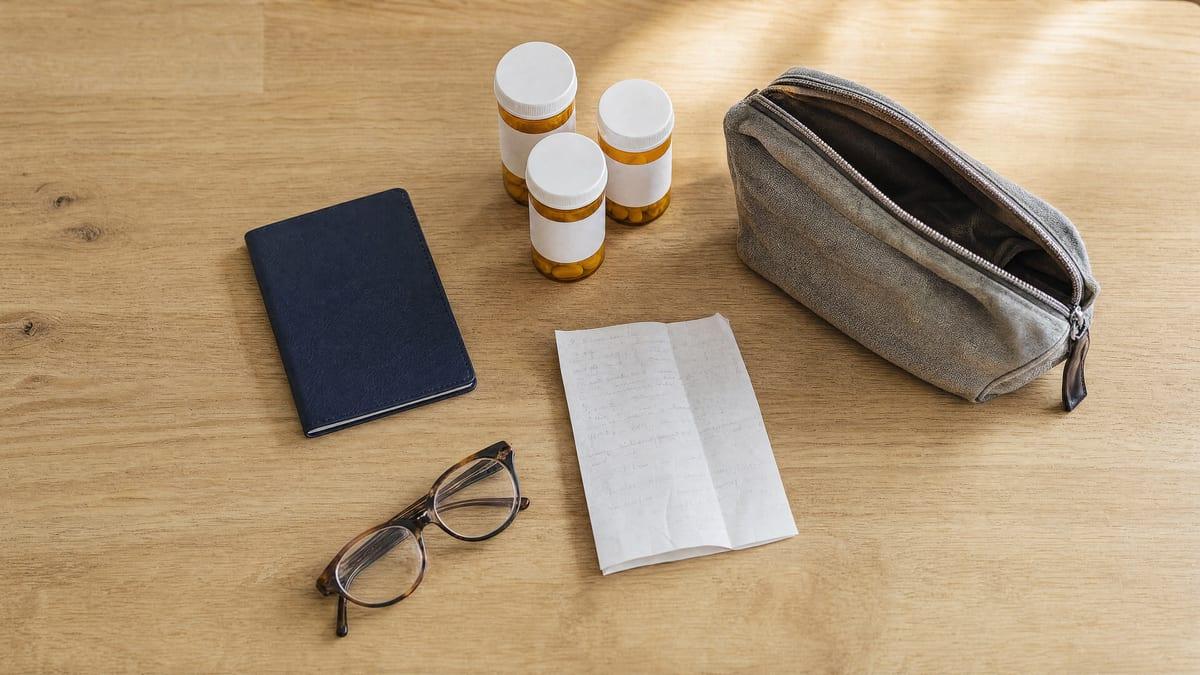
Thailand allows travellers to bring a personal supply of prescription medication, and the practical rule is to keep it obviously legitimate. That means original pharmacy labels, a current list from your prescribing doctor, and a doctor's letter for anything controlled such as an opioid or a benzodiazepine. If you're on a taper or a maintenance dose, tell your admissions contact before you fly, so the nursing team has the dose ready on the day you arrive rather than the day after. Travel insurance is the one people get wrong, and it's a different product from the health insurance question that American families usually ask about first. One covers you on the journey. The other is about claiming back the cost of treatment afterwards, and they don't substitute for each other.
- Passport and tickets: Valid six months beyond your intended departure, with a return or onward ticket and your arrival card QR code saved offline.
- Two weeks of medication: In the original labelled containers, in hand luggage, with a doctor's letter for anything controlled.
- Paper copies of recent bloodwork: Liver panels especially, because a portal login is no use to you mid-journey and the team can read paper on day one.
- Travel insurance that covers you abroad: Read the pre-existing condition wording before you buy, because substance-related exclusions are common and evacuation cover is what you want.
Chiang Mai is warm all year, so pack light and leave the heavy clothes at home. Laundry is included and nobody has ever needed the third pair of shoes they brought.
The Two Things American Clients Raise Before Booking.
Two worries come up on almost every pre-admission call from the United States, and both have practical answers rather than reassuring ones. The first is getting through a twenty-hour journey while already unwell. The second is the Bangkok connection.
On the flight itself, the answer is your own doctor rather than willpower. Be honest with them about why you're travelling and what you're managing. A short prescribed course taken as directed on the day of travel is far safer than trying to hold a withdrawal together at 38,000 feet, and doctors deal with this more often than people expect. On Bangkok, Darren's advice is blunt and it comes from watching it go wrong. Suvarnabhumi is enormous. If your itinerary makes you clear immigration and check in again, that's a long unsupervised gap at the exact point somebody is least steady. Book a connection that keeps you airside, so you never leave the transit area at all, and tell admissions which one you've chosen.
- Call before you book, not after: Admissions reviews the itinerary with you and flags a layover that leaves you loose in a terminal.
- Aim for a midday landing: It puts the first clinical read in daylight with a full shift on duty at the facility.
- Tell them what you are taking: The nursing team doses you from the day you arrive, and they can only do that from an accurate list.
The honest pattern the admissions team sees is that people who call first arrive steady and settle quickly. Cost, the clinical model and privacy are set out on the main page for US clients, and it's worth reading before that call. The ones who book everything themselves and phone afterwards are usually the ones rearranging flights later.

Talk with Our Admissions Team
Your enquiry is confidential and goes only to our admissions team.
Questions Americans Ask About Getting Here
No. A US passport is stamped in on arrival, free of charge, with nothing applied for beforehand. That stamp is 30 days, under the revised exemption scheme that took effect on 15 September 2026. A 30-day program plus travel days runs past it, so most clients extend by up to a further 30 days at the Chiang Mai immigration office, with admissions helping on the paperwork. Check the Royal Thai Embassy in Washington DC in the week before you fly.
About 15 to 21 hours door to door depending on where you start. There are no direct flights. West Coast departures run roughly 15 to 17 hours, Central around 17 to 20, and East Coast about 19 to 21. Most routes connect through Bangkok, Taipei or a Gulf hub, then take a short domestic flight north to Chiang Mai.
Yes, every non-Thai national needs one. The Thailand Digital Arrival Card replaced the old paper form. You file it online at the official government site within the 72 hours before you land, it is free, and it gives you a QR code to show at the immigration desk. One card covers one entry. File it at home rather than at the airport.
No, and you do not need one. There is no visa category for a private rehabilitation facility in Thailand, so your standard entry stamp is the correct documentation. If a stay runs longer than the stamp allows, the Thai Immigration Bureau handles an extension of stay at its Chiang Mai office and Jintara staff have been through that process with clients before.
Yes, and so is the transfer back at the end. A registered nurse and a support worker travel to Chiang Mai International to collect you from the arrivals hall, and there is no extra charge for either trip. Jintara does not use a taxi or a transfer company for this, because the nurse is assessing you from the moment you meet.
Yes, with the original pharmacy labels and a current list from your prescribing doctor. Carry at least a two-week supply in your hand luggage rather than a checked bag, and bring a doctor's letter for anything controlled such as an opioid or a benzodiazepine. Tell your admissions contact before you travel so the nursing team can prepare your dosing.
Real, and worth planning for. Chiang Mai is 11 to 12 hours ahead of the East Coast and 14 to 15 hours ahead of the West Coast, depending on daylight saving. Most people lose 24 to 48 hours to it. Day one at Jintara is orientation and rest with no group session, and the full medical workup happens on day two.
Speak to your own doctor first and be honest about why you are travelling. A short prescribed course taken as directed on the day of travel is far safer than managing a withdrawal alone in the air. Tell the admissions team as well, because it changes what the nurse is watching for when you land and what is ready at the facility.
Jintara is a small adult residential rehab in Chiang Mai. Entry rules are set by the Thai government and can change. Check the Royal Thai Embassy in Washington DC in the week before you fly.
Jintara Rehab is licensed by the Thai Ministry of Public Health as a rehabilitation centre. The clinical information on this page describes Jintara's general approach to supporting clients during the early recovery period. Medical decisions, including medication protocols, are determined by addiction-specialist psychiatrists through our partner hospital pathway. Individual treatment varies based on clinical assessment. This content is for informational purposes and does not constitute medical advice.