
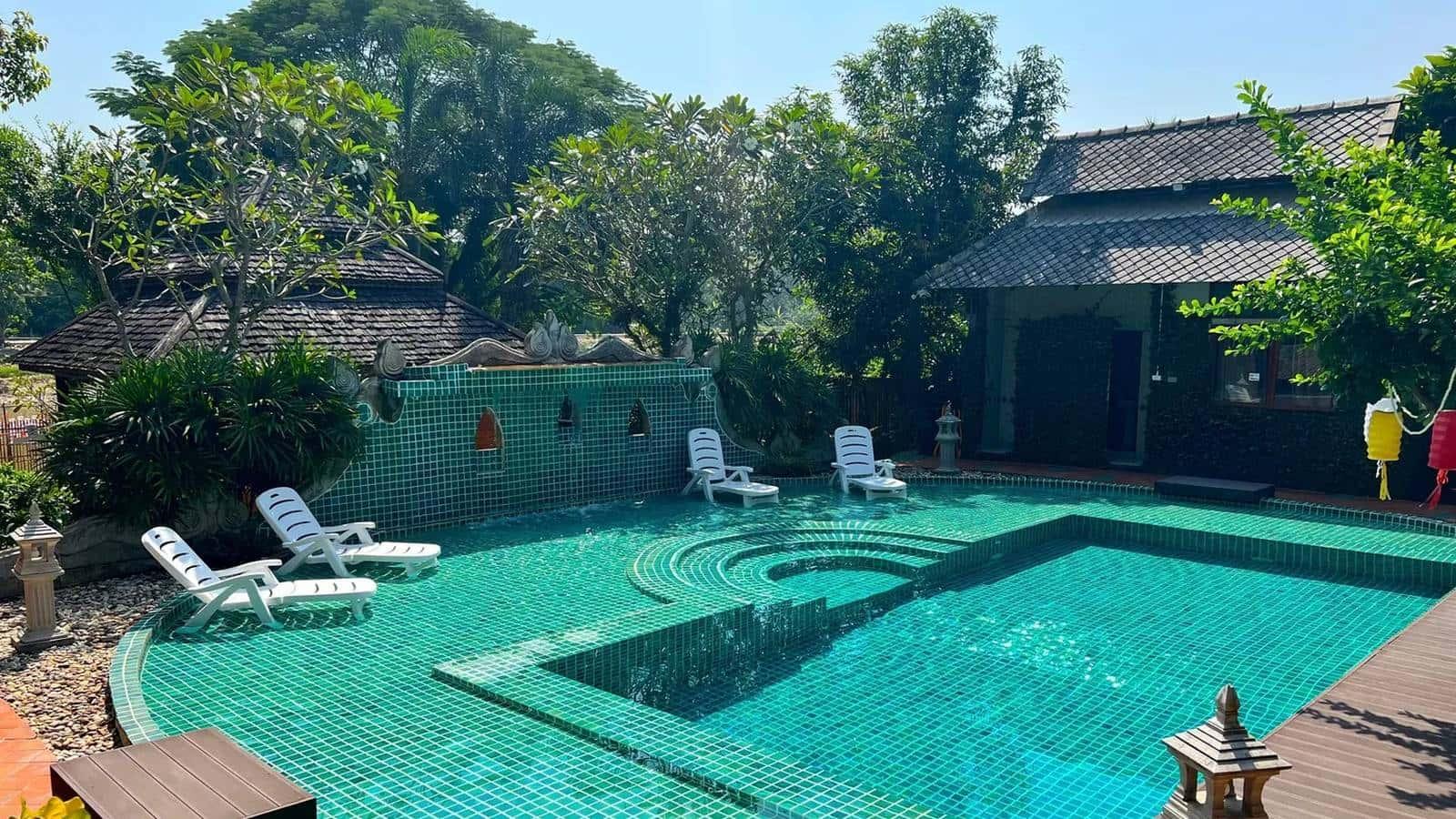
A licensed residential treatment program in Chiang Mai, for a fraction of US private rehab.
Most Americans who reach this page have already priced a private program at home and found it out of reach. What residential addiction treatment at Jintara actually costs and involves for a US client is set out below, section by section. The clinical program, the fee, the flight, your job and the handover back to care at home are all covered.
- Licensed by Thailand's Ministry of Public Health under licence SFD 50:13-106
- Maximum 10 clients at any time with a 3.2 to 1 staff-to-client ratio
- Nationally accredited, one of only six private rehabs in Thailand to hold it
- Airport transfers from Chiang Mai International included in the program fee
Fully Licensed and Hospital Accredited

Most Americans who need residential treatment never get a real option.
Rehab in Thailand for Americans is licensed, medically supervised residential addiction treatment in Chiang Mai.
If you have already run the numbers at home, you have probably found the same three doors. Insurance-approved facilities that are large and run on group throughput. Private programs priced from $20,000 to $50,000 for thirty days, often with a deductible still to meet. And free community groups that help a great many people but are not clinically supervised and were never built to treat trauma alongside the substance use.
There is a fourth position that has been hard to find in the United States at any sensible price, which is a small, medically supervised program that treats the conditions underneath the addiction at the same time. That gap is real and it is measurable. Federal survey data from SAMHSA's National Survey on Drug Use and Health, analyzed in a 2025 JAMA Network Open study, has consistently found that the large majority of Americans with a substance use disorder receive no treatment at all in a given year.
Americans are now one of the largest groups treated here, and the reason is arithmetic rather than adventure. Chiang Mai's private medical infrastructure supports clinical standards that the same dollar does not buy at home.

What clinical quality looks like when the group never exceeds ten people.
Clinical density is the part of a program you cannot see on a website, and it is the part that decides what your month is actually like.
Jintara holds a maximum of 10 clients at any one time against 32 staff, a ratio of 3.2 to 1. Three therapists each hold a master's degree in counselling, psychology or a related clinical field. A 30-day stay carries 65 to 70 hours of therapy. Individual therapy runs concurrently with medical detox rather than after it, so a person stabilising from alcohol withdrawal is in session within the first few days instead of waiting for one team to hand them to another.
Clinical Director Denise O'Leary, whose full clinical credentials are published rather than summarised, is the only therapist in Thailand certified by the EMDR International Association, and the only clinician in Thailand trained and certified in Cognitive Processing Therapy for post-traumatic stress. That is an unusual credential to find inside an addiction program at any price.
On day two of every admission there is a full workup at Bangkok Hospital Chiang Mai covering bloods, liver and kidney function, chest X-ray and EKG, and it sits inside the fee. Americans routinely note that assembling the same panel at home means several providers, several appointments and a separate bill each time.




The clinical model differs from most US programs in three specific ways.
Americans arriving here notice the difference in the first week, and it is worth knowing before you book rather than after.
The framework of the 30-day program is cognitive behavioural at its core, with dialectical behaviour therapy skills and trauma work added where the assessment supports it. Where co-occurring conditions are present, and for most of the caseload here they are, both sides are treated in the same plan from the first week rather than in sequence.
- Not 12-step: SMART Recovery is the mutual aid framework, alongside cognitive behavioural therapy and motivational interviewing. If the 12 steps have been part of your recovery and you want to keep them, the team connects you to AA and NA meetings in Chiang Mai.
- Dual diagnosis is not an add-on: Depression, anxiety, trauma histories and ADHD are the common picture among American clients. The psychiatrist and the therapist work the same plan rather than meeting at discharge.
- No maintenance medication after detox: Naltrexone, acamprosate and disulfiram are not prescribed as part of the program. Methadone is used only during an opioid withdrawal taper inside detox, never as long-term maintenance.
The whole program is built on that position, and the team will tell you plainly if it is the wrong fit for your situation.
Self-pay protects your stay from a third party.
The question every American asks first is whether insurance is billed, and the answer is no, deliberately.
Jintara does not bill insurers and does not accept guarantees of payment from them. Treatment is paid before or at admission, and the full fee and what sits inside it is published rather than quoted case by case. The reason is that a stay which depends on a third-party decision can be withdrawn halfway through, and that risk lands on the client at the worst possible moment.
Two mechanisms do reduce the effective cost for many Americans. Health savings and flexible spending accounts can generally be used for inpatient addiction treatment, because the Internal Revenue Service treats substance use disorder treatment as a qualified medical expense in IRS Publication 502. That is your own money rather than a reimbursement, so confirm the position with your plan administrator before you travel.
Separately, some employer-sponsored plans carry out-of-network mental health and substance use parity provisions that allow a claim after treatment. Our guide to health insurance for international rehab sets out which plan types support that claim and what the reimbursement rates typically look like. If you intend to try, ask for an itemised clinical invoice before discharge. Jintara will provide the documentation but does not pursue the claim on your behalf.
“We've had clients in the past where the insurance company had a letter of guarantee and then a few days before the end of treatment they found a pre-existing condition and said they weren't paying. It puts the client in an impossible position.
The cost gap between US private rehab and Jintara survives the flight.
The 30-day residential program at Jintara is $12,500, all inclusive, quoted and payable in US dollars.
Return flights add roughly $400 to $700 from the West Coast, $450 to $800 from Texas and the South, $450 to $750 from the Midwest, and $500 to $900 from the East Coast. Flights sit outside the $12,500 program fee. An eight-week stay is $25,000 and twelve weeks is $37,500. A comparable 30-day private program in the United States runs $20,000 to $50,000 before you count anything extended, and the full Thailand and USA comparison sets the two settings side by side on that point.
One planning point matters more than the headline for anyone coming for trauma work. A course of EMDR therapy requires a minimum 60-day stay, because the preparation and stabilisation work has to come first and the processing sessions follow in the second month. If trauma processing is the reason you are booking, budget for 60 days rather than 30.
Inside the fee sit the private room, all meals, the airport transfer, arrival screening, psychiatrist-led detox planning, the day two hospital workup, individual and group therapy, fitness sessions and supervised excursions. Outside it sit international flights, visas, medication brought from home, further off-site medical or dental treatment and personal spending money. Ask any facility you are considering, including this one, for a written all-in figure and an explicit exclusion list.
United States and Jintara Compared
| United States | Jintara | |
|---|---|---|
| 30-day fee | $20,000 to $50,000 | $12,500 all inclusive |
| Group size | Commonly 20 or more | 10 clients maximum |
| Staff ratio | Varies by facility | 3.2 to 1 |
| Therapy hours | Rarely published | 65 to 70 per stay |
| Day 2 workup | Billed separately | Inside the fee |
| Airport transfer | Not included | Chiang Mai pickup included |
30-day fee
United States: $20,000 to $50,000
Jintara: $12,500 all inclusive
Group size
United States: Commonly 20 or more
Jintara: 10 clients maximum
Staff ratio
United States: Varies by facility
Jintara: 3.2 to 1
Therapy hours
United States: Rarely published
Jintara: 65 to 70 per stay
Day 2 workup
United States: Billed separately
Jintara: Inside the fee
Airport transfer
United States: Not included
Jintara: Chiang Mai pickup included


Federal leave law can protect your job.
Losing the job is the fear that stops more Americans from booking than the money does, and it is usually the more manageable of the two.
Substance use disorder treatment qualifies as a serious health condition under the Family and Medical Leave Act, which means eligible employees can take up to 12 weeks of unpaid leave with job protection. The eligibility rules, and the certification process, are set out by the US Department of Labor's FMLA guidance. Your employer needs to know that you are receiving inpatient medical treatment. It does not need to know where.
Certification is usually made on form WH-380-E or an employer equivalent, completed by a treating clinician. Jintara's medical team provides clinical documentation for this purpose, and the clinical documentation standards behind that documentation are published in full. Bring the form with you or have your HR department email it ahead of admission.
Not every American worker is covered. If you are self-employed, work for a company with fewer than 50 employees, or have been with your employer less than twelve months, FMLA will not apply. Short-term disability or a discretionary medical leave policy often will. Ask HR before you travel rather than after you land.
One connection through Bangkok puts you in Chiang Mai from any US city.
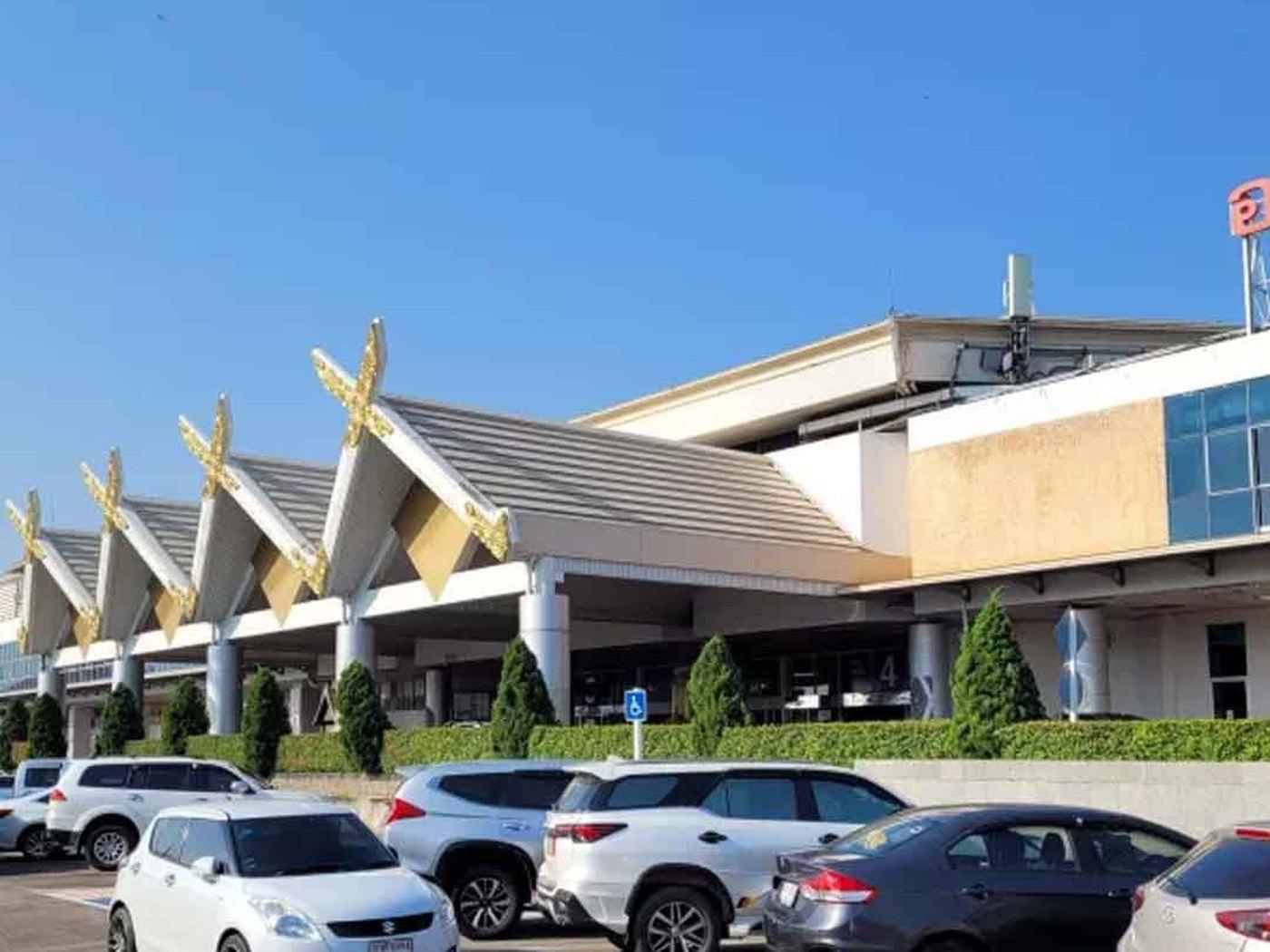
The trip is a long-haul flight to Bangkok, one onward domestic leg to Chiang Mai, and a pickup at the airport.
From the West Coast expect 15 to 17 hours in the air, and from the East Coast 18 to 20 hours routing through the Middle East or East Asia. The Bangkok to Chiang Mai leg runs about 70 minutes. Transfers from Chiang Mai International Airport are included in the fee and the drive to the facility takes 20 to 30 minutes, arranged through the same admissions conversation that covers your pre-travel paperwork.
The visa position needs care, because Thailand's entry rules are mid-change and any specific day count on a facility website can be out of date by the time you fly. Confirm the current rules for a US passport with the Royal Thai Embassy or the nearest Thai consulate before you book flights, which our page on flights, visa and the airport pickup walks through in order, and tell the admissions team what your permitted stay is so the program length is planned around it. Where documentation of inpatient medical treatment supports an application, Jintara provides it.
Two smaller points come up constantly. Travel insurance for the flight is a separate purchase and should be arranged as normal. Prescription medication brought from home should be declared at admission so the psychiatrist can reconcile it against the detox plan.
The first 48 hours are built to lower your anxiety.
You are met at Chiang Mai airport and driven straight to the facility, and the first day asks very little of you.
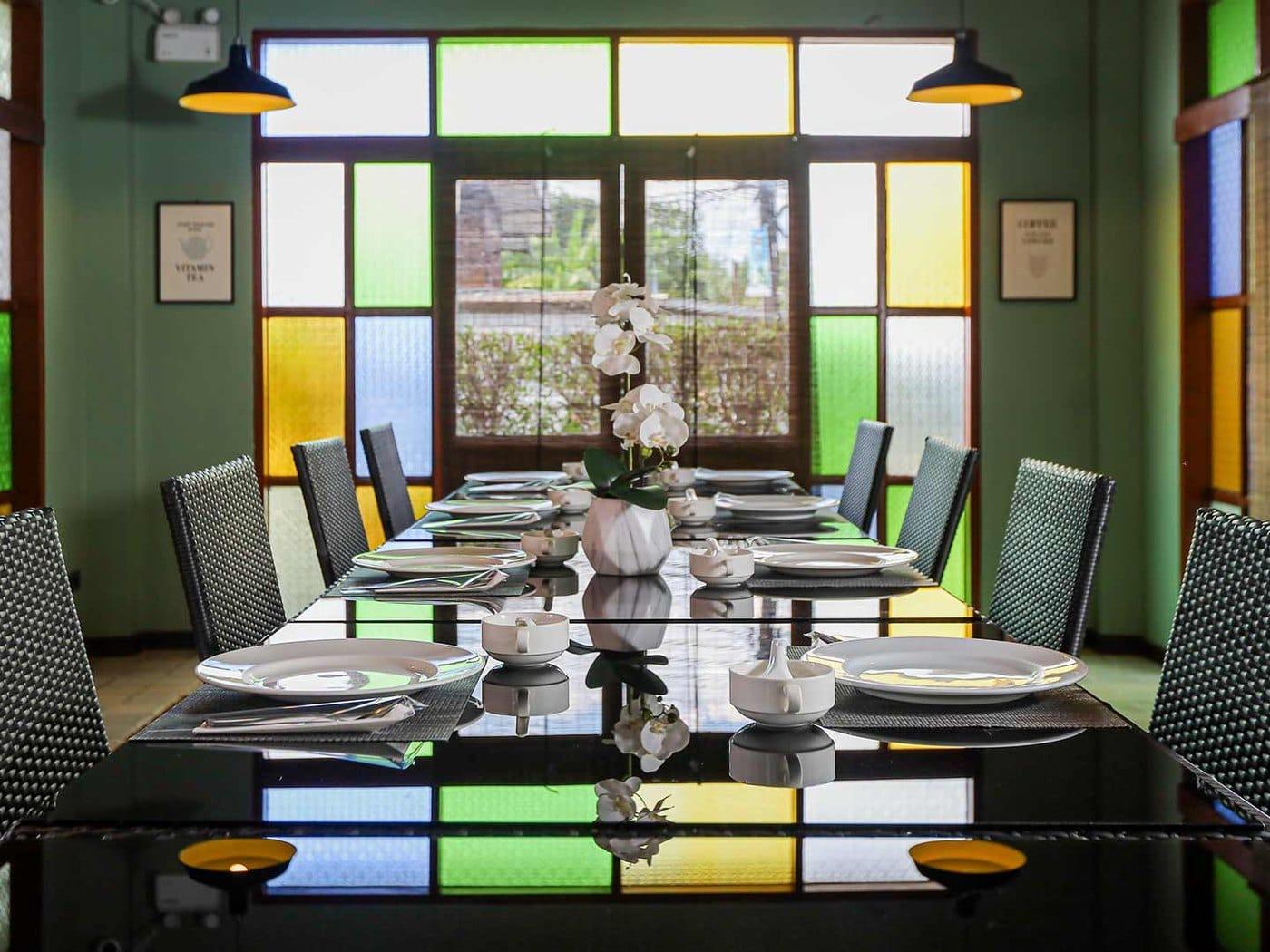
A senior staff member handles the induction. You see your room, which is private and has its own bathroom, you meet the clinical team, and you are walked through the first week rather than handed a folder. Day two is the hospital workup. For most Americans that morning is the point where the clinical environment stops feeling like a leap of faith, because the diagnostics come back within hours and are discussed with them the same day.
The early phase is contained rather than closed. Contact with home is scheduled instead of constant, and scheduled family video calls begin within the first week. Limited work contact is possible and devices are not confiscated, though phone and laptop time is controlled so that treatment gets the priority. Short focused check-ins with work are usually fine. Long days on email or video calls are not.
Food is one of the quieter strengths of the place. Produce is bought fresh daily, breakfast and dinner carry Western options, and Thai food is standard at lunch. Dietary requirements are accommodated if you raise them at intake. Chiang Mai itself is a city of about a million people, and once the clinical team confirms readiness, structured Saturday excursions to markets, temples and countryside begin. Thailand runs 12 hours ahead of US Eastern time and 15 ahead of Pacific, which matters for family calls and not at all for the clinical day.

Accreditation and hospital cover sit behind you.
Americans use Joint Commission accreditation as the shorthand for whether a facility is real. Thailand has a structural equivalent to Joint Commission accreditation, which Jintara holds from the Healthcare Accreditation Institute. Jintara does not hold Joint Commission accreditation.
The facility is jointly accredited by the Healthcare Accreditation Institute, the Princess Mother National Institute on Drug Abuse Treatment and the Department of Medical Services at the Ministry of Public Health, under certificate 25/2569, valid from 20 May 2026 to 19 May 2029. It is one of only six private rehabs in Thailand to hold it, and what that accreditation was assessed against is published in detail rather than asserted. Separately, Jintara appears in the US Consulate General Chiang Mai health facilities reference published in October 2023, one of several independently verified credentials.
- Hospital escalation: Bangkok Hospital Chiang Mai is roughly eight minutes away and Chiang Mai Ram Hospital roughly twenty. Both are formal transfer partners with addiction-specialist psychiatrists on staff and ICU capacity.
- Withdrawal is scored, not estimated: Alcohol and benzodiazepine withdrawal are scored formally using the Clinical Institute Withdrawal Assessment for Alcohol, Revised (CIWA-Ar), with awake nursing overnight. Withdrawal escalating to seizures or delirium tremens in a small proportion of cases is a recognised risk, set out in the NIAAA core resource on alcohol use disorder.
- Aftercare is arranged, not promised: The aftercare plan is built around resources in your own city and time zone. There is a nursing check-in within 24 hours of departure and a one-hour therapist call at the 28-day mark, plus a written relapse prevention plan you take home.
If Jintara is not the right clinical setting for your situation, the team will say so on the first call and point you somewhere better.
“Because we're in Thailand, and our clients are taking off to all sorts of different places and all sorts of different time zones, we help them identify what their aftercare support is going to look like when they get home.

Talk with Our Admissions Team
Your enquiry is confidential and goes only to our admissions team.
Independently Verified
Jintara is accredited against Thailand’s national quality standard for drug treatment and rehabilitation facilities, jointly certified by the Healthcare Accreditation Institute, the body that accredits Thailand’s hospitals, with the Princess Mother National Institute on Drug Abuse Treatment and the Department of Medical Services, Ministry of Public Health. Certificate no. 25/2569, valid 20 May 2026 to 19 May 2029.
Common Questions From American Clients and Families
No. Jintara is self-pay only. The policy exists because insurers have withdrawn payment commitments partway through a stay, which leaves the client in an impossible position. Health savings and flexible spending account funds can generally be used for inpatient addiction treatment. Some employer plans allow a partial out-of-network claim after treatment, which you can pursue with your insurer using an itemised clinical invoice.
The 30-day residential program is $12,500, all inclusive, quoted in US dollars. Return flights run about $400 to $900 depending on your departure city. An eight-week stay is $25,000 and twelve weeks is $37,500. A comparable 30-day private program in the United States is commonly $20,000 to $50,000.
The standard residential program is 30 days. Where a mental health condition sits alongside the substance use, which is the common picture here, eight to twelve weeks is usually what integrated treatment needs in practice. Trauma processing with EMDR requires a minimum 60-day stay, because the preparation work comes first. A 30-day admission is still a clinically meaningful first step for many people.
Thailand's entry rules are mid-change, so no day count published on a facility website should be relied on. Confirm the current position for a US passport directly with the Royal Thai Embassy or your nearest Thai consulate before booking flights, then tell the admissions team what your permitted stay is so the program length is planned around it. Jintara provides documentation of inpatient medical treatment where an application needs it.
Substance use disorder treatment qualifies as a serious health condition under the Family and Medical Leave Act, so eligible employees can take up to 12 weeks of unpaid leave with job protection. Eligibility generally requires twelve months with an employer that has 50 or more employees. Jintara's medical team completes the clinical portion of the certification paperwork. Your employer needs to know you are in inpatient treatment, not where it is.
Within limits. Devices are not confiscated, and short focused check-ins with work are usually fine. Phone and laptop time is controlled and scheduled so that treatment holds the priority, and long days on email or video calls are not workable alongside the clinical program. Agree what you need at intake so it can be planned rather than negotiated later.
No. Jintara is a non-12-step facility. The clinical framework is cognitive behavioural therapy, SMART Recovery and motivational interviewing, with dialectical behaviour therapy skills and trauma work where the assessment supports them. If the 12 steps have been part of your recovery and you want to keep them, the team connects you with AA and NA meetings in Chiang Mai.
Nursing staff are awake through the night and a psychiatrist is on call. If a situation needs hospital-level care, transfer goes to Bangkok Hospital Chiang Mai, roughly eight minutes away, or Chiang Mai Ram Hospital, roughly twenty. Both are formal transfer partners with ICU capacity and addiction-specialist psychiatrists. Every client also has a full workup on day two, which surfaces underlying conditions early.
Chiang Mai is a city of roughly one million people with internationally credentialed private hospitals and reliable infrastructure. Clients remain on facility grounds during the acute phase, and supervised excursions begin once the clinical team confirms readiness. You are met at the airport and driven to the facility, so the only unaccompanied part of the journey is the flight itself.
You leave with a written relapse prevention plan and a discharge summary prepared so a US clinician can continue the work without reconstructing your treatment history. The team maps therapists and support groups near your home before you fly. There is a nursing check-in within 24 hours of departure and a one-hour therapist call at the 28-day mark. SMART Recovery runs meetings across the United States and online.
You call, and a senior team member takes it. The conversation covers what the substance is, how long it has been going on, what has been tried before and what you need clinically. It is an assessment rather than a sales process, and if Jintara is not the right clinical setting you will be told that on the first call and pointed toward something more appropriate.
Jintara is a small licensed residential rehab in Chiang Mai with a maximum of 10 clients and a 3.2 to 1 staff-to-client ratio. The admissions team answers US enquiries directly, before anything is booked.
Jintara Rehab is licensed by the Thai Ministry of Public Health as a rehabilitation centre. The clinical information on this page describes Jintara's general approach to supporting clients during the early recovery period. Medical decisions, including medication protocols, are determined by addiction-specialist psychiatrists through our partner hospital pathway. Individual treatment varies based on clinical assessment. This content is for informational purposes and does not constitute medical advice.