
What ice withdrawal feels like and why the brain takes time to heal
Ice withdrawal is not dangerous the way alcohol withdrawal is, but the psychological symptoms are severe and they last longer than most people expect. Knowing what the brain actually goes through after the last dose is what makes the hardest weeks survivable, for the person stopping and for the family watching.
- Ice withdrawal is primarily psychological, not a physical medical emergency
- Acute symptoms typically settle within 3 to 7 days of stopping
- Depression and flat motivation can persist for weeks or months
- Structured therapy and daily physical activity support neurological recovery

Fully Licensed and Hospital Accredited
Ice withdrawal is a psychological process, not a physical one.
Ice withdrawal is the brain's response to stopping methamphetamine after sustained use. Unlike alcohol or benzodiazepine withdrawal, which carry a serious risk of seizure and can be life-threatening, ice withdrawal does not typically create a dangerous medical emergency. The risk profile is different, not absent.
The symptoms that dominate are psychological. Severe depression, a loss of pleasure in things that once felt good, profound fatigue, long hours of sleep, cognitive fog, and cravings that arrive in waves are the pattern almost everyone stopping ice describes, and they are the reason treating ice addiction is built around psychological support rather than a medication protocol. A person may sleep for most of a day, feel emotionally flat, and struggle to want anything at all.
These symptoms are neurological, not a failure of will. Methamphetamine has depleted the dopamine system over months or years of use, and as NIDA's methamphetamine research overview sets out, the brain is left unable to generate normal reward signals on its own. Families often read that flatness as not caring. It is the most predictable part of early recovery.
The acute phase usually clears within a week, but mood and sleep stay disrupted.
The acute phase of ice withdrawal begins within 24 to 48 hours of the last dose and typically lasts between 3 and 7 days. Symptoms are at their most intense here. Sleep is heavy and fragmented, appetite returns suddenly, and extreme fatigue sits alongside agitation and anxiety.
Physical safety is rarely the reason someone stopping ice needs to be somewhere clinical. There are no standard medications that reverse the neurological depletion methamphetamine causes, so ice does not require medically supervised detox in the way alcohol or opioids do, and the work in these days is supportive: keeping a person safe, sleeping, eating, and slowly stabilising. That difference is why the first week of an ice admission often looks calmer than families brace for.
Jintara provides nursing observation around the clock through this phase, with vital sign checks and psychiatric review available if paranoia or hallucinatory experiences become clinically significant. The NCBI clinical review of stimulant withdrawal describes the same supportive-care approach, without pharmacological detox. Formal counselling and group work start once a person is rested enough to engage.
The three phases of ice withdrawal
| Phase | Timing | What Dominates | Clinical Focus |
|---|---|---|---|
| Acute | Day 1 to 7 | Heavy sleep, crashing mood, returning appetite | Rest, food, nursing observation |
| Post-acute | Weeks to months | Anhedonia, cognitive fog, cravings in waves | Therapy, routine, daily activity |
| Extended recovery | 6 to 12 months | Pleasure and motivation returning unevenly | Aftercare and relapse prevention |
Acute
Timing: Day 1 to 7
What Dominates: Heavy sleep, crashing mood, returning appetite
Clinical Focus: Rest, food, nursing observation
Post-acute
Timing: Weeks to months
What Dominates: Anhedonia, cognitive fog, cravings in waves
Clinical Focus: Therapy, routine, daily activity
Extended recovery
Timing: 6 to 12 months
What Dominates: Pleasure and motivation returning unevenly
Clinical Focus: Aftercare and relapse prevention
The weeks after acute withdrawal bring a longer stretch of depression and low motivation.
Post-acute withdrawal syndrome, usually shortened to PAWS, is the continuation of withdrawal symptoms beyond the acute phase. For people stopping ice it can mean persistent depression, anhedonia, disrupted sleep, cognitive difficulty, and cravings that spike intermittently across weeks and months. This is not a sign that something has gone wrong. It is the expected pattern after heavy methamphetamine use.
PAWS symptoms are not static. They ease gradually across the residential program, particularly where dual diagnosis treatment is addressing the anxiety, depression, or trauma sitting underneath the ice use. Treating the substance alone and leaving the rest untouched is the most common reason this stretch drags.
The clinical task of weeks two to four is building structures that deliver dopamine through ordinary means, before cravings peak and before a person goes home. That work is deliberately started while someone still feels flat, because waiting for motivation to return first is waiting for the one thing withdrawal has taken.

“You're not done withdrawing until about three weeks after you get to zero. That's not failure. That's neurology.
Methamphetamine psychosis needs clinical support beyond rest and time.
A proportion of people who use ice heavily develop methamphetamine-induced psychosis: paranoia, hallucinations, disorganised thinking, and deep suspicion. These symptoms may lift within days of stopping, or persist for weeks in people who have used for a prolonged period. In some cases psychosis recurs under stress even after extended abstinence.
Psychosis management is where Jintara's approach separates most clearly from the general rehabilitation model. EMDR therapy delivered by Denise O'Leary, who holds EMDRIA certification, is used to process the trauma residue that accumulates during periods of active psychosis. Clients may not reach the processing stage inside a 30-day stay, particularly where stabilisation takes longer, and it is introduced after medical stabilisation rather than assigned by default.
Jintara does not use antipsychotic medication as a routine part of ice withdrawal treatment. Psychiatric review is available where clinically indicated and medication decisions are made individually. The emphasis stays on stabilisation through rest, nutrition, social safety, and structured engagement.
Dopamine depletion explains why recovery feels harder than stopping did.
Methamphetamine floods the dopamine system far beyond what any natural reward produces, including food, exercise, or connection. The brain compensates by cutting its own dopamine production and reducing receptor density. Remove the methamphetamine and a person is left with a system well below baseline, which is why ordinary life feels colourless for an extended stretch.
Recovery from that depletion is not simply a matter of abstinence. The dopamine system rebuilds gradually and unevenly, and it is supported by small repeated natural stimulation, which is why the residential program is structured around varied enjoyable activity rather than quiet convalescence. Those experiences are doing real neurological work.
This is the reasoning behind what Darren calls sober fun. The point is not distraction, and as NIDA's overview of how drugs affect the brain explains, repeated natural reward is part of how the system recovers its sensitivity. Learning that ordinary things can feel good again is the treatment, not a break from it.
“The key words we always use are sober fun. The brain needs to start recovering those dopamine receptors through things that are real and sustainable.
Structured physical activity rebuilds the brain's motivation pathways after ice use.
Physical activity is one of the most effective tools for rebuilding dopamine pathways after sustained methamphetamine use. Tong, Jintara's Fitness and Recovery Coach, holds a sports science credential and works with every client from day one. The fitness component is a clinical tool here, not a secondary add-on.
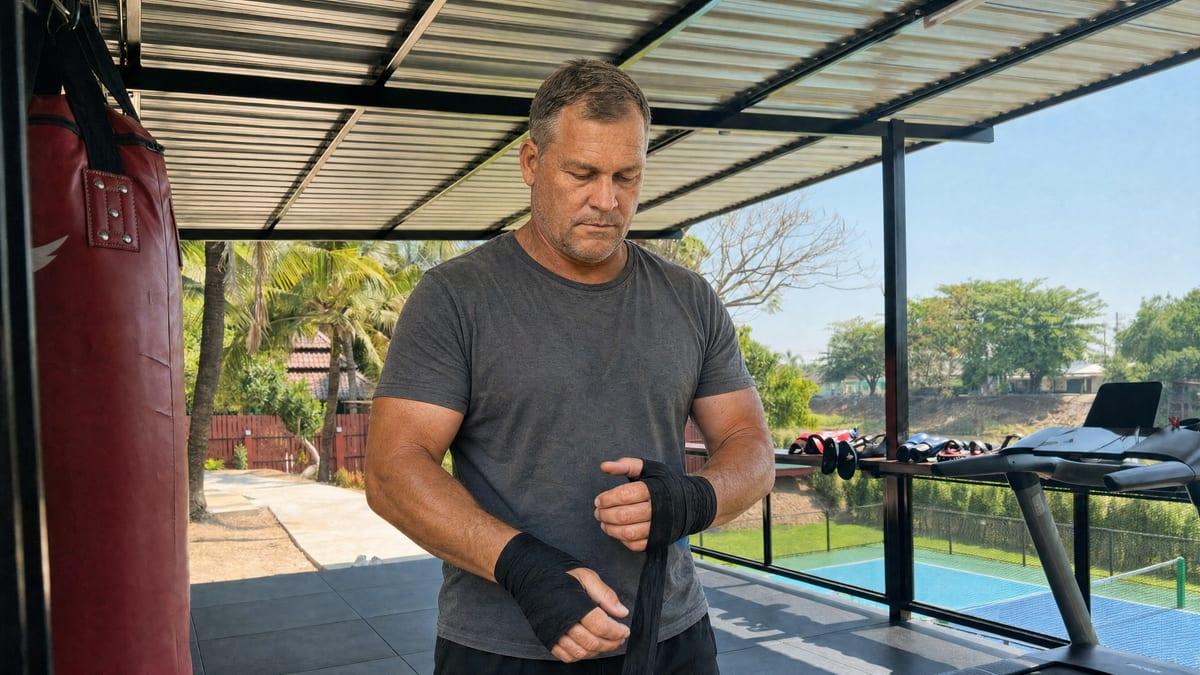
In the first week activity is gentle and assessment-based. Tong evaluates strength, cardiovascular fitness, and flexibility on arrival, then builds a weekly plan around things the person will actually sustain, and the holistic treatment activities are coordinated with the clinical team rather than running alongside them. The outdoor gym runs three times a week, with pickleball, tennis, the golf driving range, Muay Thai, and boxing available as interest allows.
The variety is deliberate. Novel enjoyable movement serves dopamine recovery better than mechanical repetition, and Tong reports back to the clinical team when a person's energy drops or when exercise starts becoming the only thing they will engage with. Both patterns change the care plan.
Therapy is the primary treatment for ice withdrawal and recovery at Jintara.
Because ice withdrawal does not need the medical management that alcohol or opioid detox requires, therapy starts earlier in the program. By the end of the first week most clients are in one-on-one counselling, group sessions, and the written assignment work that forms the backbone of the therapeutic model.
The clinical team holds post-graduate qualifications, each with a master's degree in counselling, psychology, or a related field, and counselling is led by Denise O'Leary, whose experience runs particularly to trauma-informed work with people whose ice use involved psychotic episodes. The first week of treatment is spent building a formulation: what was happening before the ice, what kept the use going, and what recovery specifically has to address. That formulation, rather than the substance itself, is what the rest of the stay is organised around.
Jintara does not offer naltrexone, acamprosate, or other oral relapse prevention medications as part of ice treatment. There is no FDA-approved medication for methamphetamine use disorder, as NIDA's methamphetamine overview confirms. The clinical position here is that building the capacity for drug-free experience beats replacing one dependence with another.
Starting treatment early shortens the hardest stretch of withdrawal.
The length and severity of ice withdrawal track the duration and intensity of use, but they are also shaped by what happens in the first weeks after stopping. Someone withdrawing at home, without structure or clinical support, is more likely to sit in prolonged PAWS and to return to use during the worst of the anhedonia and craving.
Getting help early does not shorten the neurological timeline. It changes what living through that timeline feels like. Residential care removes the triggers, the supply, and the social contexts tied to use, the daily schedule supplies natural dopamine stimulation, and the clinical team can respond to methamphetamine psychosis, severe depression, or suicidal thinking as it appears rather than after a crisis. None of that shortens the underlying biology. It changes the odds of staying present for it.
The important clinical message is that these symptoms are not permanent. Structured residential support through the vulnerable early period improves outcomes for stimulant use disorder, particularly where co-occurring mental health conditions are treated at the same time, which is the pattern NIMH describes across substance use and mental health. They have a neurological cause, they follow a predictable shape, and they resolve.

Talk with Our Admissions Team
Your enquiry is confidential and goes only to our admissions team.
Common Questions About Ice Withdrawal
The main symptoms are psychological: severe depression, anhedonia (loss of pleasure in ordinary activities), profound fatigue, excessive sleep, cognitive fog, and intense cravings. Physical symptoms such as increased appetite and restlessness also occur, but ice withdrawal does not carry the same medical risk as alcohol or benzodiazepine withdrawal. Most acute symptoms settle within 3 to 7 days, though depression and low motivation can persist for weeks.
Ice withdrawal is not typically life-threatening the way alcohol or benzodiazepine withdrawal can be, and there is no risk of seizure from stopping methamphetamine alone. The psychological severity is real and clinically significant. Methamphetamine psychosis, severe depression, and suicidal thinking can occur during withdrawal, which is why clinical support is recommended over withdrawing at home unsupervised.
The acute phase lasts roughly 3 to 7 days. After that, post-acute withdrawal syndrome can bring ongoing depression, anhedonia, disrupted sleep, and cravings for weeks or months. Neurological recovery of the dopamine system takes considerably longer, often 6 to 12 months or more depending on how long and how heavily a person used.
Methamphetamine floods the brain with dopamine at levels far above what any natural experience produces, so the brain adjusts by reducing its own dopamine output and receptor density. When ice is removed, the person is left with a dopamine system well below baseline. Ordinary activities feel flat because the brain cannot yet generate normal pleasure signals. This resolves gradually with time, abstinence, and activities that stimulate natural dopamine production.
Some people do withdraw at home, but the risk of returning to use during the worst of the depression and craving is high. Without structure, clinical monitoring, and removal of access to ice, the probability of getting through the acute phase and the harder weeks that follow is significantly lower than in a structured residential setting. For anyone who has used heavily, or who has experienced psychotic symptoms, clinical supervision is strongly recommended.
No. Jintara does not prescribe naltrexone, acamprosate, or other oral relapse prevention medications as part of ice withdrawal treatment. Psychiatric medication may be considered individually if psychotic symptoms or severe depression require clinical management, but that is case by case. The approach is therapy-primary, using counselling, EMDR where indicated, group work, and structured physical activity as the main clinical tools.
The standard residential program is 30 days, with extended stays available for people who need more time for stabilisation, trauma processing, or EMDR work. The 30-day program is designed to carry a person through the acute withdrawal phase and the most intense part of post-acute withdrawal, while building the routines that support recovery after leaving.
Jintara is a small adult residential rehab in Chiang Mai treating a maximum of ten clients at a time, with 24/7 nursing observation through the acute withdrawal phase and a clinical team experienced in stimulant recovery.
Jintara Rehab is licensed by the Thai Ministry of Public Health as a rehabilitation centre. The clinical information on this page describes Jintara's general approach to supporting clients during the early recovery period. Medical decisions, including medication protocols, are determined by addiction-specialist psychiatrists through our partner hospital pathway. Individual treatment varies based on clinical assessment. This content is for informational purposes and does not constitute medical advice.