

How to Arrange Rehab in Thailand for a Family Member
Most people who contact us about Thailand are not the person going to treatment. They are the wife, the mother, or the adult child doing the arranging, usually alone and usually in a hurry. This page walks the whole sequence, from the first confidential call through to the airport handover, and it says plainly which parts you can control and which one part you cannot.
- Call us first, on your own, before anyone else needs to know.
- Admission is confirmed within 24 to 48 hours for most clients.
- Australians, Britons and Americans fly to Thailand without arranging a visa first.
- You can pay for another adult's treatment from your own account.

Fully Licensed and Hospital Accredited
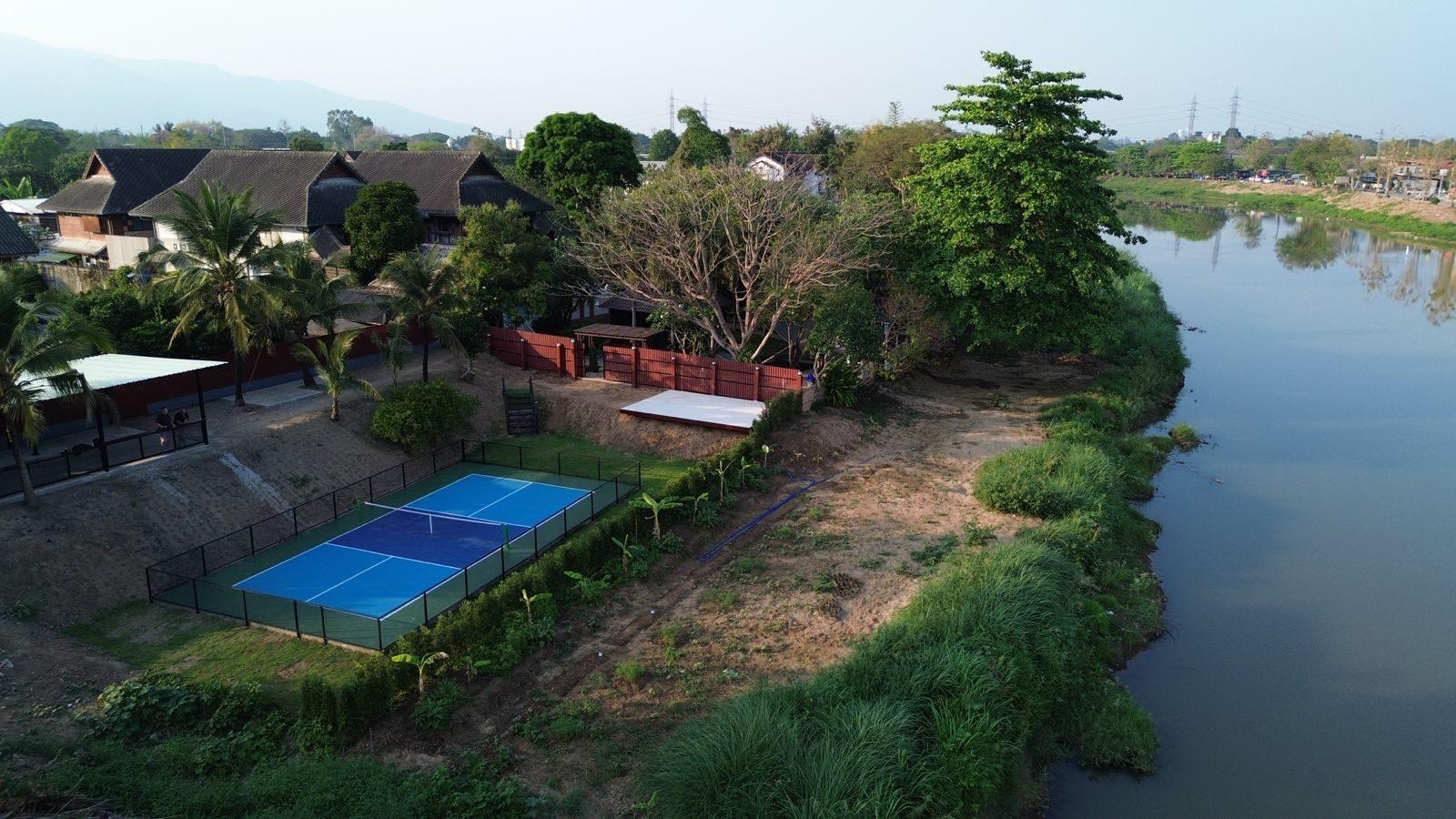
Arranging Rehab for a Relative Is a Sequence Measured in Days.
Arranging rehab for a relative is a sequence of about eight steps covering assessment, payment, travel and admission. It is not one decision, and families who know the order move faster than families who do not.
The order runs like this. You make a confidential enquiry on your own. A clinician assesses whether the person is suitable and safe to admit. A start date gets confirmed. A deposit secures the room. Flights get booked. Documents and medication get assembled. The person flies. A nurse and a support worker meet them inside arrivals at Chiang Mai. For most families the whole run takes somewhere between four days and two weeks, and the slow part is almost never the facility.
The slow part is usually the conversation at home, which is a different problem with a different answer, and the rest of our family support material covers it. What follows here assumes the answer is yes, or close enough to yes that you want the plan built and ready. Families who have been living with addiction for years often carry a fear that the treatment system will be as chaotic as the situation at home. Substance use in a household reshapes roles, finances and communication over a long period, a pattern set out in SAMHSA's TIP 39 chapter on the impact of substance abuse on families, which is why the arranging job so often lands on one exhausted person.
Work the steps in order and very little of this turns into a crisis.
The Sequence, Step by Step
| Step | What Happens | Typical Timing |
|---|---|---|
| Enquiry | You call, email or message on your own, without your relative present | Day one |
| Assessment | Confidential clinical call covering substance use, medical history and current medication | Usually within a day of the enquiry |
| Confirmation | Admission confirmed and a start date agreed | Within 24 to 48 hours |
| Deposit | Reservation deposit paid, which secures the private room | Once the date is set |
| Flights | Travel booked, ideally three to five days ahead | Days two to four |
| Documents | Passport, prescriptions in original packaging, any medical records | Before departure |
| Departure | Your relative flies, with or without you | Days four to fourteen |
| Arrival | A nurse and a support worker meet them inside arrivals and bring them to the facility | Same day |
Enquiry
What Happens: You call, email or message on your own, without your relative present
Typical Timing: Day one
Assessment
What Happens: Confidential clinical call covering substance use, medical history and current medication
Typical Timing: Usually within a day of the enquiry
Confirmation
What Happens: Admission confirmed and a start date agreed
Typical Timing: Within 24 to 48 hours
Deposit
What Happens: Reservation deposit paid, which secures the private room
Typical Timing: Once the date is set
Flights
What Happens: Travel booked, ideally three to five days ahead
Typical Timing: Days two to four
Documents
What Happens: Passport, prescriptions in original packaging, any medical records
Typical Timing: Before departure
Departure
What Happens: Your relative flies, with or without you
Typical Timing: Days four to fourteen
Arrival
What Happens: A nurse and a support worker meet them inside arrivals and bring them to the facility
Typical Timing: Same day
You Can Make the First Enquiry Without Your Relative Present.
Yes, you can call before your family member knows you have called. Nearly every family enquiry starts this way, and nobody at Jintara will contact your relative because you made an enquiry.
The first conversation is short and it is mostly us asking questions. What is the primary substance, and roughly how much. How long has it been going on. Has there been a previous treatment attempt. Are there existing mental health diagnoses or prescribed medication. Is there a medical history we need to know about, including seizures, cardiac or blood pressure problems, or pregnancy. Is the person aware that you are making the call. If you are still working out whether the drinking is what you think it is, the observable signs are the place to start. There is no test to pass here. Honest answers make the clinical assessment faster and more accurate, and a family that hides the difficult parts usually ends up with a placement that does not hold.
You can reach the team by phone, email or message, and you can contact us at any hour, because families in Australia, the United Kingdom and North America are all calling from different time zones and the team is used to it. Asking questions is not a commitment. Several families call, get the information, and then spend three weeks getting to the conversation at home. That is normal and nobody chases you.
- An approximate daily amount: of the main substance, as honestly as you can estimate it, including alcohol measured in drinks rather than units if that is easier
- A list of current prescriptions: including anything prescribed for sleep, anxiety or pain, and anything you suspect is being taken that was not prescribed
- A rough sense of workable dates: so the team can talk about real start dates rather than hypothetical ones. You do not need medical records for the first call
The first call costs nothing and changes nothing at home.

A Clinical Assessment Confirms Admission Before Any Room Is Held.
The assessment call is the step that turns an enquiry into a confirmed admission, and it happens before any money moves. It is a confidential conversation covering substance history, medical history, mental health and readiness. For most clients admission is confirmed within 24 to 48 hours of that call, and when a case is urgent the assessment happens within an hour or two.
This is the point where families most often expect something we do not do. We do not hold a bed while a family decides. Nothing is reserved before the clinical assessment, because the assessment is what tells us whether the person can be admitted safely at all. Someone in heavy alcohol or benzodiazepine dependence needs medically supervised detox with a psychiatrist and awake nursing, and that has to be planned rather than improvised on arrival. Someone with an unstable psychiatric presentation may need a different level of care than a residential program provides, and we will say so. Matching the intensity of treatment to what the person actually needs is one of the strongest predictors of whether it holds.
Read that as speed rather than as a limitation. The reason there is no waiting list is that the sequence is short, and from a first message to a confirmed start date is usually days. Families arriving from a domestic system where the honest answer was a five month wait tend to disbelieve this until it happens. If the assessment finds that Jintara is not the right fit, we tell you that and we point you somewhere that is.
Assessment first, then a date, then a deposit, in that order every time.
Your Relative Signs Their Own Consent, and No One Else Can.
Residential treatment in Thailand is voluntary, which means the adult being admitted signs their own consent and no family member can sign it for them. You can arrange every other part of this. You cannot arrange agreement, and any facility that tells you otherwise is selling you something that will not hold.
That sounds like a wall, and in practice it is a narrower gate than families fear. Pressure as the trigger is normal and it is fine. An ultimatum from a spouse, parents who have finally said no more, a workplace that has run out of patience: those are the reasons a very large share of people arrive, and arriving for someone else's sake at the start is not a problem. What does not work is a person who does not want to be there at all and intends to go through the motions until the family is off their back. A basic willingness to engage is the thing that matters, and it is what the admissions process is listening for, so where it is genuinely absent we would rather say so than take the booking.
The research says the same thing in colder language. A systematic review of family training approaches published in 2020, pooling fourteen studies of Community Reinforcement and Family Training, found the method roughly twice as effective as comparison approaches at getting a treatment-resistant relative to enter treatment. The people doing that work in the studies were mostly wives and mothers. Your position is not a weak one.
So the honest framing is this. Your job is to build the plan and hold the boundary, and their job is to say yes. Once both of those have happened, the rest of the sequence moves quickly.
“Everybody who comes to rehab has ambivalence. That is okay. We can work with that.
The Window After a Yes Is Short, So Build the Plan First.
Agreement in addiction is often a matter of days rather than weeks, which is why the plan should exist before you ask the question. Families who ask first and then start researching frequently lose the window while they are still comparing facilities.
The practical version is to run the first three steps quietly. Make the enquiry. Get the clinical assessment as far as it can go without your relative on the call. Understand the cost and confirm the money is reachable. Look at flight availability for the next fortnight, and read through what happens in the first week so you can answer that question when it comes, because it always comes. Then have the conversation. If the answer is yes on Tuesday, you want to be booking on Tuesday rather than starting your research on Tuesday.
Two timing details are worth knowing. An assessment done in advance does not expire in any meaningful way, so the preparation is not wasted if the intervention conversation goes badly and you try again a month later. And the flight itself is a useful deadline, because a person who has agreed in principle but has no departure date will often drift, while a booked flight three days out converts far more often than an open plan.
Keep the departure gap short where you safely can. Three to five days is usually enough to assemble documents and medication and long enough to say goodbye to people, and it is short enough that the decision does not unravel. If the person is drinking heavily, do not push them to stop before they fly, because unmanaged alcohol withdrawal is genuinely dangerous and detox is what the clinical team is for.
Build the plan, then ask, then move inside the week.
Paying for Another Adult's Treatment Is Routine and Simple.
Yes, you can pay for a family member's treatment, and a large share of admissions are paid for by someone other than the client. There is no legal or administrative obstacle, and the person receiving treatment does not need to be on the payment at all. What paying for someone else's rehab does not buy is access to their clinical information, which stays with them behind a consent boundary the payment does not move.
The numbers are published rather than quoted case by case. The 30-day residential program is USD 12,500. A reservation deposit of USD 2,000, or as otherwise quoted, is paid once the start date is confirmed, and that is what secures the private room. The balance follows before or on arrival. Payment can be made by international bank transfer, by credit or debit card through Stripe, or in Thai baht in cash by prior arrangement, and the full detail of what the fee covers sits on the pricing page.
If you are funding this from savings, an early-release superannuation application in Australia, or a family contribution split across siblings, tell the team early. The deposit and balance timing has some flexibility, and it is easier to arrange before a date is locked than after.
- The payer and the client can be different people: the card or account can be yours, and the name on the payment does not need to match the name of the client
- Treatment is self-pay: so no insurance claim or third-party record of treatment is created. Clients who want to claim from their own insurer afterwards are given itemised receipts to do it with
- The statement descriptor is neutral: the charge presents as a healthcare or wellness treatment reference rather than as a rehab or addiction service, which matters when a shared account or a family accountant is in the picture
The payer and the client are separate people in our system, and that is normal.

Australians, Britons and Americans Fly Without a Prior Visa.
Thailand currently admits Australian, British and American passport holders for tourism without a visa arranged in advance. Each one is stamped in at the immigration desk on arrival. The length that stamp grants is set on the day the person physically arrives, not the day you book. That stamp is 30 days. Thailand's revised visa exemption scheme took effect on 15 September 2026, replacing the 60-day exemption that had run since July 2024. The Tourism Authority of Thailand recorded the cabinet approval in May 2026, and the revised conditions moved 54 countries to a 30-day exemption and three to 15 days. A 30-day program plus the travel days either side runs past that stamp, so most clients extend once in country. The Thai Immigration Bureau grants an extension of not more than 30 days at its Chiang Mai office, and admissions helps with the paperwork.
Check this before you book. Entry rules change, the version that applies is the one your own government publishes on the day you fly, and Australian families have the flight routes and the cost comparison set out separately. The 30-day figure for British passports is the one carried by the United Kingdom's travel advice for Thailand, which has recorded it since 15 September 2026 and also records the extension of not more than 30 days. Australian and American families should confirm the length in force on the arrival date with the Royal Thai Embassy in Canberra or Washington DC. Don't rely on a day count published on a facility website, including this one. Passport validity is the item families miss most often, so allow at least six months of validity beyond the arrival date, and check that the passport is physically in the person's possession rather than in a drawer in another city.
Flights from Australia to Chiang Mai connect through Bangkok and run around 10 to 12 hours in total. From the United Kingdom the trip is longer and usually connects through the Gulf. From Manila and the rest of regional Asia it is short enough to be a same-day movement.
On whether to fly with them, some families do, and it is often the right call for a first international trip in a difficult state. If you travel with your relative you can hand over at the facility gate and fly home the next day. Do not plan on staying nearby for the first week. The clinical work of the first days depends on separation from the home environment, and a family member in a hotel down the road tends to become the pressure valve that prevents it.

Medication and Documents Get Assembled Before the Flight.
The document pack is short and it should be complete before departure. Medication needs more care than the rest of it, and undisclosed benzodiazepines or opioids are the most common cause of a detox plan being wrong on day one.
Tell the clinical team about every medication, including the ones the person is not supposed to be taking. The team has heard all of it before and nobody is going to be shocked. If there is a psychiatric diagnosis or a suspected one, that changes the treatment plan rather than the admission, and it is worth flagging at the assessment stage, because concurrent mental health conditions are common in addiction and are handled through dual diagnosis treatment alongside the substance work rather than after it.
- Passport and travel details: with at least six months of validity remaining, plus flight details, travel insurance and emergency contact numbers
- Medication in original packaging: current prescriptions in their original labelled containers, with a copy of the prescription or a letter from the prescribing doctor
- Any medical records you can reach: recent test results, discharge summaries or a GP letter. Useful, but not a reason to delay a departure date if they are hard to obtain
- A check on restricted medicines: Thailand controls some medicines that are ordinary elsewhere, including certain stimulant and codeine-containing preparations, so confirm the current rules with the Thai embassy in your country before they fly. The CDC's traveller health notes for Thailand are the standing reference
Complete the pack at home where the paperwork lives.
The Handover at the Airport Is Deliberately Short.
A Jintara nurse and a support worker meet the client inside the arrivals hall at Chiang Mai airport, not a driver, and the transfer to the facility is included in the program fee. There is no taxi to find and no address to explain in a language nobody in the family speaks.
The reason it is a nurse is clinical rather than a courtesy. The nurse is reading how your relative is from the moment they meet, at the end of a long flight on which alcohol withdrawal can begin in the air. If someone presents at real risk, the car goes to the hospital instead of the facility, and that decision gets made in the arrivals hall rather than on day two.
If you have flown with your relative, the handover happens either at the airport or at the gate of the facility, and it takes a few minutes. Families often expect a tour and a settling-in period. There is not one, and the reason is clinical rather than administrative. The first hours are medical: a nursing assessment, observations, a room, food and sleep. A long goodbye with a family member present tends to raise distress at exactly the point where the clinical team is trying to lower it.
You will hear from the team. Expect contact once the person is settled and again after the initial medical review, and expect the detail of those calls to be limited by what your relative has consented to share. Consent for family contact is set up during the first days rather than before, and it belongs to the client.
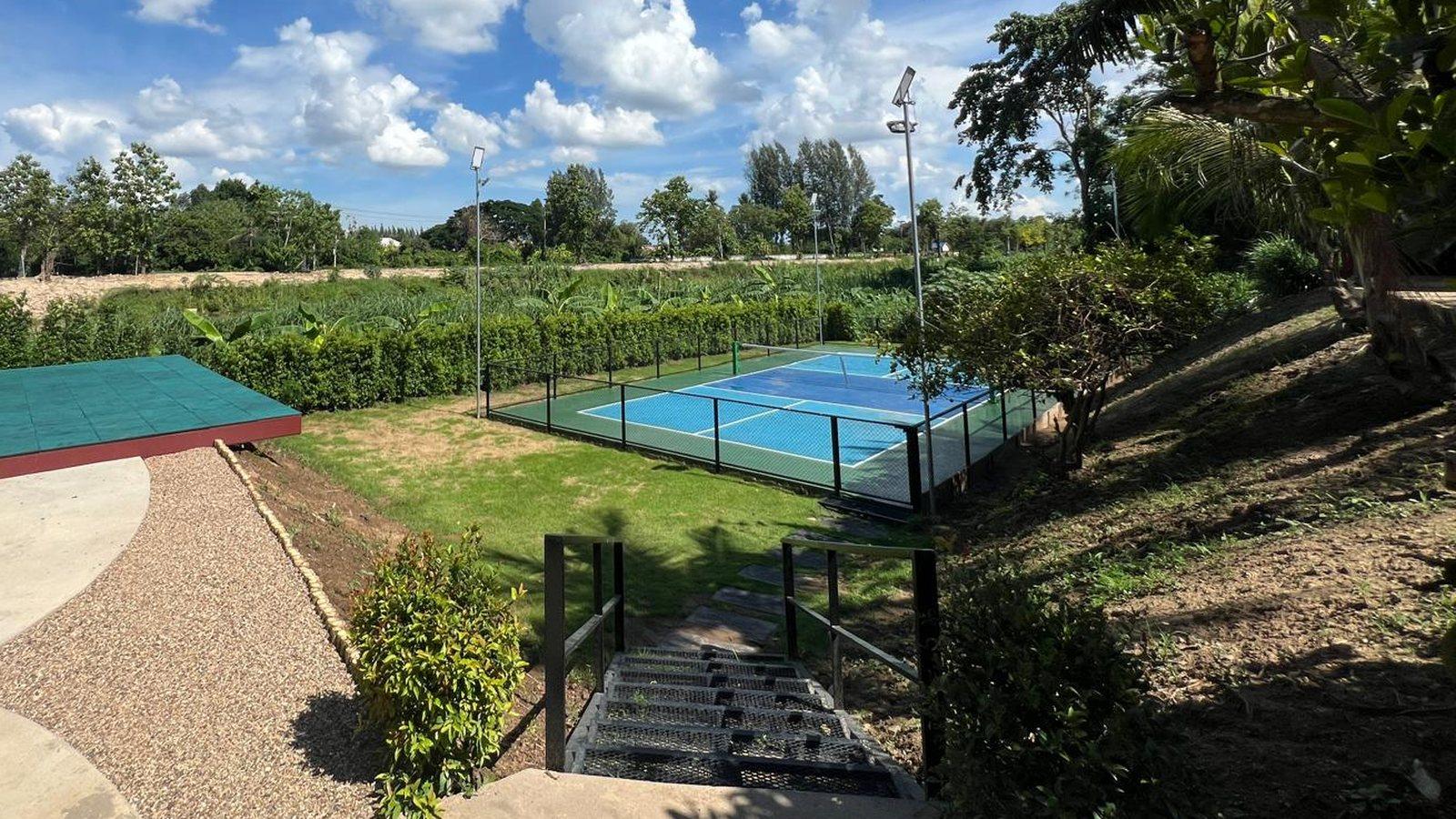
The physical environment is worth knowing about in advance so you can picture where they are. It is a residential facility with private rooms, a maximum of ten clients at a time and awake nursing overnight, and the facilities page shows it properly.
Short handover, quick clinical start, and a call to you once they are settled.

Arranging Privately Is Possible When the Wider Family Cannot Know.
Yes, this can be arranged without anyone outside the immediate household finding out. Confidentiality is not a feature bolted on for nervous clients. It is the default position and it is structural. Treatment is self-pay, so no claim is submitted to an insurer, no employer scheme is notified and no external record of treatment is created. The payment descriptor is a neutral healthcare or wellness reference rather than an addiction service. And Thailand is not a country where a professional body, a licensing register or a family friend in the same suburb is going to encounter the admission by accident.
Inside the family, the harder question is usually who you tell and when. There is no clinical rule here, but two patterns are worth knowing. Families who tell nobody at all frequently find the secrecy exhausting and end up disclosing part way through the stay under worse conditions. Families who tell one trusted person outside the household tend to hold up better. Employers are a separate calculation and depend entirely on the contract and the jurisdiction.
For families weighing a Thai facility against a domestic one specifically on discretion grounds, the family guide to hospital accreditation covers how to check a facility's clinical credentials from another country. That is the question that should sit alongside privacy rather than behind it, because a place that is genuinely private and a place that is genuinely accredited are two different claims and you want both.
Private by structure, not by promise.
If Your Relative Is Already in Thailand, Two Steps Change.
When the person is already in the country, the assessment and payment steps are identical and only travel and immigration change. This is a common enough situation that it has its own pattern: an adult child on a long trip, an expat partner, a family member who went for three weeks eighteen months ago and did not come home.
Travel becomes a domestic movement. Chiang Mai is an hour by air from Bangkok and reachable by road or rail from most of the country, and the same airport pickup applies once a flight number exists. There is no international departure to coordinate and no long-haul flight to survive, which removes the single most fragile part of the sequence.
Immigration status is the item to check early. If the person has overstayed a permitted period, that is a solvable administrative matter, but it is easier addressed before admission than during it, and the fine structure escalates with time. Raise it at the assessment call and the team will point you to the right process. Do not let an overstay become the reason nothing happens, because it is one of the most common reasons a family stalls and one of the least serious obstacles in the sequence.
The clinical side does not change at all. The same assessment, the same treatment program, the same consent requirement and the same 30-day structure. Being in Thailand already does not fast-track a placement past the assessment, and it does not need to, because the assessment is measured in hours.
Same clinical route, shorter journey, one immigration question to settle early.
How the Arranging Differs by Country.
Jintara's clients come predominantly from outside Thailand, and the arranging experience differs by country mainly in money, distance and time zone. Of 250 pre-assessment intakes recorded between December 2021 and July 2026, 92 percent listed a home address outside Thailand. Those figures are Jintara's own admissions data, anonymised, with no client identifying detail attached.
For every country the return home is the part families underestimate, and continuing care by video after discharge is how the distance stops being a problem. Aftercare planning starts during the stay rather than at the end of it, which is also the answer to the question most families ask at about week three, which is what happens when this is over.
Where Jintara Clients Arrange From
| Origin | Share of Intakes | What Differs |
|---|---|---|
| Australia | 23.6 percent | Ten to twelve hours through Bangkok, and early-release superannuation is part of the funding for some families |
| United Kingdom | 14.8 percent | Usually a Gulf connection, and a six or seven hour time difference that puts evening calls into the Thai morning |
| United States | 14.0 percent | The longest journey and the widest cost gap against domestic residential care |
| Philippines | 6.4 percent | Short flights, frequently same day, and the group most often already travelling |
Australia
Share of Intakes: 23.6 percent
What Differs: Ten to twelve hours through Bangkok, and early-release superannuation is part of the funding for some families
United Kingdom
Share of Intakes: 14.8 percent
What Differs: Usually a Gulf connection, and a six or seven hour time difference that puts evening calls into the Thai morning
United States
Share of Intakes: 14.0 percent
What Differs: The longest journey and the widest cost gap against domestic residential care
Philippines
Share of Intakes: 6.4 percent
What Differs: Short flights, frequently same day, and the group most often already travelling
What the Family Does After Admission Matters More Than Expected.
The arranging job does not end when the plane lands, and the family work that follows is a defined part of treatment rather than an optional extra. Substance use reorganises a household over years, and the household does not reorganise itself back on its own while one person is away for a month. The wider picture of how addiction reshapes a family, and what recovery asks of the people who were not using, sits in what addiction does to a family, and it is worth reading while they are away rather than after they are back.
Expect the amount of contact to be lower than you want in the first fortnight. That is deliberate and it is not a sign that anything is wrong. Early treatment works better when the daily emotional weather of the household is not arriving hourly on a phone.
- A family impact statement: a structured way to say what the situation has cost you, delivered into the clinical process rather than across a kitchen table
- A one-page family guidelines document: setting out what the household agrees to do differently when the person returns
- A straight-home instruction: the single most important thing the team asks is that the person goes straight home after discharge rather than stopping anywhere on the way

“Getting sober is one thing. Staying sober is a completely different thing, and the household they return to is a large part of which one happens.

Talk with Our Admissions Team
Your enquiry is confidential and goes only to our admissions team.
Questions Families Ask About Arranging Rehab
You can arrange everything up to the point of admission, including the enquiry, the clinical discussion and the funds. You cannot complete the admission without your relative's own consent, because residential treatment in Thailand is voluntary and the adult being admitted signs for themselves. In practice families do the whole plan quietly and then have the conversation with a departure date already available.
For most clients admission is confirmed within 24 to 48 hours of the clinical assessment call, and urgent cases are assessed within an hour or two. The limiting factor is usually the flight rather than the facility. Families who have the assessment done in advance can move from agreement to departure in three to five days.
Yes. A large share of admissions are paid by someone other than the client, and the payer's name does not need to match the client's. Payment is by international bank transfer, card through Stripe, or Thai baht in cash by prior arrangement. Treatment is self-pay, so no insurance claim or third-party record of treatment is created.
No. Australian, British and American passport holders are stamped in on arrival, free of charge, with nothing applied for beforehand. That stamp is 30 days, under the revised exemption scheme that took effect on 15 September 2026. A 30-day program plus travel days runs past it, so most clients extend by up to a further 30 days at the Chiang Mai immigration office, with admissions helping on the paperwork. Check your own Royal Thai Embassy in the week before you fly.
It happens, and it is not the end of the process. The clinical assessment does not expire in any practical sense, so the preparation carries forward if you try again. Keeping the gap between agreement and departure short, ideally three to five days, is the single most effective way of reducing the chance of it happening at all.
Often yes for a first international trip in a difficult state, and the handover at the facility takes only a few minutes. Do not plan to stay nearby afterwards. The early clinical work depends on separation from the home environment, and a family member in a hotel down the road usually becomes the release valve that prevents it.
Treatment is self-pay, so no insurer, employer scheme or third party is notified and no external record of treatment is created. The payment appears as a neutral healthcare or wellness treatment descriptor rather than an addiction service. Inside the family, who you tell is your call, and families who confide in one trusted person outside the household generally cope better than families who tell nobody.
Fees are structured in 30-day blocks, and any extension beyond the first block is decided week by week with the clinical team rather than fixed in advance. Where trauma processing or EMDR is part of the plan, a 60-day minimum stay applies, because that work cannot be done safely inside a single 30-day block.
We will tell you during the assessment and point you to somewhere that fits better. Some presentations need a level of psychiatric care that a residential addiction program does not provide, and taking a booking we cannot serve well helps nobody.
Jintara is a small adult residential rehab in Chiang Mai with a maximum of ten clients at any time. If you are still comparing options, the team will tell you during the assessment when another facility is the better fit.
Jintara Rehab is licensed by the Thai Ministry of Public Health as a rehabilitation centre. The clinical information on this page describes Jintara's general approach to supporting clients during the early recovery period. Medical decisions, including medication protocols, are determined by addiction-specialist psychiatrists through our partner hospital pathway. Individual treatment varies based on clinical assessment. This content is for informational purposes and does not constitute medical advice.