

Comparing rehab in Thailand and Australia on cost, wait time and care
Weighing rehab in Thailand or Australia? This guide compares both options through the things that actually decide recovery outcomes.
Written by Darren Lockie | Medically reviewed by Denise O'Leary | Published: November 26, 2025 | Last Updated: October 21, 2026
For Australians weighing private residential rehab, the choice between a local program and an international one involves real trade-offs in cost, wait time, clinical oversight, and setting. Treatment duration, program structure, and access to medical support are the factors this comparison works through. This guide works through each factor with concrete numbers and examples.
Money, time off work, family pressure, and fear of another failed attempt all sit in the same decision. The sections below compare both options through the things that usually matter most:
- What you pay and what you receive
- How fast you can get a bed
- How safe and clinically solid the program is
- Whether the setting helps you stay focused on change
This guide will show you how a small Thai centre like Jintara actually runs, so you can compare real examples instead of marketing slogans.
Key Takeaway
Choose rehab in Thailand if you need fast admission, stronger value for money, a small program with clear medical cover away from home, and choose Australia if you must stay close for medical, legal, or family reasons and can access good local care.
How do Thailand and Australia compare for private addiction rehab.
Private centres in Thailand serving international clients typically offer faster access at lower cost than the Australian system. The World Health Organization's global status report on alcohol and treatment of substance use disorders records that treatment coverage for substance use disorders remains low across high income and low income countries alike, which is the wider pattern Australia sits inside. Readers weighing the region itself rather than one country will find Thailand, Bali and Cambodia compared on hospital access and clinical staffing. The comparison between the two comes down to cost, wait time, clinical safety, and whether distance from home helps or hinders recovery.
Typical patterns
- Cost: Private rehab in Australia commonly costs between A$16,071 and A$42,857 for a 30 day stay (A$15,000 to A$40,000 quoted for 28 days, scaled by 30/28), before additional clinical fees.
- Cost in Thailand: Residential programs for international clients usually fall between US$3,000 and US$20,000 per month. Average mid range centres sit around US$7,000 to US$12,500 for 30 days.
- Wait times: Public rehab in Australia can involve months on a list. Victoria's peak alcohol and drug body counted 5,122 people on daily treatment waitlists in May 2026, and one ABC case followed a woman told to expect a 12 month wait.
- Access in Thailand: Private Thai rehabs usually admit within days, and Australians arrive on the standard visa exemption stamp with nothing to apply for beforehand.
Jintara sits in the middle of the Thai market on price. Its published cost for treatment reflects where the budget actually goes: nurses, therapists, and hospital links. Large buildings and sales teams take a much smaller share.
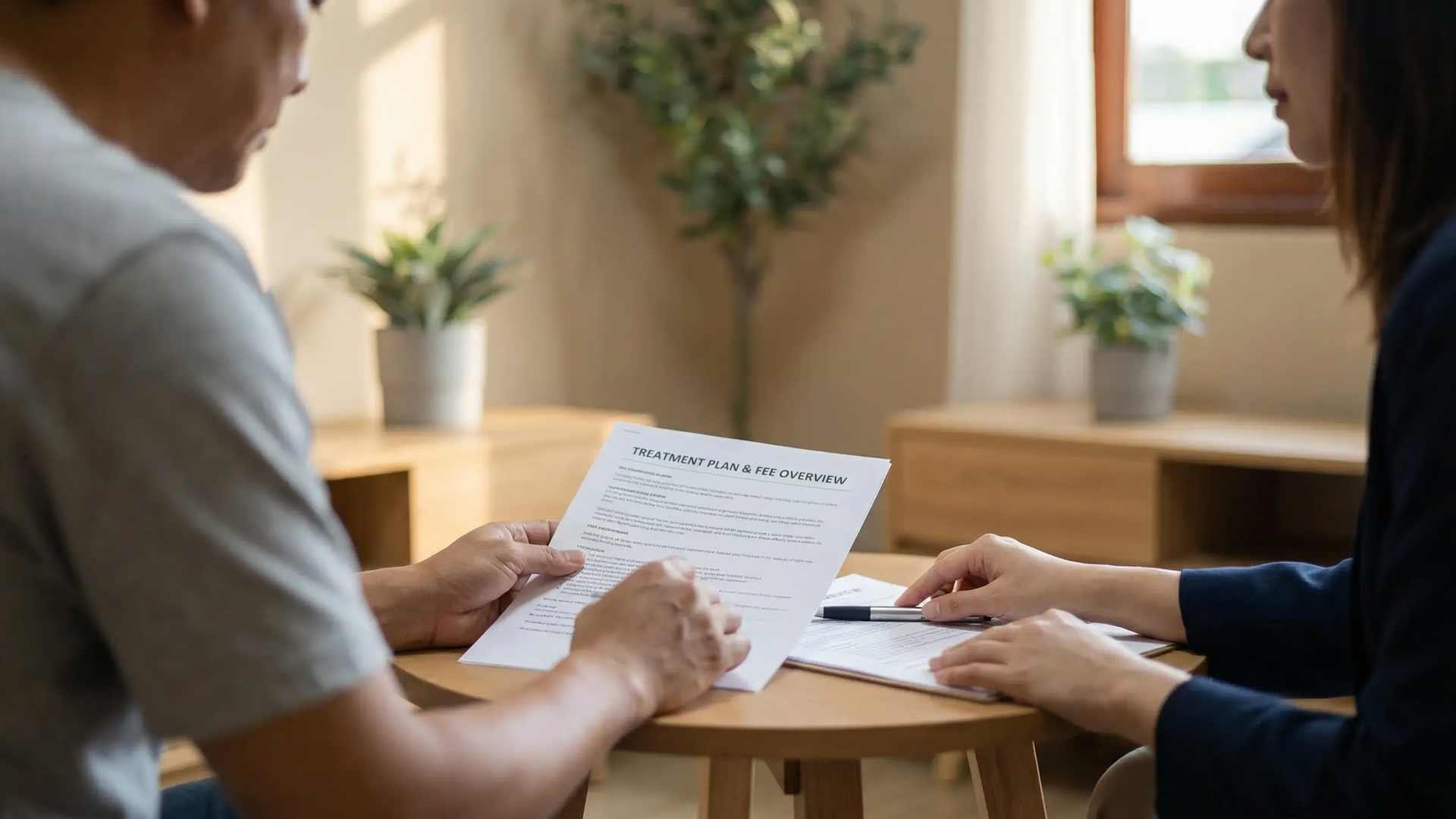
What does addiction rehab cost in Thailand vs Australia.
Private residential rehab in Australia commonly runs A$16,071 to A$42,857 for a 30 day stay (A$15,000 to A$40,000 quoted for 28 days, scaled by 30/28), before additional clinical fees, and single-client models sit well above that. The Australian Institute of Health and Welfare publishes the national count of closed treatment episodes, a service-based dataset rather than a demand-based one. Thailand-based programs for international clients typically cost US$7,000 to US$12,500 for a comparable stay.
These prices often include:
- Accommodation, food, and group work
- Some one to one therapy
- Basic medical input and detox where needed
The main gaps people report are:
- Extra fees for medical tests, extra sessions, or longer detox
- Pressure to leave once the funded period ends, even if they are still shaky
Rehab costs in Thailand
In Thailand, international level centres range from about US$3,000 per month at the budget end to US$20,000 at the luxury end. Reviewing a full breakdown of what those prices typically include or exclude before contacting any facility is worth the time. Most solid residential rehabs sit in the US$7,000 to US$12,500 range for 30 days.
At Jintara:
- A 30 day block costs US$12,500 for one adult in a private room
- That fee is all inclusive apart from six things: international flights, visa and visa extension costs, prescription medication you bring from home, off site medical or dental treatment beyond the day two package, personal spending money, and optional add-ons
- Everything else is inside the rate: airport pick up, meals, housekeeping, detox, day two hospital package, therapy, movement, and excursions
Darren often tells people that if a Thai rehab is much cheaper than this, they probably save money by lowering staffing or medical cover. If it is much higher, you are likely paying for heavy marketing or high overheads, not always better care.
How long will you wait for a rehab bed in Australia vs Thailand.
Waiting time is the one thing no national dataset actually measures. The Australian Institute of Health and Welfare counts treatment episodes that were delivered, not the people still waiting, so the wait itself only surfaces in state level reporting and in journalism. Where it does surface, it runs to months. Private centres in Thailand serving international clients typically confirm admission within days of first contact, with no waiting list.
Australia has good clinicians, but demand is heavy. Public and charity services in some states report months on a list. An ABC News report in October 2022 followed a woman named Chloe who faced a three month wait for detox and a further 12 months for a residential bed. She relapsed repeatedly while waiting.
The Victorian Alcohol and Drug Association counted 5,122 people on daily treatment waitlists in May 2026, up from 2,385 in September 2020, a 115 percent rise over that period. Victoria recorded 584 fatal overdoses in 2024. Those two numbers belong in the same sentence, because for someone in crisis the delay is the risk. Figures are Victorian and dated, and other states publish their own.
Access in Thailand:
Most private Thai rehabs, including Jintara, can admit within days. A typical pattern is:
- First call with the owner to check clinical fit and budget
- Deposit paid once the client decides to come
- Travel and visa support, followed by arrival within a week or two
Once clients land in Chiang Mai, Jintara often takes them straight from the airport to a partner hospital for assessment if their condition is risky. For someone whose situation calls for safe medical detox rather than another hospital crisis, that speed matters. Time is often critical because of heavy use, seizures, or serious mental health symptoms.
How is addiction treatment regulated in Thailand and Australia.
Australian private rehabs operate under a mix of state health, planning, and business regulations, with licensing requirements varying by state. Thailand's addiction treatment sector answers instead to the Ministry of Public Health, which licenses residential facilities, mandates regular audits, and sets minimum staffing requirements. The clinical standard of any facility, in either country, depends on its staffing, hospital links, and oversight rather than geography.
Many people assume that Thai rehabs must be lower in quality because Thailand is a developing country. Darren hears comments like 'I am scared the hospital will be like something from a movie' on most intake calls. The reality is more mixed:
- Community hospitals in rural areas can be basic
- Large private hospitals in cities like Chiang Mai and Bangkok match, and sometimes exceed, standards that clients from the UK, Europe, or Australia expect
Clients are often surprised by how quick and clean the service is. The full panel of bloods, liver and kidney function tests, chest X ray, and EKG that Jintara orders would cost thousands of dollars and take a full day through separate labs in many Western systems. In Chiang Mai, results usually arrive within hours.
How Jintara is regulated
- We hold a license from Thailand's Ministry of Public Health as a rehab and wellness centre
- We undergo regular audits that check medication storage, record keeping, fire safety, and staffing
- We hold formal hospital care agreements with Bangkok Hospital Chiang Mai, signed February 2026 with credit-backed emergency referral, and with Chiang Mai Ram Hospital, signed May 2025
In 2026, three national authorities jointly issued Jintara an accreditation against the national standard for drug treatment and rehabilitation facilities: the Healthcare Accreditation Institute, the Princess Mother National Institute on Drug Abuse Treatment, and the Department of Medical Services, Ministry of Public Health. It recognises compliance with the national standard for drug treatment and rehabilitation facilities applied to Thailand's own hospitals. Certificate 25/2569, valid May 2026 to May 2029, is verifiable through those bodies.
Nurses at Jintara come mainly from those hospitals, which is why the hospital is willing to back on site detox rather than insist on admission. Almost everyone completes detox at the facility with awake nursing through the night, a psychiatrist on call, and the owner reading the nursing report each morning. The small number who cannot are transferred under a written agreement rather than an ad hoc phone call.
Regulation in Australia
Private rehabs in Australia operate inside a mix of health, planning, and business rules, and the mix varies by state. Some link closely with state health services and are inspected as part of that relationship. Others are regulated mainly as businesses and premises, which is a different question from whether the clinical care is any good.
Public hospitals and publicly funded rehab units are tightly regulated, yet places are limited. So the choice is often between a well regulated yet crowded public system or a private service that may have less direct oversight but more space.
The key message: high quality and weak quality exist in both countries. You have to look at each rehab's licensing, hospital links, and staffing, not just the flag on the roof.
How does the treatment setting and environment affect recovery outcomes.
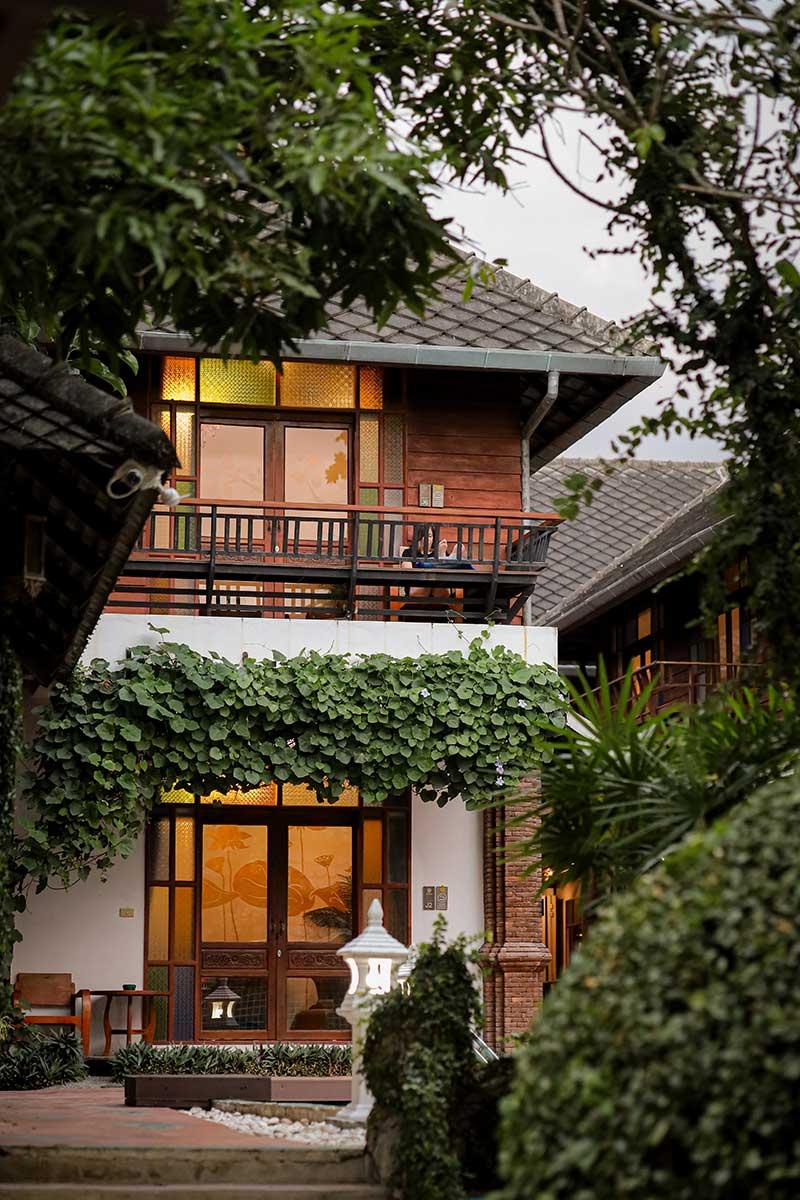
Calm residential settings support the kind of therapeutic work that reduces anxiety, depression, and stress responses. Mindfulness-based and mind-body practices, identified by the National Center for Complementary and Integrative Health as evidence-supported approaches, sit at the centre of that work. Chiang Mai's pace, Jintara's riverside site, and the structure of the daily program create conditions where those practices can take hold, away from the high-pressure environments many clients associate with their heaviest using.
Thailand as a change of setting
Chiang Mai offers green hills, rivers, and a slower pace than large cities. Jintara sits on a riverside site with private rooms, movement spaces, and calm shared areas rather than hotel style crowds. The tropical setting allows outdoor groups, movement, and quiet spots, which many adults describe as a relief after years in high pressure jobs. For international clients, Thailand also gives distance from:
- Local drinking and using networks
- Places linked to past binges
- The fear of being seen entering a local rehab
Being far from home does add travel, but for many adults it creates room to focus without constant reminders.
Australia's strengths
Australian rehabs can also make good use of nature. Many private centres sit in coastal or rural locations with beaches, bushland, or mountains on the doorstep. For Australian residents, staying in country can mean shorter flights, easier phone access, and a sense of being closer to family and local support.
The question is whether being close to those supports also keeps you close to triggers. Some people need distance at first. Others feel safer staying on familiar soil.
How does travelling to Thailand for rehab protect your privacy.
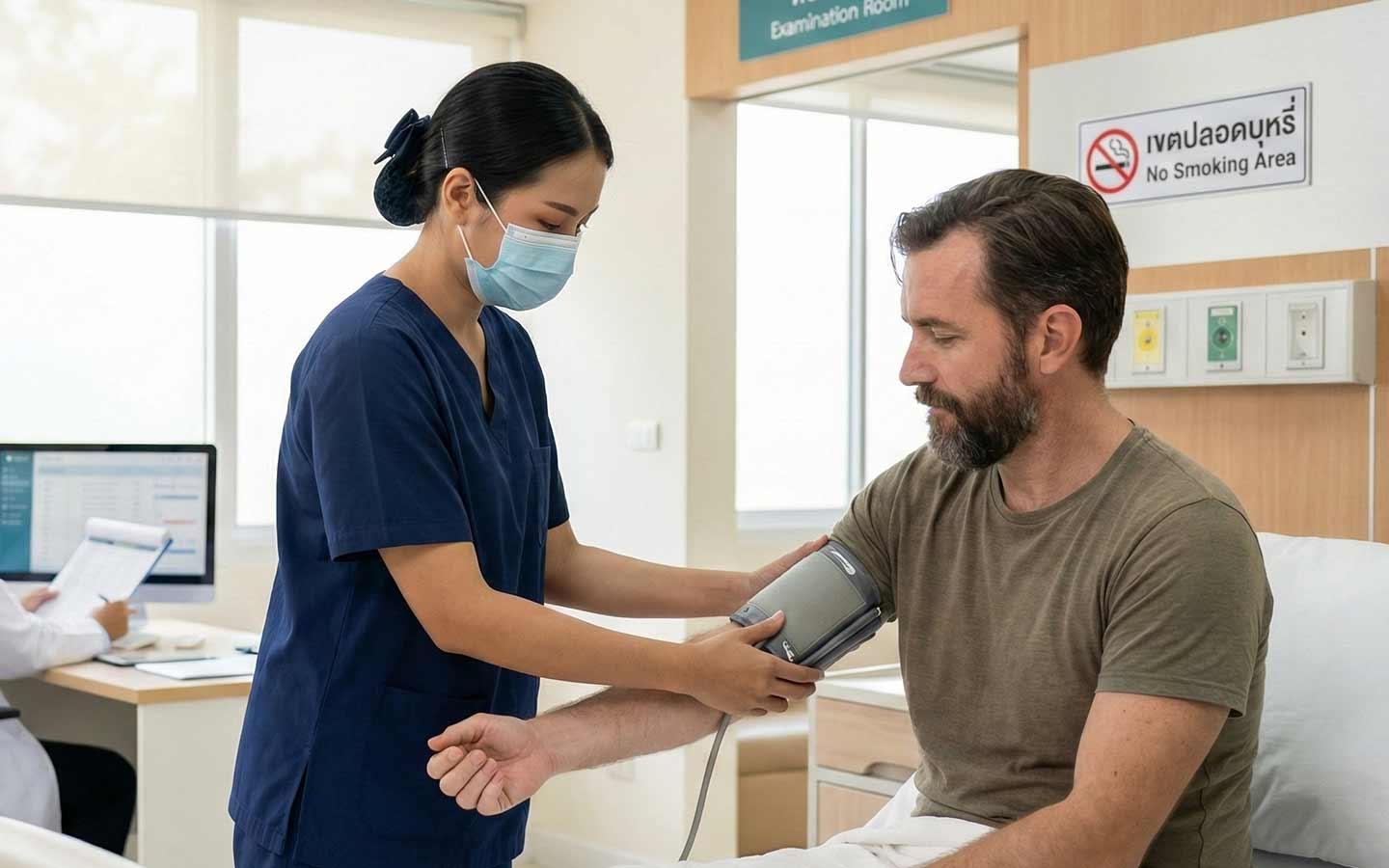
Stigma and concerns about privacy are significant barriers to treatment-seeking, particularly among professionals and adults in visible roles. Travelling abroad for residential rehab removes the social visibility of entering a local facility. For many adults, the practical anonymity of treatment in another country is not an optional extra. It is what makes treatment possible.
For many adults, shame is a real barrier. They worry about bosses, clients, or neighbours seeing them walk into a local rehab. Going to Thailand solves that practically. You are another visitor with a suitcase. At Jintara:
- The property is set back from the road
- Staff speak English and Thai
- Clients come from Australia, the UK, the Middle East, Asia, and North America, so you are rarely the only person from overseas
This mix often makes group work richer, as people hear how addiction plays out in very different settings.
Staying in Australia
For some, the fear of travel, cultural difference, or being far from children outweighs the stigma of local treatment. In that case, a well chosen Australian rehab with strong privacy rules and good aftercare can be the right starting point.
What do you need to know about visas and travel for rehab in Thailand.
Australians apply for nothing before flying. An Australian passport is stamped in at the immigration desk on arrival, free, and since 15 September 2026 that stamp is 30 days, so a 30 day program plus travel days usually needs the extension at the Chiang Mai immigration office. There is no visa category in Thailand covering a private rehabilitation facility, and none is needed, which is the same position the site's travel and arrival guide for Australians sets out in detail. Anyone quoting you a medical visa for a rehab stay is describing something that does not exist.
There is one online step that is easy to miss. Every non-Thai national has to file the Thailand Digital Arrival Card before landing. It is free, it goes in through the official government site in the 3 days before you arrive, counted back from your Thai landing date rather than your Australian departure date, and it returns a QR code for the immigration desk. Chiang Mai International has kiosks before passport control if you arrive without one. Jintara provides:
- Clear guidance on the entry stamp and what it covers for a 30, 60, or 90 day stay
- Support with an extension of stay at the Chiang Mai immigration office if you need one
In Australia, citizens and permanent residents use Medicare and local health cover. Overseas visitors face stricter entry rules, higher living costs, and more complex insurance questions.
When is staying in Australia for addiction treatment the better choice.
Not every person seeking recovery benefits from travelling internationally. Matching treatment to individual circumstances, including medical history, family obligations, and proximity to support systems, is essential for good outcomes. For some adults, staying within the Australian system is not second best. It is the clinically correct decision.
There are cases where staying in Australia is the sensible choice:
- You have serious medical problems that need your local hospital and specialist
- Court orders, child protection, or parole conditions limit international travel
- You cannot leave young children or dependent relatives for several weeks
- You already have a strong therapist or psychiatrist at home and need a short residential block nearby
In these situations, the key is still to look closely at staffing, detox protocols, and aftercare. Anyone weighing this from Britain instead of Australia is working against a different funding structure, and the equivalent comparison for UK readers sets the NHS route beside the private one before it reaches those same questions. Readers working from the United States face a third funding picture again, and the direct Thailand vs USA rehab comparison sets it out against cost and insurance. Picking on the basis of postcode is not the test in any of them.
When does rehab in Thailand make more sense than staying in Australia.
Access to treatment without delay and adequate duration are two of the most consistent predictors of recovery. For Australians who have waited on lists, faced repeated short stays, or found that local treatment has not broken the pattern, an international program with fast admission and a minimum 30-day stay offers a genuinely different structure.
Thailand is worth serious thought in a specific set of circumstances. The clearest one is when your alcohol or drug addiction has become tangled up in your daily surroundings and needs a fresh start. These are the signs that pattern applies to you:
- You have already tried local options and keep getting stuck on waitlists or short stays
- Your drinking or drug use is wrapped up in your home area and you need distance from that pattern
- You want an adult-only group instead of a mixed age rehab with many under 25s
- You want clear, visible medical cover rather than vague '24 hour support'
Jintara is a good fit for adults who:
- Want a calm group of peers with similar life stage pressures
- Need on site medical detox backed by Thai addiction psychiatrists and major private hospitals
- Value a 10 bed program with about 32 staff, which keeps the focus on close observation and real therapy time
- Want the owner to take the first call and say clearly if the centre can help, rather than talking to a commission based sales team
What does Jintara's addiction treatment program look like in practice.
Medically safe residential detox rests on a few cornerstones: 24-hour clinical monitoring, standardised withdrawal assessment tools, and clear hospital escalation pathways. Those cornerstones come from SAMHSA's TIP 45 on detoxification, the reference document for this level of care. The following sections describe Jintara's specific, verifiable practices that correspond to those standards, along with the questions you can ask to confirm them directly.
On site medical detox with hospital backing
- Almost all clients detox on site with 24 hour awake nursing
- Nurses record vitals, medication times, sleep, and behaviour through the night, with a full report reviewed by the owner each morning
- If alcohol or health risks are too high, the client is transferred to hospital for urgent assessment, including overnight, and admission is decided there rather than at the facility
- Bangkok Hospital Chiang Mai and Chiang Mai Ram Hospital are both formal transfer partners with ICU capacity, roughly eight and twenty minutes away
Day two hospital checks included in the fee
- On day two, or earlier if needed, clients attend Bangkok Hospital for full blood tests, liver and kidney function, chest X ray, and EKG
- This package is paid for by Jintara and is not billed as an extra
- Extra tests, such as hormone panels, can be added at client cost if requested
Small adult-only community
- Maximum of ten residential clients at a time
- Around 32 staff, including Lertkhwan Sukpia, the Head Nurse and Operations Manager, who holds a Bachelor of Science in Nursing from Mahidol University, alongside therapists, nurses and operations staff
- Many clients are professionals, business owners, or parents, which shapes group discussions and boundaries
Focus on substance use and trauma
- Jintara focuses on adults with primary alcohol and drug problems, sleep medication dependence, anxiety, depression, or trauma
- Trauma work, including EMDR therapy delivered one to one by one of Jintara's three EMDR therapists, is available once clients are stable, though it works best on stays of 60 days or longer because stabilisation comes first and not everyone reaches the processing stage inside a 30 day admission
- Eating disorders, primary process addictions, and complex unmedicated mental health conditions are referred elsewhere
All of these are points you can confirm directly with the team, with sample schedules, consent forms, and hospital letters if you ask.
What questions should you ask any rehab before committing.
People seeking treatment should ask centres about staffing levels, clinical protocols, detox supervision, and aftercare before committing. The 10 essential questions to ask any rehab are drawn from gaps reported by people who entered rehab without asking them first. Ask these of any centre, in Thailand or Australia, before making a decision.
Wherever you look, these questions help you judge quality:
- How many clients and how many full-time staff will be on site when I arrive?
- Who writes the detox plan, and how often will a nurse check my vitals in the first week?
- Do you send every client for medical tests, or only if they ask? Who pays?
- Are you licensed by a health authority, and how often are you audited?
- What is included in the fee, and what extra costs have recent clients faced?
- How long do people like me usually stay? What happens if I want to extend or leave early?
- What aftercare is offered once I go home, and what does it cost?
Ask these questions to Jintara and to any Australian rehab you are considering. The differences will often become clear very fast.
How do you choose between rehab in Thailand and rehab in Australia.
SAMHSA's National Helpline is a free, confidential, 24-hour treatment referral and information service for people facing substance use disorders. Both Australia and Thailand have programs a person can actually access, afford to sustain, and engage with fully. The decision comes down to which setting, cost structure, and level of medical oversight matches your specific situation.
Rehab in Australia and rehab in Thailand can both change a life. The choice is personal. Broadly:
- Australia suits people who need to stay close to home, use public funding, or keep medical care within their local system
- Thailand suits people who need faster access, more value for money, distance from triggers, and a mix of Western clinical work with calm natural surroundings
Inside Thailand, Jintara stands out as a small adult program that keeps medical safety at the centre of everything it does. MoPH licensing, on site detox, and day two hospital checks are matched by a staff team that knows every client by name. Each of those points can be verified before you commit.
If you are weighing Thailand vs Australia, a clear, human conversation about what is realistic for you is the best next step. The first call goes to Darren, the owner of Jintara, who takes it himself and covers your substances, health, budget, and timing. In twenty to thirty minutes you can decide whether a small Chiang Mai rehab is the right step or whether another path makes more sense.
Talk with Our Admissions Team
Your enquiry is confidential and goes only to our admissions team.