
How private Muay Thai boxing works at Jintara
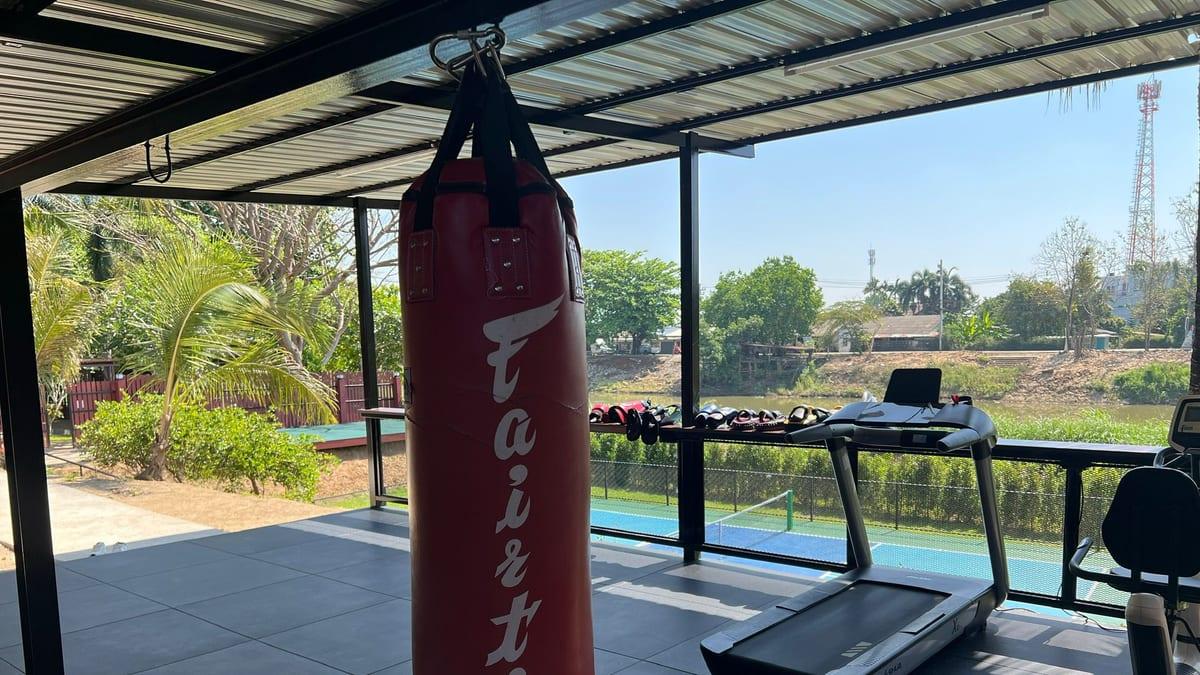
During your stay at Jintara, you can choose private Muay Thai boxing with one-to-one coaching at a pace that fits you.
Written by Darren Lockie | Published: October 3, 2026 | Last Updated: October 3, 2026
Sessions can be arranged any day of the week, around your treatment program. It's time set aside for you, with coaching built around your fitness, experience and how you feel that day.
Never boxed? Your instructor can show you where to put your feet, how to hold your gloves and how to hit the pads. You can ask a question, slow down or take a rest. It's private coaching, with time to practice the basics at a pace you can manage. This guide explains the sessions, the assessment and how Muay Thai fits around your treatment.

How Muay Thai pads and coaching work
With your own instructor, you can ask questions as you go. The coach holds the pads, watches your technique and adjusts the work. You don't have to join a group class or keep up with anyone else. Sessions are adapted to your experience, whether you're learning the sport or returning after time away.
Jintara's session guidance excludes full-contact sparring. If contact of any kind is a concern, tell us before you book so we can explain the format clearly. You shouldn't have to work that out after you've arrived in Thailand.
You don't need a boxing background. You need a starting point that fits your health, your experience and what you're ready to do. That's how our fitness and nutrition program works across the different activities. Muay Thai is one choice within it.
Your fitness history shapes your training
The fitness team starts with your exercise history, injuries, goals and current condition. The clinical team passes on medical information and limits. Two people can want the same activity and need quite different versions of it.
An old shoulder injury belongs in that conversation. So does a long break from exercise, or a habit of training until you're exhausted. We also want to know what you enjoy. Someone who hates the gym isn't going to build much of a routine around activity that sends them there every day.
- What you've been doing recently, including a stretch of doing very little.
- Old injuries and movements that cause pain.
- Activities you enjoy and ones you'd rather avoid.
- What you'd like to get back to after treatment.
This gives the team somewhere honest to start. You don't have to arrive fitter than you are, or describe the version of yourself who used to train three times a week. We start with the person here now.
Tell the coach how you feel that day
The assessment gives us a starting point. The conversation before a session tells us what has changed. A bad night's sleep, an uncomfortable movement or a difficult morning can all affect what makes sense that day. The coach needs to hear about those things.
There will be encouragement. Getting moving again can take some of that. But trying harder isn't the answer to every difficulty. If a movement hurts, say so. If you're struggling, say so. Keeping quiet to finish a round leaves the person helping you without the information they need.
The same applies to experienced people. Being comfortable in a gym doesn't settle whether a session is right for you today. At Jintara Rehab, fitness is planned around the person receiving treatment. We want you to leave with something you can keep doing, rather than a record of how hard you pushed yourself while you were here.
An injury needs an individual assessment
A shoulder problem doesn't automatically rule out every activity. It also doesn't mean pads will be suitable once somebody adjusts the session. The team needs to know the injury and the medical limits before deciding what you can do.
Withdrawal, dizziness and physical weakness are reasons to hold intensity back and involve the care team. If you feel unwell during a session, tell the coach. The nurse or clinician handles the health question. Finishing the exercise can wait.
Being keen to train doesn't change the order of care. For someone arriving in withdrawal, medical detox comes first. Exercise is planned around how you're recovering, so there isn't one starting day we can promise everybody.
Ask This
I would like to try pads, but I have an old shoulder injury. How would you assess that, and what could we discuss if pads are unsuitable?
How Muay Thai fits into treatment
Pads give you something concrete to work on. You have a movement to learn, feedback from the instructor and a reason to pay attention to what you're doing. For clients who enjoy training, it can be a good way to bring regular movement back into the day. The aim is a routine you can keep using during recovery, with coaching and enough rest.
Regular exercise can help your mood, sleep and physical health. The WHO's physical activity guidance explains these general benefits. That evidence doesn't establish Muay Thai as a treatment for addiction or trauma, and we don't use it to make that promise.
The rest of treatment still has its own work to do. A session you enjoyed can sit alongside counselling, sleep, meals and time to recover. If another activity suits you better, that matters too. The point is to find movement you can use in an ordinary week, including the weeks when you aren't feeling particularly motivated.
Tell the team if exercise has become another way to run yourself into the ground. That changes what a useful fitness routine looks like.

What to ask before you arrive
If you like the idea of Muay Thai but something about it puts you off, start there. We can explain the activity. A question about your shoulder, your fitness or the contact involved is enough to begin the conversation.
Five questions to clear up before you arrive
| Concern | What to tell us | What we should explain |
|---|---|---|
| Contact | I want to try pads, but I don't want to be hit or take part in sparring. | Sessions use an instructor's pads, and Jintara's guidance excludes full-contact sparring. Before booking, we should explain any partner work and the contact involved. |
| An injury | I have an old injury. These movements cause pain, and this is the advice I've been given. | The team needs your injury history and any medical limits before deciding whether pads are suitable. We can discuss another activity if they aren't. |
| Timing | I'd like to try a session during my stay. Will I be ready, and when could it fit? | Admissions can explain current availability. Your care team decides readiness, so there is no fixed starting day for everyone, especially when detox comes first. |
| Confidence | I've never boxed, or I haven't exercised for years. I'm worried I won't keep up. | You don't need a boxing background. Coaching starts with your current health, fitness and experience. Tell the instructor if the pace or a movement feels wrong. |
| Privacy | I'd like to know what the coach records and who can read the notes. | The fitness team keeps progress notes and shares relevant concerns within your care team. Ask what is recorded and who sees it before you start. |
Contact
What to tell us: I want to try pads, but I don't want to be hit or take part in sparring.
What we should explain: Sessions use an instructor's pads, and Jintara's guidance excludes full-contact sparring. Before booking, we should explain any partner work and the contact involved.
An injury
What to tell us: I have an old injury. These movements cause pain, and this is the advice I've been given.
What we should explain: The team needs your injury history and any medical limits before deciding whether pads are suitable. We can discuss another activity if they aren't.
Timing
What to tell us: I'd like to try a session during my stay. Will I be ready, and when could it fit?
What we should explain: Admissions can explain current availability. Your care team decides readiness, so there is no fixed starting day for everyone, especially when detox comes first.
Confidence
What to tell us: I've never boxed, or I haven't exercised for years. I'm worried I won't keep up.
What we should explain: You don't need a boxing background. Coaching starts with your current health, fitness and experience. Tell the instructor if the pace or a movement feels wrong.
Privacy
What to tell us: I'd like to know what the coach records and who can read the notes.
What we should explain: The fitness team keeps progress notes and shares relevant concerns within your care team. Ask what is recorded and who sees it before you start.
You don't need to have the whole thing worked out before you get in touch. You can message the admissions team before making a decision. We can answer practical questions and explain what needs an individual assessment.
Common questions about Muay Thai in rehab
- What if Muay Thai isn't for me? Muay Thai is optional. Tell the fitness team what you enjoy and what you'd rather avoid. Yoga is also part of Jintara's program. Ask the team which activities fit your care plan and what is available during your stay.
- Will I have to do light sparring? The session format is one-to-one instruction with gloves and pads. Jintara's guidance excludes full-contact sparring. If you're asking about light sparring or want to avoid all contact, tell us before booking. We should explain the format and any partner work clearly.
- Can I try Muay Thai without martial arts experience? You don't need boxing or martial arts experience. The team starts with your current fitness, exercise history and health. Your instructor teaches the movements and checks your technique. An injury or medical concern needs an individual assessment before deciding what is suitable.
- Does Muay Thai treat PTSD or addiction? Muay Thai is a fitness activity within the program. It can sit alongside counselling and other therapy, but it does not replace clinical treatment. Exercise has general health benefits. That does not establish Muay Thai as a treatment for PTSD or addiction.
- Can I do hard training if I already have experience? Tell the instructor what you've been doing and what you'd like to work on. The fitness team can increase intensity when you're doing well and hold it back when you're drained. Hard training still needs to fit your health and treatment. You don't have to prove anything by finishing every round.
- What can I get from a lighter Muay Thai session? A lighter session gives you time to practice basic skills and work on technique. You can tell the coach when the pace feels manageable and when you need to catch your breath. The aim is to find exercise you enjoy enough to keep doing. You don't need to turn every session into a test. With one-to-one attention, the instructor can watch your stance and give you feedback on each movement. That gives you a chance to work on balance and coordination as you learn. The work still needs to fit your assessment.
- Does my age or an old injury rule out Muay Thai? Age alone doesn't tell us what you can do. Your current health, old injuries and exercise history matter. Give the team a straight account of what hurts and what you can manage. They'll use that information and any medical advice to decide which movements are suitable. Sometimes another activity is the better choice.
- Will I be able to see a difference in my fitness? The fitness team checks strength, cardio and flexibility at the start and near the end of your stay. That gives you a way to look at progress in your own body, rather than compare yourself with other clients. Ask how your assessments will be explained and what to take forward after discharge.
- When can I start? That depends on your assessment and how you're doing. Admissions can explain current session availability. If you arrive needing detox or medical stabilisation, that care comes first.
A loved one's interest in boxing can be part of the conversation. Our guide to arranging rehab for a loved one covers the practical next steps if you're looking into treatment for them. That decision still needs to be made with them.

Talk with Our Admissions Team
Your enquiry is confidential and goes only to our admissions team.