
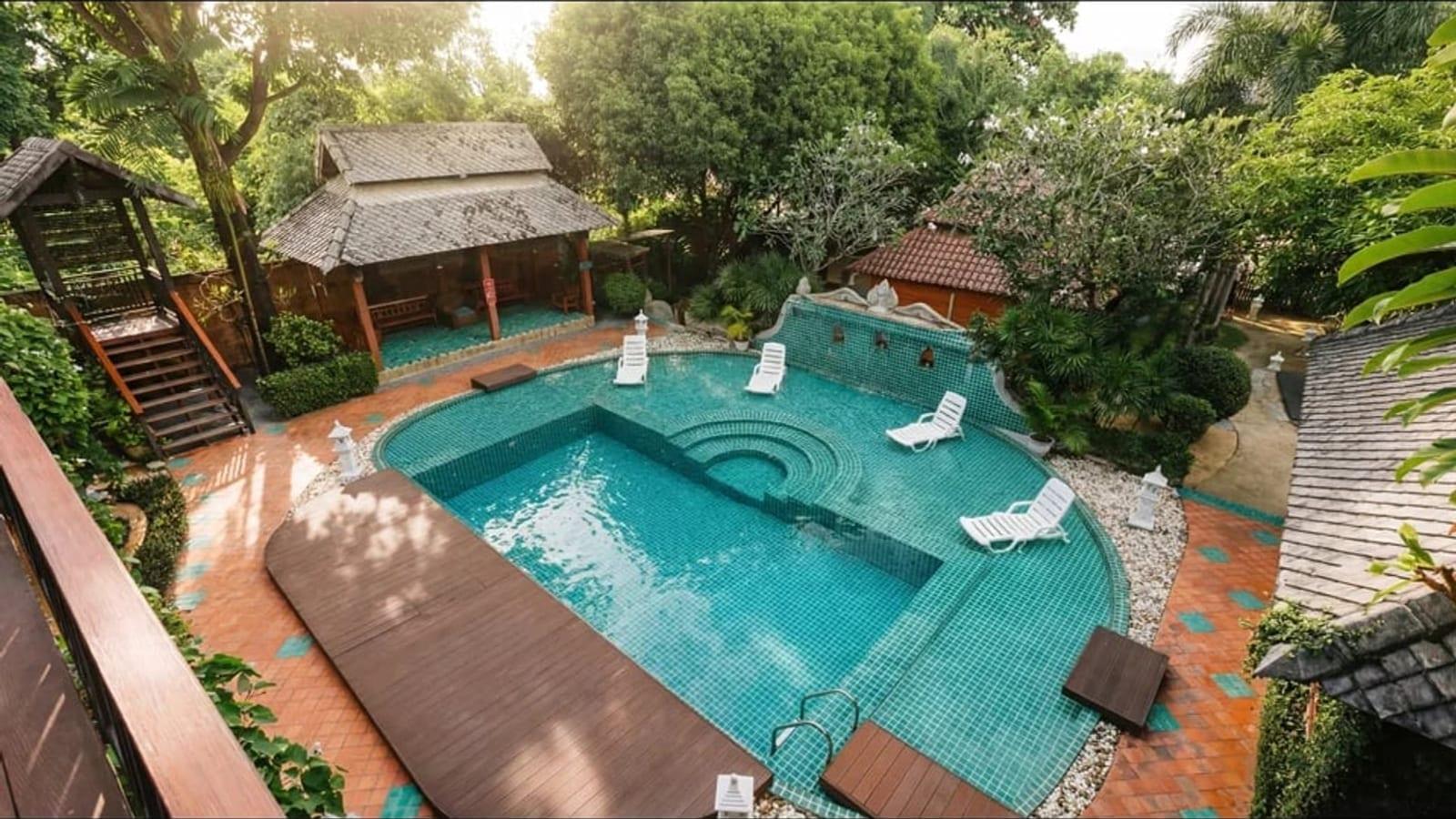
Licensed residential rehab in Chiang Mai for Canadians.
If you are researching this for yourself or someone you care about, this page covers what is different about treatment in Thailand and what Canadians specifically need to know. Jintara delivers residential addiction treatment at a licensed facility in Chiang Mai, with a maximum of 10 clients, 32 staff, and clinical oversight that begins on the day you arrive.
- Licensed by Thailand's Ministry of Public Health with ongoing compliance
- Maximum 10 clients at any time with a 3.2:1 staff-to-client ratio
- No Canadian provincial health record is created for treatment abroad
- Airport transfers from Chiang Mai International Airport included in the fee


Fully Licensed and Hospital Accredited

Cost, privacy and distance are why Canadians come.
Rehab in Thailand for Canadians is licensed residential addiction treatment based in Chiang Mai, at a fraction of Canadian private facility costs.
Canada sends clients to Jintara from every major province. Darren Lockie, Jintara's founder, has more than 15 years building and running addiction treatment programs in Thailand. The pattern he sees among Canadian clients is consistent: many have tried abstinence at home, some have attended Canadian outpatient programs, and most have concluded that removing themselves from their home environment is a clinical requirement, not just a preference.
Canadian private residential rehab typically costs between CAD 15,000 and CAD 30,000 for a 28-day stay, before ancillary fees. Publicly funded residential programs exist but carry wait times measured in weeks or months, and a level of local visibility that concerns many professional clients whose licences, employer relationships, or reputations depend on confidentiality during this period. You can get accurate current pricing from Jintara's admissions team before making any commitment, and most Canadian clients find the 30-day program costs substantially less than comparable private care at home even after return flights are included, which is the same arithmetic UK residents comparing private rehab at home and Americans weighing the same move work through. For clients who have compared options directly, the cost gap is often the first reason for making contact.
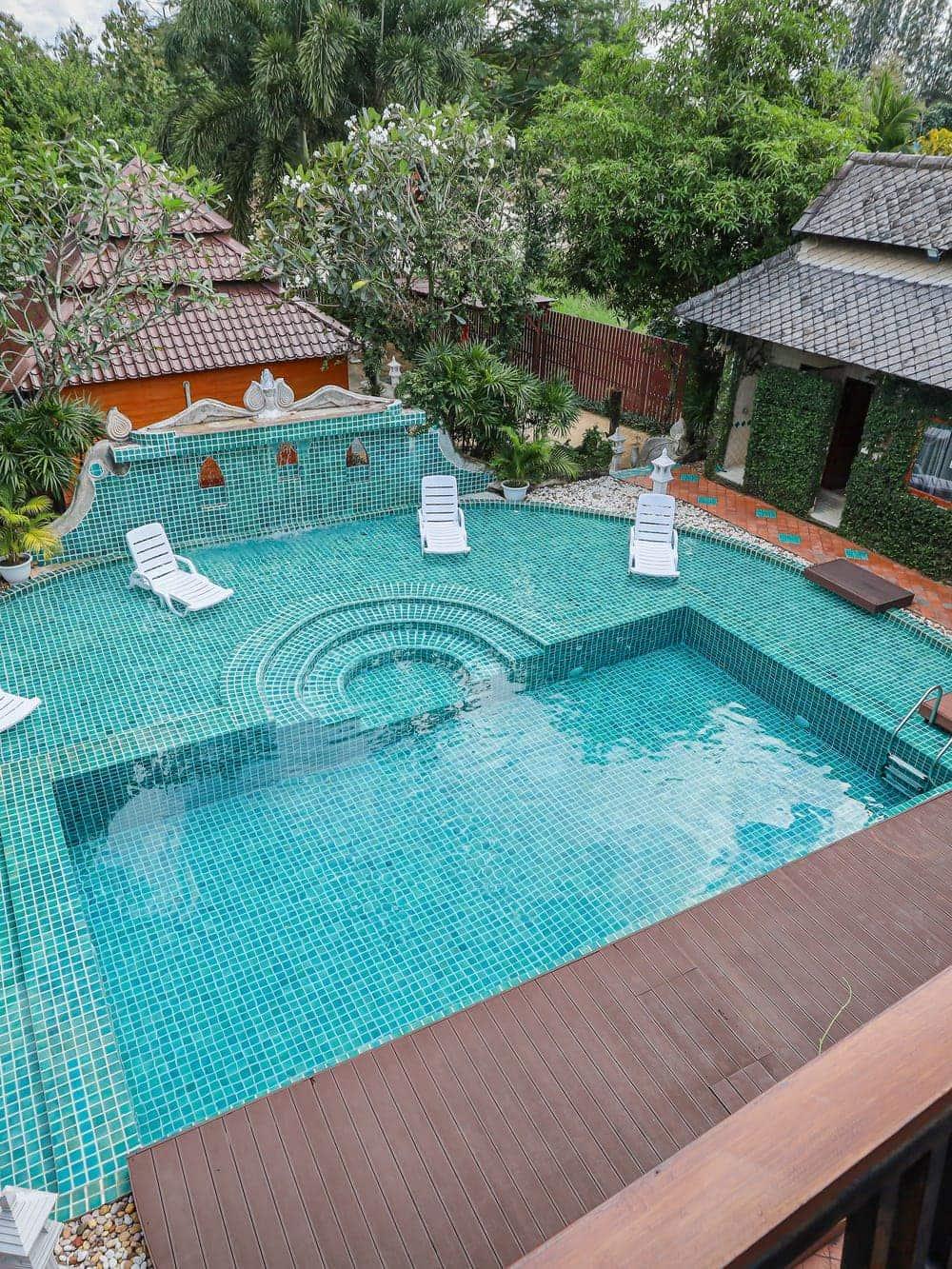
Distance removes the triggers that keep use going.
The clinical case for travelling to Thailand for residential treatment is not about escape. It is about interrupting an active obstacle.
Staying at home during early recovery means daily proximity to the environments, people, and routines that have supported substance use over months or years. Residential treatment is designed to suspend those conditions, which matters most for clients whose substance use and co-occurring mental health conditions are linked and reinforce each other at home. A client returning to their own house after outpatient therapy faces a continuous trigger load that the residential model is built to remove. The physical distance that Chiang Mai provides is not incidental to the clinical outcome. It is part of the clinical mechanism.
Jintara keeps a maximum of 10 clients in the program at any time. The group is small enough that the environment functions as a genuine therapeutic community rather than a shared facility. Clients train at a commercial gym in Chiang Mai alongside the local community, eat at local restaurants on supervised outings, and join structured weekend excursions. The goal, as Darren has described it directly, is a real-world rehab. The difference is that the real world Jintara operates in is calm, structured, and removed from the triggers that Canadian clients are trying to interrupt.
Privacy is a practical asset for many Canadian clients. Executives, lawyers, and medical professionals have completed treatment at Jintara without a confidentiality breach in the facility's history. For professionals whose licences or reputations are at stake, treatment in Chiang Mai means colleagues and networks in Canada are not in a position to observe admission or discharge.





What the 30-day program looks like day to day.
The foundation program at Jintara runs for 30 days and covers medical detox, individual therapy, group therapy, psychoeducation, fitness programming, holistic activities, and structured discharge planning. Extended stays of 8 to 12 weeks are available for clients who need more time, reviewed during admissions based on clinical assessment.
Individual and group therapy is grounded in cognitive behavioural therapy and dialectical behaviour therapy, applied to each client's assessment from week one. Denise O'Leary, Jintara's Clinical Director, leads the full treatment program with EMDR certification and two additional therapists who each hold a master's degree in counselling, psychology, or a related clinical field. The clinical model integrates addiction treatment and co-occurring mental health assessment from the first week.
- Morning: Vitals checks and medication review, followed by individual or group therapy grounded in each client's clinical assessment.
- Midday: Psychoeducation and skills development, presented in plain language for adults who are not clinicians.
- Afternoon: Fitness and wellness, with gym sessions Monday, Wednesday, and Friday and options including pickleball, a golf driving range, Muay Thai, and boxing by physical assessment.
- Evening: Lighter therapeutic group work, recovery reflection, and staff check-ins. Yoga, massage, Reiki, and meditation are fully included through the week.
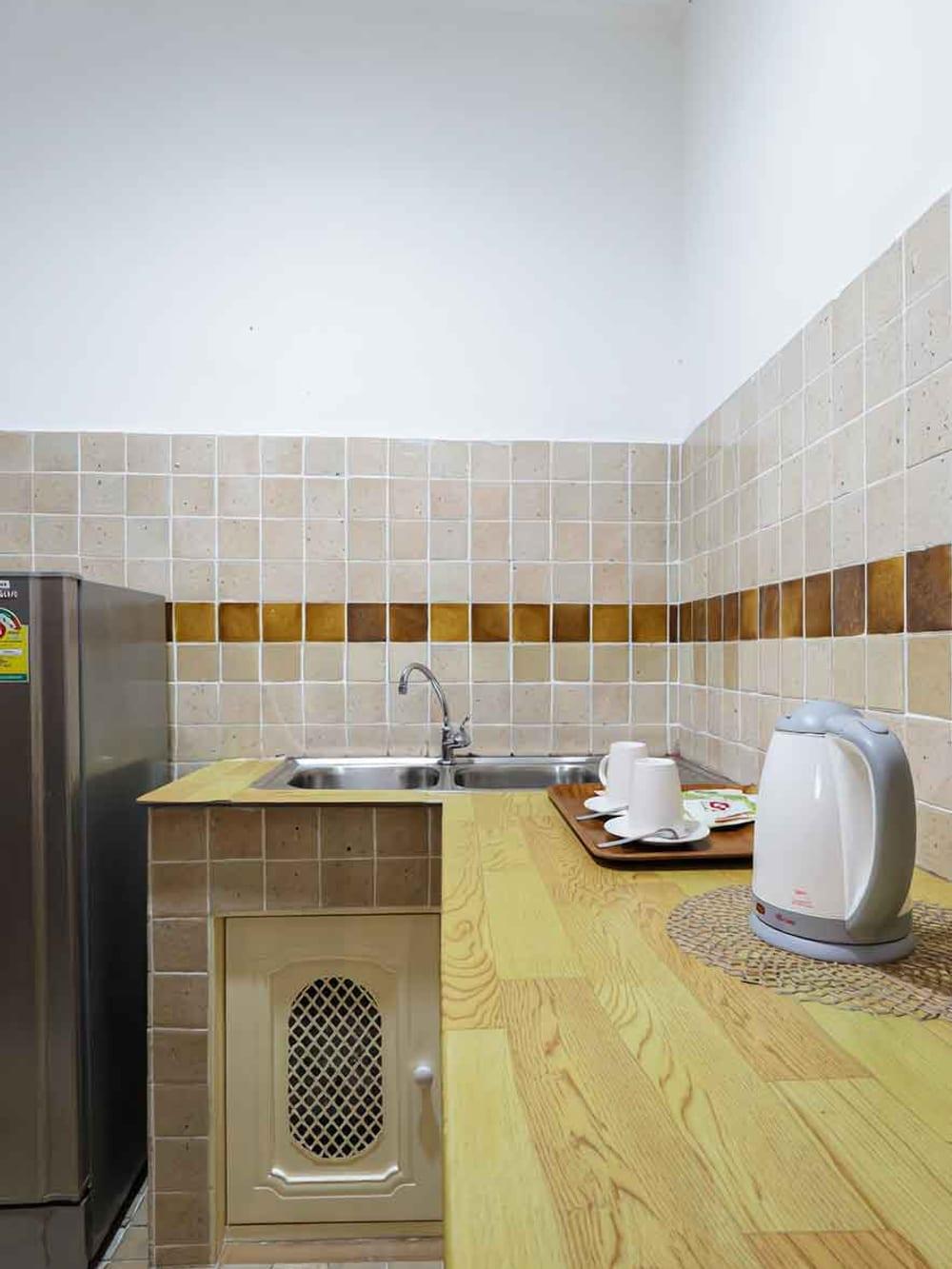
Every client receives a large private room. With a maximum of 10 clients and a 3.2:1 staff-to-client ratio, the clinical team has consistent individual access to every person throughout the stay.

What private rehab costs in Canada, and here.
Residential treatment at a private facility in Canada commonly costs between CAD 15,000 and CAD 30,000 for a 28-day stay, with psychiatric assessment, medication management, and continued care planning billed separately at some facilities.
Once return flights from Toronto, Vancouver, or Calgary are included, the total cost of treatment at Jintara remains meaningfully lower than a comparable stay at a Canadian private facility. The 30-day residential program, with current fees published on the pricing page, is designed to cost substantially less than comparable private care in Canada. For an 8-week stay, the gap between Jintara and a Canadian facility widens further.
The comparison is not only about cost. Canadian private residential facilities vary considerably in staff-to-client ratios, therapy hours per week, and on-site medical detox capability. Jintara's ratio of 32 staff to a maximum of 10 clients, with three therapists each holding a master's degree in counselling, psychology, or a related clinical field, and 24/7 awake nursing, reflects a level of clinical intensity that is uncommon even at premium price points in Canada.
Canadian clients typically pay through personal savings, family support, employer assistance program funds, or private health insurance reimbursement. The coverage section below sets out the private insurance pathway.
Convert to Canadian dollars
Canadian Private Rehab Compared With Jintara
| Factor | Canada private rehab | Jintara Thailand |
|---|---|---|
| Program fee | CAD 15,000 to 30,000, 28 days | From USD 12,500, 30 days |
| Standard stay | 28 days | 30 days |
| Extended stay | Varies by facility | 8 to 12 weeks available |
| Room | Varies by facility | Private room, included |
| Meals | Varies by facility | All meals included |
| Airport transfer | Not applicable | Included in the fee |
| Psychiatric assessment | Often billed separately | Included, on admission |
| Medical workup | Varies by facility | Day 2 hospital workup included |
| Fitness and outings | Varies by facility | Gym and weekend outings included |
| Aftercare planning | Often billed separately | Included in the fee |
| Medications | Varies by facility | Billed at cost, not in fee |
| Provincial health plan | Public programs, long waits | No funding for treatment abroad |
| Private insurance | Varies by policy | Pre-approval advised |
| Employer EAP | CAD 5,000 to 15,000 a year | Out-of-network claim |
Program fee
Canada private rehab: CAD 15,000 to 30,000, 28 days
Jintara Thailand: From USD 12,500, 30 days
Standard stay
Canada private rehab: 28 days
Jintara Thailand: 30 days
Extended stay
Canada private rehab: Varies by facility
Jintara Thailand: 8 to 12 weeks available
Room
Canada private rehab: Varies by facility
Jintara Thailand: Private room, included
Meals
Canada private rehab: Varies by facility
Jintara Thailand: All meals included
Airport transfer
Canada private rehab: Not applicable
Jintara Thailand: Included in the fee
Psychiatric assessment
Canada private rehab: Often billed separately
Jintara Thailand: Included, on admission
Medical workup
Canada private rehab: Varies by facility
Jintara Thailand: Day 2 hospital workup included
Fitness and outings
Canada private rehab: Varies by facility
Jintara Thailand: Gym and weekend outings included
Aftercare planning
Canada private rehab: Often billed separately
Jintara Thailand: Included in the fee
Medications
Canada private rehab: Varies by facility
Jintara Thailand: Billed at cost, not in fee
Provincial health plan
Canada private rehab: Public programs, long waits
Jintara Thailand: No funding for treatment abroad
Private insurance
Canada private rehab: Varies by policy
Jintara Thailand: Pre-approval advised
Employer EAP
Canada private rehab: CAD 5,000 to 15,000 a year
Jintara Thailand: Out-of-network claim
Provincial health plans do not cover treatment abroad.
Provincial health plans in Canada do not fund residential addiction treatment abroad. This is a firm policy position across all provinces. For most Canadian clients, Jintara treatment is self-funded or family-funded, with private insurance or employer assistance program reimbursement explored in parallel.
Private health insurance through providers such as Manulife, Sun Life, Blue Cross, and Great-West Life may provide partial or full reimbursement for international residential addiction treatment when three conditions are met: the treatment is pre-approved as medically necessary, the treating facility provides clinical documentation and protocol summaries, and the treatment is deemed unavailable in Canada to the required standard. Jintara's admissions team can provide clinical documentation for insurance submission, and pre-approval is strongly advised before travel.
Employee assistance programs offered by Canadian employers commonly provide mental health and addiction benefits ranging from CAD 5,000 to CAD 15,000 per year. Jintara may not be a named in-network provider, but out-of-network claims are worth pursuing with the employer's EAP administrator before travel, and reading what to expect in your first week at Jintara helps you describe the treatment clearly to your insurer. Jintara can provide itemised invoices and clinical summaries for post-program claim submission.
Addiction treatment expenses may qualify as a medical expense for Canadian federal tax credit purposes if you itemise. Consult a Canadian tax adviser before claiming.
The clearest path is to contact your benefits provider before booking, request Jintara's clinical protocol summary from the admissions team, and submit a pre-approval request. Turnaround varies by insurer, so ask for the pre-approval timeline at first contact.

Licensed, accredited, and minutes from two hospitals.
Jintara is licensed by Thailand's Ministry of Public Health. The licence took nine months to obtain before the first client was admitted, and ongoing compliance is what keeps it.
If you ever need hospital-level care, Jintara holds written transfer agreements with Bangkok Hospital Chiang Mai and RAM Hospital, both with full ICU capability. Every admission also includes a day two medical workup at the facility's cost. Withdrawal is managed on site throughout under medical detox, with 24/7 awake nursing and a psychiatrist involved.
“Our licence from Thailand's Ministry of Public Health took nine months to obtain before we admitted a single client. Ongoing compliance is not optional. It is what the licence requires.



Addiction and mental health treated in one plan.
The majority of Jintara's clients present with a substance use disorder alongside a co-occurring mental health condition. Anxiety, depression, trauma, and burnout are common presentations that interact with substance use in ways that cannot be resolved by treating either condition in isolation. Jintara's clinical model addresses both from the first week.
Clients who have been treated for addiction without concurrent mental health support frequently report returning to substance use within months. NIDA's research on co-occurring disorders sets out the strong association between substance use disorders and mental disorders including anxiety and mood disorders. Jintara's dual-diagnosis model addresses this pattern by integrating psychiatric assessment, evidence-based therapy, and trauma-focused work throughout the program.
EMDR therapy, delivered by Denise O'Leary as an EMDRIA-certified practitioner, is available for clients with trauma histories that are clinically relevant to their substance use. It is introduced after medical stabilisation, and the EMDR therapy program is primarily relevant for extended-stay clients of 60 days or longer. 30-day clients may not reach the EMDR processing stage, and the decision is made in clinical consultation.
Psychiatric assessment is conducted on admission. The psychiatrist reviews medication where relevant, adjusts prescriptions as clinically indicated, and remains involved throughout the detox phase. Group therapy sessions incorporate psychoeducation on the neuroscience of addiction and co-occurring mental health conditions, presented in plain language for adults who are not clinicians.

What Chiang Mai is actually like during treatment.
Chiang Mai is the second-largest city in Thailand and a functioning, liveable urban environment, not a resort destination that implies disconnection from the world. For clients from Toronto, Vancouver, or Calgary, the practical experience of Chiang Mai during treatment is one of a calm, active city with good food, a walkable old town, significant mountains, and a large international community.
The clinical reason this matters is that Jintara integrates clients into real-world activity under supervision rather than isolating them on a closed campus. Clients researching Chiang Mai as a location for treatment will find they use commercial gyms in the city, visit local markets and restaurants on supervised outings, and join structured excursions in and around the city on weekends. The environment provides novelty and engagement without the triggers that clients are trying to interrupt at home.
The climate in Chiang Mai is warm year-round. November through February is the most comfortable season for Canadians unfamiliar with tropical climates, March through May is the hottest period, and the rainy season runs June through October with most rainfall overnight. None of these conditions prevent normal activity during treatment, and Jintara's weekly schedule is designed for all seasons.
Chiang Mai's cost of living is low by Canadian standards. This is one factor in Jintara's ability to offer a high staff-to-client ratio and an all-inclusive program fee without the overhead of equivalent facilities in Canada or Europe. The savings are structural rather than a reflection of reduced clinical standards.
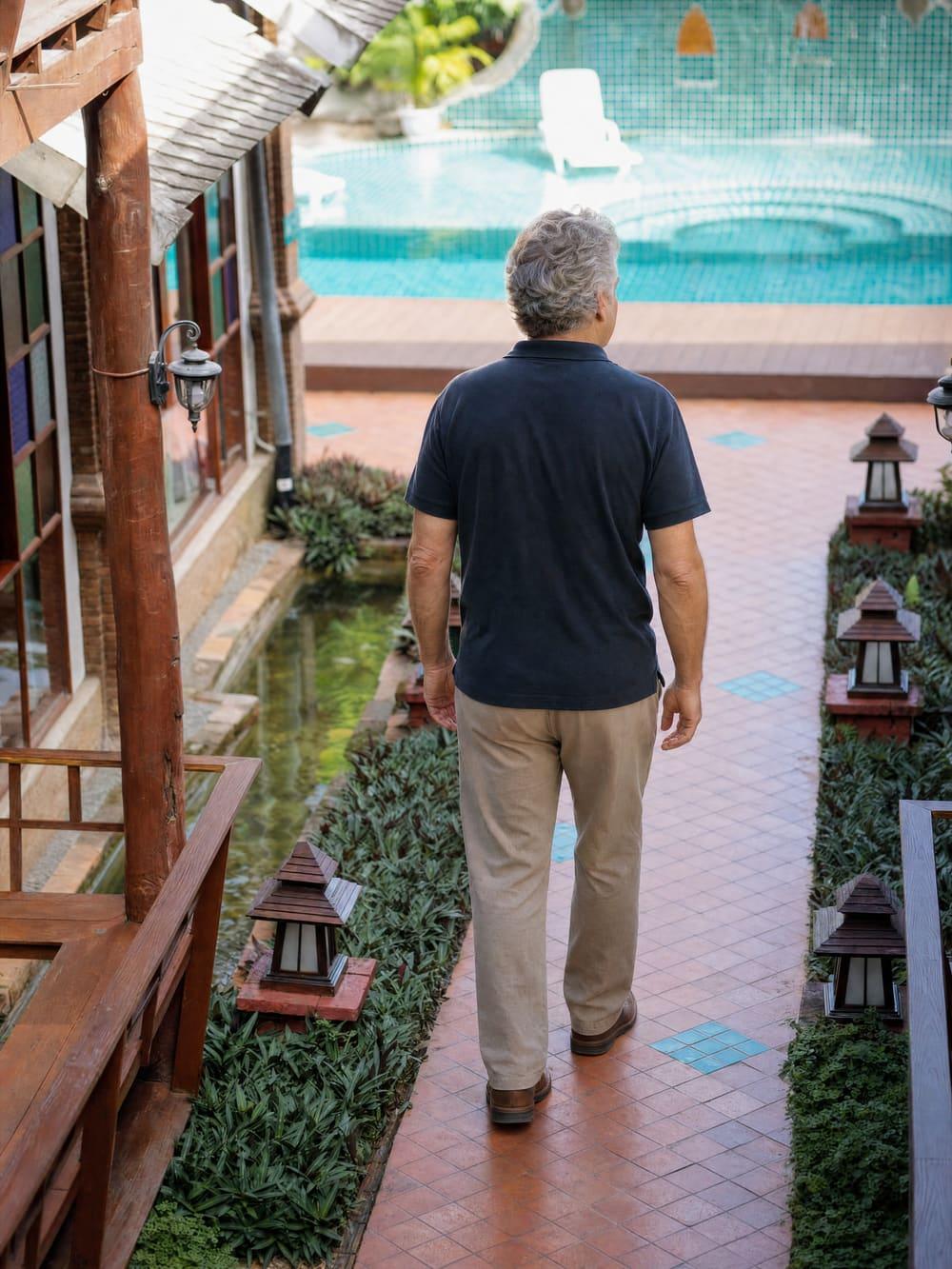
Treatment here creates no Canadian record.
Privacy is a clinical and professional concern for many Canadian clients. Lawyers, doctors, accountants, pilots, and executives have completed treatment at Jintara without a confidentiality breach at any point in the facility's history. This section explains what privacy looks like in practice.
Treatment abroad creates no record in the Canadian provincial health system, no notation in an employer's benefits claims that identifies addiction treatment specifically, and no disclosure to provincial licensing bodies unless the client chooses to disclose. The confidentiality protections that apply to Jintara operate under Thai law and Jintara's own clinical governance, and Jintara does not share client information with third parties without written consent.
For professionals in regulated industries, whether treatment affects licensure depends on the governing body, jurisdiction, and individual circumstances. Jintara cannot provide legal or regulatory advice on this. If this is a concern, speaking with a lawyer familiar with your regulatory body before you travel can give you confidence in the decision before you commit.
The small size of Jintara's client group contributes to privacy in a practical way. With a maximum of 10 clients at any time, there is no large group setting in which a person might be seen by a stranger, and the private facilities at Jintara keep individual room access and clear boundaries around common areas. Weekend excursions and community activities are structured and supervised throughout the stay.

Admissions plans your route and meets your flight.
Chiang Mai International Airport connects to every major Canadian city through Bangkok, and admissions walks through the route with you before anything is booked. Toronto, Vancouver, Calgary, and Montreal all have workable connections. What matters more than the itinerary is that you are not organising it on your own.
Darren manages the intake process directly. If the travel day is the part you keep coming back to, the Jintara admissions team stays reachable by phone and message from the moment you leave home, and there is a full account of how Canadians get here, from booking the flight to the arrivals hall. Airport transfers to Jintara are arranged through admissions and included in the program fee, so the last leg is already handled when you land.
A Canadian passport is stamped in on arrival with nothing to apply for beforehand. Thailand's entry rules are mid-change, so no day count published on a facility website should be relied on. Confirm the current position for a Canadian passport with the Royal Thai Embassy in Ottawa before you book flights, and tell the admissions team what your permitted stay is so the program length is planned around it.

A smaller program than most Canadian facilities.
Most Canadian clients who contact Jintara have already attempted some form of treatment. Common previous experiences include residential stays at large Canadian facilities, intensive outpatient programs, and individual therapy without residential support. The reasons those approaches did not produce lasting results vary, but certain patterns appear consistently.
Large residential programs in Canada often have groups of 20 to 40 clients or more, where therapy time per client is constrained by the ratio and clinical assessment depth depends on available staff. The experience of being one person in a large group, with limited direct access to a therapist, is a meaningful barrier for clients who need individual attention on complex presentations.
Jintara's capacity limit of 10 clients is a clinical decision, not a marketing position. With 32 staff serving a maximum of 10 clients, every client has consistent access to their therapist, the nursing team, and the clinical director, which matters most for clients whose alcohol use disorder has not responded to outpatient or large residential programs at home. Group sessions involve the same 8 to 10 people for the duration of the stay, long enough to build the trust that makes group therapy clinically productive.
Canadian outpatient programs are valuable for clients at early stages of use or with stable home environments. For clients who have tried outpatient and returned to use, SAMHSA's TIP 45 chapter on settings, levels of care, and patient placement sets out how a client is matched to a level of care, with residential and inpatient settings carrying the more intensive end of that range. Jintara's model is built for exactly that step up in intensity.
Non-12-step treatment is not widely available across all Canadian provinces. Jintara's program is built entirely on cognitive behavioural therapy, dialectical behaviour therapy, and evidence-based addiction medicine, with SMART Recovery available as a structured peer support model. The 12-step model is not part of the program at any stage.
How Jintara Differs From Large Canadian Programs
| Factor | Large Canadian facility | Jintara |
|---|---|---|
| Group size | 20 to 40 clients | Maximum 10 clients |
| Staff ratio | Varies by facility | 32 staff, 3.2 to 1 |
| Therapist access | Constrained by ratio | Consistent individual access |
| Medical detox | Not always on site | On site, psychiatrist-led |
| Nursing cover | Varies by facility | 24/7 awake nursing |
| Psychiatric input | Often billed separately | Assessment on admission |
| Primary model | Often 12-step | CBT and DBT, non-12-step |
| Peer support | Varies by province | SMART Recovery |
| Medication after detox | Varies by facility | No maintenance prescriptions |
| Accreditation | Varies by facility | Hospital-grade national accreditation |
| Hospital escalation | Varies by facility | Two written transfer agreements |
| Aftercare plan | Varies by facility | Written from week one |
| Wait to admission | Weeks to months on public programs | Confirmed in 24 to 48 hours |
| Canadian record | Varies by funding route | No provincial health record |
Group size
Large Canadian facility: 20 to 40 clients
Jintara: Maximum 10 clients
Staff ratio
Large Canadian facility: Varies by facility
Jintara: 32 staff, 3.2 to 1
Therapist access
Large Canadian facility: Constrained by ratio
Jintara: Consistent individual access
Medical detox
Large Canadian facility: Not always on site
Jintara: On site, psychiatrist-led
Nursing cover
Large Canadian facility: Varies by facility
Jintara: 24/7 awake nursing
Psychiatric input
Large Canadian facility: Often billed separately
Jintara: Assessment on admission
Primary model
Large Canadian facility: Often 12-step
Jintara: CBT and DBT, non-12-step
Peer support
Large Canadian facility: Varies by province
Jintara: SMART Recovery
Medication after detox
Large Canadian facility: Varies by facility
Jintara: No maintenance prescriptions
Accreditation
Large Canadian facility: Varies by facility
Jintara: Hospital-grade national accreditation
Hospital escalation
Large Canadian facility: Varies by facility
Jintara: Two written transfer agreements
Aftercare plan
Large Canadian facility: Varies by facility
Jintara: Written from week one
Wait to admission
Large Canadian facility: Weeks to months on public programs
Jintara: Confirmed in 24 to 48 hours
Canadian record
Large Canadian facility: Varies by funding route
Jintara: No provincial health record

Aftercare planning starts in your first week.
Aftercare planning is not an add-on that begins in the final days of treatment. At Jintara it is introduced in the first week and built through the program as a written, personalised plan for what happens after discharge.
The plan covers relapse warning signs specific to the individual client and a written relapse prevention plan. As part of the structured aftercare planning process, it also sets out continuing therapy referrals in Canada, SMART Recovery meeting locations for clients who want structured peer support in the non-12-step model, and a schedule for the first 30 days after discharge. Clients who wish to continue remote therapy after returning to Canada are supported in identifying therapists familiar with the clinical work done at Jintara.
For Canadian clients returning to professional environments, the aftercare plan addresses return-to-work timing, disclosure strategy where relevant, and stress management protocols for high-pressure contexts. Fitness and routine are integrated as relapse prevention tools.
Jintara does not use naltrexone, acamprosate, disulfiram, or other oral relapse prevention medications after detox. Darren's stated position is that using substances to treat substances is not the model Jintara follows. Methadone is used only during detox for opioid withdrawal tapering, not as a long-term maintenance prescription.
The discharge planning session is conducted in the final days of treatment and involves the client, the primary therapist, and, where appropriate and consented, family. The goal is a plan the client can act on immediately on return to Canada, not a document filed at discharge.
“We start building the aftercare plan in the first week. By the time a client leaves, it reflects what we actually know about them, not a template.

Talk with Our Admissions Team
Your enquiry is confidential and goes only to our admissions team.
Independently Verified
Jintara is accredited against Thailand’s national quality standard for drug treatment and rehabilitation facilities, jointly certified by the Healthcare Accreditation Institute, the body that accredits Thailand’s hospitals, with the Princess Mother National Institute on Drug Abuse Treatment and the Department of Medical Services, Ministry of Public Health. Certificate no. 25/2569, valid 20 May 2026 to 19 May 2029.
Common Questions About Rehab in Thailand for Canadians
No. Provincial health plans do not fund residential addiction treatment abroad. Most Canadian clients at Jintara self-fund or use family support. Private health insurance through Manulife, Sun Life, or Blue Cross may provide partial reimbursement with pre-approval. Contact your insurer before travel to explore your options.
Canadian private residential rehab typically costs CAD 15,000 to CAD 30,000 for 28 days, before additional fees. Jintara's 30-day program is published on the pricing page and is designed to cost substantially less, even after flights are included. For extended stays of 8 to 12 weeks, the cost difference is more significant.
No. A Canadian passport is stamped in on arrival, free of charge, with no application beforehand. Thailand's entry rules are mid-change, so check the Royal Thai Embassy in Ottawa in the week before you fly rather than relying on any day count published on a facility website. Extensions of stay for longer programs are handled at the Chiang Mai immigration office, and Jintara staff have been through that process with clients before.
Between 19 and 26 hours door to door, depending on which city you leave from. Vancouver is the shortest run at about 19 to 22 hours, Calgary about 21 to 24, and Toronto or Montreal about 22 to 26. The Chiang Mai connection from Bangkok is roughly 70 minutes. Darren is reachable during travel, and both airport transfers are included in the program fee.
Many Canadian employer EAPs cover addiction treatment up to CAD 5,000 to 15,000 per year. Jintara may not be a named in-network provider, but out-of-network claims are worth pursuing. Submit itemised invoices and Jintara's clinical summary after treatment.
Yes, for eligible clients. EMDR is delivered by Denise O'Leary, Jintara's EMDRIA-certified Clinical Director. It is introduced after medical stabilisation and is primarily suited to extended-stay clients of 60 days or more. Clients entering a 30-day program may not reach the EMDR processing stage. Clinical assessment determines suitability.
No. Jintara does not use a 12-step model as its primary treatment methodology. The program is built around cognitive behavioural therapy and evidence-based addiction medicine. SMART Recovery is used as a structured peer support model for clients who want it. As Darren has noted directly, 90 to 95 percent of the people who contact Jintara are not looking for a 12-step rehab.
Jintara treats alcohol use disorder, benzodiazepine dependence, opioid use disorder, cannabis use disorder, stimulant use disorder including methamphetamine and cocaine, and polysubstance presentations. Dual diagnosis presentations with co-occurring anxiety, depression, trauma, and burnout are common. Pre-admission assessment confirms clinical suitability for all clients.
Jintara is a small licensed residential rehab in Chiang Mai with a 3.2:1 staff-to-client ratio. Canadian clients come from every major province, and the admissions team is available to answer any question before you decide.
Jintara Rehab is licensed by the Thai Ministry of Public Health as a rehabilitation centre. The clinical information on this page describes Jintara's general approach to supporting clients during the early recovery period. Medical decisions, including medication protocols, are determined by addiction-specialist psychiatrists through our partner hospital pathway. Individual treatment varies based on clinical assessment. This content is for informational purposes and does not constitute medical advice.