
Is Suboxone Addictive? Is It Just Trading One Addiction for Another?
Suboxone and methadone can cause physical dependence, which isn't the same as addiction. What the fear gets right, what it misses, and why not to stop alone.
Written by Darren Lockie | Published: November 10, 2026 | Last Updated: November 10, 2026
The doctor said it like it was nothing: Suboxone, a film under your tongue, come back in a month. You nodded and took the script. You got as far as the parking lot before you heard how it would sound at home. After two rehabs and what your family paid for them, you'd be telling them you're on another opioid, this time with a doctor's signature on it. Now it's late, and you've typed the question you didn't ask in that office.
Yes, Suboxone can make your body dependent, and so can methadone, and both can be misused. Taken as prescribed, that dependence isn't the same thing as addiction. NIDA, the US national institute on addiction research, says people aren't simply swapping one drug for another, and that those treated are less likely to die or overdose than people who go untreated.
You should not stop Suboxone or methadone on your own. Stopping suddenly is dangerous, so talk to your prescriber first and come down slowly with them. Once you stop or take a break, your tolerance drops, and an amount you used to take can now stop your breathing. The World Health Organization lists going back to opioids after a break as an overdose risk. If someone isn't breathing or can't be woken, call your local emergency number and give naloxone if you have it.
If you want to talk it through with a person first, you can message Darren, who owns Jintara. Every enquiry goes to him, he usually answers within a few hours, and you don't need to have decided anything.

Is Suboxone addictive?
Suboxone can make your body dependent, and it can be misused, so your fear isn't silly. But dependence and addiction are different things. Dependence means your body has gotten used to a medicine and you'd feel sick if it stopped. Addiction is the part you've been living with: the craving, the lost control, carrying on while it costs you.
Suboxone is the brand name for buprenorphine with naloxone, one of the medicines doctors use to treat opioid addiction. Its US medication guide puts it in one line: "Physical dependence is not the same as drug addiction." NIDA says that for people with opioid addiction who take these medicines as prescribed, they prevent cravings and withdrawal "without causing the intense feelings of pleasure" that other opioids produce.
That doesn't make it harmless. It's still an opioid. The same guide warns of serious breathing problems, and says that taking it with alcohol or benzodiazepines can lead to overdose and death, so tell your prescriber everything else you take. MedlinePlus, the US National Library of Medicine's drug guide, also warns that it can be a target for people misusing medicines.
The two words get mixed up all the time, so here they are side by side:
| In plain words | Physical dependence | Addiction |
|---|---|---|
| What it means | Your body has gotten used to a medicine | You've lost control over a substance and keep going despite the harm |
| What you'd notice | You feel sick if a dose is missed or stopped too fast | Craving, using more than you meant to, hiding it |
| What helps | Coming down slowly with your prescriber, never all at once | Treatment, with medicine, therapy or both, from people who know your history |
What it means
Physical dependence: Your body has gotten used to a medicine
Addiction: You've lost control over a substance and keep going despite the harm
What you'd notice
Physical dependence: You feel sick if a dose is missed or stopped too fast
Addiction: Craving, using more than you meant to, hiding it
What helps
Physical dependence: Coming down slowly with your prescriber, never all at once
Addiction: Treatment, with medicine, therapy or both, from people who know your history
Is methadone just another addiction?
Methadone gets the same question, often with more shame attached, and the medical answer runs the same way. MedlinePlus says it may be habit forming, and the NHS says it's possible to become dependent on it. NIDA still puts it with Suboxone: taken as prescribed, it doesn't produce the high that other opioids do.
A lot of the shame comes from how it's handed out. In the US, it only comes from approved opioid treatment programs, and at the start you usually have to go every day or almost every day. Darren hears this a lot, especially from people in the UK. The picture in their heads is a line outside a clinic at eight in the morning, and people who got on methadone and never got off it.
None of that is a moral failing. It does mean methadone asks more of your day than a prescription from a pharmacy. It's also strong: MedlinePlus warns of serious or life-threatening breathing problems and says to take it exactly as directed. If you've been offered it, ask what the first month of visits looks like and how your dose gets decided.
Is it just trading one addiction for another?
In its treatment guide, NIDA asks whether these medicines are "simply replacing one addiction with another" and answers: "No." A steady prescribed dose builds gradually and stays level, so people "do not experience a rush." What the fear gets right is that you're still taking an opioid, and your body will need it for as long as you're on it. What it misses is what changes: less chasing, fewer overdoses and a much lower chance of dying.
The numbers behind that are hard to argue with. A 2017 review in The BMJ pooled 19 groups of people followed over time, more than 122,000 on methadone and more than 15,000 on buprenorphine. It counted deaths from any cause per 1,000 people a year:
- On methadone, 11.3. Off methadone, 36.1. That's about three times higher off it.
- On buprenorphine, 4.3. Off buprenorphine, 9.5. That's a little over twice as high off it.
These were different people in different places, and the authors say comparing the two medicines needs more research, so this can't tell you which one suits you. It does show that people who stay in treatment are much less likely to die.
Underneath the word "trading" there's often a quieter fear: that you'll be someone who always needs something, and that everyone will know. That's a lot to carry out of a doctor's office. Needing a medicine to get your life back doesn't make you weak, and it doesn't cancel the work you've already done. You're also allowed to decide it isn't what you want, as long as you make that call with a doctor and with a plan.
Suboxone vs methadone: what's the difference?
Both act on the same brain receptors as heroin and fentanyl, and both are used to reduce withdrawal and cravings. Suboxone activates those receptors to a lesser degree, and in the US many clinicians can prescribe it. Methadone comes only through approved programs. Neither one is the right answer for everybody, and both can cause dependence.
This comes from NIDA's US summary, and the rules are different in other countries:
| Question | Suboxone | Methadone |
|---|---|---|
| What is it? | Buprenorphine with naloxone, the overdose-reversal medicine | Methadone on its own |
| How does it act? | Activates opioid receptors to a lesser degree than methadone, and can block other opioids from attaching | Activates them more slowly than heroin or fentanyl, and stays in the body longer |
| Where do you get it in the US? | From many doctors, nurse practitioners and physician assistants | Only from approved opioid treatment programs |
| How often do you go? | No special clinic needed | Every day or almost every day at first, with take-home doses possible later |
What is it?
Suboxone: Buprenorphine with naloxone, the overdose-reversal medicine
Methadone: Methadone on its own
How does it act?
Suboxone: Activates opioid receptors to a lesser degree than methadone, and can block other opioids from attaching
Methadone: Activates them more slowly than heroin or fentanyl, and stays in the body longer
Where do you get it in the US?
Suboxone: From many doctors, nurse practitioners and physician assistants
Methadone: Only from approved opioid treatment programs
How often do you go?
Suboxone: No special clinic needed
Methadone: Every day or almost every day at first, with take-home doses possible later
Which one fits you depends on what you've been using, your health and what you can realistically get to each week. That's a call to make with a doctor who knows your history.
How long do people stay on it, and who decides when to come off?
There's no set end date. The CDC says no recommended limit exists for how long someone stays on either medicine, and that stopping carries risks of going back to use and of overdose. So the decision belongs to you and your prescriber, and the pace matters as much as the decision.
If you want to come off, the NHS says you'll need a new treatment plan and a dose that comes down very gradually, and not to stop suddenly. The riskiest stretch comes straight after you stop. In the BMJ review's data, the death rate in the first four weeks off either medicine ran at about 32 per 1,000 people a year, then fell to 13.5 for methadone and 10.9 for buprenorphine. A few things help in those weeks:
- Know your tolerance has dropped. The amount you used to take is no longer the amount your body can handle. The CDC's naloxone advice covers people at risk of going back to a high dose after losing tolerance.
- Keep naloxone in the house. The World Health Organization says it can prevent death from an opioid overdose if it's given in time, and that family and friends should have it. Show someone where it is and how it works.
- Don't do those weeks alone. Tell someone you trust your dates, and book extra contact with your prescriber or counselor for that stretch.
- Ask what happens if it goes badly. Find out whether you could go back on the medicine, and how quickly.
Ask This
If I want to come off this one day, how slowly would we go, and what's the plan if I struggle halfway?
If you do use again, it doesn't wipe out what you've done. Relapse is part of recovery. It's also when your body is least ready for your old amount, so reach out quickly and keep the naloxone close.
What do you tell the people who paid last time?
Tell them what you're taking, who prescribed it and what you've agreed with that doctor, then let them check it. Your family has heard promises before, and they may not have any trust left for another one. Something they can look up and ask about will hold more weight than how you feel about it tonight.
It might sound like this: "My doctor has prescribed Suboxone for opioid addiction. Here's what the US government's addiction institute says about it. I see the doctor every month, and you can come with me if you want." Some of them will still hear "another opioid." That's fair after what they've been through, and you don't have to win that argument tonight.
If you're the parent or partner reading this
Your doubts make sense, and you're allowed to ask questions. Ask who's prescribing it, how often they're seen and what the plan is. Don't push them to stop a prescribed medicine to prove they're serious. Stopping suddenly is the dangerous part. Learn where the naloxone is and how to use it. We recommend Al-Anon for your own support.
If they come to Jintara, you can still be part of it through an impact statement, a one-page guide for families and an optional online session with their counselor. There are no automatic updates, though: written consent decides what's shared with you. We don't provide family therapy or formal interventions.
What does Jintara do about Suboxone and methadone?
Opioid detox at Jintara uses a methadone taper. Opioid withdrawal takes at least three weeks. Methadone is what's available to us here in Thailand, and we can't provide Suboxone. A taper is a dose that comes down over a short window until you're off it. You and the treating psychiatrist choose the approach together, starting with your psychiatric assessment on your first day.
You don't have to take methadone if you don't want to. Supported withdrawal, meaning withdrawal with our nurses and the psychiatrist watching closely but no methadone, is an option. Many people arrive set against it, and those who start without it often ask for it within three or four days, which is fine too.
- Nurses hold the medication. Nobody gives themselves a dose here. Nurses dispense, observe and document each one.
- Withdrawal gets scored. Nurses use COWS, a scale for opioid withdrawal, and in early detox a nurse visits every one to two hours.
- Someone's always awake. Registered nurses are awake on site 24 hours a day. There's no doctor on site: psychiatric oversight comes from addiction-specialist psychiatrists at our two partner hospitals, Bangkok Hospital Chiang Mai and Chiang Mai Ram, and a hospital transfer is available at any hour.
- Therapy starts on your first day. It runs alongside opioid detox, with no gap between them.
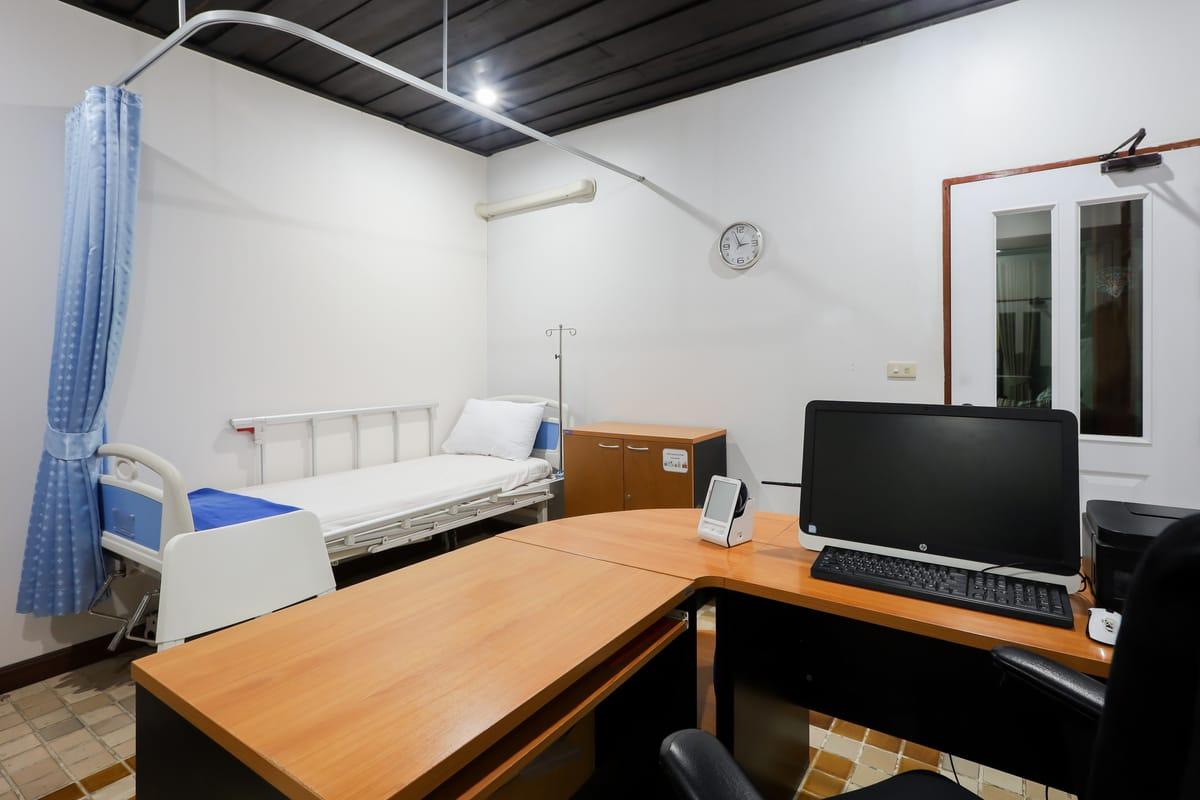
Our aim is for you to leave without a daily opioid. Denise O'Leary, our Clinical Director, is direct about it:
“We're not here to have people on substances for the rest of their lives.
That's where our program stands. It isn't a verdict on the medicine or on anyone taking it. Plenty of good doctors keep people on these medicines for years, and the research above is why.
If you're on Suboxone or methadone now
Tell Darren the medicine, the dose and how long you've been on it before you book anything. Don't cut your dose to get ready. Keep taking it as prescribed until you have a plan, because how we'd handle your prescription depends on your situation, and we'd rather answer that properly than guess here. Both medicines are controlled in Thailand, and the Thai FDA's guidance for travelers sets limits and paperwork for carrying them in, so talk to him before you pack anything.
When you go home
Your tolerance will be lower after detox, so the amount you used to take can now be dangerous. We don't give out naloxone kits when you leave, so get some at home. In the US, it's sold over the counter. We ask you to go straight home rather than stay on for a holiday in Thailand. Aftercare planning starts in your first week, and your relapse prevention work goes home with you in a discharge pack: your warning signs, a plan for the journey and an emergency card.
Is Jintara the right place, and when isn't it?
Jintara is a private, adult-only treatment center in Chiang Mai with a maximum of ten clients at a time and 32 staff. It tends to suit people who want to come off opioids completely and who've found that stopping closer to home didn't hold. If Suboxone or methadone is working for you and you want to stay on it, we're the wrong place.
We don't offer long-term maintenance, and we'd be asking you to give up something that's working to fit our program. Don't come off a medicine that's working for you just to get into a rehab, ours included. These are better places to start:
- If you want to stay on your medicine, stay with your prescriber. In the US, FindTreatment.gov and SAMHSA's free helpline, 1-800-662-4357, can point you to local care. In the UK, call FRANK on 0300 123 6600. In Australia, the National Alcohol and Other Drug Hotline is 1800 250 015.
- In an emergency, such as an overdose, call your local emergency number now. Hospital care comes first.
- Jintara is adult-only, so anyone under 18 needs a youth service.
- Schizophrenia and unmedicated psychosis need a psychiatric setting.
When Jintara is not the right place for someone, Darren helps them find a setting that is.
Frequently Asked Questions
- Can you get high on Suboxone? NIDA says people with opioid addiction who take it as prescribed don't get the high that other opioids produce, and don't get a rush, because it builds gradually and stays level. That doesn't mean it can't be misused, and alcohol or benzodiazepines on top of it can kill.
- Am I weak if I need Suboxone or methadone? No. Addiction is a health condition, and a prescribed medicine is treatment for it, which says nothing about your character.
- Does being on Suboxone count as recovery? Many doctors and people in recovery would say yes, and some groups see it differently. Our aim at Jintara is to come off, and that doesn't make anyone else's recovery less real. We also aren't a 12-step program: treatment is led by CBT, we use SMART Recovery, and 12-step peer support is optional.
- Can I get Suboxone at Jintara? We can't provide it here. Opioid detox here uses a methadone taper or supported withdrawal, chosen with the treating psychiatrist, and therapy runs alongside it from your first day. If you're already on Suboxone, tell Darren before you book so you get a straight answer for your situation.
- How long does opioid detox take at Jintara? Opioid withdrawal takes at least three weeks, and therapy starts on your first day alongside it. The minimum stay is 30 days, most stays run 30 to 60 days, and 60- and 90-day programs are available.
- How much does opioid treatment cost at Jintara? The 30-day program costs USD 12,500. You pay in 30-day blocks, and we never take payment for more than 30 days at a time. The program fee includes medical detox and the psychiatric assessment, and prescribed medication is the only extra.
- What happens if I message or call Darren? Calls go straight to Darren, and enquiries usually get an answer within a few hours. There's no sales team. He isn't a clinician, so he won't advise you on your dose, and you can ask anything, including whether you'd be better off somewhere else. If you do decide to come, admissions covers what happens next.

Talk with Our Admissions Team
Your enquiry is confidential and goes only to our admissions team.