
Holistic Treatment Inside Your Thailand Rehab Program
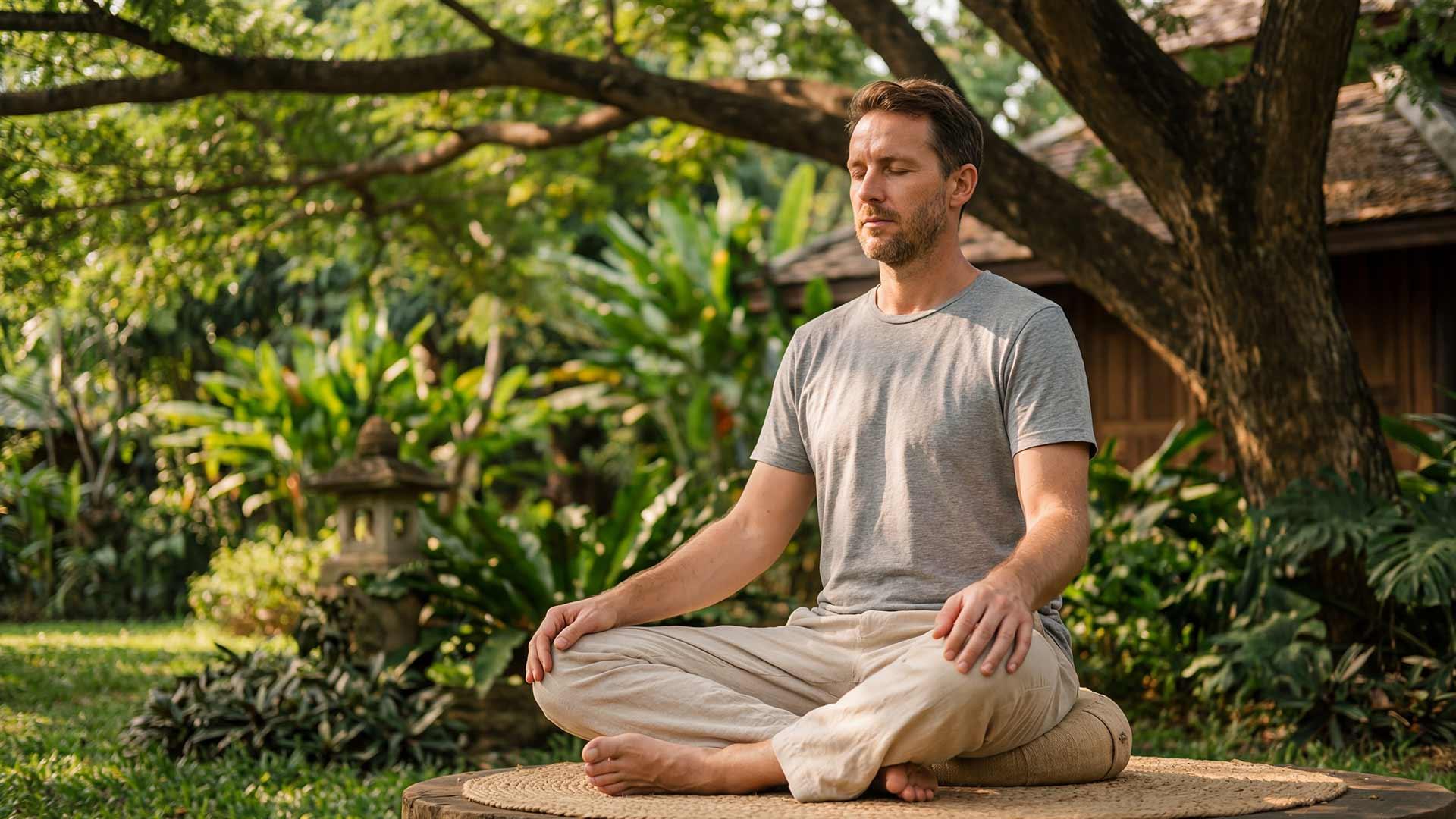
At Jintara, 'holistic' means supporting sleep, stress, and routine around your medical care and therapy. Not replacing them. We use calm, low-pressure practices like sleep hygiene, gentle movement, and short grounding exercises to help your nervous system settle so therapy can land.
Fully Licensed and Hospital Accredited
What does 'holistic' actually mean here.
Complementary and integrative approaches address the whole person alongside evidence-based medical care and therapy. The National Center for Complementary and Integrative Health notes that meditation and mindfulness may help reduce symptoms of anxiety, depression, and post-traumatic stress disorder. At Jintara, holistic activities are opt-in supports that reinforce your medical detox plan and therapy, not replace them.
Think of it like a tasting menu. During your stay as part of our residential program, you get to try different supportive practices and figure out what works for you. Some people love the Reiki. Others prefer a walk by the river. Some find art therapy surprisingly moving. Others would rather journal in their room. The point is that by the time you leave, you know which tools actually help you, and you take those home with you.
We keep the group small, around ten people at a time, so nothing feels rushed or chaotic. Your day has structure, but within that structure there is space to breathe. The Chiang Mai setting helps. It is naturally calm, green, and quiet. Being outdoors in natural light, near the river, surrounded by trees, that does something for the nervous system that no amount of theory can replace.
The core program is non-12-step and CBT-led. Holistic supports sit around that clinical spine, not in place of it. If 12-step peer support is something you want, it is available and optional. If it is not, that is fine too. Treatment is built around evidence-based therapy, not a single recovery doctrine.
What supportive activities are included.
Complementary wellness activities used alongside clinical care, including sleep hygiene, mindfulness, gentle movement, and body-based therapies, address the physiological disruption that medication alone does not fully resolve in early recovery. The National Heart, Lung, and Blood Institute reports that insomnia can affect memory and concentration. Every activity at Jintara is opt-in. You can step away at any time, no explanation needed.
We do encourage everyone to try all the activities at different times throughout your stay with us. Every activity below is included in the program fee, with no add-on charges for Reiki, Thai massage, art therapy, or meditation sessions. The point is to experiment freely, figure out which tools genuinely help you, and take those home.
- Sleep hygiene and circadian support: Light exposure timing, caffeine cut-offs, quiet hours, and wind-down routines. Many people find their sleep starts to improve within the first week. We set consistent wake times, encourage morning light, and build a simple evening routine that helps the body learn when to rest. Better sleep makes everything else easier, from therapy to mood to cravings.
- Stress reduction and grounding: Diaphragmatic breathing, guided relaxation, brief mindfulness practice, and simple grounding techniques. These are the same tools you will use after therapy sessions and EMDR processing to help your nervous system settle back down. They are practical, not abstract, and you can use them anywhere.
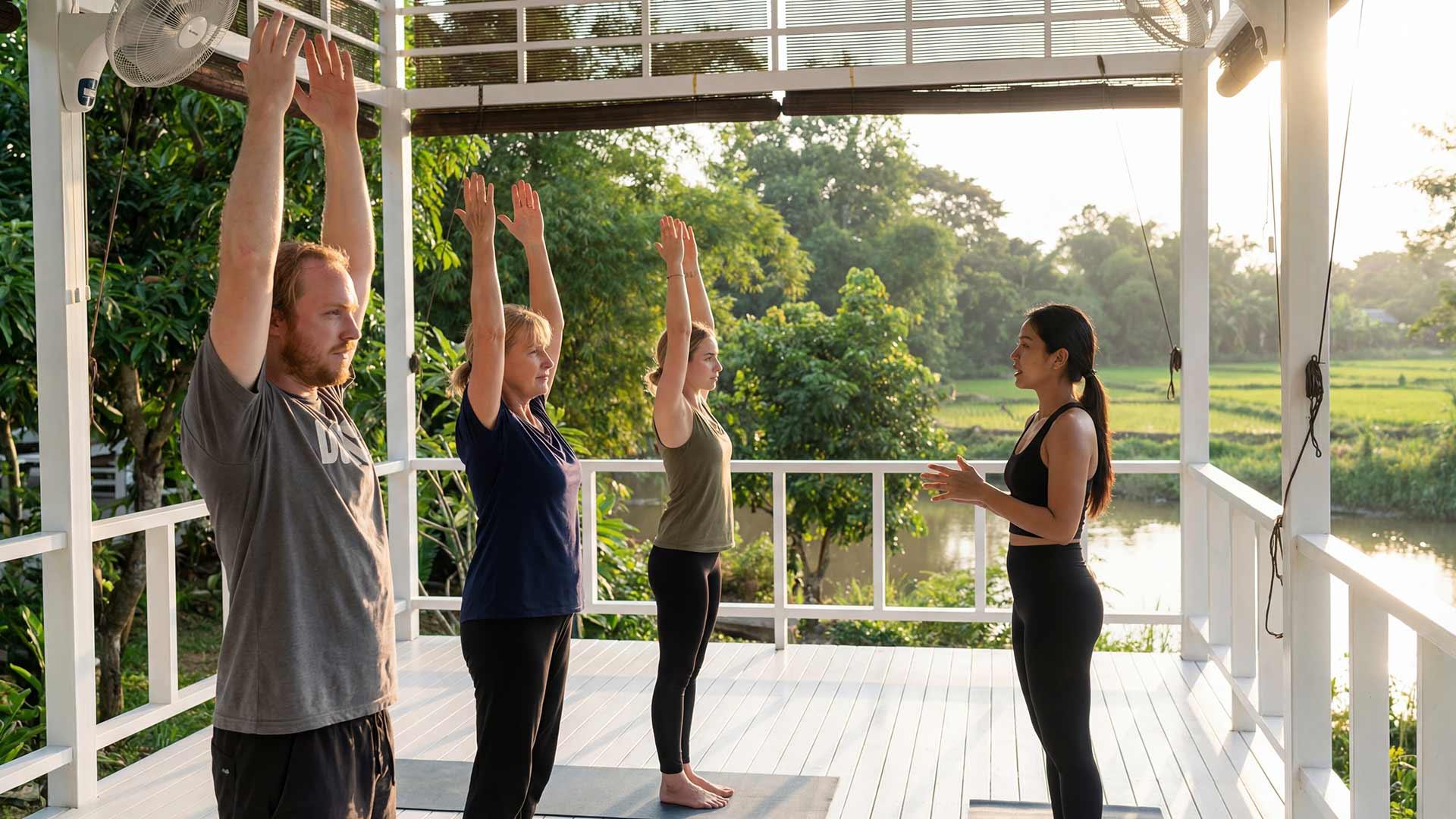
- Gentle movement: Low-intensity stretching, mobility work, and walking. Optional yoga-style sessions adapted for newcomers. You do not need any experience or special gear. The morning yoga or walking session runs from 7:30 to 8:45, Monday to Friday, and is a calm way to start the day before breakfast.
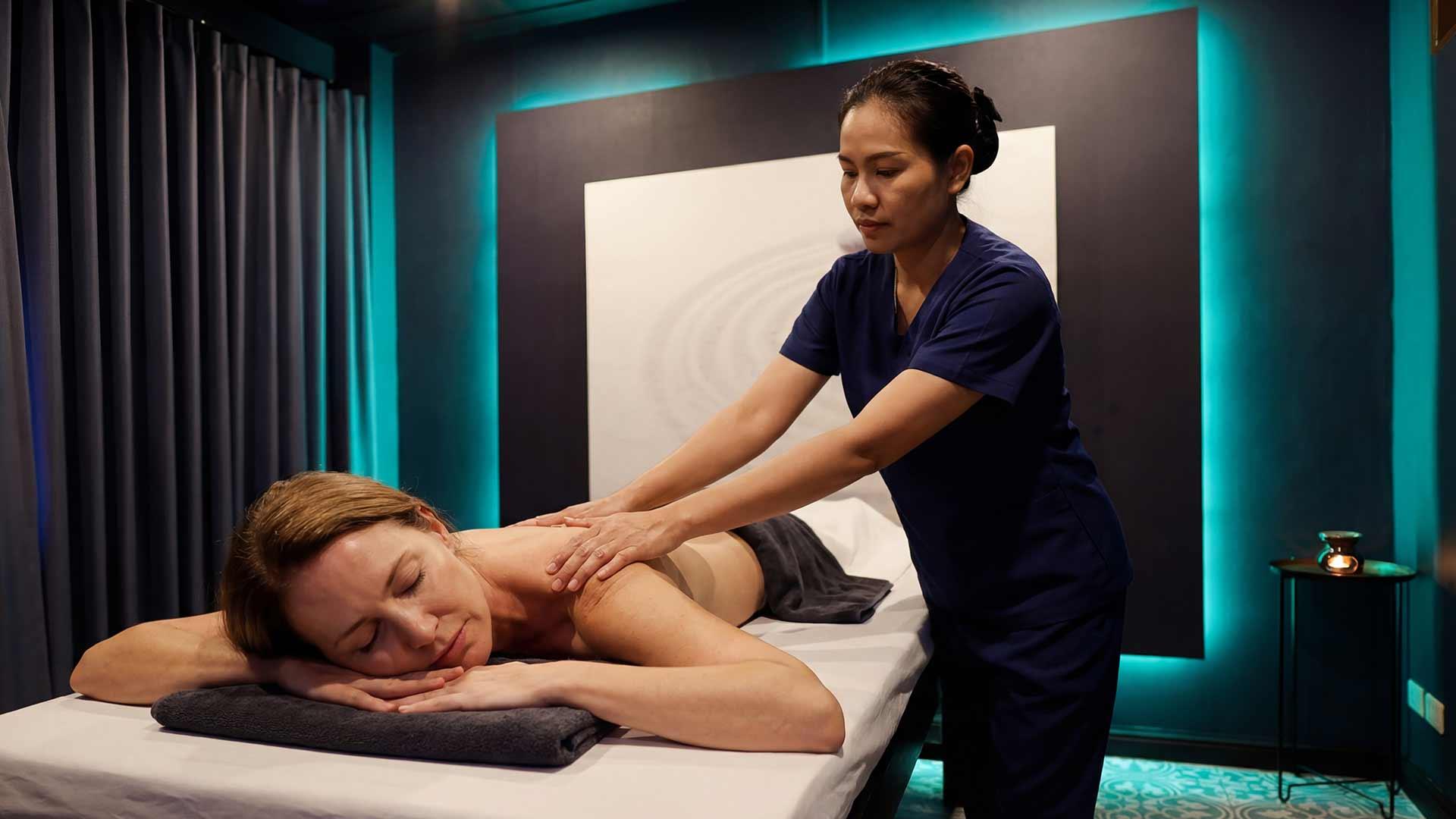
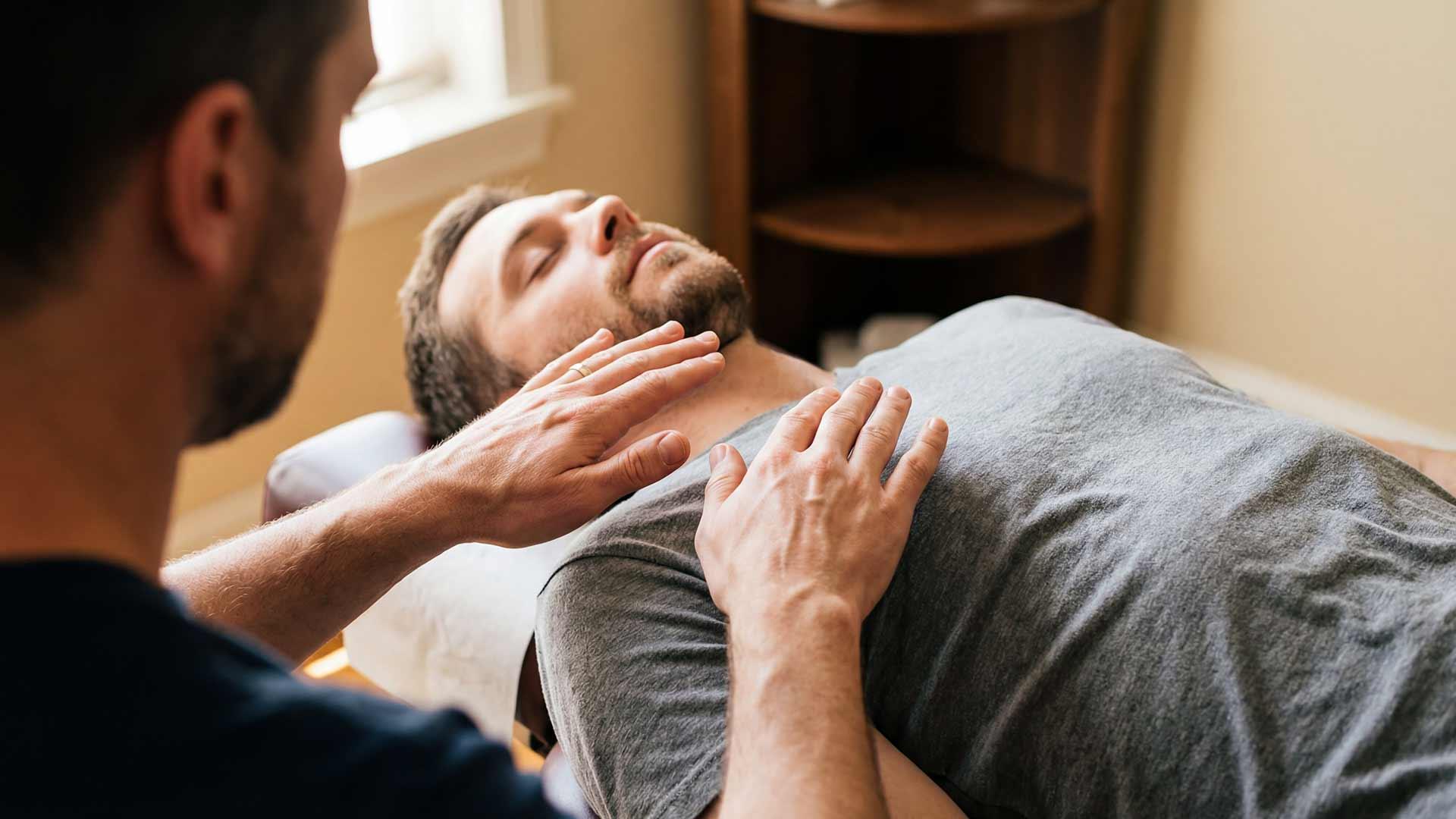
- Reiki (one-to-one sessions): A gentle, hands-on practice done in a quiet massage-room setting. The practitioner uses light touch to help your body release surface-level stress and tension. Sessions run about an hour. At the start, the practitioner explains the process, including what you might feel, from warmth to unexpected emotions surfacing. Some people find it deeply calming. Others are skeptical at first and then surprised. The first session often just releases the surface stress, and many people fall asleep for a moment. Deeper work can happen in later sessions as the body relaxes. Touch is always consent-based and can be adjusted or removed entirely.
- Thai massage: Delivered by a fully qualified practitioner on site. Sessions focus on physical relaxation and easing the muscle tension that often builds during early recovery. This is separate from Reiki and uses different techniques focused on the physical body.
- Art therapy (Friday mornings): A visiting art therapist leads a weekly group session each Friday. No artistic skill required. It is more about right-brain expression than producing anything polished. Some people who struggle to talk about what they are going through find that drawing or painting opens something up in a different way.
- Meditation and mindfulness (one-to-one): Individual sessions with a trained practitioner, usually one Reiki session early in the week and one meditation or mindfulness session later. Meditation is not about stopping your thoughts. It is about noticing them without getting pulled along. This skill has a specific and important role in addiction recovery, which we explain below.
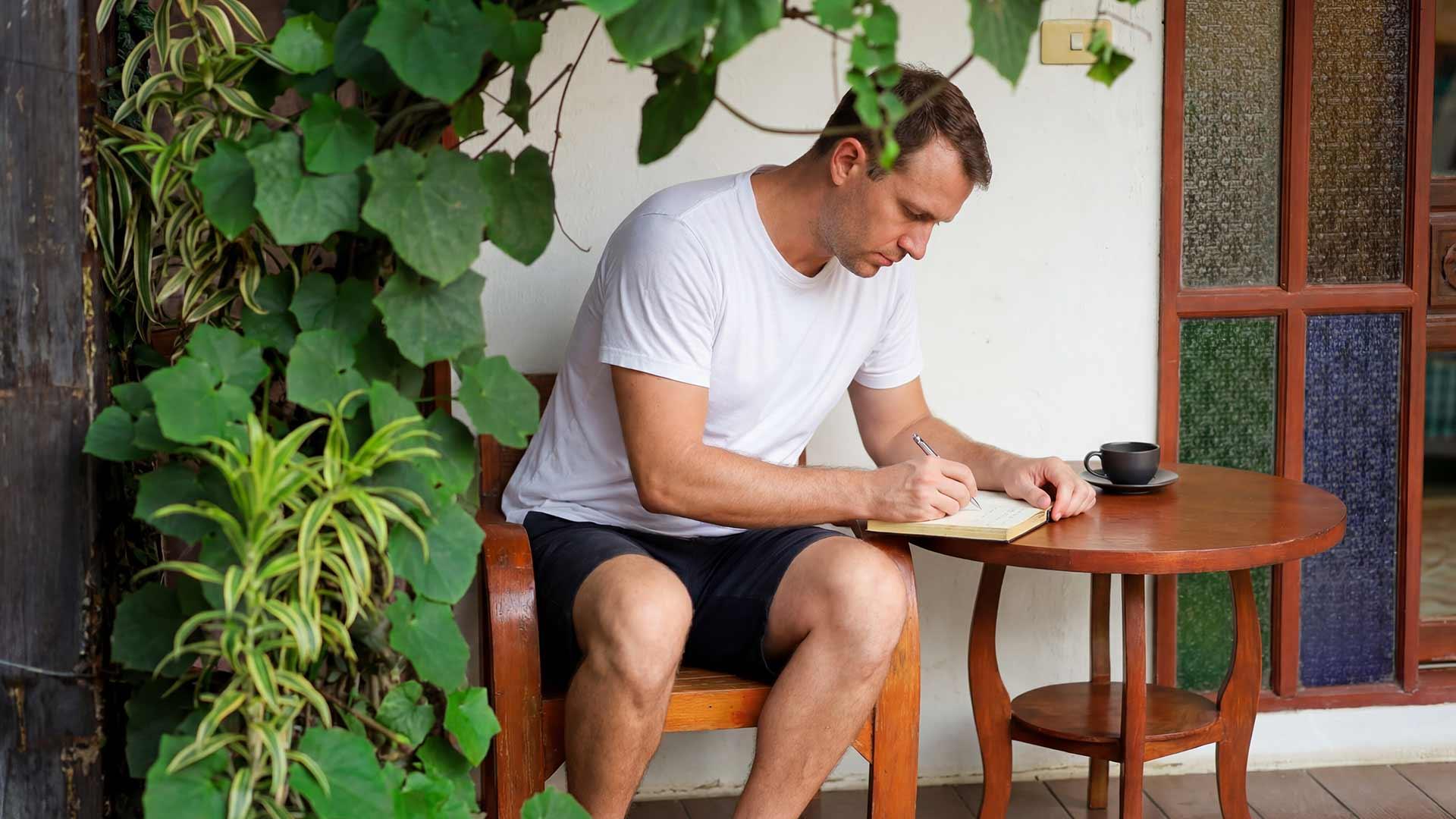
- Paced journaling and reflections: Written prompts tied to your therapy goals. You are never required to share what you write. Some people find that writing helps them process what comes up in sessions. Others use it to track patterns they would not have noticed otherwise.
- Nutrition basics and hydration coaching: Steady, balanced meals at set times. Culturally neutral menus. Many people arrive having barely eaten in weeks or months. Regular meals rebuild energy, mood, and sleep quality. We pay attention to caffeine timing and sugar patterns because both affect anxiety and cravings more than most people expect.
- Psychoeducation: Short, plain-English sessions explaining how pain, sleep, cravings, and stress actually work in the body and brain. Understanding the mechanics makes it easier to use the tools. When you know why your body responds a certain way, the fear reduces and you can act earlier.
- Nature time and routine building: Structured daylight exposure, short garden walks, time by the river. Being outdoors in natural light helps reset your body clock. The environment in Chiang Mai is green, warm, and quiet, which is a genuine advantage for nervous system regulation.
How does mindfulness help with addiction specifically.
Mindfulness-based practices are among the most evidence-supported behavioural tools for addiction recovery. A 2014 meta-analysis in JAMA Internal Medicine found that mindfulness programs show moderate evidence for reducing anxiety, depression, and pain across clinical populations. The key mechanism in addiction is metacognitive awareness: noticing a craving or emotional shift early enough to choose a response rather than reacting automatically. At Jintara, mindfulness is embedded throughout the day.
A lot of addictive behaviour runs on autopilot. If you do not notice that your emotional state has changed, that a craving has arrived, that an urge is building, you will have a drink or a substance in your hand before you have even noticed.
Mindfulness helps you get in earlier. The more you practice noticing what is happening in your body and mind, the earlier you can spot the shift and reach for a tool instead. This is not abstract philosophy. It is a practical skill with a direct link to staying safe.
At Jintara, mindfulness is woven through the day rather than isolated into one session, complementing our trauma-focused clinical program and clinical work. Morning yoga or walking, breathing exercises before groups, grounding techniques after therapy sessions, and short reflections in the afternoon all contribute. By the time you leave, you will have practised this skill in enough different settings that it can become a habit you use at home.
We do not expect perfection. Even a few seconds of noticing, that pause between the urge and the action, can change everything.
What does a typical day look like.
Residential addiction treatment is placed at a defined level of care in SAMHSA's Treatment Improvement Protocol 45, with the intensity of services matched to medical and psychological need. At Jintara, the day is designed so clinical sessions are balanced with movement, rest, and holistic supports.
- Morning: Yoga or walking from 7:30, breakfast at 8:30, then a short rest and reset period before the morning group sessions begin at 9:30. Morning groups cover CBT skills, relapse prevention, psychoeducation, and recovery goals, depending on the day.
- Afternoon: One-to-one therapy sessions, recovery skills work, and individual care planning fill the early afternoon. Later in the afternoon is when holistic activities are scheduled, including outdoor gym sessions, Thai massage, Reiki, bodywork, or wellness groups, depending on the day and your plan.
- Evening: Meditation practice, guided reflection, holistic wellness activities, or journaling and goals work fills the late afternoon window. Dinner is at 6:30, followed by personal time until curfew at 9:30.
- Overnight: A nurse is on call every night, seven days a week.
Saturdays include a supervised excursion, community lunch, and a family call window. Sundays include movement therapy, self-care time, and a slower pace. Session times may shift to support your recovery needs. The schedule above is a sample, not a rigid timetable.
What do we avoid, and why.
Effective addiction treatment avoids practices that destabilize recovering clients regardless of how widely they are marketed. SAMHSA's trauma-informed care framework prioritises physical and emotional safety as the foundation of any therapeutic intervention, cautioning against coercive, confrontational, or unsupervised approaches that can retraumatize people in early recovery. Every exclusion below reflects a clinical, legal, or ethical boundary, not a gap in our program.
- Extreme "detox" regimens: Fasts, harsh cleanses, or restrictive diets. During withdrawal and early recovery, your body needs steady nutrition and hydration, not deprivation.
- Megadose supplements or IV drips without clinical indication: Variable quality, limited evidence for most claims, and real drug interaction risks. If your body needs something specific, the medical team will prescribe it.
- Unsupervised breathwork that provokes hyperventilation: Certain breathing techniques can destabilize anxiety and trauma responses. We stick to gentle, regulated breathing practices.
- Massage or bodywork without explicit consent and screening: Touch is always opt in, never a default. If you have any history that makes physical contact difficult, alternatives are offered without questions asked. Male and female preferences are respected.
- Confrontational groups or public shaming: Not trauma informed. Not something we do. Groups here are built on relating to each other, not tearing people down.
- Psychedelics or illegal substances: Not provided. Outside our scope and the law.
- Religious coercion or mandatory spiritual content: Personal choice. If Reiki or meditation does not align with your beliefs, you can opt out. Some clients decline for religious reasons, and that is respected without question.
- Diagnostic or medical claims by non-clinicians: Medical advice stays with the medical team. Wellness staff do not adjust medication or diagnose conditions.
What is included vs. what we avoid
What is included (opt-in)
- Sleep hygiene and circadian support
- Stress reduction and grounding
- Gentle movement and walking
- Reiki (consent-based, one-to-one)
- Thai massage (on staff practitioner)
- Art therapy (Friday group)
- Meditation and mindfulness
- Paced journaling
- Nutrition and hydration coaching
- Psychoeducation in plain English
- Nature time and routine building
What we avoid (and why)
- Extreme detox diets or fasting (withdrawal risk)
- Megadose supplements without indication (interaction risk)
- Unsupervised intense breathwork (can destabilize)
- Touch without explicit consent (dignity)
- Confrontational groups or shaming (not trauma-informed)
- Psychedelics or illegal substances (law, scope)
- Religious coercion or mandatory spiritual content
- Medical claims by non-clinicians (scope of practice)
What if I am skeptical about Reiki or meditation.
Complementary approaches including Reiki and meditation are not clinically mandatory components of addiction treatment. At Jintara, every non-medical activity is fully opt-in. Clients who find Reiki or meditation unhelpful use that time differently with no pressure.
Many people are. Some clients arrive from high-pressure professional backgrounds with a strong 'mind over matter' approach and little patience for anything that sounds spiritual. That is completely fine. As Darren puts it, 'Everybody who comes to rehab has ambivalence. That's okay. We can work with that.' Scepticism about Reiki or meditation falls into the same category.
We ask people to try things once or twice before deciding. Sometimes people who are very skeptical at the start have an unexpected experience during a Reiki session and become converts. Sometimes they try it, feel nothing, and say it is not for them. Both outcomes are fine.
If Reiki is not for you, you can use that time differently. If meditation feels uncomfortable, we can adjust the approach or focus on other grounding techniques that feel more practical. The whole point of the tasting menu is to figure out what works for you and leave the rest behind.
Nobody will pressure you, judge you, or make you feel like you are missing out. We treat you like an adult.
How do medication and wellness work together.
Medication management and complementary wellness activities serve distinct roles in residential addiction treatment and are designed not to overlap. At Jintara, all prescriptions are managed by the medical team exclusively.
Medication is prescribed and managed by trained clinicians as part of your personalised detox plan. Our non-medical staff do not adjust meds, suggest alternatives, or comment on your prescriptions. If you are taking medication for anxiety, depression, sleep, or any other condition, that is between you and the medical team.
Clinical safety sits underneath everything. Your Day 2 hospital-grade workup, including bloods, EKG, chest X-ray, and a full liver and kidney panel, is included in the program fee, and Darren signs off on it personally. Acute escalation runs through our partnership with Bangkok Hospital and Chiang Mai Ram, both a short drive from the centre. Holistic activities are sequenced behind that medical baseline, never on top of unmanaged risk.
Families sometimes ask whether a focus on holistic activities means the clinical side is lighter. It does not. The Healthcare Accreditation Institute, the national body that accredits Thailand's hospitals, assessed Jintara's clinical protocols alongside the Princess Mother National Institute on Drug Abuse Treatment and the Department of Medical Services, Ministry of Public Health. All three confirmed the standard is met, certificate 25/2569, valid until May 2029. Held to a hospital's bar, and still small enough that the nurse knows your name by the second day.
We do not accept vendor kickbacks for supplements, products, or services. If we suggest something optional, we will tell you why and who benefits. Usually no one but you.
Wellness activities do not replace medical treatment. They support it. The medical team, therapy team, and wellness staff coordinate so messages do not conflict and your day flows in a way that supports the overall plan.
Every elective wellness activity has its own informed consent process. You know what you are signing up for before it starts.

How does consent work here.
Informed consent and the right to withdraw are clinic rules at Jintara, not a named principle in SAMHSA's trauma-informed approach. The six key principles are safety; trustworthiness and transparency; peer support; collaboration and mutuality; empowerment, voice, and choice; and cultural, historical, and gender issues. At Jintara, every non-medical activity requires explicit consent and can be stopped at any time.
Every non-medical activity is opt-in. You sign up, and you can opt out at any time without penalty. Nobody will pressure you.
Body-based activities like Reiki and massage require explicit, revocable consent. If you change your mind mid-session, you stop. No explanation needed. If you have any history with touch-related trauma, the practitioner will discuss alternatives before the session begins, including working without physical contact.
Group participation is encouraged but never forced. If a topic or activity does not feel right, you can sit it out. Quiet observation counts.
No photography of clients. Spaces are non-identifying. Your privacy is protected throughout your stay.
How does holistic care support therapy and detox.
Integrated complementary care within residential treatment improves clinical outcomes by reducing inter-session anxiety, improving sleep quality, and supporting nervous system regulation. NIDA's treatment overview describes medications and psychotherapies used together, and says co-occurring health conditions are usually better treated at the same time rather than separately. At Jintara, all wellness staff report to the clinical team.
The holistic therapist holds qualifications in holistic massage from City College of London, with additional training in Thai massage, Reiki, Chinese medicine, craniosacral therapy, meditation, and mindfulness from programs across Thailand. He has worked at Jintara since shortly after the pandemic and at the predecessor facility for several years before that.
Thai massage is delivered by a Thai practitioner who's part of our onsite team, so you can request this service in your own private room when you feel like it, without needing to travel offsite. Art therapy is led by a visiting art therapist each Friday morning.
All practitioners operate within the framework set by the clinical team. Wellness staff do not diagnose, do not adjust medication, and do not make medical claims. Their role is supportive, and they report to the treatment manager.
Want to talk about how holistic care fits into your plan.
A pre-admission conversation allows prospective clients to confirm that the holistic care model fits their needs, preferences, and history before committing to a program. At Jintara, that conversation is with the owner directly and is confidential.
Jintara's owner can walk you through suitability, timing, and how the holistic schedule integrates with therapy and medical care. This call is not a sales pitch.
If you want to see how the rest of the program ties together, Jintara is built around small numbers, owner-led intake, and adult-only treatment, with holistic supports as one part of a wider clinical plan.
Talk with Our Admissions Team
Your enquiry is confidential and goes only to our admissions team.
Common Questions About Holistic Treatment in a Thailand Rehab
No. All non-medical activities are opt-in and consent-based. You can opt out at any time without penalty, and alternatives are offered. The core therapy and medical program is the foundation. Holistic activities are the support around it.
We encourage people to try each activity at least once during their stay. Some clients arrive skeptical about Reiki or art therapy and end up finding them genuinely helpful. Others try something, decide it is not for them, and use that time for journaling or a walk by the river instead. Both outcomes are fine.
Medical care and medications are managed by clinicians only. Holistic supports like sleep hygiene and gentle grounding are coordinated to work alongside medical treatment, not replace it. Non-medical staff do not comment on medication or suggest changes.
During the first few days of detox, the holistic schedule is lighter. As withdrawal symptoms ease and the medical team confirms you are stable, more activities become available. The timing is always guided by clinical safety, not a fixed timetable.
Sleep hygiene, stress-reduction techniques, gentle movement, Reiki, Thai massage, art therapy, meditation, paced journaling, nutrition basics, and brief psychoeducation. All are optional. You will try different things during your stay and keep what works.
Everything listed above is included in the program fee. There are no add-on charges for massage, Reiki, or art therapy sessions. The idea is that you experiment freely and figure out which tools you want to take home, without worrying about individual costs.
We avoid extreme detoxes, megadose supplements, unsafe breathwork, touch without explicit consent, confrontational groups, illegal substances, and any claims outside our clinical scope. Each decision comes down to safety, evidence, or professional boundaries.
Some of these are common at other facilities. Megadose IV drips, for example, carry real drug interaction risks during detox. Intense breathwork can destabilize trauma responses. Confrontational group therapy has been linked to worse outcomes in addiction treatment research. We stick to what is safe and what works.
Yes. We use non-identifying spaces, do not photograph clients, and follow consent-first policies for any elective activity, including body-based work. The group stays small, around ten people, which keeps the environment calm and discreet.
Many clients are professionals, business owners, or people in public-facing roles. Privacy is a practical concern, not a luxury. Staff are trained in confidentiality, and the facility layout means you are not visible to passing visitors or delivery staff. For professionals experiencing burnout alongside substance use, holistic therapies also build nervous-system regulation skills that transfer directly into the demands they will return to.
That is respected without question. Some clients decline Reiki for religious or personal reasons. Others find meditation uncomfortable at first. You will not be pressured, and you can use that time differently.
If you prefer practical grounding techniques over meditation, or a walk by the river over Reiki, those are equally valid ways to calm your nervous system. The program adapts to you. There is no single path that everyone has to follow.
Absolutely. The whole point is to try different supports and keep what works. There is no obligation to continue anything that does not feel right. If Reiki does nothing for you, stop. If meditation is uncomfortable, we can adjust the approach or focus on other techniques.
Some people who were certain they would hate art therapy end up doing it every Friday. Others try Reiki once and prefer Thai massage instead. By the time you leave, you know which tools actually help you, and you take those home.
You lie comfortably in a private massage-room setting. The practitioner uses gentle touch on different parts of the body to help release surface-level stress and tension. Sessions run about an hour. You might feel warmth, deep relaxation, or unexpected emotions surfacing. Some people fall asleep during the first session.
The practitioner explains the process beforehand, including what you might feel and how the session will flow. Touch is always consent-based and can be adjusted or removed entirely. You can stop at any time, no explanation needed. If emotions come up during the session, the practitioner can help you ground using breathing techniques.
A lot of addictive behaviour runs on autopilot. Mindfulness teaches you to notice changes in your emotional state, cravings, and urges earlier, so you can use a tool before the automatic response kicks in. Even a few seconds of awareness can be the difference between reaching for a substance and reaching for a coping strategy.
Research supports this. A 2014 review in JAMA Internal Medicine found that mindfulness meditation programs showed moderate evidence of reducing anxiety, depression, and pain. In addiction recovery, the skill of noticing without reacting is directly linked to fewer impulsive decisions around substances.
No experience needed. Morning yoga sessions are gentle and adapted for newcomers. Meditation is guided and individual, not a group class where you sit in silence for an hour. The practitioner works with wherever you are and builds from there.
Most clients joining our recovery program have never practised yoga or meditation before arriving. The sessions are designed for people in early recovery, not fitness enthusiasts. If you can breathe and stand, you can do the morning session. If standing is difficult, seated or lying-down alternatives are always available.
Staff across the medical, therapy, and wellness teams communicate daily. Your schedule is designed so that intense therapy sessions are followed by calming activities. If your therapist adjusts your plan, the holistic schedule adapts. It is a small team, and information flows quickly.
For example, if you have an EMDR session in the morning that brings up difficult material, the afternoon might include a Reiki session or a walk rather than another intense group. The team adjusts in real time because there are only ten clients and everyone knows your plan.
No. Holistic activities are opt-in supports sequenced behind a clinical framework that has been independently assessed. The Healthcare Accreditation Institute, the national body that accredits Thailand's hospitals, assessed Jintara's clinical protocols alongside the Princess Mother National Institute on Drug Abuse Treatment and the Department of Medical Services, Ministry of Public Health. All three confirmed the facility meets the hospital-grade standard. Certificate 25/2569 is valid until May 2029.
The holistic program is built around the clinical spine, not in place of it. Medication is managed exclusively by clinicians. Wellness staff do not diagnose, adjust prescriptions, or make medical claims. If withdrawal is medically complex, more of your day will be structured around medical support and the holistic activities will shift accordingly.
No. All wellness staff operate within the clinical team's framework. They do not adjust medication, make diagnoses, or comment on your prescriptions. Their role is clearly defined as supportive, and they report to the treatment manager.
This scope-of-practice boundary is part of the reason Jintara holds hospital-grade accreditation from HAI, PMNIDAT, and DMS, certificate 25/2569. An independent assessment confirmed the clinical governance structure, including how non-clinical staff operate within it. The line between clinical and wellness work is explicit and enforced.
The practitioner is experienced with emotional responses. During Reiki or meditation, old feelings or memories can sometimes surface. The practitioner can help you ground, use breathing techniques to calm the nervous system, and will pause or stop the session if needed.
Anything that comes up can be brought to your next therapy session for processing with your counsellor. This is actually a sign that the body is releasing stored tension, which is a normal part of recovery. Our team is always close by, and you are never left to deal with it alone.
Jintara Rehab is licensed by the Thai Ministry of Public Health as a rehabilitation centre. The clinical information on this page describes Jintara's general approach to supporting clients during the early recovery period. Medical decisions, including medication protocols, are determined by addiction-specialist psychiatrists through our partner hospital pathway. Individual treatment varies based on clinical assessment. This content is for informational purposes and does not constitute medical advice.